
Оригинал материала
‘A new precedent’
In an interview with Meduza, expert Pierre Thévenin breaks down the maritime law behind Washington’s recent tanker seizures
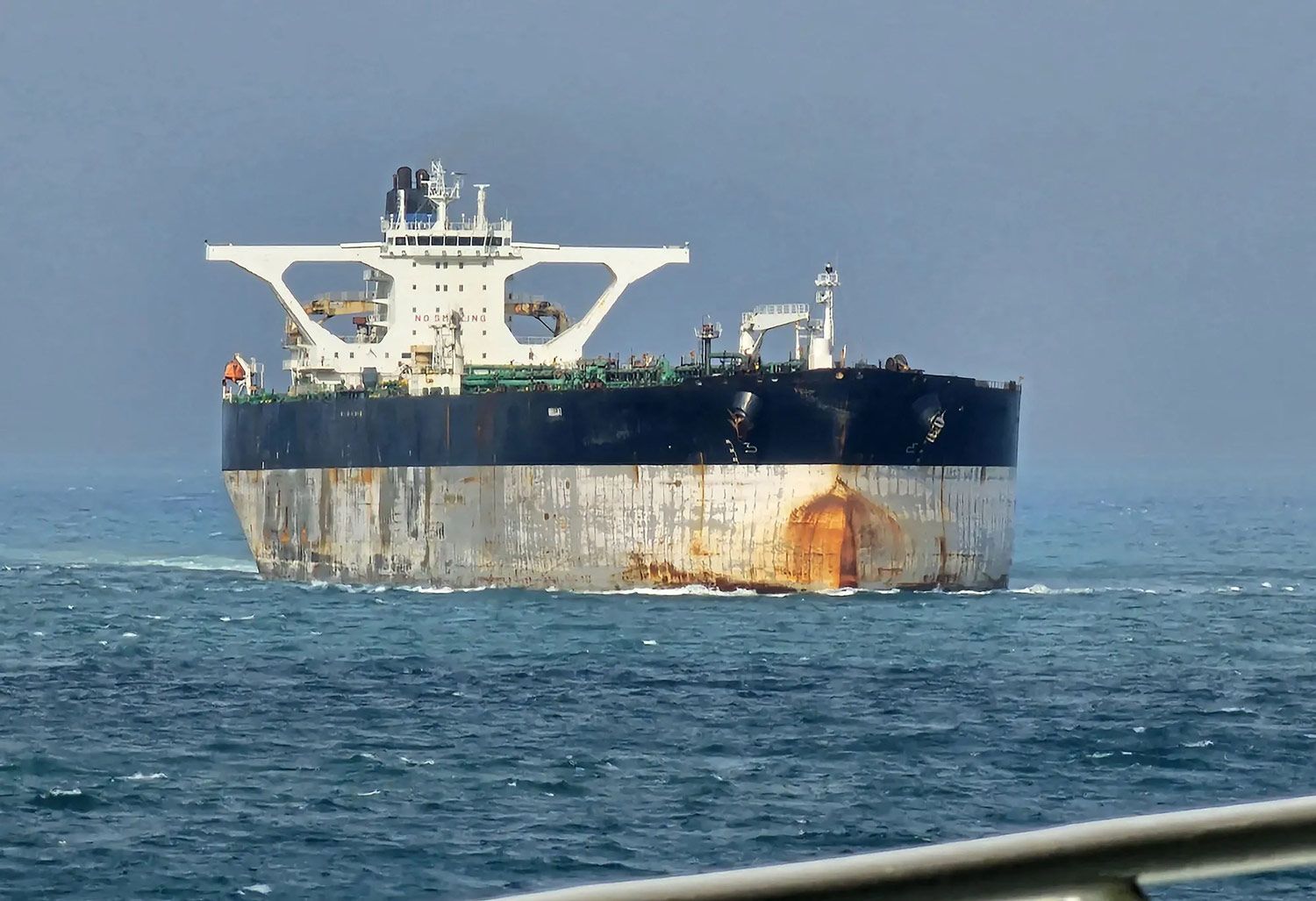
On January 7, U.S. military forces seized two tankers linked to Russia’s “shadow fleet,” ending a weeks-long pursuit of one vessel, the Bella 1. After the ship sought Russian sovereign protection by changing its flag in late December, Moscow mobilized warships and a submarine to intervene. Despite these maneuvers, U.S. personnel eventually boarded and detained the ship. Russia’s Transport and Foreign ministries have since accused Washington of violating the U.N. Convention on the Law of the Sea, while Washington maintains the operation was a lawful enforcement of sanctions. Meduza spoke with Dr. Pierre Thévenin, an international maritime law researcher at the Stockholm International Peace Research Institute, to explain the legality of the actions taken by both sides in the “tanker conflict.”
You’re currently reading Meduza, the world’s largest independent Russian news outlet. Every day, we bring you essential coverage from Russia and beyond. Explore our reporting here and follow us wherever you get your news.
The U.S. position: Why the tanker seizure may be legal under maritime rules
Changing a flag at sea is a violation of international maritime law under Article 92 of the UN Convention on the Law of the Sea (UNCLOS), the primary global regulatory instrument in this field:
- A ship shall sail under the flag of one State only and, save in exceptional cases expressly provided for in international treaties or in this Convention, shall be subject to its exclusive jurisdiction on the high seas. A ship may not change its flag during a voyage or while in a port of call, save in the case of a real transfer of ownership or change of registry.
- A ship which sails under the flags of two or more States, using them according to convenience, may not claim any of the nationalities in question with respect to any other State, and may be assimilated to a ship without nationality.
As Pierre Thévenin explains, according to Article 92(2), the flag change from Guyana to Russia could mean the Bella 1 — later renamed the Marinera under Russian jurisdiction — lost its original legal protection:
When a ship sails under the flag of a state, such as Panama, it falls under the exclusive jurisdiction of that state. Only the Panamanian authorities may act on board the vessel, and only they can control or arrest it (per Article 94 of UNCLOS). There are only four exceptions where this jurisdiction may be superseded: slave trading (Article 99), piracy (Articles 100 and 101), illicit drug trafficking (Article 108), and unauthorized high-seas broadcasting (Article 109). In this tanker’s case, however, no one is claiming that any of those things happened.
When a vessel changes its flag while at sea, it is considered stateless. In the absence of a national affiliation, any warship or government vessel maintains the right to conduct inspections and seize the ship. This principle forms the coreof the American legal argument. Notably, authorities in Estonia and France employed similar reasoning to justify the detention of Russian “shadow fleet” tankers in 2025.
Where U.S. actions diverge from UNCLOS
Regarding the Sofia, the second tanker detained on January 7: CBS reports it operates under a Cameroonian flag. The U.S. has accused it of violating an embargo imposed against Venezuela. Under this line of reasoning, the seizure violates international law in several ways, according to Pierre Thévenin:
- First, from the perspective of public international law, an embargo is an illegal instrument of pressure against a sovereign state, as it encroaches upon Venezuela’s right to set its own policies — a violation of Article 2(7) of the U.N. Charter.
- Furthermore, under international maritime law, an embargo violates the right of innocent passage and freedom of navigation within Venezuelan territorial waters (Articles 17–19 of UNCLOS), its exclusive economic zone (Article 58(1) of UNCLOS), and on the high seas (Article 87 of UNCLOS).
- The seizure of the Sofia also breaches Cameroon’s jurisdiction. Per Article 94 of UNCLOS, only the flag state has the authority to arrest its own vessels. U.S. forces could only seize the ship without Cameroonian consent if it were engaged in the slave trade, piracy, drug trafficking, or unauthorized broadcasting from the high seas.
The Russian position: Why the tanker’s seizure may have violated international maritime law
Russian officials point to Article 92(1) of UNCLOS, which makes an exception for a “real transfer of ownership” or “change of registry.” It appears that both the ownership and registration of the Bella 1 (renamed Marinera) changed while the vessel was under pursuit by the U.S. Navy.
According to reporting by the Financial Times, ownership of the tanker was transferred in December to the Russian firm Burevestmarin. Before U.S. forces detained the ship, it had been added to Russia’s maritime register, and its official status in the International Maritime Organization’s database was updated to a Russian flag.
so...
Who’s right?
There is currently no clear legal resolution to this dispute. As The Conversation has noted, a vessel changing its flag during an active pursuit is a new precedent in maritime law. Both the U.S. and Russia would need to prove their case if a formal investigation is launched.
Thévenin notes that if the flag change is ruled illegal under Article 92(1) of UNCLOS, Russia would essentially have no right to take retaliatory measures against the U.S. Any scenario involving military escalation remains, in his view, highly unlikely.