
Translated material
Einstein Sea - 4

Einsteiniada 2.0
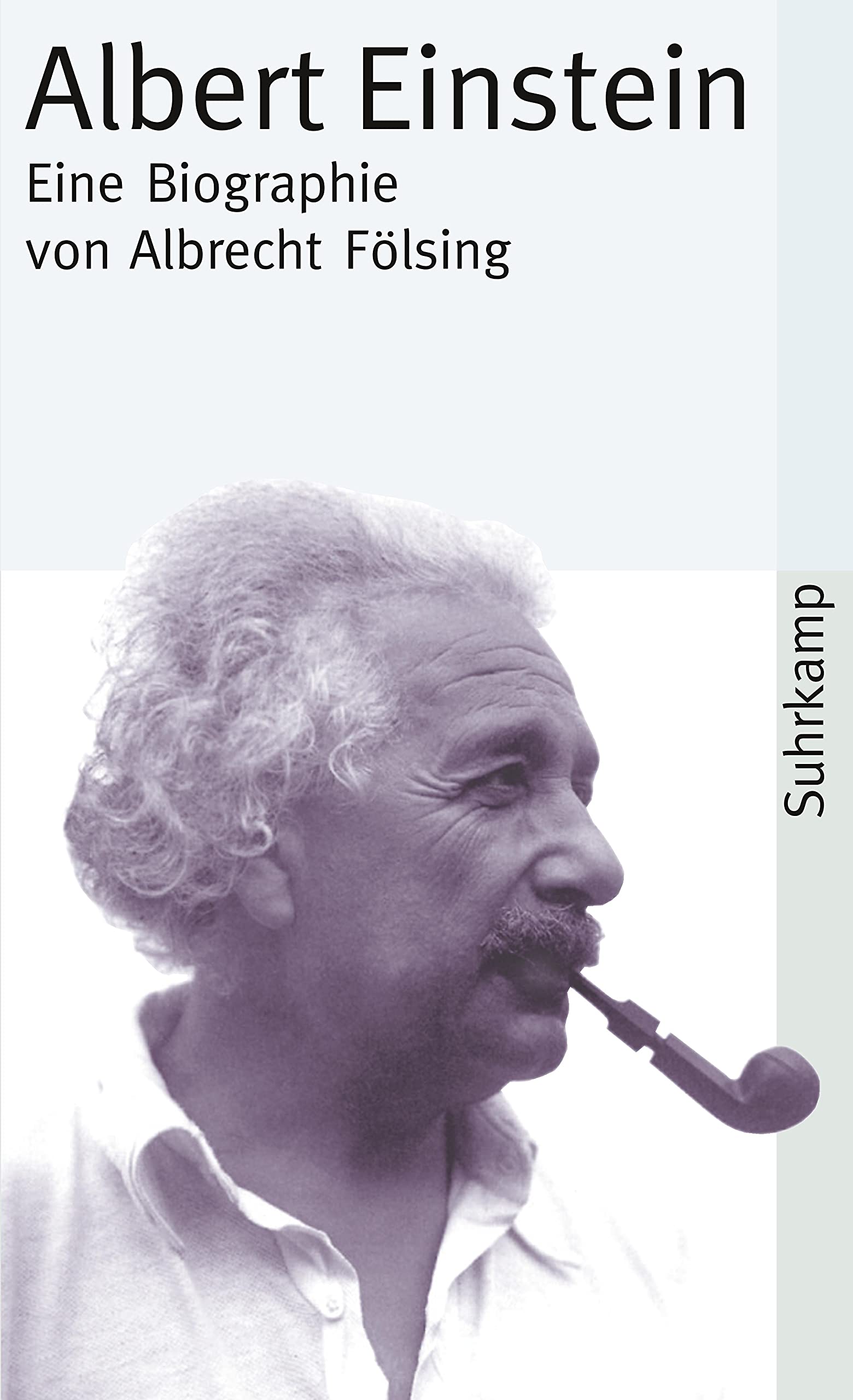
We talked about the books of Rudolf Kaiser, Philip Frank, Karl Zeliga and Abraham Pays 1 . Einstein’s biographies, written by people, familiar with him, could be listed further, but it is clear that this list cannot be long. Next are the work of those biographers that draw facts from secondary sources, rely on historical jokes about the author of the theory of relativity and facts told by other people. Among them are successful biographies, for example, Albrecht Fölsing (Fölsing, 1995), but more often various myths and erroneous stereotypes are replicated in this way.
After the death of Albert Einstein on April 18, 1955, the need to build a solid documentary base, based on which could more reasonably judge his life and work, became obvious. The basis of this base was the archive of the scientist, which began to form mainly after 1919, when world glory came to Einstein and the circle of his communication radically expanded. Prior to this, Albert did not care very much about the preservation of manuscripts and letters. After the marriage of Elsa in 1919, Einstein attracted her eldest daughter Ilze to the archive. She brought the first order in his confusing paper. And in 1928, the new secretary Helen Ducas, who did not depart from Einstein until his last day, took up this matter.
 In a will, finally edited on March 18, 1955, a month before his death, it was Helen Ducas and a longtime friend Otto Nathan Einstein who appointed the trustees of his inheritance. If possible, they had to collect the entire Archive of Einstein and transfer it to Jewish university in Jerusalem. The university transferred all Einstein intellectual property rights.
Einstein’s archive hit Jerusalem in 1982 after a tense and long, more than a quarter century, work on him Otto Nathan and Helen Ducas. Copies of archive documents are also stored in Princeton (Institute of Promising Research), Pasadena (California Technological Institute) and in Zurich (Polytechnic). Without the heroic efforts of Dr. Nathan and Helen Ducas, many securities would be lost and would not enter the scientific circulation of modern Einsteinians. In 1955, in the year of Einstein’s death, his archive consisted of 14 thousand documents. By 1982, when Helen Ducas died, it grew to 42 thousand, that is, three times! (Rosenkranz, 2004, S. 226) Currently, the archive consists of 55 thousand documents, of which about ten thousand contain notes made by Einstein himself.
Robert Oppenheimer (director of the Institute of Prospective Research in Princeton, whose employee Einstein was considered even after going to an honorary pension) proposed publishing at Princeton University Press all scientific works of the late author of the theory of relativity. However, the trustees of the inheritance also wanted to publish Einstein's articles about peace and politics, correspondence and other materials.
The grandiose task arose: taking into account all the requirements of historical science, to prepare a complete collection of these materials for the publication, to make them accessible to a wide range of historians, physicists, biographers, just fans interested in the work of the greatest physics of the twentieth century.
 From the very beginning it was clear that a simple publication would not be enough. It is necessary to show a wide context of each document, to explain the circumstances of its creation, its sources, the role of a document in the work of a scientist and his colleagues, internal ties with other documents, and the impact on the development of science. How complicated such a task is shown by the fact that Einstein began direct discussion of the publication of the works of Einstein only in 1970, fifteen years after the death of the scientist. It was then that Dr. Nathan turned to the director of Princeton University Press with a proposal to discuss the details of the upcoming comprehensive publication and develop a publishing agreement. After a series of working meetings and discussions, such an agreement between the trustees and the publishing house was drawn up and signed on February 22, 1971 (Einstein, 1987, p. XII).
The initial composition of the editorial council included expert scientists who knew Einstein well and worked with him: Valentin Bargman, Freemen Dyson, Gerald Holton, Martin Klein, Thomas Kun, John Willer and others.
The editorial council first gathered on April 3, 1971. First of all, it was necessary to choose the chief editor of the first volume. The task was extremely difficult, given the variety of topics of the texts that was to be included in the collection of documents. In addition to work on physics, history and philosophy of science, it was necessary to take into account notes on social and political issues, reasoning about Zionism and Jewish affairs, not to mention thousands of letters to scientists such as Lorenz, Bor, Pauli and Erenfest, and such cultural figures as Thomas Mann, Sigmund Freud, Roman Rollan, Bertran Rosol ...
The choice of the editor -in -chief of the first volume of the Ainstein’s collection of documents took a long five years - only in June 1976, a professor of physics of Boston University John Stacel was appointed to this position. Work on the first volume of the grandiose collection of documents began. The place for work was provided by the Princeton Institute of Promising Research.
Shortly before the death of Helen Ducas in 1982, she and Dr. Nathan decided to completely transfer the rights and obligations of Einstein’s inheritance trustees in accordance with his will to Jewish University in Jerusalem. Representatives of the university replenished the team of historians and physicists who worked with the archive documents. In the 1980s, new specialists-historians of science joined them: American Robert Schulman, who later became the head of the project, American David Cassidy, author of biographies Bora, Geisenberg and Pauli, Berlin professor Jurgen Renn and other young researchers.
Work on such a huge number of documents was moving slowly, various financial and technical difficulties arose along the way, and the first volume was released only in 1987 (Einstein, 1987). It is dedicated to Einstein's early years (1879–1902), family, childhood and youth. In total, about thirty volumes are expected, sixteen are currently published. The publication of documents was brought to the Berlin period (1927-1929).
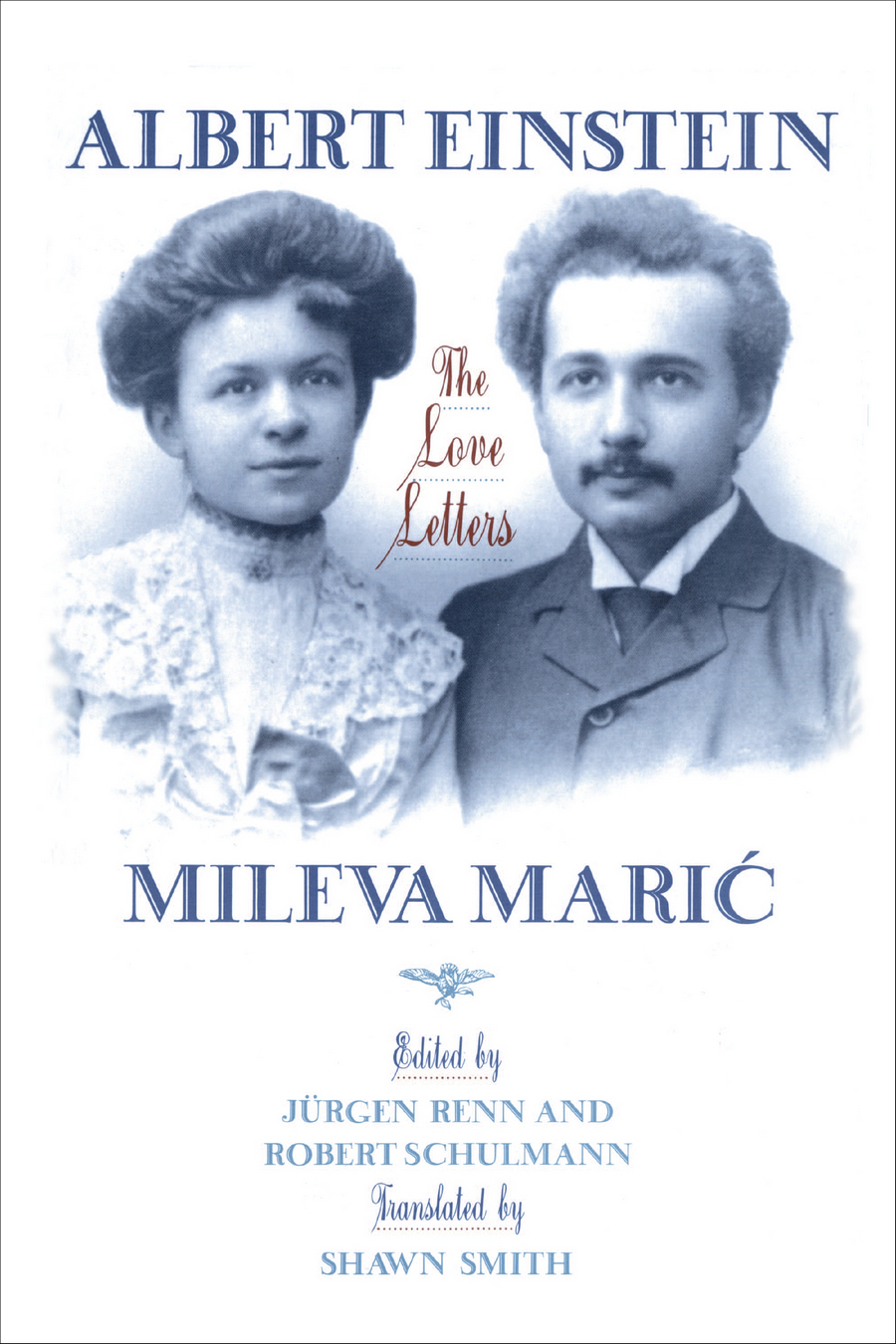 As we see, over a third of the century it was possible to publish only about half of the documents. But already now we can confidently say that with the publication of the first volumes of the collection of documents of Albert Einstein, the situation in Einstein studies has radically changed. It becomes a solid documentary basis. There was an opportunity to check the legends and myths that have developed around Einstein, break false stereotypes, justify new bold hypotheses. Jurgen Renn and Robert Schulman compare the project “Einstein's Documents” with an archaeological expedition, the success of which depends on the joint work of historians interpreting the finds and archaeologists conducting search field work (Einstein - Marić, 2005, S. 18). Many documents were first put into scientific circulation precisely in the process of working on the collection of documents. For example, the love correspondence of Albert Einstein and Milevy Marich was found by Robert Schulman in the mid-1980s with the assistance of Evelina Einstein, the granddaughter of the great physicist; All 55 letters were included in the first volume of the meeting of Einstein's documents, and also published by a separate book (Einstein - Marić, 2005).
New research
Another important point should be noted. The Einstein documents that has developed around the project “Documents of Einstein” continues to study their research not only as part of the publication of the meeting of Einstein's documents. They write and publish other books that expand and deepen our knowledge about the author of the theory of relativity and its ideas. I will note some publications that significantly expand our ideas about the creative heritage of Albert Einstein.
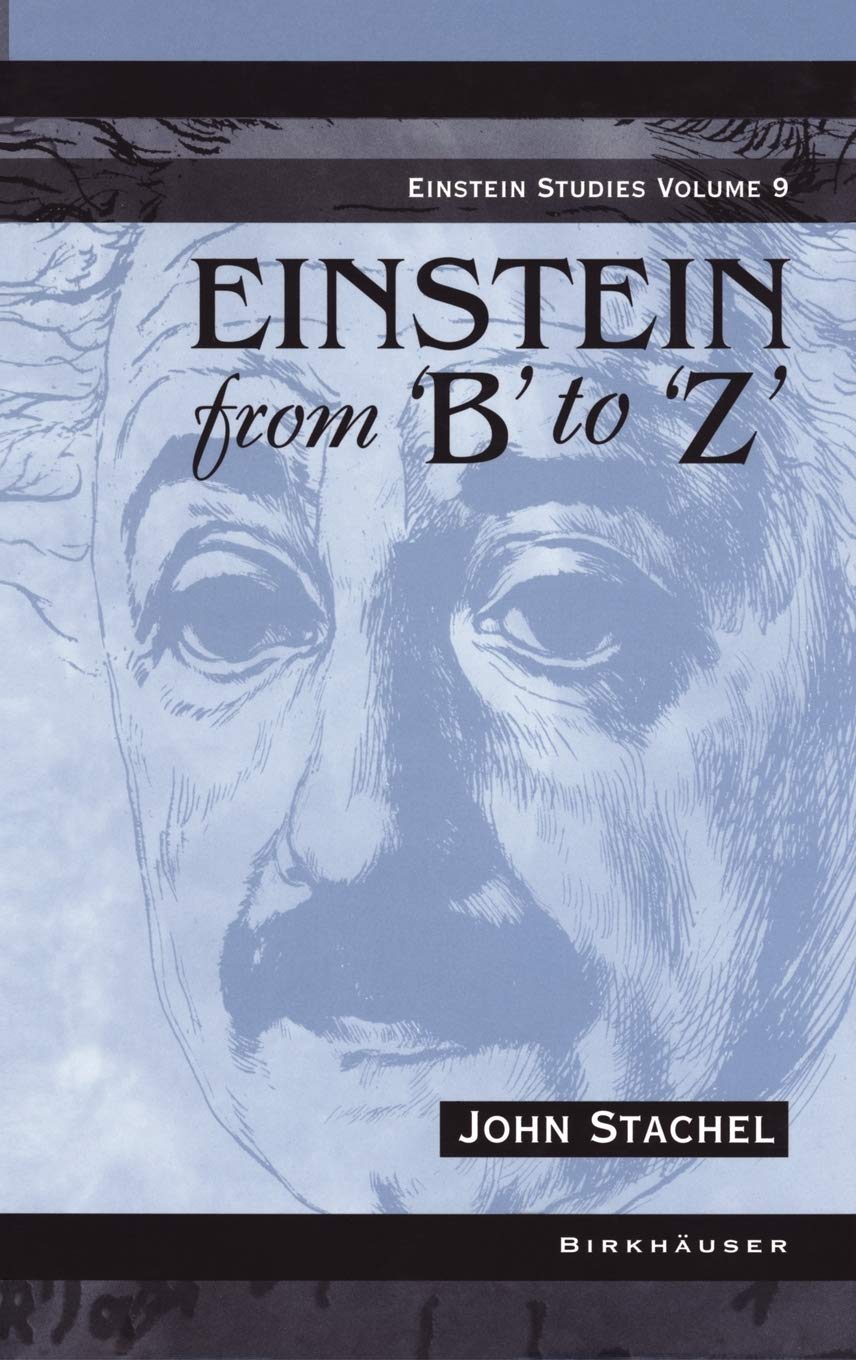 I’ll start with a series of books “Einstein Studies”, published by Birkhäuser, edited by John Stachel and Don Howard. In this series, sixteen monographs and collections of articles by leading historians of science and physicists have already been published. I will especially note the ninth volume - the book of Stacel himself “Einstein from“ B ”to“ Z ”(Stachel, 2002), containing essays on his own participation in the project“ Einstein's Documents ”within a quarter century. This is the ninth volume. I will note two more. The seventh volume is called the "Expanding World of General Relativity" (Goenner, et al., 1999). The sixteenth volume of the series, published recently, in 2020, is called the Renaissance of General Relativity in Context (Blum et al., 2020).
Another famous series of monographs, in which important works on the theory of relativity and other topics of the Einstein heritage in the interdisciplinary and international aspects are “Boston studies on the philosophy of science”. This series is released at the Springer Publishing House under the general editorship of Robert Cohen from Boston University, Jurgen Renna, Director of the Institute of Science of the Society of Max Planck (Berlin), and Kostasa Gavroglu from the University of Athens. I note in this series the grandiose four -volume “Genesis of General relativity” edited by Jurgen Renna (Renn, 2007). The first two volumes of this four -volume are devoted to the detailed analysis of the so -called Zurich notebook - the Chernovaya notebook Einstein, in which he tried to derive equations of the general theory of relativity in 1912, although he was very close. A thorough analysis of the layouts from the Zurich notebook showed how complex, winding, Einstein’s thought to the final triumph of 1915 was breaking through - the creation of the theory of gravity and the basics of the structure of the Universe. The third and fourth volumes of the four -volume is called “gravity at the twilight of classical physics” and are devoted to alternative gravity theories, which were considered within the framework of classical physics, forming a certain context for the general theory of relativity.
In the conclusion of this short review of modern Einstein studies, I will indicate three monographs of the Israeli researcher from the Jewish University at Jerusalem Hanoha Gutfroind and the tireless Jurgen Renna. The first monograph is called the “Road to Relativity” (Gutfreund et al., 2015), the second is “Years of Relativity” (Gutfreund et al., 2017), the third is “Einstein about Einstein” (Gutfreund et al., 2020) (German translation) (German translation) (German translation) 2023)). I also note the collection of articles of very authoritative authors written without formulas for a wide reader - Ernst Peter Fisher, Jurgen Renna and Horst Tsigelman - Albert Einstein, which gives a good idea of the scientist’s achievements in the quantum and relativist regions (Fischer et al., 2012). And finally, I’ll name another book about the author of the theory of relativity, which gives an idea of his significance in science, art and modern culture: “Einstein for the 21st century” edited by Peter Galison, Gerald Holton and Silvan et al., 2018).
Russian sector
 For a long time, books in Russian about Einstein and his discoveries were in no way inferior to such literature in other languages, and in some ways they were even the best in the world. Thus, the collection of Einstein’s scientific works in four volumes edited by I. E. Tamma, Ya. A. Smorodinsky, B. G. Kuznetsov (Einstein, 1965–1967) was published in the 1960s long before such meetings were born in other countries. This turned out to be possible, because the USSR was not connected by the copyright Convention. In addition, the initiative of Professor Yakov Abramovich Smorodinsky, who became the soul and the driving force of this grandiose publication at that time, played a role.
Another large project implemented in the USSR was the publication of the Einstein Collections series, begun in 1966. In total, 15 collections were published in which the translations of Einstein’s articles, the work of Soviet and foreign authors, leading specialists in physics and the history of physics were published. For example, in the first collection of 1966 (responsible editors I.E. Tamm, B. G. Kuznetsov, compiler of U. I. Frankfurt) 12 articles were printed, of which three are small notes of Einstein, five articles were written by Soviet authors, four articles - translations of the work of foreign scientists. Among the authors of the first collection are J. B. Zeldovich, B. G. Kuznetsov, D. Holton, M. D. Klein and others (Frankfurt, 1966). The publication stopped at the issue dated as 1986-1990. The mentioned series “Einstein Studia” by Birkhäuser may serve as some analogue of the Einstein Collections series.
There was no shortage of translations into Russian of the fundamental works of the classics, especially Einstein himself. I will give several examples without claiming to be full. In 1935, a collection “Principle of Relativity” was published edited by V.K. Fredericks and D. D. Ivanenko (Fredericks, Ivanenko, 1935). The collection was published in the series “Classics of Natural Sciences” and contains the works of Lorenz, Poincare, Einstein, Minkovsky.
The famous article by Wolfgang Pauli about the theory of relativity, written for the “Encyclopedia of the Mathematical Sciences” in 1921, in Russian published in 1947 in the form of a separate book (Pauli, 1947). The translation was completed by the future Nobel laureate V. L. Ginzburg and L. M. Levin.
Albert Einstein’s book “The Essence of The Theory of Relativity” was translated and published in Russian several times. The Russian translation of the first edition was published in 1923 under the name “Fundamentals of the theory of relativity”, then this publication was repeated in 1935, and finally the translation of the fourth (1953) publication was published in the publishing house “Foreign Literature” in 1955 (Einstein, 1955).
The works of the classics of physics of the twentieth century were collected in the collection “Theoretical Physics of the 20th Century”, published in 1962 in the publishing house “Foreign Literature” (Cupross, 1962). The collection is dedicated to the memory of Wolfgang Pauli and mainly contains work on quantum physics, but there are work on the theory of relativity, cosmology, and statistical mechanics. But the collection of articles “Albert Einstein and the theory of gravity”, published in the publishing house “Mir” in 1979 (Kunsky, 1979), is completely devoted to the problems of the general theory of relativity. The coverage of the collection is extremely wide - it includes the work of a variety of authors: from Lobachevsky to Einstein, from Hilbert to Mach, from Foc to Ivanenko, from Dirak to Ginzburg, etc.
Work was very intensively carried out in the USSR to clarify the basic principles of new physics, which Albert Einstein introduced into scientific circulation. I will note here, first of all, lectures on optics, the theory of relativity and quantum mechanics of academician L.I. Mandelstam (Mandelstam, 1972). Many have done a lot to popularize the theory of relativity, Usher Ioovich Frankfurt, the compiler of most of the Einstein collections. The history of the special theory of relativity is devoted to his book (Frankfurt, 1961). Historical essays on the general theory of relativity are collected in the book (Frankfurt, 1968). Both B. G. Kuznetsov and U. I. Frankfurt worked at the Institute for the History of Natural Sciences and Technology of the USSR Academy of Sciences. There was constant work on the study of the historical roots of relativism. Professor V.P. Vizgin did a lot in this direction (see, e.g., (Vizgin, 1981)). More than once turned to the history of the creation of the theory of relativity and academician Vitaly Lazarevich Ginzburg (see, eg, (Ginzburg, 2014)). Translated into Russian and sensible textbooks on the theory of relativity, for example, the book of David Bom (Bom, 1967).
As for Einstein’s biographies, they were represented in the USSR - although modestly, but worthy. We have already said that the first biography of Alexander Moshkovsky (Moshkovsky, 1922) was translated into Russian and published only a year later than the original. In addition to her, Einstein’s biography, written by Karl Zelig (Zelig, 1964), was translated into Russian. Of the biographies of domestic authors, it should be noted the books of Boris Grigoryevich Kuznetsov “Einstein” (Kuznetsov, 1963) and “Studies about Einstein” (Kuznetsov, 1965), written without obvious factual errors at the level of knowledge of the history of that time. Useful biographical information about Einstein is contained in the memoirs of his friend Max Born, also translated into Russian (BORN, 1977).
The greatest success of Soviet Einstein studies after the publication of the collection of scientific works of the scientist (1965–1967) I consider the translation of the biography of Einstein, written by Abraham Pais (Pays, 1989). This 1989 can be considered a turning point - further the quality of books about the life and work of Einstein was steadily reduced. The Einstein Collections of the Einsteinsky series, in the XXI century, the book market filled the frankly hackshots, not withstanding any criticism of the Boulevard “biographies” of Einstein, transferred or their own Russian manufacture, disappeared from the sale of collections of serious scientific works that develop the heritage of the author of the theory of relativity. It looks especially sad against the background of the fact that the end of the 1980s in Western Europe, the USA and Israel became the beginning of a new era in Einstein Studies, when the publication of the complete collection of Einstein's documents unfolded, new series of serious monographs and collections of articles such as Einstein's studies appeared, the level of books about Einstein, his discoveries and his time has grown noticeably.
Конечно, и в наше время переводятся на русский язык неплохие книги по тематике теории относительности, например книга Питера Галисона «Часы Эйнштейна, карты Пуанкаре: империи времени» (Галисон, 2022). But this is rather an exception than the rule. Значительно чаще издатели берутся за перевод «клубнички», смакующей любовные похождения и сердечные тайны Альберта, как делается в книге Пола Картера и Роджера Хайфильда «Эйнштейн. Частная жизнь» (Картер, Хайфильд, 1998). Либо выбираются сенсационные книги типа двухтомника Эдмунда Уиттекера «История теорий эфира и электричества» (Уиттекер, 2004), где теория относительности называется теорией Лоренца — Пуанкаре, а имя Эйнштейна в связи с этой теорией вообще не упоминается.
Из переводных биографий отмечу огромный (более 800 страниц) том Уолтера Айзексона «Альберт Эйнштейн. Его жизнь и его Вселенная» (Айзексон, 2016). Автор занимает достаточно высокое положение в американском обществе (он бывший директор телекомпании CNN и главный редактор журнала Time ), чтобы пригласить нужных консультантов и ассистентов, занятых отбором фактов для книги. Там, где цитируются материалы чужих исследований, всё выглядит гладко. Но как только Айзексон пытается добавить что-то от себя, получается конфуз, так как темой он не владеет, серьезно документы не изучал, вся его книга насквозь вторична. Отсюда такие перлы, как «Эйнштейн в Цюрихе жил в студенческом общежитии» (на самом деле Эйнштейн-студент снимал жилье 2 ), «Эйнштейн был самым молодым участником первого Сольвеевского конгресса» (Фредерик Линдеман был на семь лет моложе Эйнштейна), «Пауль Эренфест преподавал в Петербургском университете» (трагедия Эренфеста в том и состояла, что он не мог найти постоянную работу в Петербурге, о его преподавании в университете даже речи не было 3 ). Характерным для всех подобных «биографов», не очень глубоко вникавших в тему, является утверждение о том, что Эйнштейн был профессором Берлинского университета. Этот утверждение — лакмусовая бумажка, точно указывающая на непрофессионализм писателя-дилетанта, на то, что он плохо себе представляет процедуру назначения университетских профессоров, не знает должности, которую занимал Эйнштейн в Берлине, не представляет себе научную иерархию того времени. Эйнштейн был избран в 1913 году действительным членом Прусской академии наук и занимал единственную в физико-математическом отделении должность профессора академии — но не Берлинского университета! Именно эту ошибку делают авторы многих биографий Эйнштейна, появившихся сравнительно недавно.
Возьмем, к примеру, книгу Максима Гуреева «Альберт Эйнштейн. Теория всего» (Гуреев, 2017). Вот один из гуреевских перлов: « В 1913 году по рекомендации Макса Планка Альберт Эйнштейн возглавил физический исследовательский институт Берлина, а также был зачислен профессором в Берлинский университет » (Гуреев, 2017, с. 74). Не было в 1913 году «физического исследовательского института Берлина» (оцените название!), так что и возглавлять было нечего. Планк рекомендовал Эйнштейна в академию, а физический институт, который возглавил Эйнштейн, был создан в Обществе кайзера Вильгельма только в 1917 году. Совсем смешная путаница царит в приложении к книге, названном «Даты жизни». Если верить Гурееву, то Эйнштейн в 1894 году « в декабре покидает гимназию, не окончив ее, и едет к семье в Милан », а в 1896 году « семнадцати лет покидает Вюртемберг » (Гуреев, 2017, с. 375). Интересно, когда же, по мнению Гуреева, Эйнштейн снова оказался в Вюртемберге? Максим Гуреев должен был бы написать, что в 1896 году Эйнштейн отказался от вюртембергского гражданства, но по невежеству своему написал явную глупость.
В тех же «Датах жизни» утверждается, что в 1907 году « соискание докторской степени отклонено Бернским университетом, поскольку диссертация была признана неудовлетворительной » (Гуреев, 2017, с. 377). Чушь и поклеп на Эйнштейна! Кто это позволил себе признать диссертацию великого физика неудовлетворительной?! На самом деле всё было не так. В Берне в 1907 году была попытка получить звание приват-доцента без защиты второй докторской диссертации. Бернский университет не отклонил защиту диссертации, так как Эйнштейн никакую диссертацию тогда не прислал, а отклонил попытку Эйнштейна получить звание «по совокупности работ», в чем потом бернские профессора сильно раскаялись. Поэтому заявление, что « диссертация была признана неудовлетворительной », не соответствует действительности. Такими ляпами, иногда смешными, но чаще грустными полна книга Максима Гуреева. Возможно, он хороший филолог, но не дал себе труд хотя бы посмотреть документы о герое своего повествования. А ведь они уже давно собраны, систематизированы и открыты любому человеку, имеющему доступ в интернет или в хорошую библиотеку!
Столь же поверхностно и неряшливо написана другая биография Эйнштейна, вышедшая в популярной серии «Жизнь замечательных людей» (Чертанов, 2015). Автор книги, Максим Чертанов, делает те же ошибки, что и Гуреев, в отношении профессорства Эйнштейна и института, которым он якобы руководил в 1914 году. Но это цветочки. Ягодки начинаются, когда Максим Чертанов приступает к рассказу о том, как после прихода нацистов к власти Эйнштейн расставался со званием академика: « В первый же день он принялся рвать связи с Германией. Паспорт сдал в немецкое консульство в Бельгии. В Прусскую и Берлинскую академии написал о своей отставке » (Чертанов, 2015, с. 268). Чтобы читатель не подумал, будто автор оговорился, Чертанов далее уточняет: « Берлинская академия обвинила его в „антигерманской деятельности“… То же сделала и Прусская академия, только жестче: его назвали „агитатором“ и заявили, что не сожалеют о его отставке » (Чертанов, 2015, с. 268). Автору невдомек, что в то время в Берлине была только одна академия — Прусская академия наук, до 1918 года имевшая еще уточнение «Королевская». Берлинской академия стала уже после Второй мировой войны, когда оказалась на территории ГДР. После объединения Германии академия с 1992 года стала называться Берлин-Бранденбургской. Вообразить, что Эйнштейн переписывался с несколькими берлинскими академиями, мог только полный невежда, не имеющий никакого понятия о научном ландшафте Германии до Второй мировой войны.
Мне кажется, примеров достаточно, чтобы оценить уровень новых биографий Эйнштейна и сделать некоторые общие выводы.
* * *
Преимущество, которое имело советское эйнштейноведение перед зарубежным в середине ХХ века, к 1990-м годам было полностью утрачено. Качество публикуемых на русском языке книг об Эйнштейне заметно упало и в XXI веке остается на недопустимо низком уровне. Серия «Эйнштейновские сборники» оборвалась на выпуске 1990 года. К этому времени эйнштейноведение в Западной Европе, США и Израиле перешло на новый, чрезвычайно высокий уровень и опирается на уникальное полное Собрание документов Эйнштейна, издание которого медленно, но верно движется к завершению, оставаясь почти недоступным для русского читателя. Вокруг этого уникального по размаху проекта сложился мощный коллектив исследователей, занятых не только подготовкой очередных томов собрания, но и собственными исследованиями на базе архива Эйнштейна. Уровень монографий и сборников статей, выходящих в серии «Эйнштейновские штудии» и в других подобных сериях очень высок по сравнению с книгами, выходившими в прошлом веке. Почти ничего из этого богатства не переведено на русский язык. А ведь изучение эйнштейновского наследия — отличная школа для любого исследователя.
Evgeny Berkovich
Blum A., Lalli R., Renn J. (editors). The Renaissance of General Relativity in Context. Berlin: Birkhäuser, 2020.
Einstein A., Marić M. Am Sonntag küss' ich Dich mündlich. Die Liebesbriefe 1897–1903. München; Zürich: Piper, 2005.
Einstein A. The collected papers of Albert Einstein. Volume 1: The Early Years, 1879–1902. Princeton: Princeton University Press, 1987.
Fischer EP, Renn J., Ziegelmann H. Albert Einstein. Berlin; Brandenburg: Be.bra Wissenschaft, 2012.
Fölsing A. Albert Einstein. Eine Biographie. Berlin: Suhrkamp Taschenbuch Verlag, 1995.
Galison P., Holton G., Schweber S. (editors). Einstein for 21st Centure. Princeton; Oxford: Princeton University Press, 2018.
Goenner H. (editor) et al. The Expanding Worlds of General Relativivty. Boston; Basel; Berlin: Birkhäuser, 1999.
Gutfreund H., Renn J. The Road to Relativivty. Princeton; Oxford: Princeton University Press, 2015.
The Formative Years of Relativity. Princeton; Oxford: Princeton University Press, 2017.
Einstein on Einstein. Princeton; Oxford: Princeton University Press, 2020.
Einstein über Einstein. Berlin; Boston: De Gruyter, 2023.
Renn J. (editor). The Genesis of General Relativity, vol. 1–4. Dordrecht: Springer, 2007.
Rosenkranz Z. Albert Einstein: privat und ganz persönlich. Jerusalem: Jüdische National- und Universitätsbibliothek, 2004.
Stachel J. Einstein from «B» to «Z». Boston; Basel; Berlin: Birkhäuser, 2002.
Айзексон У. Альберт Эйнштейн: его жизнь и его Вселенная. — М.: АСТ, Corpus, 2016.
Бом Д. Специальная теория относительности. — М.: Мир, 1967.
Борн М. Размышления и воспоминания физика. — М.: Наука, 1977.
Визгин В. П. Релятивистская теория тяготения. Истоки и формирование. 1900–1915. — М.: Наука, 1981.
Галисон П. Часы Эйнштейна, карты Пуанкаре: империи времени. — М.: Издательский дом Высшей школы экономики, 2022.
Гинзбург В. Л. О теории относительности. Ed. 2-е. — М.: ЛЕНАНД, 2014.
Гуреев М. Альберт Эйнштейн. Теория всего. — М.: АСТ, 2017.
Зелиг К. Альберт Эйнштейн. Сокр. per. With him. — М.: Атомиздат, 1964.
Картер П., Хайфильд Р. Эйнштейн. Privacy. — М.: Захаров, АСТ, 1998.
Кузнецов Б. Г. Эйнштейн. — М.: Издательство Академии наук СССР, 1963.
Кузнецов Б. Г. Этюды об Эйнштейне. — М.: Наука, 1965.
Франкфурт У. И. Специальная и общая теория относительности. Исторические очерки. М.: Наука, 1968.
Куранский Е. (ред.). Альберт Эйнштейн и теория гравитации. Collection of articles. — М.: Мир, 1979.
Мандельштам Л. И. Лекции по оптике, теории относительности и квантовой механике. — М.: Наука, 1972.
Мошковский А. Альберт Эйнштейн: беседы с Эйнштейном о теории относительности и общей системе мира. — М.: Работник просвещения, 1922.
Пайс А. Научная деятельность и жизнь Альберта Эйнштейна. — М.: Наука, 1989.
Паули В. Теория относительности. — М.; Л.: ОГИЗ, ГТТИ, 1947.
Смородинский Я. А. (ред.). Теоретическая физика 20 века. — М.: Издательство иностранной литературы, 1962.
Уиттекер Э. История теорий эфира и электричества. In 2 volumes. - Moscow; Ижевск: Институт компьютерных исследований, 2004.
Франкфурт У. И. (сост.). Эйнштейновский сборник 1966. — М.: Наука, 1966.
Франкфурт У. И. Очерки по истории специальной теории относительности. — М.: Издательство Академии наук СССР, 1961.
Фредерикс В. К. (ред.), Иваненко Д. Д. (ред.). Принцип относительности. Сборник работ классиков релятивизма. — Л.: ОНТИ, Главная редакция общетехнической литературы, 1935.
Чертанов М. Эйнштейн. — М.: Мол. гвардия, 2015.
Эйнштейн А. Сущность теории относительности. — М.: Издательство иностранной литературы, 1955.
Эйнштейн А. Собрание научных трудов в четырех томах. — М.: Наука, 1965–1967.
1 Предыдущие заметки:
trv-science.ru/2023/01/more-einsteina ;
trv-science.ru/2023/02/more-einsteina-2 ;
trv-science.ru/2023/02/more-einsteina-3-kniga-abrahama-paisa