
Translated material
Do not want to voluntar
In society
 Do not want to voluntar
October 14, 2010 Alexander Podrabinek
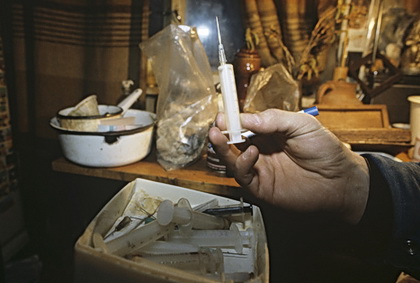
The case of Yegor Bychkov was not accidentally provoked in society such a lively discussion. The court verdict came to society on his favorite corn, hit the nerve, which has made Russia for more than a century. How to live correctly: in truth or by law?
True, everyone has their own. The truth of Bychkova is that drug addicts should not exist either in Nizhny Tagil, nor in the Sverdlovsk region, or in Russia. They should not be at all. From the point of view of Bychkov and his defenders, drug addiction is such an evil against which all means are good.
Parents of drug addicts have their own truth. It is unbearably painful to see how their children die. In general, they are not up to the global problems of the survival of the nation or compliance with the rule of law. They would save from devastation or possible death of their child.
Law enforcement officers have its own truth, even two. The first is small and kutsay, that citizens must act according to the law, and if against the law, then with their law enforcement officers, interested consent. The second is real and important, that an effective struggle against drug mafia and drug addiction is generally an attempt on their income and material well -being. All over the world, drug mafia is a reliable and constant source of income not only for drug lords, but also for those who are fighting these drug lords. Sometimes even by mutual agreement.
And finally, the truth has its own. For some reason, Yegor Bychkov, for some reason, prefer not to talk about this when discussing the loud business. They seemed to be not. Addicts are just a certain object of activity for different persons and organizations. Everyone is very easily about the interests of drug addicts, not even interested in their own opinion. Meanwhile, they are full -fledged citizens and their fate are free to decide for themselves. If they decide to be treated, they are treated. If they decide to die, they die. Who has the right to prevent them? Who has the right to solve the issues of their life and death for them? The right to death is as integral as the right to life.
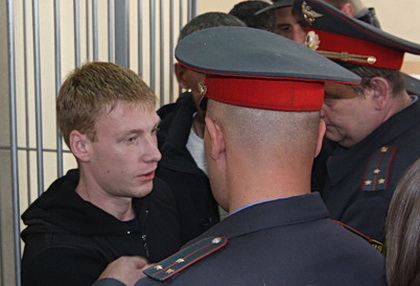 Perhaps Yegor Bychkov had the good intentions. The very ones, which, as you know, beged by the road to hell. Perhaps he wanted only the best for these people. Maybe he wanted something for himself, but since it is not known reliably, we will interpret all doubts in favor of the defendant. Suppose he wanted only one thing - to save drug addicts from destructive addictions. In some cases, he persuaded them and received a positive result. In other cases, he “treated” by force. It is these cases that Bychkov in the form of articles on abduction and illegal deprivation of liberty are charged.
The links to the fact that he coordinated compulsory treatment with parents of drug addicts, is not the point - parents are not entitled to make such decisions for their adult children, if children are not devoid of legal capacity, and their parents themselves do not fulfill the function of guardians. Parents can have moral impact on their adult children, persuade them, convince them, but they cannot give their sanction for their forced treatment. Such a sanction costs nothing.
Passionarians, inspired by bright ideas, faith or pure altruism, would not hurt to make their intentions with the law from time to time. At least in order to make sure that their passionate activity does not lead to the destruction of other people's destinies. The Holy Inquisition condemned heretics to death also out of exalted motives - in order to save their sinful souls. Savonarola burned books exclusively for the sake of religious and moral revival - in his case there was definitely nothing selfish and personal. The Bolsheviks arranged a bloody meat in Russia for the sake of the happy future of all mankind. Who will prove about any particular Bolshevik that he shot the “enemies of the people” not out of high motives, but from the skins? Doubts - in favor of the defendants.
It seems that all the most severe mass repressions and acts of genocide were justified by high ideas. No one proclaims himself or his ideology with a frank evil. All the radiators about the public good want to drive humanity with an iron hand into the earthly paradise. No one remembers the proverbs "you will not be a dear dear."
No, of course, bulls are not an inquisitor and not a Bolshevik. Different scales. But the approach is one.
The desire to live in truth, and not according to the law, is strong where the right is weak, and the laws are not binding. Where laws do not exist for everyone, but for the elect. That is, in today's Russia. True, we have one advantage, which was not yet a hundred years ago - international law. We can make our ideas about the truth with him without afraid to make a mistake too much. We can make international law with our laws. We can make sure that it is criminal to deprive an adult capable person of freedom of personal choice.
So until recently, only three or four decades ago, Soviet psychiatrists sent healthy people for compulsory treatment, explaining that this is done in their interests, for their health. And some of the doctors in private conversations explained that they, in essence, are benefactors, since in special psychics the conditions of detention of prisoners, in their opinion, are better than in camps. Probably, punishers in white robes also had their own truth. It is unlikely that they themselves considered themselves the fanses of hell.
Perhaps Yegor Bychkov was sentenced to too severe. Not knowing all the details of the case (but the verdict is not released), it is difficult to judge this. Undoubtedly, however, that the drug dealers and their high patrons in law enforcement agencies were reduced by him. For in some cases of bulls, it seems, he pulled out people who turned to him for help from the drug addiction. Honor for this and praise, although the methods of “treatment”, as they say, were very cruel, even barbaric. But if people voluntarily agreed on them, then there are no problems.
The only problem is that it is impossible to help people against their will. This circumstance does not bother many. Hardly, most of the listeners of the “Echo of Moscow”, who discussed Bychkov, believes that cruelty in relation to drug addicts is not only appropriate, but also necessary. Cruelty is the banner of our society, a symbol of our time. The right of a drug addict, suicides or applicant for euthanasia is not taken into account at all to manage their fate at all. Is it any wonder that the state neglects human rights on the scale of all Russian society, even if individuals, with significant public support, believe that they have the right to decide his fate for another person?
Arrogant people who enrolled themselves in superheroes, it is necessary to resemble simple truths. Addicts are also people. All people are equal. Everyone has an equal right to protect the law. Everyone has the right to independently resolve issues of their health and life if his illness or life does not pose threats to other people. Addicts threaten only their health. If for the sake of their addictions they commit criminal offenses, they must be judged. But not for the fact that they are drug addicts, but for the fact that criminals.
Our society should begin to treat a person with respect. Regardless of whether it is a homeless person or prime minister, a Russian or Chukch, a successful football player or a dying addict, a beggar or a millionaire. It must be remembered that all of them are citizens, and no one has the right to encroach on their legal rights. And whoever forgets about this, this should be reminded of the court.
Photos of RIA Novosti