
Translated material
Rachmat is power
New life of Russians in Uzbekistan
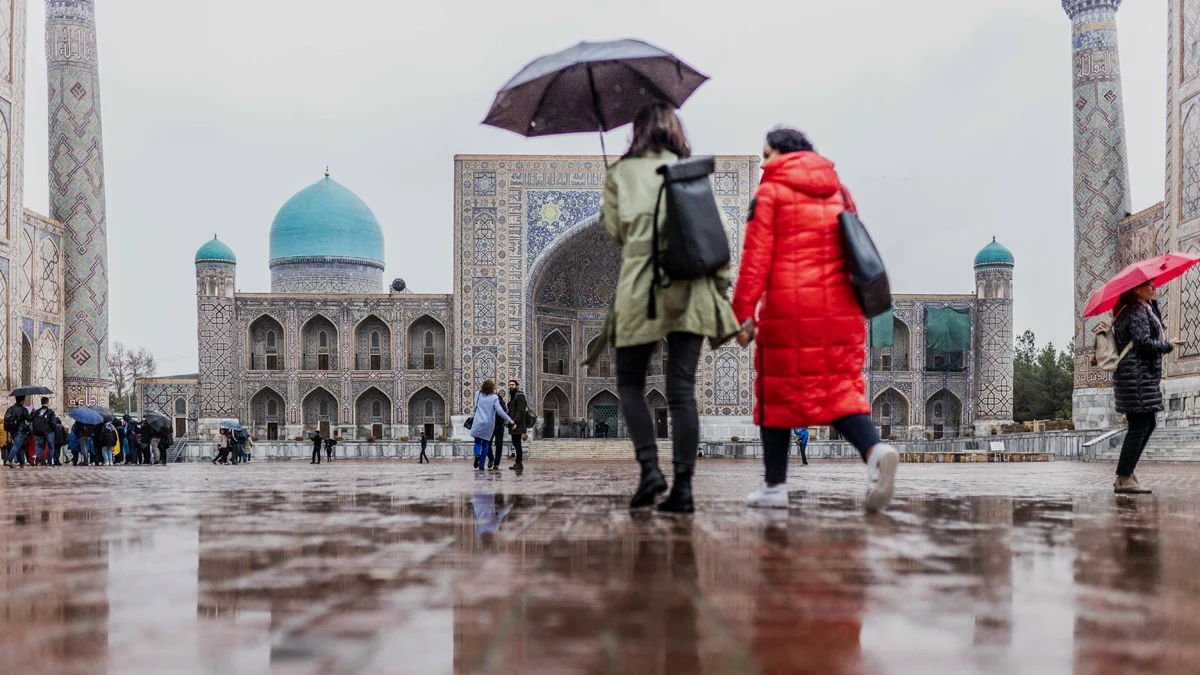
From January to September 2022, 395.1 thousand Russian citizens entered the Uzbekistan, according to the Ministry of Tourism and Cultural Heritage of the country. At the same time, in the first month of the declared partial mobilization - 78.3 thousand. There is no exact data for October and November yet, but it is obvious that the number of arrivals has increased.
According to the chairman of the board of the Central Bank of the country, Mamariso Nurmuratov, about half of those who arrived remained in Uzbekistan. “They constantly work and are here,” he said. Accounts in local banks opened 67 thousand citizens of the Russian Federation. They converted more than $ 200 million into Sumy (national currency), unlike Kazakhstan or Kyrgyzstan, where the question of what to do with the retains was reached many times in the media and at the state level, in Uzbekistan, it seems, it seems, and was not there. The press on this topic is mainly expressed by economists who simultaneously note the problem of raising housing prices and opportunities for economic growth. Of the authorities, only the Foreign Ministry unequivocally stated that Tashkent advocates a political and diplomatic settlement of the conflict in Ukraine and deport the citizens of Russia who do not violate the laws of Uzbekistan, the state will not. As the Russians themselves are mastered in Uzbekistan, what advantages they find in this country and what difficulties are faced with, whether they plan to return to Russia - in the report of Novaya Gazeta.
"Gift of Allah"
- Brother, brother, brother, where are you going? Do not be shy - say, we’ll take it off inexpensively - you just have to cross the border of Uzbekistan, as the taxi drivers surround you. They stand right under the roof at the exit from the border post, and so far there are no orders - they are moving away with the inspection of the documents as a machine gunner.
The machine gunner, no matter how menacingly this word sounds, does not inspire any fear. Densely good. “Ivan? “He takes my passport and returns it after 10 seconds.” “Come on, good to you.” Passes me to the very taxi drivers.
Of course, they take away the costs. At least by local standards. In 40 minutes from the border to the center of Tashkent - $ 20. On Yandex.Taxi, as it turns out later, the price is 4 times lower, but I, who came to Uzbekistan without Sumy and a local SIM card (that is, left without the Internet), the choice is small.
Daewoo Nexia howls, gaining momentum, and now we are already racing at eighty kilometers per hour in border villages, the streets of which flow into each other until Tashkent itself.
- No need to fasten, brother. We will fasten in the city, ”Nuriddin says this with the confidence of a person who has been a taxi for twenty years.
He says that in February-March, and then in September and October he only managed to take Russians from Tashkent Airport and the Kazakhstan border. I slept four hours a day, but I earned money - "enough for a year, even more."
- They rented their apartment and wife, moved to my mother. I have a “little one” - for $ 800 Russians took. I tell you exactly: now in Tashkent housing is more appreciated than in Moscow, ”he says.
And he does not deceive: with the massive arrival of Russians, the prices for renting housing in Uzbekistan, as in other neighboring countries, sharply increased - 2-2.5 times. And now, for the “kopecks” on the outskirts of Tashkent, you need to give at least $ 500, 4-5 kilometers from the center - at least $ 800, and in the very center of the price start at $ 900. There are practically no one -room apartments in the capital of Uzbekistan: both before, and now housing is being built with the expectation of large families. According to the State Statistics Committee, children under 16 have 75.3% of the households of the republic, and 25.7% of families are large.
- And how do Russians perceive here? I ask Nuriddin.
“We are very good,” he throws his hand. - The guest is a gift from Allah. And Russia is not a stranger country, everyone worked in Russia.
According to him, the attitude to what is happening in Ukraine in the Uzbek society is ambiguous: many believe that the Russian leadership has come correctly, and many on the contrary, they support Ukraine. But they remarks that for Uzbekistan this is not such a painful question and there is no split among people. “We have our own problems,” he says.
“I personally don’t understand why this was done, brother.” Uzbekistan has no [territorial] disputes with anyone. But even if ... would we really fight with the Kazakh brothers or with Kyrgyz, or with Turkmens? Yes, we would have sat down, talked, everything would have decided - he thinks for a few seconds. - But no matter how anyone treats [the conflict of Russia and Ukraine], this will not affect you. Everyone will be good at you. We understand that you are saving your lives.
And Uzbekistan historically saved people: here under Stalin there were Crimean Tatars, Armenians, Bulgarians - they were deported here, and our grandfathers and grandfathers fed them, let them into their homes. We remember this.
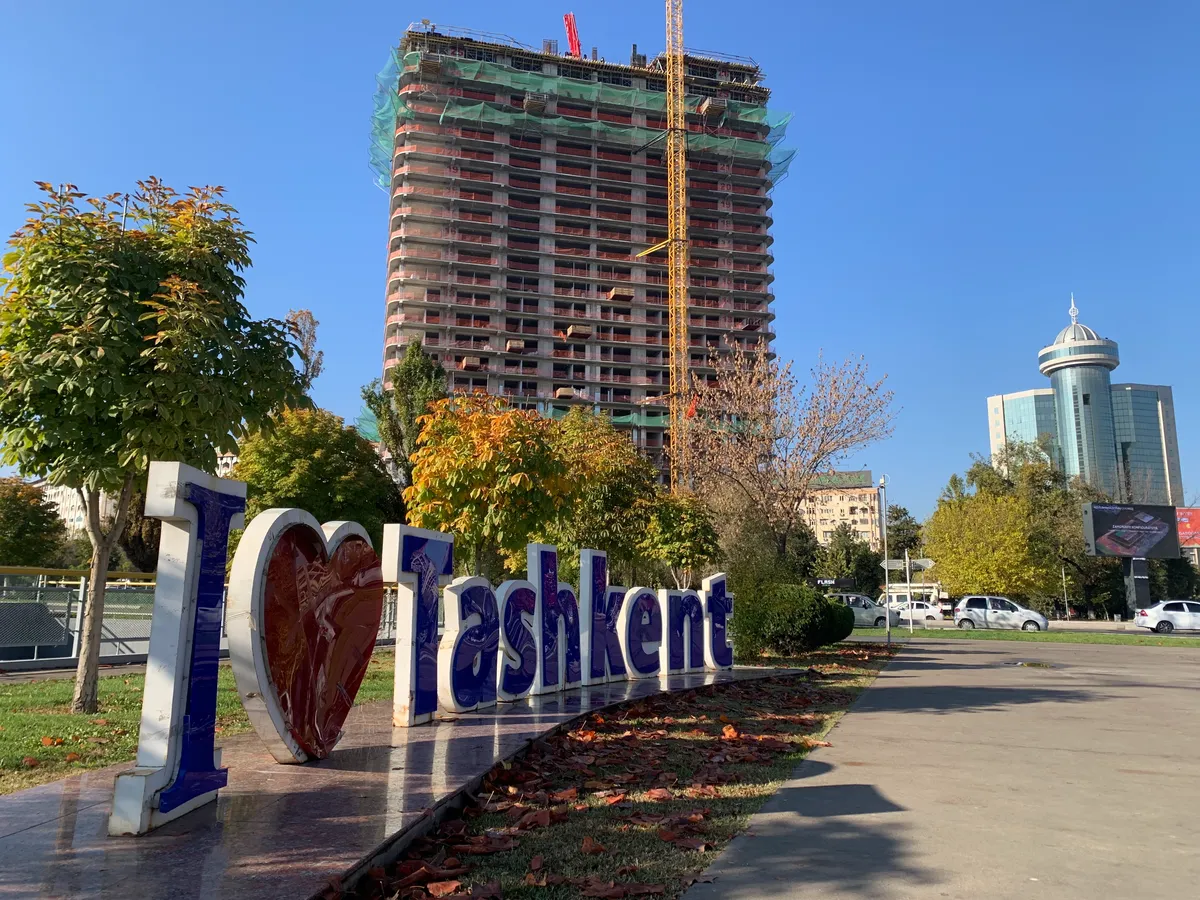
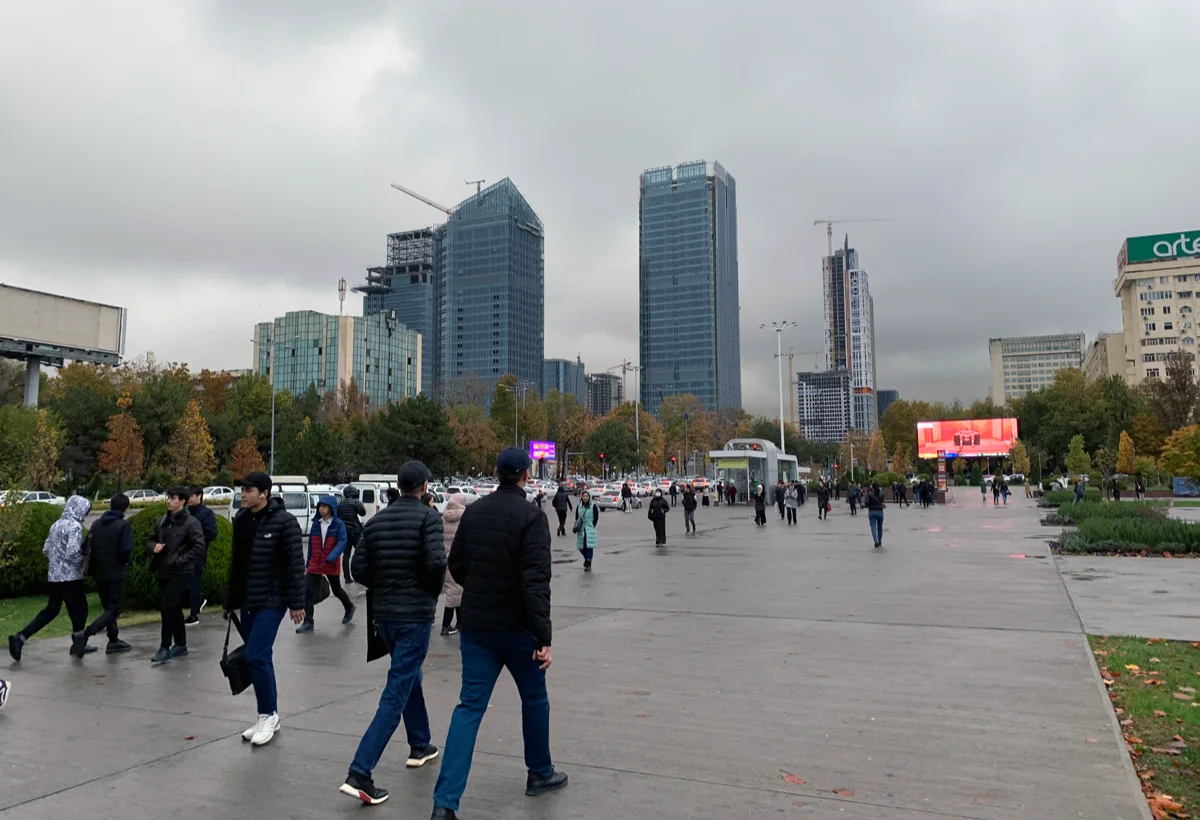
Tashkent opens up in yellow and white colors with Soviet houses, which in the center are replaced by pompous new buildings with arches and glass skyscrapers. Many retains in conversations with me will note that they imagined the capital of Uzbekistan much more modest and that we, alas, know little about Central Asia.
Money and bread
Yuri Kobtsev, an entrepreneur from Tver, is conducting a business in the e-commerce and is now preparing to launch Marketplais, which will work for the CIS countries. And he has five children. Unlike most autumn emigrants, he left Russia with his family before the announcement of partial mobilization - he foresaw it.
“It was enough just to look at the situation to understand what everything was going on,” says Yuri. - We crossed the border with Kazakhstan on the night of September 11 to 12 and then went to Uzbekistan. And when on September 20, the State Duma adopted the law on the introduction of the concepts of “mobilization” and “martial law” to the Criminal Code, I called my son and said: “Donation, how much do you go to home? Urgently throw everything, mom buys a ticket - fly out. ” The son was late on the plane, but in the end he was able to leave by car.
The Kobtsev decided to leave Russia back in February, but it turned out to be not so easy to do with business and five children.
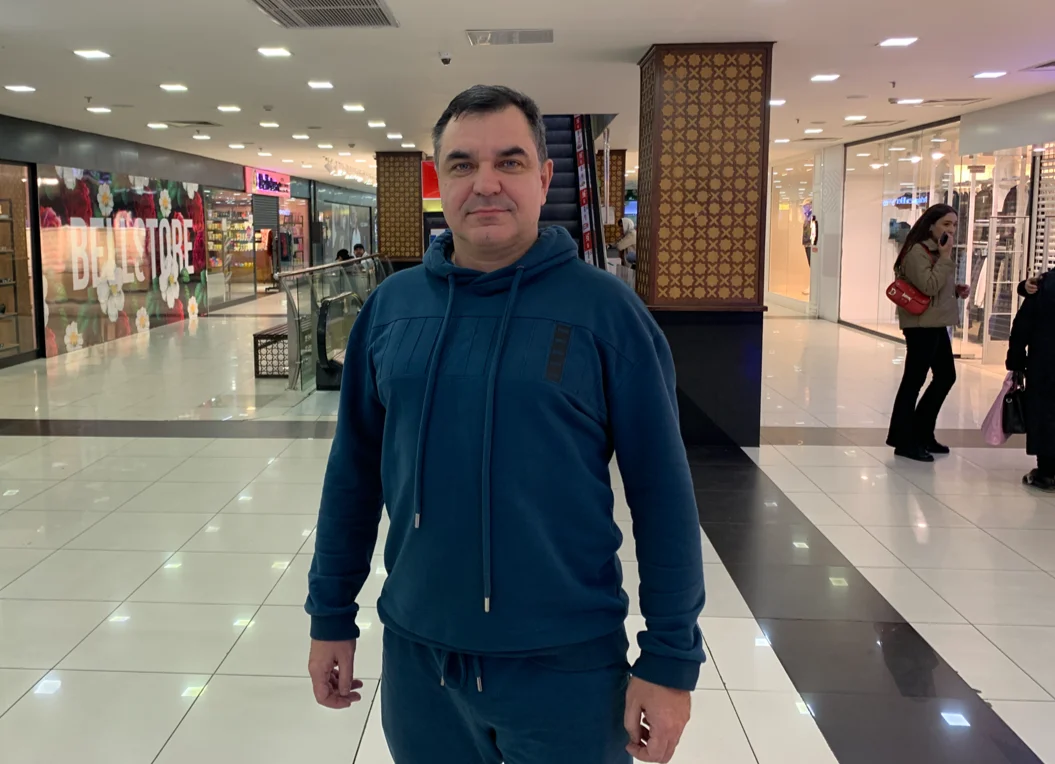
- I clearly understood that no one would make unpopular decisions before the elections in our country, and even after the elections it was easy. Therefore, he set a goal: to the day of voting, you need to deal with all business and go abroad. We initially considered Uzbekistan as a temporary asylum before leaving for Dubai.
But when they saw what kind of country there was, what a delicious kitchen here, what hospitable people are here and how they, Russians, relate well, decided that we will live here at least six months and maybe try to get a residence permit.
- What is a good relationship expressed? I clarify.
“Our first destruction from hospitality almost happened on the train,” Yuri grins. - At the entrance to Tashkent, one man persistently offered to take money from him so that we could pay a taxi. Do not exchange rubles for Sumy, but simply take money from him. We refused. Because of this, the whole car gathered at the consultation to discuss how to help us. They propose money vied - we do not take money. In the end, we were baked by a local SIM card, and then the man who collected the consultation went with us at the station to show where the currency was exchanged.
On the second or third day of our stay, my youngest son Nikita went in a taxi. And my Sumy was over, and I planned to pay for the trip with a Russian card. I look, suddenly in the application, the payment method changes to cash. I say to the driver: "Oh, can you give you rubles?" He says: "No, quit, I'll take you for free." I am surprised: "How is it - for free?" He says: "Yes, because Nikitos is my friend." And smiles. Of course, I still gave him rubles.
Another example. We went to draw up Pinfl (and the tax of Russian TIN, without it it is impossible to issue a card in a local bank. - I. Zh. ), And it turned out that the single window service moved. And where I moved - we do not understand: the announcement in Uzbek sounds. A woman came out, we ask her: "What do they say in the ad?" At first she tried to explain something to us, then waved her hand: "Let's go." And just took us to the right place.
You come to shops, sellers say: “From Russia? Do you have bread? We can just give bread. ”
And I just had a failure in the system from such an attitude at the first time. Especially because I know that in our country they are not very good about migrants from Uzbekistan. I started asking everyone: for sellers, at taxi drivers, for passers -by - why do we treat us like this? And this was an explanation. People said in different words that in the 90s there was a large outcome of the Russians from here, and after that, an economic subsidence began in the country, so the return of Russians is a good sign, this means that there will be a heyday, that everything will be fine. Moreover, really smart and entrepreneurial.
And this has another side: from many Russians, here I heard that they, having met such an attitude towards themselves, will now be better about migrants in Russia.
The departure of Yuri and his family not all relatives perceived positively.
One of the elderly relatives, who survived the Great Patriotic War, sent a message to the family chat: “There have never been traitors and panties in our family.” Then, however, this message deleted.
“I in no case condemn her,” says Yuri. - A person for 90. If we were attacked, I would definitely not go to Uzbekistan, but would take my son and go to the front. But now the initial data is different. In general, the attitude of older relatives to what is happening after [partial] mobilization has changed a lot. If earlier we argued with them, now, for example, the wife of a spouse makes a passport for himself and, perhaps, will come to us for the New Year.
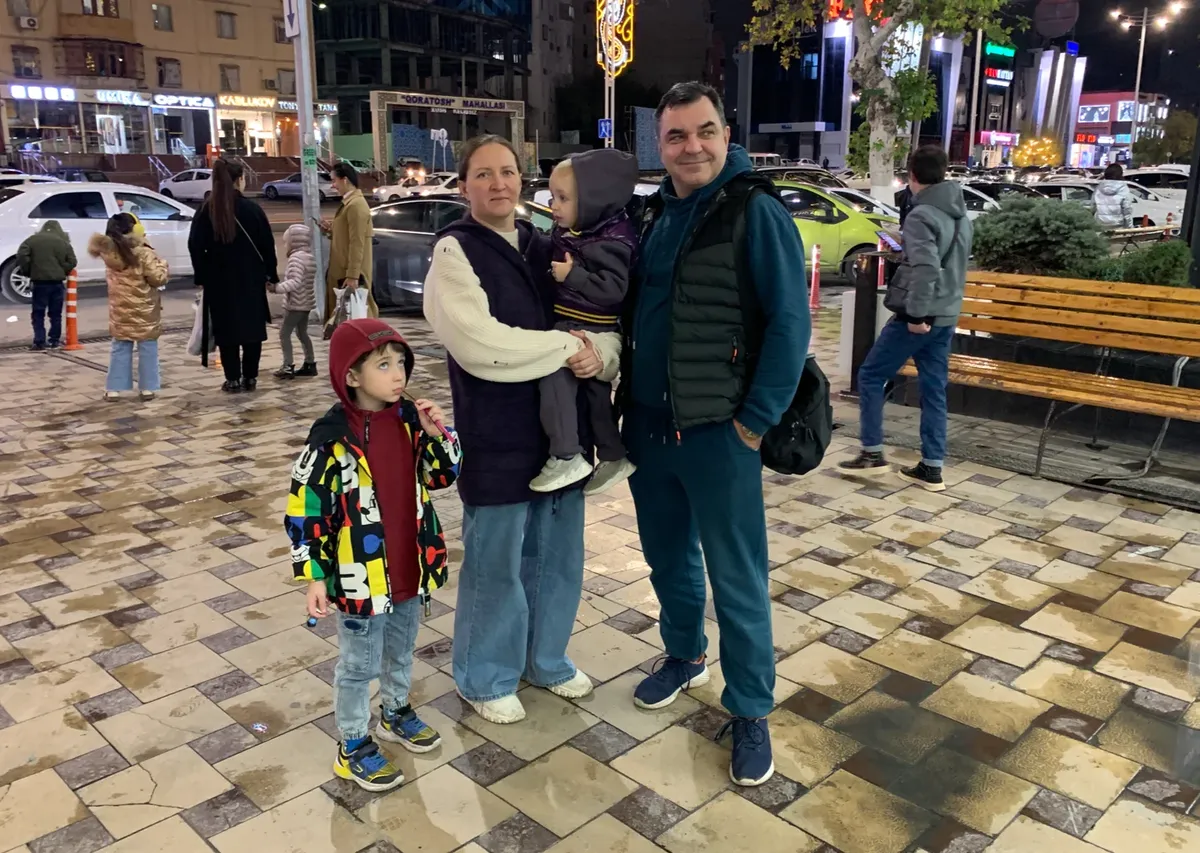
In Tashkent, Kobtsevs rented a four -room apartment 20 minutes drive from the city center. She cost them relatively inexpensive - $ 800 per month (we must remember that the matter was even before partial mobilization). Now they plan to open in the city center of the Bar-Copey with the ironic name “Citing”.
- I just see that the guys who came in one or small companies are a little boring here - there is not enough communication. And we want to collect them for games in the "mafia", in stickers, in the tables. We will call musicians to perform.
- Is it difficult for a Russian business to open a business in Uzbekistan?
- Yes, I would not say. Register the company - 40 minutes. Government services, the service of one window work very well. In places even better than in Russia. The only difficulty is that non -residents should pay extra when opening a legal entity $ 900.
But if you find a local director, then this is not necessary to pay. A license for alcohol costs about 7,000 rubles per month. The rental is also quite feasible: 120 “squares” in the center - about $ 2000. According to my estimates, it should be fought off.
To their homeland
Since September, natives from this country have been actively leaving for Uzbekistan. Karim Azamov was born and raised in Tashkent, but seven years ago he received Russian citizenship under the state program “Compatriots”.
- At first I chose the resettlement to the Kaluga region, but there they refused me. Then he submitted documents to Saratov, and a positive answer came from there, he says. - By education, I am a microelectricant: I have to calculate microcircuits, solder boards, and developing circuitry. And salaries in Uzbekistan as a specialist did not suit me. Life in Russia seemed much more promising.
In fact, of course, everything turned out to be more difficult: Karim was not able to work as a microelectric agent in Russia, although the refrigerator production plant in Saratov was ready to take it. Problems arose because of the Uzbek passport: the procedure for leaving citizenship (in Uzbekistan is prohibited) is not fast, it takes more than one year. Actually, Karim is now a citizen of the two countries.
- In the end, I worked as a loader, a handyman. The salary was 13,000 rubles a month. He lived very poorly, lost 12 kilograms. Then my brother called me to work in the suburbs by an electrician and a plumber at the production of salads. There were good conditions: I could earn up to 70,000 rubles, plus the enterprise provided housing and food.
Azamov says that he saw in Russia a different attitude towards himself, but basically-still positive.
- I was even praised for good knowledge of the Russian language. And I was silent that I really did not know Uzbek. This is another reason why I would like to live in Russia. She is mentally clear to me. It happened: I have a Russian -speaking family. I studied in the Russian -speaking class. And now in our schools and universities there are Russian -speaking classes and Russian -speaking groups - by the way, it is very convenient for Russians leaving here.
In Russia, Azamov became interested in politics. He went to rallies in support of Alexei Navalny, even went to meet him at Vnukovo Airport in January 2021, when the politician returned from Germany.
- I thought that if many people came, then they would not be detained. But we were all “outplayed” and the plane was put in Sheremetyevo, ”he laughs. -I also got acquainted with the judicial system of Russia: I was detained along with other protesters on January 21 [2021] at the "sailor of silence" [where they brought Navalny]. They delivered “Bratevo” to the police department, then there was no such horror as this year, although the cameras were also scored tightly - 8–9 people each. Maria Aismont, a lawyer, was not allowed to us. The court passed very quickly, gave 10 days of arrest.
Karim says that he had thoughts about leaving for Uzbekistan back in February. The misunderstanding of what he would do in his homeland was restrained. But on September 24, his father died in Tashkent. Together with partial mobilization (and in Russia, after receiving the passport, he became military service), this left no choice - it was necessary to go home.
- The aircraft tickets were already very expensive, and my brother and I could not buy them. We went to Orenburg, from there through Kazakhstan we reached Tashkent, ”says Azamov. - Despite the fact that I am a Russian citizen, they did not ask me a single question on the border.
Now Karim has entered the three -month courses of electricians: to get a diploma and gain new knowledge. Then he plans to get a job and monitor what is happening in Russia.
- Of course, I would like to return. If there are no improvements, I will wait ... I will wait until I either die, or ... - he does not agree.
Katta Rahmat
Uzbekistan surprises the visiting from Russia with its simplicity. First of all in human relations. On the second day of my stay in Tashkent, my fear of police officers completely disappeared.
No “checks of documents”, no even contemptuous views. If you need to ask something, you boldly go to a person in green uniform (there are many of them on the streets), and he tells you everything. What surprises separately - sometimes police officers squeeze your hand and wish a good day.
But the arrival of Russians, of course, refuses to discuss-in the service, after all.
The situation in one of the local cafes surprised me the most surprised me. She formed as the beginning of a bad joke. Having had lunch at 70,000 sum (this is 380 rubles), I found that I had only 61,000 in my pocket. The payment of the Kazakhstan card as luck would have not passed, and there is nothing to say about the Russian card.
- Let me go to the nearest bank to exchange currency. I will leave you a backpack as a bail, ”I told the owner of the institution sitting next to the cashier.
“Yok Yok,” he waved. - Do not need a backpack. I believe you.
For half an hour I was looking for an exchanger on Tashkent (not everything that is present on Yandex.maces is on the ground). And when he returned, the owner said that I did honestly and therefore he wants to make me a 10%discount. Of course, I refused and added the same 10% tips.
“Katta Rahmat ( thank you very much ),” the owner of the institution extended his hand as if I had done something good, and not initially talked with payment.
Гости дорогие
Вечером на кухне в новостройке Юнусабада — это район Ташкента рядом с кольцевой автодорогой — собираются сразу пятеро айтишников. Они из разных квартир, но заселились в один дом, не сговариваясь. И здесь уже познакомились.
У каждого своя история отъезда из России, но у Константина Болдина — самая драматичная и в то же время смешная. Он переехал в Ташкент с супругой и двумя детьми.
— Никуда уезжать ни я, ни жена не собирались, — начинает рассказывать он. — Частичную мобилизацию объявили в среду, а в субботу мы зашли в гости к друзьям, которые готовились к отъезду, — попрощаться. Отношение к их решению у нас было довольно скептичным. Но послушав их, к вечеру воскресенья я уже сам начал искать билеты. У знакомых была паника, градус нарастал, родственники некоторые начали уезжать. И вроде бы у меня на работе должна быть бронь. И вроде мне больше 35 лет. То есть в очереди на съедение я должен быть где-то в хвосте. Но в то же время вокруг происходил такой хаос. И я стал искать варианты уехать.
Билеты нашлись только до таджикистанского города Бохтар, что в 70 километрах от границы с Афганистаном.
— Туда летели преимущественно местные жители. Но несколько россиян все же затесались на рейс. В куртке я вышел в 35-градусное пекло. Нас отвезли к палатке, в которой проходил таможенный контроль. Людей при этом не оставили в очереди, а завели в какой-то загон. Все галдят, смеются. Я спрашиваю у одного мужчины: о чем говорят-то? Он мне: говорят, что за взятку можно быстрее пройти. Потом вышел таможенник, выцепил из загона всех русских — пять человек, отвел нас в отдельную комнату и говорит: «Вы расслабьтесь, эти там пусть галдят, а с вас — чисто символически».
Оказалось, что ему нужно 1000 рублей. Получив их, он сам заполнил за нас миграционные карты, отдал паспорта и торжественно заявил: «Добро пожаловать в Таджикистан!»
Но потом мы попали в другой загон. Там выдают багаж, а чтобы его получить — нужно предъявить корешок билета. Я его, как назло, потерял. И мне говорят: «Ваш паспорт». Что за люди говорят — я совершенно не знаю, но они в форме. Даю им паспорт. Они: «Пойдем». Отводят, видимо, в отдел милиции. Там те же русские. Усадили нас за стол. Начальник предложил нам чай — все отказались. Он говорит: «Знаете, мы очень рады вас видеть. Очень рады вас приветствовать, гости Таджикистана. Но знаете, что странно? За лето здесь, в Бохтаре, не было ни одного русского. А сейчас вас… Ну ведь это же нехорошо». Потом почти всех внезапно отпускают, сам начальник уходит, а к нам — двум оставшимся — начинает то и дело заходить его помощник. Мы спрашиваем: «Чего ждем?» Он: «Да сам не знаю, чего ждем». В конце концов парень, с которым я сидел, сообразил. Говорит: «Может, надо чего?» Помощник: «Ну… вообще надо». «Тысячи хватит?» - "Enough". А я даю 500 рублей. Он говорит: «Мало». Я говорю: «Ну а за что?» «Есть за что, — говорит. — Есть за что». Я: «Так не за что. Это ж подарок». Он: «А, подарок. Тогда спасибо. Добро пожаловать в Таджикистан!»
В чатах потом прочитал, что взятки действительно очень любят, но размер их при этом — микроскопический.
В аэропорту Константин договорился с таксистом, что тот довезет его до Ташкента (388 километров от Бохтара) за 6000 рублей.
— Он был очень рад такой сумме, и даже заявил, что не будет брать попутчиков. Правда, через несколько минут выяснилось, что все же возьмет двух пассажиров, причем поедут они, чисто по-братски, за мой счет. По пути оказалось, что он, конечно, имел в виду, что поедем мы не до Ташкента, а до границы Узбекистана. Ну там же недалеко ( всего 100 километров. — И. Ж. )… Потом в Душанбе он высадил этих попутчиков и сказал, что хорошо бы взять новых. Поехали за новыми, но оказалось, что найти их сложно, поэтому он передаст меня другому таксисту, которому нужно добрать всего одного пассажира в салон. В середине дороги я понял, как работает эта экономика:
в среднем добраться из Бохтара в Душанбе на такси стоит 1500 рублей, от Душанбе до границы Узбекистана — столько же. Водитель из аэропорта довез меня за 1500 рублей до Душанбе, дал 1500 таксисту, который поехал на границу, а 3000 рублей — взял себе как чистый бонус.
Перейдя границу Узбекистана, Константин решил сэкономить и добраться до Ташкента вместе с попутчиками — за 300 рублей с человека. И вновь погорел.
— Таксист по-русски не говорит. А я смотрю по карте и понимаю, что нужно меня первым завезти. Прошу одного из пассажиров, чтоб тот передал это водителю. Водитель сначала соглашается, но потом смотрю — едет как-то не так. Двух пассажиров высаживает, едет дальше. Я говорю: «Мы как-то неправильно едем». Оказывается, что он решил взять еще каких-то пассажиров. А у меня состояние прекрасное: ночь перед вылетом не спал, в самолете не спал, целый день в пути, а теперь меня возят туда-сюда по всему Ташкенту. Говорю: «Выпускай, выйду». Он остановился, вызвал мне Яндекс.Такси. Я протягиваю ему 500 рублей, он назад отдает 100. А мы на 300 договаривались же. Говорю: «Мало». Он протягивает еще 50. Ну хотя бы 50 нужно сверху получить. Притом что не довез. Но в Узбекистане это была единственная неприятная ситуация — в остальном здесь все очень корректно.
На сколько Константин останется в Узбекистане, он не знает. На работе его решение уехать поддержали: «У нас сотрудников ценят», — говорит он. Вслед за ним из России уехала его супруга с детьми.
— Мы давно планировали пожить зимой в каком-нибудь теплом месте. Видимо, это время пришло, — заключает Константин.
КОММЕНТАРИЙ ДЛЯ «НОВОЙ»
Камолиддин Рабимов, политолог:— На мой взгляд, массовый приезд россиян в Узбекистан не стал ни проблемой, ни новой экономической возможностью для страны. В первую очередь для нашего общества это возможность проявить гуманизм. Те, кто приезжает к нам, это люди, которые бегут как по политическим причинам, так и из-за экзистенциальной угрозы — чтобы не погибнуть.
Узбекистан официально поддерживает территориальную целостность Украины, и прием россиян, которые не хотят отправиться на передовую, — это наша деятельная поддержка.
Конечно, повышается стоимость аренды жилья. This is a problem. Но это явление, скорее всего, временное. И в то же время в нашем обществе есть опасения, что если Украина будет побеждена, то могут возникнуть какие-то территориальные претензии к государствам Центральной Азии. В конце концов около 2,5 миллиона граждан Узбекистана работают в РФ, а к нам приехало около 150‒200 тысяч россиян. Конечно, это справедливо, и мы должны проявлять к ним терпимость.
При этом невозможно сказать, что в узбекистанском обществе есть консенсус по российско-украинскому конфликту. В нашей стране довольно сильное влияние имеет российское телевидение. В отличие от Казахстана, который смог выстроить свое независимое информационное пространство, мы этого не сделали. В результате около 55‒60% жителей скорее поддерживают Россию в этом конфликте, но, по моим оценкам, их доля постоянно снижается.