
Translated material
Zigzag rock and roll
The country in which the “brake fluid is drunk” and “growing milk yield” is growing, was not called Flanders at all
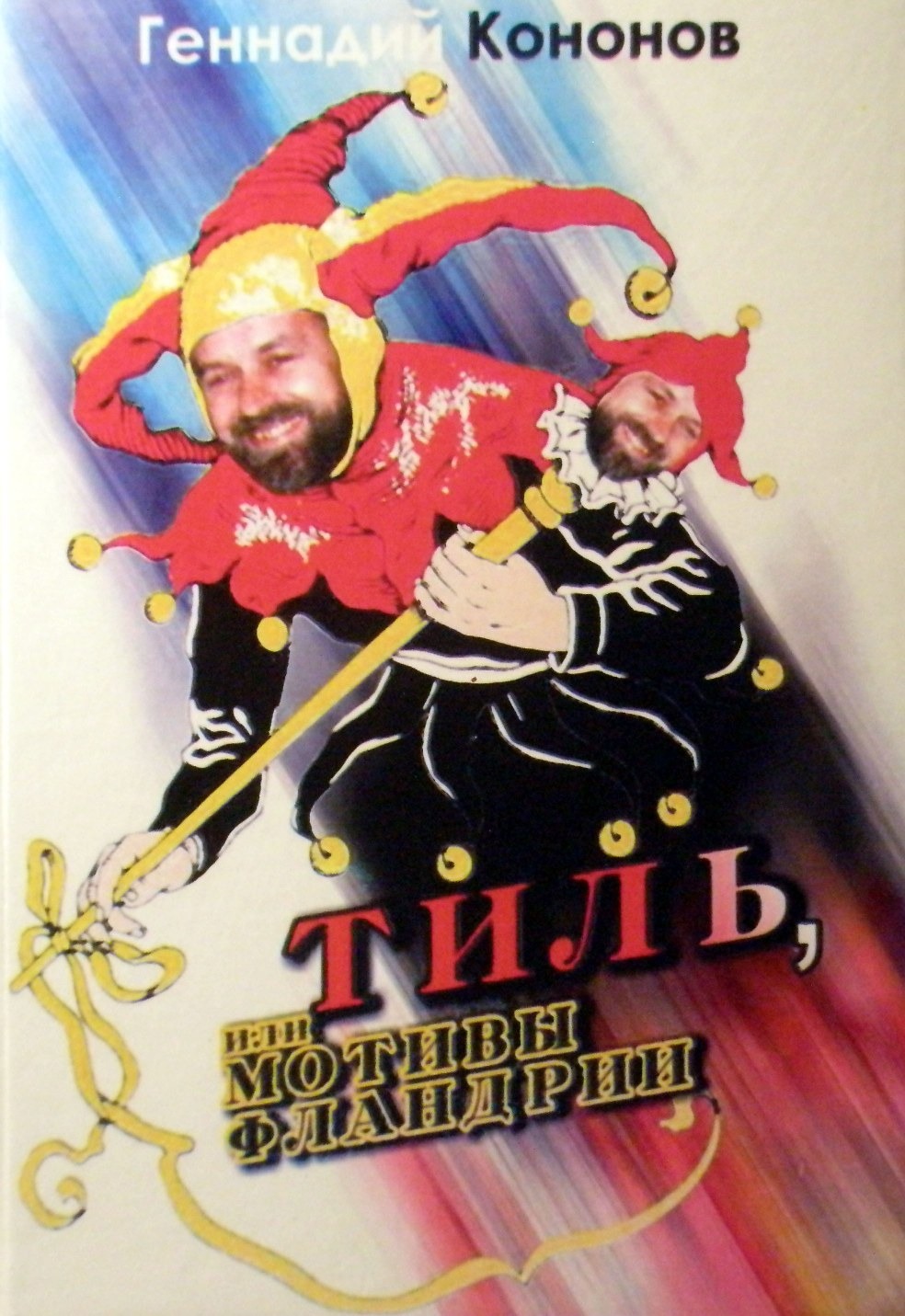
It was supposed to be a rock opera. As the poet Gennady Kononov wrote on another reason: “Everything is on Chekhov: deaf and head. // Everything is in winter and deaf. // But Zigzag Rock-n Roll pierced // into the slush of the brain through the left ear. " So, everything should have been if not according to Chekhov, so according to Charles de Coster, the author of the book “Legends about Tila Ulenspiegel”. Or based on medieval legends about tilles. However, the rock opera "Til" did not work. The twentieth century ended. Then the life of Gennady Kononov ended. But in 2017, the book of poems by Gennady Kononov “Til, or the motives of Flanders” was published. The presentation of the collection of poems was held in the media hollow of the Pskov Academic Theater. A. S. Pushkin.
"Under the torn father, the boy was baptized by the boy"
The motives seem to be Flanders. But the country in which the “brake liquid is drunk” or “grown milk yield” was called completely different.
Of course, Til was not dedicated to Flanders. “Through a stone, through a hangover nonsense // You have made its way, grass. // Chekanit Step Sold-Sova, // Silence in the night a knock-hunger, // And the monk-Sova teaches to live, // Life goes to nothing ... "
These are our stones, and hangover nonsense is also our Russian. And this is our life comes to naught. Although Gennady Kononov from those authors who do not close in geographical and temporary borders (PG wrote about him here and here ).
The owl here in different guises appears because, as a rule, the hero of the medieval Dutch and German folklore Til Ulenspigel was depicted with the owl and mirror, starting from the nickname Ulenspigel (either the mirror of the owl, or something more indecent). The keyword is a mirror. It reflects everything that is. Monks, informers, soldiers ... does not reflect only what is not and cannot be.
I don’t know if Gennady Kononov heard in the late 80s, when he composed his “Tilya”, the Rock-Opera “Flemish Legend” ( Julia Kim’s original libretto, the music of Romuald Greenblat , then the librettist Yuri Dimitrin was invited). The premiere of that rock opera took place in December 1978 in Leningrad. The ensemble “Singing Guitars” with Albert Asadulin , who performed the Tilya party, performed with it.
The beginning of the Rock Opera of the 1978 model about Tila Ulenspigel was like that. "Officer:" Forbidden! " Crowd: “It is forbidden ... forbidden ... forbidden ...” Everything that follows this, proves that the prohibitions do not always act (“Many courage and long swords, // But the hands are short ...” )
Julia Kim turned out to be a play in verses, and Gennady Kononov, rather, of poems of ascension. “Song of Nerle”, “Complaint of Lamme”, “Duel”, “Serenade”, “Food” ... There is even a poem “White Powder” ( “Girlfriend, Dark Wine and White Powder ...”). So the zigzags of rock and roll are quite definite.
There is something significant that forces different authors living in different cities and countries, from time to time to turn to the legendary figure of the vagabond-balgur Til Ulenspigel.
Til is a freedom (“Under the torn with a raincoat // was a boy was baptized. // Road gray sand, // Holy water and salt. // and a puddle - its font, // and cloud - cradle”).
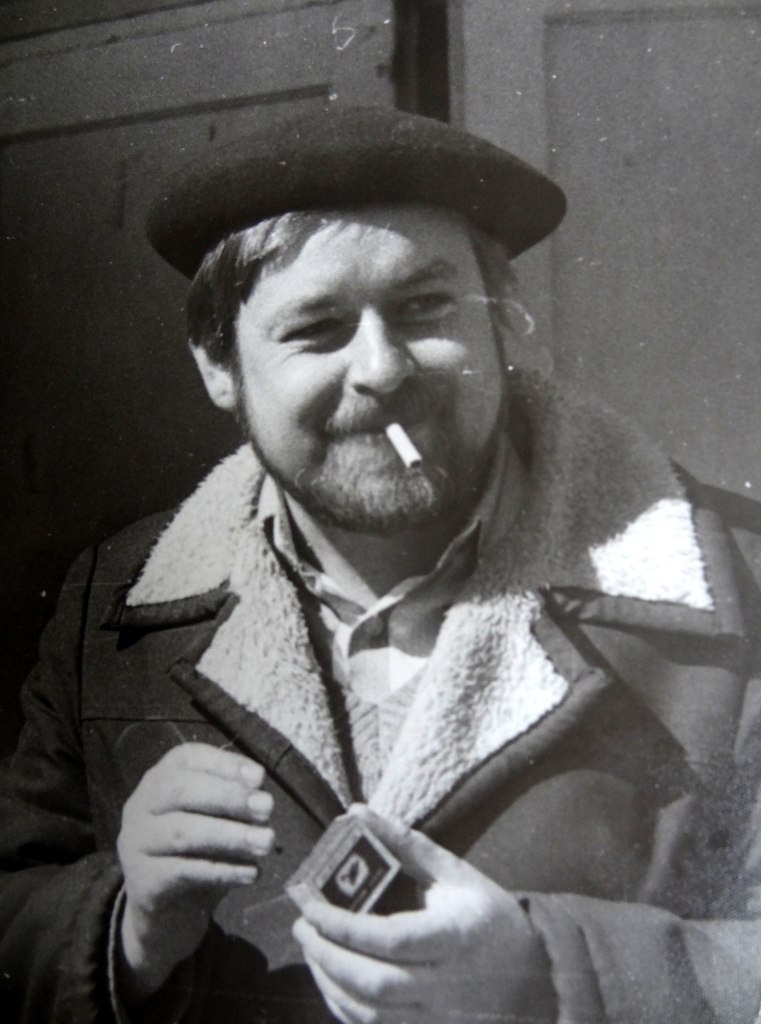
Gennady Kononov.
In Russia and even more so in the USSR, Tila Ulenspigel was loved. And it was not official love. Even before the revolution, in 1916, Vaclav Nizhinsky set the ballet “Til Ulenspigel” according to the symphonic poem by Richard Strauss “Funny tricks of Tilya Ulenspiel”.
Til was especially popular in late Soviet times. Evgeny Glebov’s ballet “Legend of Ulenspiegel” appeared, Nikolai Karenikov’s opera “Til Ulenspiegel”, the film “Legend of Tile” Alexander Alov and Vladimir Naumov ...
Western classics gave creative people additional freedom. It is more difficult to complain to the censor. It seems to be not about the present, but about a distant country. The distance to us is thousands of kilometers and several centuries.
But the Middle Ages is only a pretext. Here is what Gennady Kononov wrote in “Tila”: “In the plumage of a colorful (well, a spilled punk!) // Drunk Baron was sitting on a mare, // covered with armor, like a NATO tank ...” The poet did not seek to delve into the past. On the contrary, he turned to the present. Panks, tanks ...
"We are well -fed, prayers and water ..."
“The time has come for Ulenspigel,” said Lyudmila Isaev , the compiler of the book and the author of the preface and the afterword, at the presentation of the collection.
In the narrow sense - the time has come to publish eighteen excerpts about Tila Ulenspiegel dated to 1988.
But if you look wider, then the "time of Ulenspiegel" is a time of free people. In any case, those for whom freedom is not an empty phrase. (“The prince is whipping the wine and hiding the caps. We puffed us. // We are with a gun and lay useless bullets. // Herds graze. Humanities grow steadily. // We are fed with lies, prayers and water ...”)
He who is saturated with lies begins to look for a way out. Looking for more diverse food. Often this is actually not a way out, but a dead end, a constant foy and an intrusive idea to violate all kinds of norms. But it happens differently.
The preface to the book “Til, or the motives of Flanders” says: “The operas did not work ... The texts did not grow together into a consistent developing dramatic action - a necessary condition for an opera scenario.” But it turned out to be a successively developing action - the work of Gennady Kononov. Although there were few lifetime publications. And those revolution in the minds did not produce.
Next to the new book, published by the Pustoshkinsky printing house in 2017, in the media hut lay magazines and almanacs of different years, in which the works of Gennady Kononov - lifetime and posthumous. The magazines “Moscow”, “Youth”, “Day and Night”, “Sklyanka of the Empire”, “1st All-Russian Literary Journal”, Almanac “Skobari”, “Origins”, “Pskov Literary Art Journal” ... I opened the April number of Yunosti 1998. The story of Leonid Borodin , poems by Gennady Kononov, publicity of Nikita Mikhalkov (film director), Valery Shantsev (future governor of the Nizhny Novgorod region), Alexander Dugin (Eurasian, who became the editor -in -chief of the TV channel "Tsargrad TV") ... A strange set of authors. But this is an almost inevitable fate of the author published in magazines and almanacs. From all sides, you are surrounded and pressed by other people's words and feelings.
Gennady Kononov did not publish full-fledged books during his lifetime, and the best that was published after death was still the book “On the Russian Paths” (2009, the Pskov publishing house “Logos”, prepared by Lyudmila Isaeva and Vadim Andreev ). But “Til, or the motives of Flanders” is a book for an amateur. The font of different sizes, different gaps, controversial illustrations and undoubtedly low printing quality of the press (when it comes to black and white illustrations). Some long -standing fans of Gennady Kononov defiantly did not recognize the new book and deleted it as a non -existent one. Their claims are largely fair, but the book was still published. It can not only be examined, but also read, including what was not published before. Someone will open Gennady Kononov only thanks to her. So the librarians in any case should pay attention to it, get it, and then, if necessary, provide a site for disputes. In the end, book design is not the only thing that the readers cause disputes.
The thought expressed by Gennady Kononov is quite controversial: “Everything that contributes to creativity is morally. And vice versa. " Is it all? Did many true and fake creators think so when they compromised with conscience and power? And in general, what is creativity and how endless is its size? Where does it end?
So the controversy on this topic is inevitable. And the new book of Gennady Kononov is a good reason to continue it.
"A poet who spoke of the most important thing is freedom." This is again Lyudmila Isaeva. And yet, I think, not freedom is the most important thing. If you do not even take into account the conscience. Talent is also more important. There are a lot of those who were freed from something (from prejudices, from internal and external censorship). But when there is not enough talent, freedom is useless, or even dangerous.
The talent of Gennady Kononov allowed him to speak in full voice. Although few people heard him. But this is the property of not the author, but readers. In addition, each era has its own acoustics. Much seems to be sounding, but it's hard to hear. So it was once. So, although under other circumstances, there is now. It is often noticed not who composes talentedly, but who has a puddled or durable throat.
"I opened hell in provincial alleys"
But there is, as it seems to me, another reason that Gennady Kononov did not make a famous poet. “I opened hell in provincial alleys ,” he wrote. - Hell without Eurydice and other poetic beauties. And he wrote only about him. ”
How many are ready to go straight to hell? Especially in hell without "beautifulities." It’s how to watch high -quality gloomy arthouse films - the movie “For a few”.
“Everything written - in a certain sense of howls ,” explained Gennady Kononov. “ A creative act serves as anesthesia and frees the soul for subsequent suffering.” Many readers, of course, prefer to suffering something more light. And they are told: “Vineyards presses the tank. // Sarai is eagerly burning. // Contractors march in a bright, cool paradise. "
But when Gennady Kononov wrote about paradise, he got hell. But this is not at all the hell that is customary to rhyme with the garden. His hell rhymes with clowning. Ruthless clowning. On the cover of the new book of Gennady Kononov, they depicted in a joke guise. The name is printed with white font, the surname is black. In this hell it smells not by gray, but by what it usually stinks in provincial alleys.
This is like in the author’s collection “Rivalnered” by Gennady Kononov: “Slow rain pours, starting with six, // and no one is in a hurry with the return of the debt. // You don’t have time to bring the glass to your mouth, // How you sober instantly, seriously and for a long time ... ” The poem ends like this: “ ... and I find metaphors in the garbage dump. ”
In the “Sleep”, Gennady Kononov (this is part of the “tille ...”) - “the country of fun” with a well -fed and drunken feast: “And behind the window is black andus, // Pars, slush, denunciations, hunger, // And near the Temple, in the shadow of the cross // more and brighter, bonfires blazing ...”
Rock opera did not work, but the songs of the verses by Gennady Kononov still sound. Every year there are more and more of them. At the presentation, they were performed not only by Vadim Andreev (it was with him in the eighties that the rock opera about the tile was planned), but also others. Andrey Vasiliev , for example : “Here is September. At sunset, it will cry glass ... ” It turns out that people continue to open the poems of Gennady Kononov. Not only young people.
The new book has 146 pages. So it included not only eighteen excerpts about Tile, but also poems known for previous publications. Located in a different order, they are already read a little differently. It is striking that the theme of war arises every now and then (“As long as customs rot // and children dream of the horrors of war, // Rosehip crumbles on the grass, // Building in the sun is heated”).
War is not only hostilities, but also the state of society. Unhealthy need for enemies. To see and feel it, it is not necessary to go to some distant war-to where the vineyards “presses the tank”.
It is enough to walk along the dark provincial alleys.