
Translated material
Belcanto 2.0
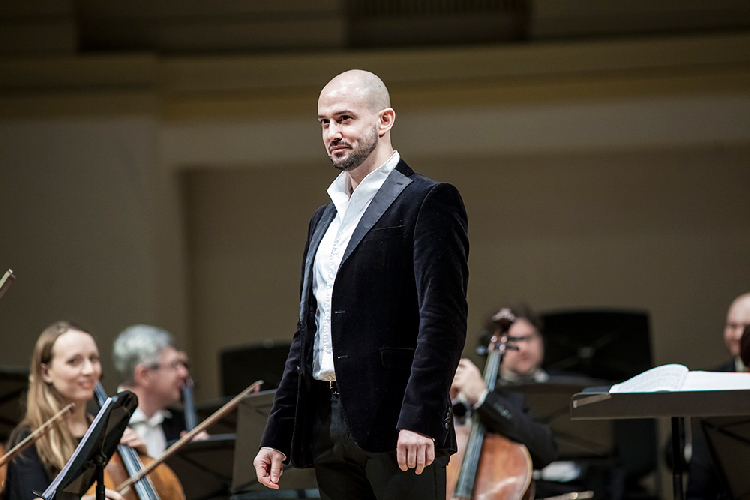
Last season, the Apriori Opera project completed on a high victorious note - a solo concert of star counteratradenor Max Emanuel Tsenchich . And this season - the fourth in its life - began with about the same note. Again, a fragile fuel miracle with a magical voice, again a fascinated hall, listening to old, forgotten and very complex arias pulled out of chests.
Franco Fajoli is another idol of the modern enlightened public, a counterattacent from Argentina, the last decade traveling from one prestigious scene to another. The final statement of his superstatus was the performance of the singer in 2014 in Salzburg at the Trinity Festival of Chechilia Bartoli with the Arias of Rossini and Meyerber, written for the last famous Kazambatist Velluti. In the repertoire of castrates (especially in the vast sea of the opera Handel), Fajoli is indispensable. But the prima donnut ambitions, a unique vocal technique and fashionable games with gender identity move him to less obvious music.
On the recent Rossini disc, which he began relations with Deutsche Grammophon , the singer gathered the “trouser” parties of languid young men and brutal rulers, written no longer for castrates, but for Matsso-soprano (after all, the 19th century was in the yard). That is, roughly speaking, gender intrigue now looks like this: a man performs male parties with a female voice. Fajoli came to the Moscow festival just within the framework of a tour of the disk promotion - with a compact set of Arya from Rossini’s operas Demetrius and Polybius, Virgo Lake, Tancred, Semiramida, Eduardo and Christine. And for greater clarity, he summed up this series of little -known and completely unknown numbers by Bisov Mozart Kerubino, replacing him/her usual convention with unusual.
However, the gallery howled with admiringly only when the singer appeared on the stage of Tchaikovsky’s hall, so that he triumphantly looked around the audience, not even singing a single note. Of course, this is not a female voice. He attracts his unusualness, with his alluring irregularity. In addition, against a general counteratrador background, it stands out with an amazingly warm beauty, volume and a huge range, even from top to bottom. Delicate oily legato and brave diving from the soprana top into the almost baritonal depth - its recognizable miracles. And, of course, this is not Belcanto, although it seems to be in mind in this repertoire. Fajoli's falsel technique is an incredibly skillful fake for it, capable of turning his head even more than the original.
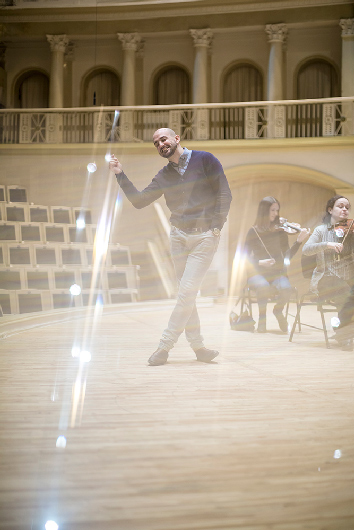 © "Opera a priori"
Like last year's Tsenchich, the Moscow Musica Moscow Orchestra accompanied the Argentino-Spanish guest VIVA , under the direction of Maxim Emelyanichev, whose international career is rapidly gaining momentum (in 2016 - debut in the Zurich opera with the production of “abduction from Seral” Mozart, concerts with the IL orchestra Pomo D ' ORO and MECSO-Soprano Joyce Didonato, Echo prize Klassik for a disk of Haydn's concerts recorded with the violinist Ricardo Minazi). And to follow the cheerful flight of the young maestro is no less exciting than the programs of the Apriori operas (this season ahead is a concert from the music of the XVI and XXI centuries in the Roman Catholic Cathedral on March 25 and the Russian premiere of the Sibelius Opera “Virgo in the Tower” paired with “Kashcheye immortal” Rimsky-Korsakov in Philharmonic-2 April 23).
The instrumental respite, which in the program of the Moscow concert of Fajoli were many also consisted of Russian works, only one hundred percent hits fell into their number - an overture for the Seville Barber. In general, the music of this composer (not always bothering himself beyond the limits of three chords) Emelyanychev brushes easily, joyfully and unusually diverse. He leads to a non-dull orchestra, submissively muttering his “mind-tsa-tsa”, but rather the ensemble of curious soloists, where Elena Korzhenevich’s violin, then Goboy of Emil Miroslavsky, Klar Valentina Uryupina and who is also not averse to playing this bizarre game “ Belcanto 2.0”.