
Translated material
Judicial long -term construction
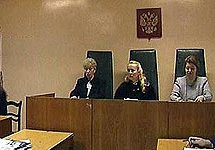
In Soviet times, construction sites were called long -term construction, which could not reach a happy ending. It is quite in the spirit of socialist realism (in the direct, and not literary sense!), Other judicial cases of our post -Soviet time are also drawn. An example of this is the so -called Aeroflot business.
Nikolai Glushkov and other defendants in this case are accused of fraud on episodes of 1996-1997. Understanding the essence of this matter for a simple person cannot do. It is hardly possible to count on the objectivity of the court, tightly tied to dependence on the executive branch and the Soviet tradition not to judge, but to condemn. But regardless of what the result of the process will be, at least one circumstance of legal proceedings in the Glushkov case cannot be evaluated otherwise than outrageous. An innocent person (until the sentence has been sentenced, he is innocent) is kept in prison for almost three years.
Former Deputy General Director of Aeroflot for Finance Nikolai Glushkov was arrested on December 7, 2000. He spent more than a year in prison, waiting for the court, which was completely a lot, but still fits into the framework of Article 109 of the Code of Criminal Procedure of the Russian Federation, restricting the abdominal stay during the preliminary investigation for 18 months. The court began on January 14, 2002, that is, more than a year and a half ago. After the first six months, the court began to renew him in custody and does it regularly every three months. The legislator made sure that during the preliminary investigation the accused was in custody for no more than 18 months. But what about the trial? And nothing! Article 255 of the Code of Criminal Procedure allows for the defendant accused of serious and especially serious crimes, the extension of the detention of "each time for no more than 3 months." How many of these "every time" will be, until they finally pronounce the verdict, the law does not specify. In principle, the court session can be stretched for the rest of his life - at least the defendant, even a judge. The judge will die - the case should be considered again and from the very beginning. The defendant will not withstand prison conditions - the case can be attributed to the archive, not being difficult than the sentence. And the verdict Glushkov is really difficult to bear. The indictment - it doesn’t work out, justifying - they will not be allowed. So not a convicted prisoner is sitting at anyone until his health or will be dried up.
Nikolai Glushkov is a fairly famous person, both his many friends and the press follow his fate. But what happens to those whose friends are not entering high rooms and who are the journalists are not interested in?
Elena Smirnova tried 9 (nine!) Years for fraud. Of these, for about 4 years, she spent in custody. When in January last year she was sentenced to 8 years in prison, it turned out that the statute of limitations had already expired, and she had to be released from serving her sentence. The European Court of Human Rights in Strasbourg, which subsequently examined this case, ruled that the Russian court violated Smirnova’s right to the trial within a reasonable time.
How many judicial long -term construction is stretching throughout Russia now, it’s even difficult to imagine. The wretched quality of justice and the law, severe to citizens, but soft to the authorities, create a picture of Russian "justice". This word has to be taken in quotation marks, because it is really not so much in it a lot of law as judicial arbitrariness.