
Translated material
Not only the street
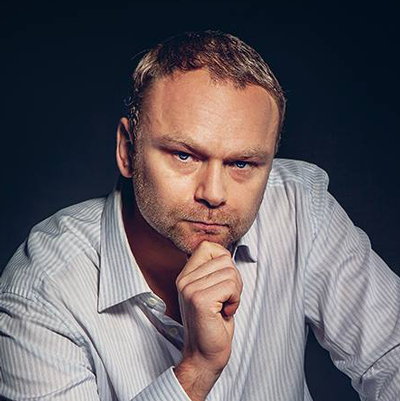
The success of protest in Yekaterinburg shows that the opposition should be prepared not only for street actions, but also for negotiations with the authorities in order to achieve specific goals, according to political scientist Fedor Krasheninnikov
A few days before the “direct line” of Vladimir Putin, the history of the construction of the cathedral in the center of Yekaterinburg and protests against it ended. From the point of view of the external observer, it ended in May, when the fence around the planned construction site was dismantled, but in fact the situation developed much more slowly and difficult. At times it seemed that it would be necessary to protest again.
The words of the shepherds
The whole month that passed after street protests, the Yekaterinburg Metropolitan remained the main bastion of supporters of construction in the square. Even after Putin’s words about the need to take into account the opinion of people, after polls by citizens who showed that the idea of destroying the square did not cause any approval, clergy and the Orthodox community continued to insist on their own.
Neither the statement of the governor Kuyvashev that the square should be excluded from the list of places where the church could be built, nor a clear weakening of the support of the project by its sponsors, did not work to the position of the church. It was said that the construction of a new church is extremely important for the further career of the Yekaterinburg Metropolitan and this is precisely what his intransigence is explained.
Perhaps in the diocese they were waiting for the publication of the Patriarch on the topic - and it followed on June 14. The Patriarch repeated his favorite thesis of supporters of construction-that people protested from the lack of information about the project-and hinted at the dark political forces standing behind the discontent of the townspeople, but in the end he still came to the correct conclusion: “We received what we received. From all this you need to make lessons. The construction of the temple should not become a place of struggle, including political. ”
The specifics of the situation in Yekaterinburg also lies in the fact that there is no Muratov or Venediktov, who can go in the backstage of the authorities and agree there about something
It is difficult to say whether this lesson was extracted by the Church itself, or whether the requirement to stop insisting on the square came from the presidential administration, but after these words the Patriarch, the construction project in the square was finally buried.
On June 16, the Metropolitan of Yekaterinburg and Verkhotursky Kirill published his appeal, in which he confirmed the refusal of the church from claims to the square of the Drama Theater, but seasoned the long -awaited step towards the townspeople with a fair amount of curses and accusations. The tonality of circulation only strengthened the opinion that the stubborn Yekaterinburg Metropolitan was persistently asked to surrender.
However, if we talk not about the form, but about the content, the performance of the head of the diocese was perceived with satisfaction: it was the link to the tough position of the church that formally did not allow the municipal authorities to remove the square from the list of sites for possible construction.
City and regional leaders immediately supported the church and made statements that the townspeople had been expected from them for so long. The mayor of Yekaterinburg, Alexander Vysokinsky, changed its position. He guaranteed that a new site will be found for the church. It is noteworthy of the speech of the vice-governor of the region Sergey Bidonko, who himself recently reasoned that the square of the Drama Theater could not be deleted from the list: “Before making some decision, it was necessary to study public opinion. Let this not be prescribed for today, but this should become a rule. If we do not take into account the opinion of the inhabitants, then we get such situations. ” An amazing discovery!
Public in negotiations
An important result of mass street protests in Yekaterinburg was a series of negotiations between the authorities and the protesters, which in different forms went the whole month. For modern Russia, this is a unique phenomenon: the authorities do not like to communicate with the participants in street protests, squeezing them sophisticated in enemies of the state and agents of foreign special services.
The specifics of the situation in Yekaterinburg also lies in the fact that there is no Muratov or Venediktov, who can go in the backstage of the authorities and agree about something there, because the power is ready to communicate with them, but not with Navalny and Yashin. In Yekaterinburg, the power entered into negotiations with those whom the representative of the Russian Orthodox Church dismissively called "people from the street." These were mostly ordinary social activists, without loud names and ranks. Representatives of the Ural public (for example, head of the headquarters of Navalny) voluntarily and quite consciously did not insist on their participation in consultations, which simplified the task of all.
In general, there was no squabbles around the one who will become a “representative of the protesters” - and this is also an important difference from the Moscow political tradition. By itself, the prospect of talking with the governor of the region or mayor of the city in Yekaterinburg does not seem to anyone a magical prize. However, Kuyvashev and Vysokinsky are, of course, not even close to Putin and Sobyanin.
Political non -political protest
For nine years, either a fading, which flashes with a new force of conflict around the choice of a place for the construction of the cathedral is a rare story of the success of civil society in Russia. But analyzing the results of this confrontation, the nuances cannot be ignored.
In modern Russia, any street protest - one way or another, politics, a blow to the official thesis of the universal unity of citizens around the authorities
First of all, the protest regarding the construction of the temple from the very beginning was positioned as non -political and it was a fundamental position of all those who organized it one way or another.
The declared apopoliticity made it possible to combine the widest circle of citizens around a solution to a specific problem. A purely political protest in the regions seems simply useless: the Center for Power is located in Moscow, and only there it makes sense to speak massively with political slogans. Those who are waiting for the Russian regions will rise under anti -government slogans should understand: this is possible only in a situation where in Moscow the power will be driven into a corner with mass performances and people will see a real opportunity in their cities to influence the situation in the country.
For all that, non -political protest is in any case the experience of horizontal communication between citizens in a crisis situation. And in modern Russia, any street protest - one way or another, politics, a blow to the official thesis of the universal unity of citizens around the authorities. So even the most non -political protest is the most natural policy.
The difficult path of compromises
Civil society in Yekaterinburg turned out to be mature and united enough, so as not to succumb to provocations of power and thereby not give it a reason to include a tough script.
When it was necessary to go outside and demonstrate the authorities of their determination - the Yekaterinburgers went out, in their own initiative and at their own peril and risk. When negotiations began, people patiently waited for them, without driving power into a corner, not provoking it with new protests. The level of mobilization of civil society in Yekaterinburg all this time remained high enough for the threats to continue protest to be perceived by the authorities with all seriousness.
The history of the transformation of the political regimes of Eastern Europe demonstrates that mass street protests only launch the mechanism of change
It is important to understand that all this time the bullying campaign and intimidation of protesters continued. On the fact of protests, the case of riots was initiated , and at any moment the power could go to repression.
In such conditions, members of the negotiation group and active participants in protest actions seriously risked, because the facet between the “representatives of the protesters” and the “protest organizers” are Tonka, and representatives of the authorities and the protective public constantly hinted that they were looking for and will certainly find the organizers of street actions.
Nevertheless, the negotiations went and somehow prompted the authorities to make the only right decision: not only to close the topic of construction in a particular square at the Drama Theater and at all those sites that provoked protests in past years, but even abandon the idea of choosing new places for construction without taking into account the opinions of citizens.
The most important conclusion from this whole story, which opposition and activists throughout Russia should make is the need to be prepared not only for street protests, but also for negotiations with the authorities, and even compromises with it in order to achieve specific goals. Street protests are not an end in itself.
The history of the transformation of the political regimes of Eastern Europe demonstrates that mass street protests only launch the mechanism of change, but in order for the authorities to go to deep reforms and even to dismantle the regime, it is necessary to be able to put forward situational leaders in time, who will be able to develop the achieved success at the negotiating table. In Russia, this has not yet happened, but the experience of Yekaterinburg shows that this is a completely real way.
Photo: Artem Ustyuzhanin / E1.ru