
Translated material
The fifth parliament
The Pskov Regional Assembly of Deputies of the fifth convocation, having gone half the way, remains split into unequal political units. Part One
The Pskov Regional Assembly of Deputies of the fifth convocation, having gone half the way, remains split into unequal political units. Part One
In the outgoing April, the Pskov Regional Assembly of Deputies celebrated its twentieth anniversary. The anniversary turned out to be somewhat strange and something similar to the current meeting itself-representatives of United Russia of various types and caliber handed out their colleagues in the party memorable insignia and gratitude “for great achievements in the development of parliamentarism”, allowing only two patriarchs of Pskov parliamentarism in this series: non-partisan Yuri Shmatov and communist Gennadi Bubnova. After the consistent with unprecedented performances, the audience gathered for a collective photograph and headed for a buffet, which looked like a meeting of the past yard fights of secondary school graduates [ 1 ]. The schools of the Pskov parliamentarism, which has not yet become parliament in the full sense of the word. But in the modern political history of the Pskov region, the regional meeting of deputies of the fifth convocation was an indicative example of what is happening with regional policy in modern Russia.
The Decembrists are involuntarily
| | | --- | | 
The fifth Pskov parliament was elected in the December 4, 2011 elections simultaneously with the State Duma of Russia of the sixth convocation, which took place against the backdrop of a sharp public crisis of confidence in United Russia. The most popular slogan of that parliamentary campaign was two, both launched by Alexei Navalny: “Against the party of crooks and thieves!” And "vote for any party except" United Russia "!"
As in the whole country and in the Pskov region, the active part of the company was outraged by the official election results, considering them dishonest and unfair [ 2 ].
The official results of the elections of deputies of the Pskov Regional Assembly of the fifth convocation are as follows. In the United Russia united constituency received 113,559 votes (37.41%, 9 mandates) [ 3 ], the Communist Party - 75 192 votes (24.77%, 6 mandates) [ 4 ], “Fair Russia” - 45 596 votes (15.02%, 3 mandates) [ 5 ], LDPR - 43 003 votes (14.17%, 3, 3, 3, 3, 3, 3, 3, 3, 3, 3, 3, 3, 3, 3, 3, 3, 3. Mandate) [ 6 ], “Yabloko” - 20 387 votes (6.72%, 1 mandate) [ 7 ] with a turnout of voters 52.64%.
22 mandates of deputies elected in single-mandate districts were distributed as follows: “United Russia”-17, the Communist Party-3, “Fair Russia”-1, self-nominated 1 (Yuri Sorokin de facto was supported by “United Russia” and predictably became a member of its faction).
In total, the numerical ratio of the political parties in the Pskov Regional Assembly is as follows: “United Russia” - 27, the Communist Party - 9, “Fair Russia” - 4, LDPR - 3, “Yabloko” - 1.
It should be noted that 20 out of 44 deputies of the Pskov Regional Assembly of Deputies are current entrepreneurs. There are 15 of them in the United Russia faction, 2 in the Communist Party faction, 2 in the Fair Russia faction and 1 in the LDPR faction.
After the announcement of the elections about their dishonesty, both in the Unified Electoral District and in single -mandate districts, the Pskov branches of the Communist Party, the LDPR and Yabloko stated, which fully corresponded to the positions of the federal leadership of these parties following the results of the December 4, 2011 elections, including the State Duma of Russia.
| | | --- | | 
The Pskov branch of the Communist Party said that its result in the region as a whole was underestimated by about 10% and the result of United Russia is about the same.
The Pskov Communists did not agree with the official results in the constituency No. 8 (Great Luke), when Oleg Kozyr nominated by the Communists, according to the first version of the final protocol, won with a slight advantage Boris Karakaev, but then the election commission canceled the voting results of one of the plots due to the supposedly bribery of the Communist, the issue of what was considered by the world court, And the official difference between the candidates eventually amounted to 43 votes, but in favor of United Russia (3616 at the trump card against 3659 at Karakaev).
Two cycles of the courts, including the Supreme, did not give anything to the Communists, although after the first court circle all decisions of the lower courts were canceled and the case was sent for a new consideration, but the mandate eventually remained with the Entrepreneur-Rostinoss.
A similar situation developed in the district No. 9 (Great Luke), where the representative of the Communist Party Alexander Maksimov was the leader in the course of the vote count, then the calculation was suspended by the decision of the territorial election commission, some of the ballots were invalidated, and after the renewal of the calculation, the unanimous Alexander Kozlovsky, the son of the head of the great bow of Nikolai, came to the first place. Kozlovsky.
The LDPR announced falsification of elections in the region as a whole, focusing on the results in the Unified Electoral District.
Yabloko announced that in fact the result of about 10-11% (that is, two mandates according to a single list), as well as the fact that in the two single-mandate districts, his candidates had to defeat were defeated in the single district.
First of all, it was about okrug No. 12 (Dnovsky and Dedovichi districts), where Yabloko’s nominee Igor Gumenyuk with 2920 votes turned out to be only 23 votes below the nominated Russia, Ulyana Mikhailova, who received 2943 votes in the official protocol, but did not win separately in the Dnovsky districts.
The second “Yabloko” called District No. 10 (Gdovsky and part of the Pskov districts), where the “Yabloko” farmer Alexander Konashenkov during the night of the vote counted and even a little ahead of the United Russia, Vladimir Yanikov, called him and “lost” him only in the early morning hours in Pskovsky. The district, showing in his native Gdovsky the result of about 57%, but this was not enough for a total victory in the district.
Perhaps it was precisely the results of the voting in the 10th district that most eloquently showed how politically works through the territories of the regions of the region a scandalous cutting of single -mandate electoral districts, developed in the election commission of the Pskov region and approved by the regional parliament of the fourth convocation on the eve of the elections [ 8 ].
Fair Russia in the Pskov region did not declare the falsification of elections, at that moment it fully corresponded to the federal trend of this party as the younger partner of United Russia on the left flank of the political field.
The Pskov Regional Assembly of Deputies of the fifth convocation born in scandals and disputes and in the course of his work constantly finds himself in conflict situations, and in all cases, without exception, these are conflicts of “United Russia” and the opposition.
Replacing the first microphone
| | | --- | | 
The intentions of the administration of Andrei Turchak regarding the configuration of the leadership of the Pskov Regional Assembly of Deputies became indirectly clear during the election, when the current chairman of the regional assembly Boris Polozov did not enter the “top” list of the party in the power in the single district, and, according to the information available, Andrei Turchak personally made the decision about this.
Already during the elections there was a version that the governor puts forward his deputy Alexander Kotov for the role of “the first among equals”, who went in three years in the administration of Andrei Turchak the path from a temporary disgrace to “completely his own”.
After the resignation of the previous Governor Mikhail Kuznetsov, one of his key deputies was reduced to the deputy head of the administration apparatus, but then entered the trust, was recognized as a member of the team, again became the deputy governor and headed the Regional Political Council of United Russia (which became a political appointment).
Alexander Kotov went to the elections of deputies of the regional assembly by the second number of the common part of the United Russia, which guaranteed the meeting in the meeting, as well as in the district, the basis of which is the Strug-Krasnensky district, the head of which he worked for a long time.
The deep causes of the change of Boris Polozov to Alexander Kotov became obvious only in the process of the regional assembly of the fifth convocation.
The experienced chairman of the regional parliament, who became part of the Pskov political elite in the early 1990s, began his political career with the post of deputy governor under Vladislav Tumanov, known at one time by democratic views, Boris Polozov in the 2000s, under Mikhail Kuznetsovo, again became part of the regional authorities, and very successfully.
Twice elected by the chairman of the regional assembly, having joined United Russia, he quite showed his loyalty to the system, and in this part Andrei Turchak had no reason to doubt the experimental regional policy. Boris Polozov would not work against the system.
The reasons for the replacement of Boris Polozov with Alexander Kotov are most likely not so much in political as in the personal sphere. Being a man deeply rooted in the Pskov elite, Boris Polozov practically did not spoil his relationship with anyone and never crossed the line of personal enmity, he did not comply with the personal political orders of the governors. We can say that he was more the chairman of the regional assembly than one of the leaders of the regional branch of the Party of Power, which was quite consistent with the trend of Mikhail Kuznetsov, for whom the functionality was higher than the partisanship.
| | | --- | | 
But Andrei Turchak, on the site of the chairman of the regional assembly, needed a politician who is very different from Boris Polozov precisely by personal characteristics. He was supposed to be recklessly loyal to Andrei Turchak personally, to accept his opinion as his own in any situation, to clearly position and behave primarily as a representative of United Russia in the regional parliament, and not as its chairman, was to be ready at any time to fight against any opponent of the governor and party of power by any means, not caring about how this struggle looks from the outside.
Alexander Kotov turned out to be just such a person and “revealed” in the regional meeting from this side.
At the same time, the displacement of Boris Polozov from the post of chairman of the regional parliament occurred with indicative and completely unnecessary in every sense by public humiliation: in 2011, he was not even provided at the beginning of his work as deputy chairman of the meeting, limiting himself to the staff of the Committee on Budget, Tax and Financial Policy. The status of the deputy chairman of the meeting was granted to Boris Polozov only in 2012, after the scandal with deprivation of the deputy status of another deputy chairman of the assembly, Mikhail Gavunas.
In December 2011, when forming the working bodies of the assembly, Andrei Turchak’s most tough approach to the status of opposition politicians became obvious: at the direction of the governor in the Pskov Regional Assembly, even a very modest standard of respect for the opposition, adopted in the State Duma of the Russian Federation, when representatives of all factions became deputy assemblies and part of the posts of committees chairmen deposit, with the opposition, while leaving the opposition, with the opposition, while The professional skills of parliamentarians are taken into account.
In the Pskov Regional Assembly of Deputies of the fifth convocation, all the posts of deputy chairman and chairmen of committees were given to United Russia, and among the four deputies, three at that time (Elena Bibikova, Mikhail Gavunas and Valentin Kalensky) did not work in the meeting on a liberated basis, that is, they were provided with status without full -time duties. Moreover, even the chairmen of two of the four permanent committees of the meeting (under legislation, economic policy and local self -government, as well as on the agricultural sector and nature management), the United Russia Mikhail Gavunas and Andrei Kozlov, respectively.
Two other committees were headed by representatives of United Russia, which included in the state of the meeting: Boris Polozov (budget, finance and tax policy committee) and Viktor Antonov (Committee on Labor and Social Policy), who also became deputy chairman of the assembly.
All representatives of the opposition who, according to the law, received the right to work in the regional meeting on a permanent professional basis in leadership positions (Anatoly Koposov, Alexander Rogov, Sergey Makarchenko, Lilia Nikiforova, Lev Schlosberg) received symbolic both in terms of powers and the influence of the parliament of the deputy chairmen of committees.
Such a situation could not arise without reaching an agreement between the administration of the region and the most large opposition faction, the Communist Party. The package agreement was essentially as follows: the opposition was proposed to support the candidacy of Alexander Kotov for the post of chairman of the meeting, not to claim the posts of deputy chairman of the meeting and even chairmen of committees, to be satisfied with the posts of deputy chairmen of committees, but at the same time the Communist Party, on which the result of the secret vote depended, received the third place of the deputy working on a professional basis, and, as it became clear in the sessions of December 16, 2011, 2011 years, was satisfied with this [ 9 ].
“Fair Russia”, the LDPR and “Yabloko” in this situation could claim only one permanent workplace in the meeting, which happened.
It is significant that the secret vote for the candidacy of the chairman of the meeting, when the parliamentarians were chosen between Alexander Kotov and Leo Schlosberg, actually became clear: Alexander Kotov received 39 votes out of 44 [ 10 ], which showed: only the opponent himself voted and, judging by the situation, the deputies from the LDPR, who did not go to the partnership agreement with Andrey Turchak.
The administrative configuration of the Pskov Regional Assembly of Deputies of the fifth convocation was built in such a way that the opposition could not concentrate its efforts on any committee, nor in any direction of work, and United Russia fully forms the agenda.
"United Russia": Most without a political person
| | | --- | | 
The Pskov “United Russia” went to the elections without a governor: despite the public promises to lead the regional list of the ruling party, Andrei Turchak did not take responsibility for the results of the election campaign and did not go to the elections with the first number of a single list [ 11 ].
The list was headed by Elena Bibikova (managing the regional branch of the Pension Fund), Alexander Kotov (deputy governor, secretary of the regional political council) and Ulyana Mikhailov (chairman of the regional clock). Thus, the extra -real rate was made on a person who personifies some mass, but very amorphous audiences: pensioners and union members.
The fourth and fifth numbers of the general part of the list were personified by Pskov and the Great Lukes: Ivan Tsketzersky (head of Pskov) and Alexander Vasilevsky (General Director of the Leskhozmash Plant OJSC).
The election campaign took place against the backdrop of an acute crisis of confidence in the party in power by voters, and its agitation activity even caused irritation: having felt this, the Pskov United Russia abandoned part of the election airtime on television and radio, but this did not solve anything.
27 mandates of “United Russia” (in the fourth convocation was 29), on the one hand, the parties were guaranteed by the parties by a constant numerical advantage over the opposition (23 votes are needed to make a decision in the regional assembly) and on the other hand, it created a clear political positioning in relation to opposition factions.
Positioning in parliament cannot but be of a personal nature, and here, United Russia has, due to the “command-staff” approach to the formation of a single list and a list of single-mandate, problems have arisen, since most of its deputies are traditionally not publicly public, not ready and do not want to become public political persons. More than half of the deputies included in the United Russia faction did not perform at the sessions of the regional assembly once.
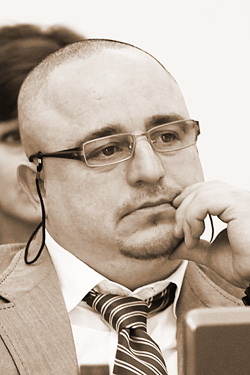
The function of publicity in the faction is divided by three “soloists”: Alexander Kotov, Victor Antonov and Alexei Sevastyanov.
Показательно, что формальный руководитель фракции Валентин Каленский, заместитель председателя Собрания, бывший секретарь регионального политсовета «Единой России», играет в руководстве фракцией почти номинальную роль: его публичные выступление редки и, как правило, происходят от имени фракции, когда никто другой и не вправе взять слово.
Идеальным руководителем той фракции «Единая Россия», которая сформирована в областном Собрании, был бы Виктор Антонов, но ему просто не нужны дополнительная нагрузка и хлопоты, поэтому персона Валентина Каленского оказалась востребована вновь.
Для самого предпринимателя, приведшего в состав Собрания ещё четырёх представителей облпотребсоюза, статус руководителя фракции правящей партии является, скорее, дополнительной политической страховкой, чем потребностью. О политических гарантиях в современной политической ситуации говорить уже невозможно.
Александр Котов как председатель Собрания должен был, по идее, дистанцироваться от партийности и быть «спикером всех депутатов». Но произошло прямо противоположное: более пристрастного партийного председателя не было за всю историю областного Собрания. Александр Котов демонстративно неравнодушен к оппозиции, вступает в постоянные публичные препирательства с депутатами оппозиционных фракций на сессиях, всячески демонстрирует свою лояльность, если не сказать преданность, позиции губернатора Андрея Турчака, фактически растворился в ней.
Многие наблюдатели полагают, что такая позиция парламентария была обусловлена тем, что в 2011-2013 гг. именно Александр Котов неформально считался претендентом номер 1 в кандидаты на должность губернатора области от «Единой России» – до тех пор, пока сам Андрей Турчак подтверждал в узком кругу, что намерен найти себе новую работу в Москве или Санкт-Петербурге [ 12 ]. Соответственно, чтобы никому не отдать нишу «преемника», Александр Котов представлял себя более правоверным, чем сам правоверный.
Так или иначе, его персональная матрица поведения в областном парламенте сложилась именно так, и теперь трудно представить себе, чтобы она изменилась до конца созыва.
Главная политическая роль Виктора Антонова в областном Собрании заключается в исполнении весьма щепетильных обязанностей в публичной сфере, в частности, внесении в Собрание «трудных, но необходимых» законодательных инициатив. Так было, в частности, со скандально знаменитым, в том числе благодаря Псковскому областному Собранию, где голосование проходило дважды, федеральным «антисиротским законом» [ 13 ], так было с поправками в Регламент областного Собрания, разрешающим голосование депутатов за других депутатов по доверенности [ 14 ].
| | | --- | | 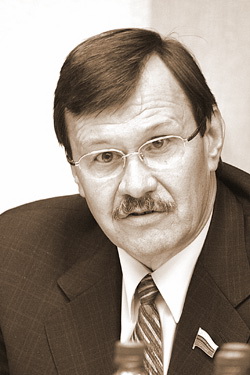
Готовность делать «неприятную работу» позволила Виктору Антонову стать единственным из пяти к 2014 году заместителем председателя Собрания, которому при отсутствии на работе Александра Котова передаются полномочия председателя.
Но самым громким политическим событием для «Единой России» в пятом созыве Псковского областного Собрания депутатов, безусловно, стало лишение депутатского мандата одного из самых влиятельных региональных единороссов, предпринимателя Михаила Гавунаса, которого лишили статуса депутата за внезапно ставшее публичным фактом второе (израильское) гражданство [ 15 ].
История, ставшая предметом внимания не только региональных, но и федеральных СМИ, до сих пор не имеет однозначного политического толкования.
Трудно предположить, что администрация области, достаточно тесно работающая со спецслужбами, не располагала информацией о втором гражданстве Гавунаса. Но до некоторого времени это обстоятельство никого не беспокоило и не вызывало к жизни никаких сценариев.
Более того, респектабельный парламентарий, один из ведущих финансовых доноров региональной «Единой России», Михаил Гавунас чувствовал себя абсолютно уверенно и спокойно, не опасаясь угроз. Союз умолчаний был выгоден многим, если не всем, заинтересованным лицам.
Формально установившийся ещё при Михаиле Кузнецове благоприятный климат вокруг г-на Гавунаса был нарушен затяжным конфликтом самого Михаила Гавунаса, и прокурора Псковской области Тимура Кебекова, который возбудил административное производство по факту отказа высокопоставленного парламентария заполнить обязательную для депутатов годовую декларацию о доходах. Конфликт с прокуратурой по не стоящему спора поводу, безусловно, был ошибкой Михаила Гавунаса, но не она сыграла в ситуации фатальную роль.
Фатальную роль, судя по всему, сыграл интерес неких предпринимательских структур (по имеющейся информации, петербургского происхождения) к предпринимательской империи Михаила Гавунаса, в первую очередь к ЗАО «Псковпищепром» и ООО «Евро-Керамика». Отказ г-на Гавунаса от «добровольной» продажи прибыльных активов и стал, как полагают многие наблюдатели, тем событием, которое мотивировало заинтересованных лиц запустить сценарий «Ч».
Причем запуск сценария был произведён весьма технично, через заброс информации в оппозиционную фракцию областного Собрания (КПРФ), которая предсказуемо не могла не отреагировать на «внезапно» поступившую «высокодоходную тему».
С точки зрения ситуации внутри «Единой России» расставание с Михаилом Гавунасом стало показательным именно в контексте мгновенного публичного предательства однопартийцев, которое состоялось немедленно после того, как свою негативную позицию озвучил Андрей Турчак, объявив о «предательстве» г-на Гавунаса. И в тот же момент люди, которые едва ли не ели с руки Михаила Гавунаса, стали публично от него отрекаться в самых лучших традициях советского времени.
И некоторые из них, наверно, думали в тот момент: «Следующим могу быть я». И отрекались ещё исступленнее.
Как никакая другая, ситуация с политическим изгнанием Михаила Гавунаса из Псковского областного Собрания депутатов стала яркой иллюстрацией известного тезиса о том, что «Единая Россия» – это испорченный вариант КПСС».
Функцию публичной атаки на представителей региональной оппозиции во фракции «Единая Россия» не без удовольствия исполняет Алексей Севастьянов. Природный актер и успешно сотрудничающий с администрацией области и региональным отделением партии власти предприниматель не просто на каждой сессии, а несколько раз за сессию «остро реагирует» на выступления оппозиционных депутатов, вполне предсказуемо вызывая ответную реакцию, достаточно профессионально провоцируя политических оппонентов на эмоциональное поведение.
Классической для Псковского областного Собрания стала публичная пикировка на сессиях Алексея Севастьянова и Александра Рогова, доходящая до высоких тонов и рискованных лексических оборотов.
С не меньшим запалом Алексей Севастьянов выступает против Олега Брячака и Льва Шлосберга. Такая публичная миссия, востребованная ежемесячно, очевидно, делает для Алексея Севастьянова времяпровождение на сессиях не таким скучным.
В целом фракция «Единой России» в Псковском областном Собрании депутатов пятого созыва представляет собой разнородную по-человечески и политически бесцветную массу, из которой в любой момент можно соорудить любую политическую фигуру, что максимально нивелирует в этой политической группе роль одного депутата. Впрочем, в этой фракции, за редким исключением, собрались те, кто не только не испытывает потребности в такой роли, но и всячески избегает её.
В этом смысле фракция «Единая Россия» в Псковском областном Собрании депутатов пятого созыва является идеальной политической конструкцией с точки зрения поставленных перед ней утилитарных политических задач.
Агентство политической информации «НАВИГАТОР», специально для «Псковской губернии»
To be continued.
See: S. Prokopyeva. Двадцать лет за час // «ПГ», № 15 (687) от 16-22 апреля 2014 г.
См.: А. Семенов. Грязная обработка // «ПГ», № 47 (569) от 7-13 декабря 2011 г.; D. Kamalyagin. Go to people // "PG", No. 48 (570) dated December 14-20, 2011
В 2007 г. на выборах в областное Собрание депутатов в едином избирательном округе «Единая Россия» получила 45,42% (110 406 голосов) и 11 мандатов.
В 2007 г. на выборах в областное Собрание депутатов в едином избирательном округе КПРФ получила 19,46% (47 298 голосов) и 5 мандатов.
В 2007 г. на выборах в областное Собрание депутатов в едином избирательном округе «Справедливая Россия» получила 15,68% (38 109 голосов) и 4 мандата.
В 2007 г. на выборах в областное Собрание депутатов в едином избирательном округе ЛДПР получила 8,41% (20 456 голосов) и 2 мандата.
В 2007 г. в выборах в областное Собрание депутатов по единому избирательному округу партия «ЯБЛОКО» не участвовала.
See: L. Schlosberg. The head of the horse on the head // "PG", No. 30 (552) dated August 10-16, 2011
See: D. Kamalyagin. Role games // "PG", No. 49 (571) dated December 21-27, 2011
See: D. Kamalyagin. Role games // "PG", No. 49 (571) dated December 21-27, 2011
В июне 2011 года на региональной партийной конференции Андрей Турчак сказал: «Пользуясь случаем, я хочу заявить, что готов возглавить партийные списки на осенних выборах, полноценно, как ваш коллега, участвовать в избирательной кампании и вместе с вами одержать уверенную победу». See: D. Kamalyagin. Под ружьё! // «ПГ», № 23 (545) от 15-21 июня 2011 г.
See: API "Navigator". Thirteenth rating // "PG", No. 40 (662) of October 16-22, 2013
See: K. Minaev. Damn session // "PG", No. 50 (622) dated December 26-31, 2012
See: S. Prokopyeva. «Не зря я сегодня весь в чёрном» // «ПГ», № 9 (681) от 5-11 марта 2014 г.
See: D. Kamalyagin. Паспорт, деньги, два ствола // «ПГ», № 18 (590) от 9-15 мая 2012 г.; D. Kamalyagin. За флажки // «ПГ», № 20 (592) от 23-29 мая 2012 г.