
Translated material
There, on the mountain
The treasures of the castle mountain in itself prevented the installation of a ten -meter iron cross on it
The treasures of the castle mountain in itself prevented the installation of a ten -meter iron cross on it
*“You see there, on the mountain, the cross rises.
Under him a dozen soldiers. Possess on it.
And when you get tired, go back, walk around the water, walk around the water, walk around the water with me! ”
Ilya Kormiltsev, Vyacheslav Butusov, "Walks on the water." *
On August 3, a long ellaries were put in a more than a hundred -day history of the confrontation in self -residents between local residents and local authorities who destroyed a memorial sign in honor of the founding of the city and intended to establish a ten -meter iron cross with a sword in Soviet times. The protests of the inhabitants did not have any impact on local leaders, rather caused aggression, but received a great public resonance and reaction both in the scientific and social environment and at the level of the regional authorities, forced to declare their position in the conflict [ 1 ].
| | | --- | | 
The final in 2011, the stage of confrontation in himself was quite intense: literally in 10 days scandalous public hearings, the first archaeological discoveries, and the decision to conduct an open competition for a memorial sign on Castle Mountain, which actually disavowed the intention of the Sebely authorities to establish a cross by the upcoming autumn.
Even during the previous visit to Sebezh, June 15, communicating on castle mountains with representatives of the public initiative group of defenders of the castle mountain and local leaders, Governor Andrei Turchak said that he considers it necessary to conduct a memorable sign in themselves in a public hearing.
| | | --- | | 
Leonid Rustyenkov did not answer a direct question, but he insisted: “We did not violate anything”, and about himself, the project caused the surge of indignation, objected to the governor: “This is not a significant decision for the city.”
“Where are you holding public hearings?”, Andrei Turchak asked Galina Malyutina then. “In the RCC,” there was an answer (and it was at that time not true). - “Here it will be necessary to gather people and discuss all projects - this project, an alternative project, we know that it is, perhaps, other suggestions. We will discuss everything there, ” - on June 15, Andrei Turchak made it clear that he did not exclude personal participation in public hearing about the improvement of the castle mountain.
| | | --- | | 
The question of the supporters of the cross was almost fateful, because it was public hearings that became not only a peak of the confrontation between the authorities and citizens in self -made, but also a kind of Rubikon, having crossed the self -propelled authorities instead of obtaining the final and irrevocable support of the governor in favor of their project, it was lost.
“This is the third Nazi performance! Third!!!"
| | | --- | | 
On July 25, the local authorities in self -propelled power (it is necessary to attribute not only to persons holding positions in local governments, but persons who are part of the near circle of power - all those who perceived the mass public protest against the planted monument as a direct threat of power itself) decided to show the people their full force.
The main instrument of suppression of dissent was aggressive nationalism multiplied by an administrative resource.
| | | --- | | 
In controlled and dependent organizations, they called the instructions to ensure the appearance of employees in support of the cross, and some opponents called the direct proposal not to come, so as not to interfere with the authorities.
The scenarios of the mental suppression of opponents developed in advance by the Seine, but the hearings themselves surpassed all the most gloomy expectations.
The hall of the district administration did not accommodate all those who came, and I had to take a step obvious in advance - to go to the hall of the district cultural center.
| | | --- | | 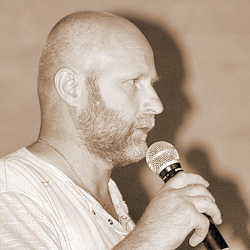
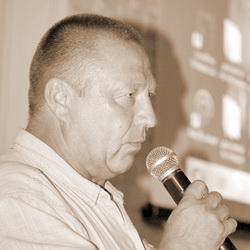
At the beginning of the hearing, the presenter (the nominal head of the city of Seamuzha Gennady Vasiliev) said that the regulation of the hearings involves a report up to 10 minutes, and the performances - up to 5 minutes. From where such a regulation did not, they did not explain.
After the hearing, it turned out that allegedly on October 28, 2005, then the Zapojsk City Assembly of deputies of the first convocation, which was just elected then, approved the Regulation on public hearings, which until July 25, 2011 was not known to anyone not only in himself, but also in the regional administration.
All speaking in support of the installation of a cross with a sword were recorded in advance, and roles were distributed between them. For five minutes each.
Surprisingly: several “crusaders” at once had an enviable task to prove that Sebezh is not a historical settlement, and the castle mountain is not a monument of history and culture.
| | | --- | | 
“In the resolution of the regional assembly No. 452 there is no castle mountain! So, she is not a monument! ”, The chairman of the district council of veterans solemnly said, to whom the distributors of the roles did not explain that the castle mountain in Sebezh is part of the regional parliament of the Gorodishch and Posada of the XV-XVII centuries.
The hand of a bad director seemed to turn the inhabitants of the glorious city into aggressive zombies, not just hating his cultural heritage, but deny the very fact of its presence.
How it was possible to bring people to such a self -destructive state - it is impossible even to assume.
It seemed that the initiators of the installation of the Cross were ready to demolish himself from the face of the earth himself, just to prove their right to erect their iron brainchild in his historical heart.
By virtue of only their understandable logic, the organizers of the public hearings are almost more than a memorable sign, as an actual sign of the very memorable sign, they decided to pay attention to their main, as it seems to them, it seems, to the opponent - the deputy chairman of the Pskov regional department of the All -Russian History and Culture Society, Lev Schlosberg, in which the Sebezh authorities see only their political opponent, and judging by the hearing, and judging Rather, even an enemy.
Everything was ready in advance.
The deputy of the district assembly from the LDPR Leonid Anshakov asked the gathered the question of why the initiative group advocates to restore the former memorial sign, and immediately, according to the Oka, a picture appeared on the monitor screen: in the well -known city, the now destroyed memorial sign was inscribed in the electronic method of David. Anshakov laughed rather and went to his place, and the hall buzzed: partially - in support of the speaker, partially from the shock. Many only at this moment understood completely where they went.
The picture appeared on the screen of the projector not from somewhere, but from the computer of the administration of the Sebezh district, followed by the system administrator of the district administration Ilya Babenko, who issued an illustration of the official project to the hall.
“It's disgusting! This is unacceptable and vile! This is a shame! ”, - the architect of the landscaping project of the castle mountain, an employee of Pskovgrazhdanproekt Larisa Nukolov, jumped up, but the organizers did not pay any attention to her performance. Everything went according to plan. Nukolov’s architect completed his work, and the opinion of the citizen of the Russian Federation Nukolova was absolutely indifferent to them.
It was at that moment that respectable citizens began to leave the hall, seeing the whole savagery of the script prepared by the authorities and the meaninglessness of their location in the hall.
The deputy of the district assembly from the Communist Party, Sergei Matveev, called to the microphone on the list, shared with his theory of capturing the city by people of incorrect nationality and actually called to make the peovery of the city for Russians and the Orthodox.
The microphone passed to a woman who shouted that she wanted to leave himself, because the surname "Schlosberg", it turns out, is translated into Russian as a "castle mountain".
The performances of the opponents of the attitude of the cross were drowning in a whistle, stomp, hooting, screams and direct insults. The hall was full of hatred, its charges were thrown into the audience according to the list, according to plan.
Schlosberg did not give a word for a long time representing the regional branch of the Vopiyk, although the application for a speech was sent to himself in the morning of July 25. He went to Vasiliev and demanded a word. After a while, the word was given. “Why did you give him a word?!”, ”Malyutina’s question to Vasilieva retained the hearing (the microphone on the table of the presidium was constantly turned on).
The decision of the Presidium of the Pskov branch of the Vopiyk was listened to the hall in the barely restrained silence, and the answers to questions from the hall were already given to noise and screams.
“The worst thing has not happened yet,” said Lev Schlosberg. “The worst thing is if the aggressive majority prevails in the city.”
Half of the hall roared.
The chairman of the Sebezhsky district assembly of deputies Viktor Polkeev, the former first secretary of the CPSU district committee, stomped his feet, clapped his hands over his head and shouted: “Enough! Regulations!".
Several people became bad, and they went outside.
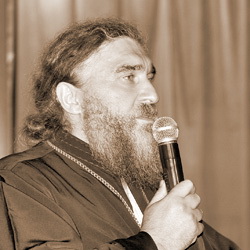
Local Archpriest Fr. Peter called the opponents of the cross demons.
The author of the cross with a sword is a blacksmith Vladimir Uniihin, explaining the sign he created, he said that the sword is a “instrument of love” and immediately quoted: “I did not come to bring the world to you, but the sword.” This was somehow combined in one head and one performance.
Some strange young man went out to read a multi-page text with an unclear logic in which he argued with opponents of the cross-country setting-participants in the local Internet forum, painfully diligently revealing the real names of his opponents and their place of residence. He also said something about the cross, and the head of the city administration patiently held a microphone in front of his face.
The head of the red volost, Vera Vavilova, who specially arrived in himself from the village of Sutoka, recalled the scandalous episode of a year ago, when the remains of the Soviet soldier, buried in the village of White Key, the authorities of the Sebezh district refused to accept for the reburial, which the plot of the "Sebezh soldier" came out on the regional television, which caused a common renmed resonance. Then the Pskov province wrote about this sad episode [ 2 ]. Ms. Vavilova did not mention the television of the GTRK “Pskov”, but she remembered the article in the “Pskov province”. According to her version, everything was fine until "journalist Sh."
The mother -in -law of Vladimir Turyagin said that the main thing for the city is worthy to accept the gift from the master.
Semenov, a deputy of the suitee city assembly, suggested taking a pause until next year and limit himself only to the improvement of the castle mountain, leaving the decision on the most memorable sign for the future - when it would be possible to comprehend the situation calmly.
In the hall there were several quiet exclamations of support.
Several speakers at once, including the editor of the local newspaper "Call" Vyacheslav Sidorenkov, said that the struggle against the installation of the Castle Castle was the beginning of the election campaign. Vyacheslav Petrovich also very offended the statement in the statement of the public initiative group that he headed by the newspaper is controlled by the local administration.
The castle mountain and the ten -meter iron cross with a sword threatening her as if simply ceased to exist.
The real became virtual, and the virtual - real.
The leading hearings did not react to any insults and causing remarks, they clearly liked what was happening. The plan of the triumph of will was embodied before our eyes. Everything went just fine. Opposite the surnames of speakers in order of priority, ticks were placed.
The chairman of the State Committee of the Pskov Region for local government Tatyana Smirnova, who was sitting in the presidium, did not say a word.
It lasted about four hours.
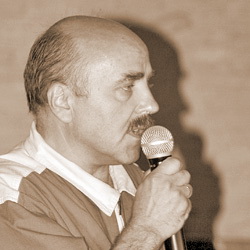
The peak of the hearings came at the eleventh hour of the evening, when an employee of the duty and dispatch service of the Sebezhsky district Vladimir Spiridenkov, who addressedly turned to Leo Shlosberg, was called to the microphone and said that he would now read the Talmud about ... the need for the Jews of the struggle against the cross. In the hands of Spiridenkov was a typewritten, pre -prepared text.
Schlosberg rose, went to the leading table and demanded a microphone from Gennady Vasiliev. Vasiliev hid the microphone behind his back. Schlosberg went to Spiridenkov and closed his microphone with his hand. “This is the third Nazi performance! Third !!!, ”he shouted to Malyutina,“ and you organized them! ” Malyutina was silent. Gennady Vasiliev in the microphone insisted that the speaker was given to speak further and asked Schlosberg not to interfere. People jumped up in the hall and went to the stage. Among them was a tall young man who shouted a falsetto: “My child will live under this cross !!!” It turned out to be the son of Fr. Petra Peter Netreba Jr., an employee of the Sebezhi customs. He poked his hand with an elongated index finger into the hall and shouted: "Return to his place !!!". They spoke and shouted at the same time.
Gennady Vasiliev closed the hearing and said "thank you very much."
Their kampf
| | | --- | | 
For those who know the history of the Sebezh region, no surprise occurred.
In 2001, during the early elections of the head of the Sebezhsky district, appointed after the sudden death of the head of the district, Peter Shtylun, when the authoritative customs entrepreneur Vladimir Afanasyev walked ahead of the first deputy head of the administration of the district of Alexei Arkhipov, the Afanasyev campaign was provided by the deputy of the Pskov Regional Assembly, Alexander Khristoforov.
Within the framework of local elections, the Nazi Niva Nazi newspaper published by A. Khristoforov was published, many publications of which were personally sent against A. Arkhipov, who was blamed ... his Karelian origin, which no one in the election was guessed. All criticism of the candidate for the post of head of the Sebezh district, Alexei Arkhipov, was built on his nationality.
After publications in the Pskov Niva, the regional prosecutor’s office for the first time in the history of the Pskov region opened a criminal case against a deputy of the regional assembly on charges of inciting national razor. An indictment was issued, but the regional deputy corps did not remove the deputy inviolability from Alexander Khristoforov (then it still extended to regional deputies), and the case was not transferred to court.
The closest friend and business partner of Vladimir Afanasyev, Alexander Khristoforov “became famous” also by publicly presenting the Ugler “Mein Kampf” copies to the activists of the Pskov nationalists at the entrance to the House of Soviets in the regional center.
The head of the Sebezhsky district, Peter Shtylun, died of a heart attack on April 29, 2001 after the unidentified faces burned his country house with a dog, which burned out alive. They did not find anyone. Prior to this, in 1999, Peter Shtylong won the elections with Vladimir Afanasyev in the most severe struggle.
In 1999 and in 2001, the technology of the election campaign of Vladimir Afanasyev in the Sebezh district was provided by the same people, the key player among whom was Galina Malyutina.
The same people provided on July 25, 2011 in the self -made significant part of the audience at a public hearing, the composition of the speakers and the content of the performances.
“Gopnichki's Afonins came,” one of the women said sadly, looking at the hall.
On July 26, the Sebezh events, whose witnessed regional media journalists, except for the Pskov province, became the property of publicity after Schlosberg left an entry on his blog: “On July 25,“ Public Heads on the Public Loading Project of the Castle Mountain ”were turned into a nationalist shabash. For almost 4 hours, in the presence of about 200 people, a Nazi performance organized by the local authorities of self -government was played ...
Everything that happened ... is a planned nationalist anti -Semitic action ... The many -hour public action in self -made and could not have any relation to the public hearings.
It was an explosion of medieval obscurantism and frank Nazism, planned, organized and encouraged by the authorities. None of the persons who were responsible for organizing the hearings and were in the presidium of the meeting called for the termination of the criminally punished Nazi speeches.
The Constitution of Russia in the territory of the Sebezhsky district does not exist and does not work. Nazism is able to completely destroy the Russian state, to lead to the destruction of the whole country. Любое попустительство нацизму является государственным преступлением, нарушающим основы конституционного строя» [ 3 ].
Комментарии участников публичных слушаний опубликовала «Псковская лента новостей». Так общество узнало о произошедшем.
27 июля курирующий правовую сферу заместитель губернатора Псковской области Максим Жаворонков заявил, что «в связи с опубликованными в СМИ заявлениями отдельных участников слушаний я ознакомился с видеозаписью данного мероприятия. Принято решение направить видеозапись в Следственное управление Следственного комитета Российской Федерации по Псковской области, специалисты которого дадут правовую оценку выступлениям и действиям отдельных участников мероприятия».
Результаты проверки Следственного управления на данный момент неизвестны.
Между тем в Себеже шло свое «следствие».
На публичных слушаниях 25 июля представитель инициативной группы Алексей Трашков приобщил к протоколу слушаний подписные листы с подписями 825 жителей Себежа, выступивших с протестом против уничтожения прежнего памятного знака и установки на Замковой горе десятиметрового железного креста.
Как выяснилось несколькими днями позже, подписи почти 1000 человек (пятая часть совершеннолетних жителей города) организаторами слушаний было решено вообще не учитывать. Они сочли их «недействительными».
Но папку с подписями передали на «изучение» бывшему себежскому райвоенкому, а ныне начальнику Единой дежурно-диспетчерской службы Себежского района Фариду Акперову. Как стало известно от источника в администрации Себежского района, г-ну Акперову было дано задание сделать выборки подписавшихся лиц по местам их работы.
Самая большая выборка вполне ожидаемо получилась по Себежской таможне – почти 190 человек.
В эти же дни мы получили из администрации района копию чрезвычайно интересного письма, предположительно составленного Галиной Малютиной и подписанного еще 16 июня (на следующий день после первого визита в Себеж в связи с ситуацией на Замковой горе губернатора Андрея Турчака) главой Себежского района Леонидом Курсенковым на имя и. O. начальника Себежской таможни Александра Ершова (копия письма была направлена начальнику Северо-Западного таможенного управления в Санкт-Петербурге).
В этом письме общественная инициативная группа названа «стихийным объединением граждан», а сбор подписей в защиту Замковой горы определен как «сбор подписей против действия органов местного самоуправления по установке памятного знака, посвященного победе русского оружия над иноземными захватчиками».
Глава района потребовал от никак не подчиненного ему по службе должностного лица федеральной структуры «принять меры реагирования в отношении должностных лиц, допустивших подобные нарушения, и усилить контроль среди личного состава по вопросам осуществления ими деятельности, не связанной с исполнением должностных обязанностей».
Интересный вопрос: кому подчиняется Себежская таможня и кто способен давать ее руководству указания.
Получив доступ к подписям несогласных граждан, себежские власти пошли дальше: они стали требовать найти подписавшихся людей (фамилии были без труда установлены по подписным листам) и потребовать от них… отказаться от своих подписей. На недоуменные вопросы о причинах такой «загогулины» отвечали еще более интересно: мол, «пришло указание из области» и намекали на некое высокопоставленное лицо.
Письменных следов «указания из области» «Псковской губернии» обнаружить в Себежском районе пока не удалось.
Но удалось установить имя человека, сотрудника таможни, сообщившего в администрацию района, что в таможне люди охотно подписываются против установки креста на Замковой горе: им оказался всё тот же сын о. Петра Нетребы, Пётр Нетреба-младший.
Удивительные происходят метаморфозы: еще двадцать пять лет назад, когда младший Нетреба был ребенком, на священников и членов их семей доносили, за ними следили, их права ограничивали. Прошло всего четверть века – и вот уже сын священника оказался банальным стукачом.
«Людей, хотящих поставить этот меч-крест, мы никогда не видели в храме…»
Несколько дней спустя после слушаний по Себежу прошла информация о том, что многие прихожане храма Святой Троицы, настоятелем в котором является о. Пётр Нетреба, оказывается, не согласны с установлением десятиметрового железного креста на Замковой горе, не считая его православным крестом.
Когда стало известно о том, что в Себеж снова едет Андрей Турчак, настоятель призвал прихожан прийти на встречу с губернатором и поддержать установку креста (сам он оказался в день визита губернатора в отъезде). Каково же было его удивление, когда прихожане отказались, сказав, что не считают предложенный крест православным и даже ставили подписи против его установки.
О. Пётр, как говорят свидетели, был в ярости, и вышел из храма.
Скорее всего, в общине храма Св. Троицы было написано обращение к православным верующим Себежа, которое в конце июля – начале августа появилось в Себеже. Обращение было озаглавлено «Без Христа нет креста» и вызвало активное обсуждение среди верующих.
Обращение заслуживает подробного цитирования:
«…Разговор пойдет о так называемом десятиметровом железном мече-кресте. Его еще не поставили, а он внес в наши сердца смуту, вражду, разобщенность, нарушил наши Святыни.
Why is this happening? Потому что вместо Спасителя нашего Господа Иисуса Христа, который добровольно пострадал за нас на Кресте, искупил нас своей Божественной кровью, примирил с Богом Отцом, нас призывают поклоняться мечу.
Люди, опомнитесь!!!
Вторая заповедь Божия гласит: «Не сотвори себе кумира, и всякого подобия, на небеси горе, и елико на земли низу, и елико в водах под землею, да не поклонитися им, не послужита им.
Не делай себе кумира (изваяние из дерева или камня или отлитие из металла) и никаких изображений того, что ты видишь вверху на небе, внизу на земле, под землею в воде!
Look! Не молись этим изваяниям и не приноси им жертвы – не служи им».
…Православные, зайдите в любой храм и посмотрите, кто на Голгофском Кресте: Спаситель или меч.
Посмотрите на икону Божией Матери «Семистрельная». Пресвятая Пречистая Дева Богородица Мария стояла безмолвно у Креста, невероятно страдая. Голгофский меч пронзил ее сердце и душу.
Пресвятая Богородица, не отыми от нас твой Честной Омофор!
Крест и меч несовместимы!
Господь покорил мир не мечом, а кротостью и любовью.
Взирая на любой православный крест, мы духовными очами и сердцем видим распятого за нас Спасителя. В знак благодарности со слезами, часто на коленях мы Ему молимся и благодарим за все Его благодеяния.
…Но как можно молиться у креста-меча, вместо Спасителя видя занесенный над тобою и Русской Землею меч?!
Кресту-мечу нет места на псковской земле, посвященной Святой Троице!
…А это страшное заблуждение можно объяснить только тем, что людей, хотящих поставить этот меч-крест, мы никогда не видели в храме и они не знают прописных истин Православия. Помоги им Господи!
Призываем прислушаться всех к своей совести, ею руководствоваться в данном случае.
Горе нам будет, если на Страшном Суде Христовом Он произнесет грозный приговор: «Не знаю вас!». (Матф.XXV,12)».
«Я вот до вас довожу...»
3 августа в Себеж приехал Андрей Турчак.
Местные власти собрали для него на Замковой горе весь свой «актив» - собственно, почти всё тех же самых людей, которые обеспечили «нужный» ход публичных слушаний.
Общение актива «крестоносцев» с губернатором на Замковой горе подробнее других описал журналист «Псковской ленты новостей» Александр Донецкий:
«…Большинство жителей, бросивших дела ради Замковой горы, пришли абсолютно сознательно – донести до губернатора свою точку зрения. А если судить по тому, что все они – как оказалось - были единодушны в своем мнении – кресту с мечом быть! – возникало даже подозрение, что толпа «организована» местными властями…
…Губернатор поинтересовался у себежан, которые пришли на Замковую гору, что они думают о прошедших слушаньях по судьбе поклонного креста. И здесь слово взял себежский краевед Владимир Спириденков, сразу задавший резкий и воинственный тон дискуссии.
Великая просьба: примите правильное решение для района, – призвал губернатора краевед, пожаловавшийся, что общественный деятель Лев Шлосберг назвал его в своем блоге «фашистом». – Такое впечатление, что по Себежу пробежались скунсы, стравили людей.
Скунсы – это не оскорбление? – решил уточнить губернатор.
No. – Заявил краевед. – Это метафора. Если будет принято решение не в пользу большинства города, то это плевок в адрес депутата районного собрания, удар по авторитету главы района. А авторитет становится большим, потому что город начинает оживать. Тот же памятник Гердту...
Посвященные в себежские разборки люди тут же поняли, что речь идет о кресте, который власти Себежа хотели установить на Замковой горе, да были остановлены кампанией в СМИ, которую и организовал Лев Шлосберг.
Замковая гора на месяцы стала настоящей «горой преткновения», спровоцировав, - в том числе, - и обострение собственно политической борьбы в Себежском районе.
Краевед принялся жаловаться, что в блоге Шлосберга сюжет о скандале вокруг Замковой горы проходит под рубрикой «Сукины дети» и «Слуги Дьявола», а многие себежане названы «фашистами» и «варварами».
- Да, взбесившимися колхозниками... – крикнул кто-то из толпы.
| | | --- | | 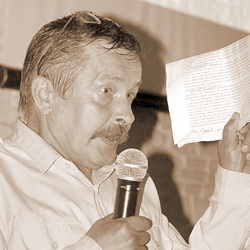
Все, кто против Шлосберга, фашисты, а все, кто за, милые люди, – кипятился Владимир Спириденков, – поносят православного священника Петра Нетребу. Главу района сравнили с Гитлером. Я вот до вас довожу...
Я тоже люблю Интернет почитать, – вставил реплику губернатор, вероятно, намекая, что хорошо знаком с псковским виртуальным пространством.
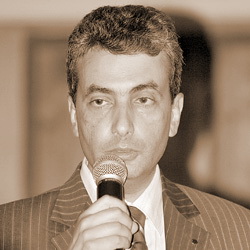
Примите, пожалуйста, правильное решение, – еще раз повторил краевед» [ 4 ].
| | | --- | | 
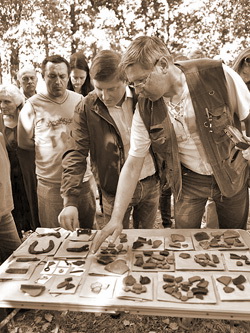
В заложенном раскопе уже обнаружены десятки фрагментов керамики XII-XIII веков, фрагменты браслета и перстня. Впервые получены материальные доказательства того, что Себеж как минимум на два века старше известного по письменным источникам своего возраста, ведущего отсчет с 1414 года, когда город был сожжен великим литовским князем Витовтом.
«С точки зрения археолога мы извлекли стандартный набор предметов, но для Себежа, поскольку раскопки здесь проводятся впервые, это первый вклад в изучение древней истории города, – отчитался перед губернатором Борис Харлашов. – И вклад результативный».
Судя по всему, открытия археологических культурных ценностей на Замковой горе стало главным аргументом для принятия решения, которое Андрей Турчак вынашивал долго. И наконец он его озвучил: «Сейчас единственно правильное решение – завершить раскопки. Законсервировать то, что сделали строители. И, после того, как появится паспорт объекта, перейти к благоустройству. Я предлагаю в этом сезоне больше ничем не заниматься. Необходимо открыть в этом году памятник Гердту. А вопрос по кресту, какой нужно поставить – тот, который уже сделан, или какой-то иной – обсудить позже. Здесь тоже нужно представить несколько вариантов, причем именно поклонных крестов. И выбрать тот, который будет отвечать эстетическим критериям».
Меньше всего собравшиеся на Замковой горе сторонники действий администрации ожидали услышать от губернатора такое решение.
| | | --- | | 
Но услышал в ответ: «Этим годом: раскопки, паспортизация объекта наследия, консервация и подготовка фундамента. После чего появляется несколько проектов. В том числе и нынешний. Так же, как и с памятником Гердту, всё это выносится на обсуждение, на голосование. Выбирается и устанавливается. Я все-таки хочу, чтобы мы не ограничивались одним проектом. Как он будет финансироваться? Может быть так, как и памятник Гердту. Будут народные деньги, найдем спонсоров, лично я поучаствую как гражданин. Благоустройство обязательно в этом году, чтобы все, что раскопано, не раскисло».
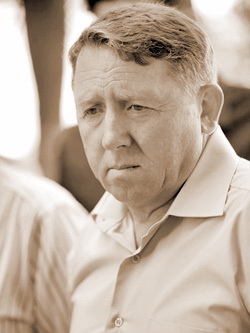
Леонид Курсенков снова высказался невпопад: «Здесь такой раздрай из-за этого креста. Нужно закрыть тему Замковой горы».
Похоже, он был готов ставить крест немедленно.
| | | --- | | 
Мотивов своих губернатор подробно описывать не стал, но, очевидно, все события десяти предшествующих дней в Себеже внесли в его решение свой вклад.
Таким образом, основное внимание ближайшего полугода будет сфокусировано на археологическом исследовании Себежского городища (есть предположение, что оно в силу открывшихся перспектив будет продолжено), а также на консервации, паспортизации и мягком благоустройстве.
Пока что – без основного символического элемента.
Крест на Себеже в 2011 году поставлен не будет.
Алексей АЛЕСИН, Себеж – Псков
1 See: L. Schlosberg. Furious collective farm // "PG", No. 20 (542) dated May 25-31, 2011; L. Schlosberg. Кража со взломом // «ПГ», № 21 (543) от 1-7 июня 2011 г.; L. Schlosberg. «Невежества убийственный позор» // «ПГ», № 22 (544) от 8-14 июня 2011 г.; L. Schlosberg. On the ruins of history // "PG", No. 23 (545) dated June 15-21, 2011; L. Schlosberg. Стояние на Замковой горе // «ПГ», № 24 (546) от 22-28 июня 2011 г.
2 See: L. Schlosberg. Мёртвые люди // «ПГ», № 36 (507) от 15-21 сентября 2010 г.; ГТРК «Псков». Себежский солдат . Стенограмма сюжета // «ПГ», № 36 (507) от 15-21 сентября 2010 г.; Ирина Коваленко: «Я была просто потрясена» // «ПГ», № 36 (507) от 15-21 сентября 2010 г.; Editors. Живые люди // № 37 (508) от 22-28 сентября 2010 г.
3 См.: Нацистские публичные слушания в Себеже 25 июля, http://lev-shlosberg.livejournal.com/474182.html
4 Здесь и далее описание встречи в Себеже 3 августа цитируется по: А. Донецкий. Разборки на Замковой горе / ПЛН, 04.08.2011 11:34.