
Translated material
Reformer
Rudolf Praust is a long time and firmly connected with the Pskov region, or rather, with Pylovsky district.
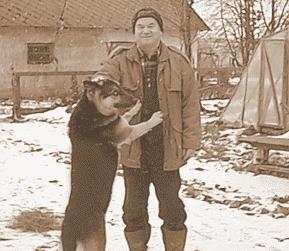
The first thing he remembers from childhood is his grandfather farm in the Novgorod region and the Estonian Farm Farm. Perhaps this predetermined the choice of a profession.
Pranest has a well -being Soviet biography: a university, practice from a young specialist to the head of a large state farm, from the head of the district department of agriculture to the general director of the interdistrict association of the Sovezov, a party career: from the secretary of the Komsomol commander to the secretary of the Leningrad regional party committee, deputy of the Supreme Council of Russia. And yet, now, living on a farm in the Pypalovsky district and looking back at most of the earthly path traveled, he believes that his life was painted in advance and marked with supporting milestones.
The path from the impasse
32 years of agriculturalpracts in the Leningrad Region with numerous attempts to reform the yawning industry led the reformer to a dead end and to a nervous breakdown. Rudolf Praust realized that he had exhausted himself as a practitioner, and in 1985 he went into science. And as often happened in his life, suddenly received an unexpected offer. President Vaskhnil Alexander Nikonov asked him to go to his small homeland, to Pynovsky District, with a new experiment to reform collective farms and state farms. Nikonov really wanted to do something good and useful for his native land. And Praust went.
Then the first secretary of the Pypalovsky district committee of the party was Nikolai Vorobyov. He enthusiastically reacted to my grandiose plans and promised to help. I created a supporting point, which soon turned into a laboratory. And the experiment began: at the expense of the lease of collective farm-horses and land, we created farms, believing that in this way, in the evolutionary way, collective farms and state farms are converted into farms working in close contact with the personal courtyards of the peasants.
How, then, then the whole country buzzed about the Pypalovsky experiment. Mikhail Gorbachev and members of the government from the stands of meetings and congresses, you were set as an example of others.
I counted: 3600 all kinds of domestic and foreign excursionists came to study our experience. In 1991, the experiment was stopped - restructuring began.
But why? After all, he was just in the spirit of the began changes?
The local political and economic elite was against. Frightened. A successful experiment of many would make us work or change a grinding warm place. The elite reaction was natural. But the fact that a significant part of the rural residents will be against reforms in the village really surprised me. In 1988, together with the Japanese, we conducted the first sociological study and found that only 4 - 5% of the peasants were ready to support farming and private property. Subsequently, life fully confirmed these conclusions and once again showed that nothing can be solved from the scab, cavalry methods, no matter how beautiful programs and projects were.
Farm
To the farm, Praust and his family moved in 1991. But first he ... dreamed of him ... More precisely, for several years a linden alley dreamed. And once, traveling through the Typalovsky fields, he saw an alley out of his sleep. She led to the dilapidated house. It turned out that the house was sold. It also turned out that the farm has an interesting story. An abandoned manor with well -preserved stone white courtyards for cattle is the former farm of Timofei Evdokimov, repressed and exiled for the ability to work well and live well. But this is a separate story that we will tell a little later.
Out of respect for the former owner, Rudolf Eduardovich called his peasant farm "Evdokimov". This is officially, unofficially, the farm has long been the name of Pranest.
The place is tall, around the hilly fields, the wind walks along the tops of the alley trees. It is not very comfortable here by snowless winter. The gate was opened by the hostess Galina Nikitichna, she just went out with dogs for a walk. The inveitness of winter nature is compensated by the warm coziness of the village house and the hospitality of the owners. Between the two rooms of the firmware for the office, racks with folders, books, a computer - this, in fact, is a laboratory, plus the entire economy.
- Ten years ago, we moved here from Leningrad to a permanent place of residence with an adult son. Without it, it would not make sense to start an experiment, ”explains Rudolf Eduardovich. - While they were repairing the house on their own, Eduard was sent to the farm internship to Sweden. Now she and her daughter -in -law Irina are the main labor force on the farm.
Farm
The farm has nine heads of cattle, of which four cows. Here everyone has their own role. Each step is fixed and entered into the computer: who, how many hours and minutes, on which site he worked, what he did. It turns out that full employment in the economy only two - Eduard and Irina, among the senior foresters and their grandchildren of Rostislav, Ivan and Nikita - partial employment. Each member of the family monthly draws up a report not only about how much he managed to do, but also how much he spent, what he acquired, what he realized, how much he helped out. Everything is taken into account: expenses for any acquisitions, products, clothing, services, treatment, postal expenses and so literally to the pin. This is important for the purity of research. In addition, there is daily accounting of income and expenses. Rudolph Eduardovich brings all these reports to the tables by months, quarters and years. In the course of the analysis, it is clearly seen how the income is growing gradually from year to year, the production base is developing, that in fact, only two adults can cope with the farm of the foremen. It would be possible to enlarge the farm, but so far it is unprofitable - it is difficult to sell products. And so they sell milk, butter, cottage cheese, meat at the most minimal prices - just to sell. They value each of their buyer, trying to please. The main conclusion is that in ten years, with a rather competent management of the farm, the peasant farmstead of Praustov only is equipped.
There is an experiment
Since 1985, Rudolf Praust for a day has not stopped a scientific experiment on the reform of agricultural production in a single Pypalovsky district. The scale of work changed, but not the point. The flexible system of the Nikonov agricultural institute allows the scientist, depending on the economic situation, to vary the number of full -time and abnormal employees of the laboratory, to spend funds on the collection of information. The so -called field work for laboratory staff begins in February and end in June. In addition to the support group of 30 farmers, which has been examined since 1988, each of the counters, and from 5 to 12 people, leads its own group. For example, Nina Kononova has up to 50 wards of personal auxiliary and farms.
Rudolf Eduardovich showed huge summary tables of surveys. They take into account very detailed and take into account everything: housing, land use, livestock, products, sales, equipment, food costs and clothing, and so on, up to political sympathies and assessments of the activity of local and regional authorities.
All this information is entered into the computer, processed and analyzed. Based on them, Praust prepares scientific reports in Russian, German and English, since it is often necessary to perform with them at international conferences. February 8 has a large report in Moscow for 2000.
Are you interested in the regional authorities, the regional administration?
No. Although I regularly send them to the libraries of my reports, as well as a monograph book, where the experience of ten years is collected. By the way, Tumanov was interested in our research. This administration does not see point blank. Last year, the scientific council of the Academy was held in Povalov. There were leaders of the region. They talked about progress and achievements in the agricultural industry and left. I suggested to them: let's hold a round table, invite the leading economists of the region, and let them break my arguments to fluff, if they can. Then the picture will be clear from these debates, what is the human resource, in which direction should be invested and much more. In response to me - indifferent silence. Actually, I do not need anything from the authorities. That's just for the power, as they say, insulting.
And in fact, he is used to getting around small and counts only on his own strength. Researchs are working as a legal advice on legal issues. Previously, he had his own office in Povalov, now he consults right in the car near the Rus Hotel. Topics of consultations are very different: from the simplest texts of contracts, statements and petitions to complex calculations on the division of property of peasant farms, reorganizing the form of ownership and the like. There are enough customers, especially since Prausta asks only to in good faith to answer the questions of a detailed questionnaire. This "barter" gives the scientist the opportunity to explore the maximum number of different types of agricultural activity, to get first -hand information.
Not yet time
Since 1998, Rudolf Proust - Chairman of the Association of Peasant farms.
At the beginning of the 90s, I was terribly worried that I could not achieve a specific result, then I realized - not the time. America reformed its agriculture 30-40 years. We will need the same amount. For some reason, we thought that any person can become a farmer. Practice has shown that not everyone, but only one who is able to endure deprivation and stubbornly go to the goal, is able to absorb new, progressive. Such selection is already coming. We also believed that we can make a single program for the development and transformation of farms. And then life corrected us, although they still did not understand that, for example, the experience of the Leningrad region, where I worked for three decades, is not suitable for the Pypalovsky district, because the main development potential is a person and the local conditions in which he lives. In fact, it is necessary to start the development of any program from below, from local self -government - so the Americans went to their food abundance. For local conditions, technology is needed, not only small and energy -intensive, but also adapted to the terrain. But the main condition on this difficult path is human psychology. Therefore, the current generation should be replaced.
It turns out, Rudolf Eduardovich, have you lived in vain life, and what you are doing now, in vain work?
Not at all. On the contrary, I have to work even more, because my experience will be in demand by my grandchildren. I have to do as much as possible for them. I work for the future generation of farmers. Therefore, I am calm and I think that life was a success.
Elizaveta Martynova.
Pyvalovsky district.
Photo: Elizaveta Martynova