
Translated material
Stop, canned food
Rosselkhoznadzor checked the fishing enterprises of Latvia and Estonia due to the "growth of identified violations"
Rosselkhoznadzor checked the fishing enterprises of Latvia and Estonia due to the "growth of identified violations"
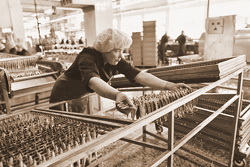
Employees of the Rosselkhoznadzor checked five fish processing enterprises in Latvia and four enterprises in Estonia. Basically, these are SPPROT manufacturers. The department notes that hazardous substances, such as benzopyrene, are constantly detected in the fish products of Estonia and Latvia. In addition, violations were recorded in the system for tracking products from the supplier to the processor.
| | | --- | | 
The supply of fish from Latvia and Estonia to Russia has been banned since August 2014, the import of canned fish is not limited. But only for now. In the near future, reports on checks of fish factories in the Baltic states will be made public. There is a high probability that the supply of canned fish from Estonia and Latvia will also be prohibited.
“In fact, these checks are an ordinary thing,” explains Alexei Malov, the ex -deputy chairman of the Pskovrybkhoz regional association. - We check the Baltic states, and those in turn are us. When the Gdovsky fish processing plant received an euro to export the perch fillet, it was also checked by experts from abroad. It is noteworthy that the initiators of checks by neighbors often become Estonians themselves or Latvians. Each of them is ready to take a vacant place on the market. ”
According to Alexei Menov, the Estonians have already firmly entered the fishing industry of our region. In fact, they are the main investors of regional fishing enterprises.
“When sanctions were imposed, the Estonians immediately came to us. The euro has grown up, and the price of our assets remained at about the same level. This was beneficial for investors for launching their production in the Pskov region. At the same time, they are interested in fishing enterprises in our region to work without violations. The fish is exported, and this is a currency, ”Malov explains.
In recent years, the enterprises of the fish industry of Estonia and Latvia have been in recent years. Having lost due to the sanctions of the traditional market, enterprises cannot function in normal mode. If the embargo now affects the canned fish, then the neighbors will become even harder, the products will have to sell the products for the most part in Western Europe. However, the same sprats and Salak are not in great demand there.
Estonia now even came out with a proposal to Belarusians so that they processed Estonian fish and then export it to Russia. Perhaps in the case of the embargo for fish canned food, this will be the only option to return to the Russian market.
While the neighbors are trying to find exits from the current situation and hold their fingers with a cross so that the results of checks of fish processing enterprises are positive, the fishing industry in the Pskov region, we can say, is worried about their heyday.
“Last year, fishermen showed plus on catching, employment in the industry increased,” says Alexei Malov. - For the development of the economy of the Pskov, Pechora and Gdovsky districts, this is a great help. The fish industry in the Pskov region is now doing great. It is not ZAUSED - banks for mythical quotas did not give money. The industry is developing, and for this it does not require a large participation of regional authorities. ”
The fishing industry, which has the status of strategic, which is poured into control of the participation of foreign capital in it, is not very interesting to Moscow and St. Petersburg. But for the regions, in particular for the Pskov region, the opposite, given the minimum credit load of the industry and the lack of debts to the fishermen. Now it is important to "preserve" the current state of affairs. Probably, negative and most likely, the non -accidental results of checks of fishing enterprises in Latvia and Estonia can lead to this.
Vladimir Kapustinsky