
Translated material
Patience of fuss
Attentiveness and balancy in making decisions regarding the cultural heritage of Pskov entered into an open contradiction with the limit of the time of administrative persons. Part two
Attentiveness and balancy in making decisions regarding the cultural heritage of Pskov entered into an open contradiction with the limit of the time of administrative persons. Part two
The most strategic issue on the meeting of the Public Council on Cultural Heritage under the Governor [ 1 ] predictably and inevitably became the question of the new project of the zones of the protection of historical and culture monuments of Pskov [ 2 ], the adoption of which, according to many, will destroy the entire system of protecting the historical and culture monuments in the historical center of Pskov. It is not a secret to any of the specialists that the real reason for the development of a new project of protection zones was not so much a change in federal legislation, but the intention of a number of commercial companies that have received oral advances of the authorities, to conduct new construction in the historical center of Pskov, which now (according to the current project of protection zones) is prohibited.
A more than a strange unsystematic choice for the development of projects of protection zones of only 11 cultural heritage objects [ 3 ] is simply explained: it was from these sites that the experts were planned, to start new development, and for this reason it was required to establish the so -called. The boundaries of the territory of the monuments, leaving the inviolable small plots of land near them and turning almost the entire historical center of Pskov into the so -called building regulation zone, where construction is basically allowed. And what new construction can be in relation to monuments of history and culture - knows well from the tragic experience of both Pskov and all of Russia.
"In the declared time, by the end of May, to make development and approve a new regulatory act"
| | | --- | | 
The territory of the current security zone of Pskov occupies an area of 330 hectares. This is 3% of the entire city. In Pskov, 123 ground and 17 archaeological monuments of federal significance, 204 ground and 39 archaeological monuments of regional significance are located and registered.
In addition, the city contains 115 newly identified terrestrial monuments of history and culture.
In total, in Pskov, the state accounting costs 498 monuments of history and culture, of which there are a direct impact on the urban environment, 442 monuments.
Pskov is one of the unique cities of Russia in terms of the density of the preserved objects of cultural heritage.
The monument protection zone, strictly regulating land use and development regimes in historical cities, is almost the only protection against barbaric development. There is no other way to preserve the architectural heritage of historical cities in principle: the least civilized developers are manicing to look for stains for the new building in the historical parts of the cities, increasing the capitalization of their business.
With the approval of the projects of new Pskov protection zones, only 11 monuments (10 - federal significance and 1 - regional significance) are planned to completely cancel the decision of the Pskov Regional Assembly of Deputies of June 29, 1995, which created a kind of legal fortress wall in Pskov - the united protection zone of the historical center of Pskov, which “covered” the monuments of history and culture from modern developers. The fall of this legal wall makes most monuments of the city defenseless before new construction.
| | | --- | | 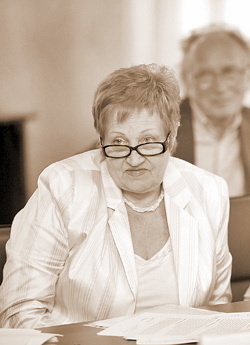
Then Ms. Trunova reported that the State Committee and State Committee for Culture she headed with the winner of the competition-the Yaroslavl Foundation "Institute for Sustainable Development of Cities" (Ipurga Foundation) [ 4 ] "Active work", so that "in the declared time, that is, by the end of May, to make a development and approve a new regulatory act", which confirms the intention, which confirms the intention, which confirms the intention, which confirms the intention. The regional administration raise the issue of canceling the decision of the Pskov Regional Assembly of Deputies of 1995.
Doctor of Historical Sciences, Professor, Archaeologist Anatoly Kirpichnikov said in April that officials “offer a mosaic system, a fractional system of approach to the security zone. It will be difficult to agree with this, maybe even unacceptable. ... There are things that are not mentioned at all. I do not know if the church of Vasily on the hill is included in the protection zone, is it covered with some kind of veil there? Nicola is covered with a lot? Walls and towers at all you have not entered any list ...
There is a single platform that unites all this amazing place and repeats the protection zone: it is a cultural layer. This is a blanket that covers the whole of Pskov. This alone obliges us to give not 11 separate fractional objects. This is a common security zone, a common attraction, this approach to Pskov is fully consistent with the general plan of Pskov, in vain, or something, was it accepted? ... There will be an underlying question: where is one zone where the other begins ... And there, between them, is an empty place, and there you can stick a skyscraper on 9 floors, and better - 25. You see, here is a tropin, a clue for the future destruction of a historical place! ”
The April discussion showed that no responsible specialist under the new system of Pskov protection zones is ready to subscribe.
This then prompted Andrei Tourchak to make a conclusion after a two -hour discussion: “We agreed that if these 11 monuments are missing and voids will appear, we will add. It seems to me that the discussion of this issue was quite productive. ... and at the next council we will raise this question on the vote. "
The next meeting was planned to be held in the second half of May, in accordance with the deadlines for the execution of the state contract, but even on June 16, almost a month in excess of the appointed term, it became obvious: the work is not ready, in the current form, it contains huge risks for the cultural heritage of Pskov and is subject to (with mild assessment) of great refinement or (with strict evaluation) to the archive as unsuitable for practical use. Most likely, no one of the council members would have risen to vote for her.
"Andrey Vladislavovich, what kind of story with Rostov turned out?"
| | | --- | | 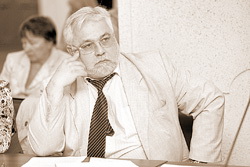
The governor had for such a replica of the foundation: in one of the new development tests presented to him, it was noticed that in the text of the new project, for example, phrases were found: “The cultural layer of the city of Rostov is a unique value ... The preservation of the historical environment of the city of Pskov cannot and should not contradict the tasks of preserving the cultural layer of the city of Rostov” [ 5 ].
The quoted phrase caused a strong indignation in the community of Pskov experts and gave rise to a stable impression that the project for the protection of historical and culture monuments Pskov was nothing more than adapted by automatic replacements of keywords by the Rostov text.
But there were more serious claims.
From the Russian State Research and Project Institute of Urbanism (developer adopted both in 1973 and in 2010, the General Plan of the Pskov) came a tooth-conveying feedback signed by the director of the Institute of V. A. Shchitinsky and the chief architect of the project of the Pskov Protection Zones, the co-author of the general plan Pskov (participants in the meeting received copies of the meeting. official letter):
"1. If the city of Pskov is considered as a historical settlement, and in accordance with the definition of a historical settlement in the Federal Law “On Cultural Heritage ...”, it is such a technical task for developing a project for the protection zones of cultural heritage objects of the city of Pskov (only 11 monuments !!) is unlawful, since: “All historically valuable city -forming objects are subject to state protection ...”.
- The authors of the project argue that "the traditional protective approach is a tendency to release the system of local security zones and regulation zones, taking into account the prevailing realities and focused on the maintenance of the most valuable fragments and characteristics of the historical center."
In the historical center of Pskov, in addition to the 11 stated monuments, there are about 100 monuments of federal and regional significance, which in this project include (without the identified territory of the monument and the constructed security zone) in the “quarterly” zones of development regulation, and it is not clear how the permissible buildings of the development height of development.
So, for example, in the ZRZ [ 6 ] .14 with the permissible height of the building of 18 meters is a unique monument of federal significance of the Church of Nikola from the Usokhi. The same in ZRZ 1 - the Church of Varlaam Khutinsky and the Resurrection; ZRZ.10 - the church of Nikolai revealed and the cover from the bargain; ZRZ 1 - the Church of Kozma and Damian with a person; ZRZ. 4 - Ilya Church from the wet meadow, etc.
Many churches as dominants-silhouette-forming elements of the environment-are perceived against the background of the sky, but are included by the authors in the regulation zone without any assessment of their visual perception and the corresponding designation as monuments.
The project does not have a description of the boundaries of the territories of cultural heritage objects (a area historically belonging to the cultural heritage object, related to it functionally and artistically), there are no archival documents confirming the boundaries of cultural heritage objects.
There is completely no justification for the construction of the boundaries of security zones of cultural heritage and their description (approved part of the project).
There is no report on the historical and cultural studies. ”
| | | --- | | 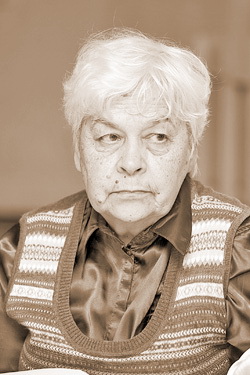
Natalya Trunova, who was familiar with the conclusion of the Urbanism Institute and the direct threat to the results of the work of his unaccounted protrusion and, possibly, to his own actions in citation by the governor of the obvious blunder developers of new projects, the first to ask the word: “I would make a brief organizational performance and allow Andrei Vladislavich Lukashev about the general concept. Now an array of comments on this work has been received. We have an agreement with the developer that they will be introduced within 3-4 days. And then to members of the Methodological Council, members of the Council on Culture, the Committee on Culture, material will be presented taking into account the comments. Now this is material in a single scheme, but it will be divided into 11 objects. And within two weeks, when a new set of comments will be received, the developers are ready to provide the final, final version. ”
But Ms. Trunov could not bring down the governor from a stable thought.
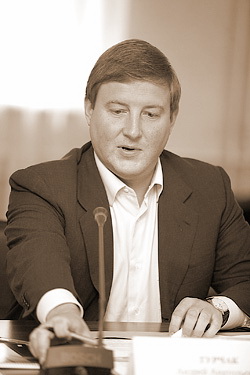
“Andrei Vladislavovich, what kind of story was there with Rostov?” Andrei Turchak Andrei Lukashev asked, not without obvious sarcasm.
Lukashev: “In Rostov, we worked in the same channel, so we wrote off by ourselves. We mentioned Rostov as an example, since they are similar in monuments, a cultural layer. ”
Turchak: “The text was mechanically moved. Or is it not true? "
| | | --- | | 
7 Turchak: “But there should be Pskov, right?! The question is what: you are not doing this for free! We pay money for this, and the money is not small, and we want an exclusive attitude for this money, and not so that you translate the text from the material for which Rostov has already paid, and for the second time they sold us the same. The only question is in this - in relation! That's all, ”the governor threw out indignation.
After this explosion, Mr. Lukashev got the opportunity to speak in detail.
The editors of the Pskov province quoted Andrei Lukashev in the most detail as possible.
Having dealt with excitement, he said: “The topic is really difficult, in terms of ambiguity of legislation. On June 29, the State Duma of Changes in the Federal Law No. 73 “On the Protection of Monuments ...”, which can significantly adjust the current legislative situation, is planned.
Where we worked earlier, we worked according to various methods. Other cities also went by creating protection zones to individual monuments, but Yaroslavl went in another way, we did not take part there. To date, the concept [development of projects for the protection zones of monuments] is not accepted on the principle of nesting dolls, another development concept comes: the formation of [projects of the monument protection zones] on the principle of mosaics, when the zones are coasted and not overlap.
11 objects that we consider really close the significant part that is protected and preserved by the 1995 project. Today we received comments. To the method that matches the technical task, questions arise. But, nevertheless, this method when individual zones are formed by individual monuments, tested.
As for the regulations of individual zones, here as a result of discussions we see quite opposite positions. The position of the community, which is professionally engaged in the preservation of the historical and cultural heritage and the position of architects, that we have laid too hard areas, restrain the freedom of architectural creativity in this territory.
Before Tuesday, we will try to take these proposals to take into account and prepare an option that would take into account the maximum interests. From Monday, we showed our work to federal experts who work with us as part of the technical specifications. I believe that these are the best experts in the country. This is Irina Shevchenko, Alla Godlevskaya and Tatyana Kudryavtseva ... "
Andrei Turchak artistically interrupted the speaker: “We believe that the best experts are Pskovichi. There are no better experts of the Pskov representatives ... ”
Andrei Lukashev in response said an important thing known only to a narrow circle of specialists: “Unfortunately, Andrei Anatolyevich, it is necessary to certify Pskov experts in the Ministry of Culture. There is only one, but according to archeology ”[ 8 ].
The governor, who was surrounded by two archaeologists (Anatoly Kirpichnikov and Elena Yakovleva), said: “In archeology, we are generally the best. The regional register ".
As you know, in every joke there is only a share of a joke.
Andrey Lukashev continued:
“One of the comments presented is the question of the inclusion in the protection zone of the Snowogorsk monastery, Petrovsky bastions, and Gremyachychi of the tower.
Yes, we do not close those objects that are located far enough, but the method allows you to announce a competition for the development of other protection zones tomorrow and attach these security zones [to previously developed].
I think that the development of events on our project will go as follows. We will make a proposal to organize work to establish the boundaries of the territory of cultural heritage objects of individual monuments, which are included in the development zones of development. This applies to the Church of Vasily on the hill, and the Church of Nikola from the Usookh, and all other objects that require such an attitude. And, apparently, with the Methodological Council, the Town Planning Council, we will give recommendations on those objects for which the work on which needs to be continued.
I beg you to excuse if we were incorrectly understood. We try to make an exclusive option. ”
In former times, in such cases they wrote: "For this I ask you to take my assurances in the respects to your excellency."
The last phrase was simply inevitable in this situation.
Andrei Turchak went to meet: “We are ready to add. We understand that out of 11 it can turn out 20 and more. Is it possible to see how the zones [protection] are in contact, ensuring overlapping the entire historical center? ”
Natalya Trunova again came to the aid of the contractors, who inadvertently spoke about the unacceptability of the border of the guardian protection zones on the current line: “Additional proposals will also be along the updated border, this border cannot be directed directly along the territory of the roundabout city. It is advisable to regulate the nearest border by the project of security zones in relation to the Kremlin. Second. It is necessary to form a list of [monuments], for which protection zones will be developed without fail. ”
“From July, this work can be started,” Ms. Trunov optimistically described the prospect of self -employment.
"We will have to issue building permits for which it will be ashamed"
| | | --- | | 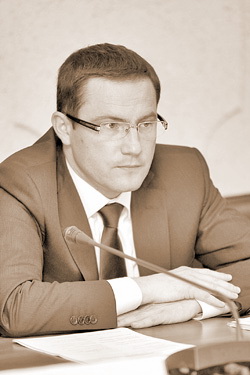
In fact, it was an oral review of Ipurg’s proposals, and the review is negative: “It is not clear where these several protection zones came from. The justification why they are so located was not given to us anywhere. I want to remind members of the Council that the development of protection zones is included in the regional cultural heritage program. It was planned to add new security areas for the implementation of design annually. Для большинства памятников Пскова такие зоны охраны сейчас отсутствуют. 11 из них будут проработаны. Важно показать в проекте каждую зону отдельно с выявленными памятниками. Пока я понимаю, что это не выполнено. Где мы можем увидеть каждую из этих зон охраны? Не в соотношении с историческим центром, а отдельно – подробно спроектированную.
В проекте есть текстовая часть, но графической части мы не видим. Срок действия исполнения проекта определен 61 днем, которые уже прошли. И пока мы видим в основном теоретизирование, но при этом видим искажение, непосредственно касающееся памятников Пскова. Это искажение касается датировки культурного слоя, которая дается по Ростову», - бросила еще один увесистый камушек в огород небрежных исполнителей Инга Константиновна.
И продолжила: «Режимы охраны по археологии в проекте делятся на два уровня. Один – это режим археологического исследования, там, где слой имеет мощность более метра. Простите, но у нас есть ямы в материке, из которых происходит материал Х века, а слой там – ничтожный. В метрах и сантиметрах охраняемый федеральный памятник мы измерять не можем!
Говорится, что режим исследования вводится там, где особо ценный культурный слой. Но весь слой в границах Пскова признан федеральным памятником и является особо ценным. А другой вводимый режим на памятнике федерального значения – это какой-то режим поиска, с чем мы не согласны».
Уже второе подряд обсуждение с участием Андрея Лукашева показывает, что в ответ на конкретные аргументированные претензии, после которых абстрактные разговоры невозможны, он начинает оправдываться и обещать.
Так случилось и на этот раз: «Мы представим отдельные обоснования и проекты по каждому из заявленных в техническом задании объектов. Не всё, чтобы мы хотели видеть среди исходных данных, мы получили вовремя. До сих пор ряд материалов, который мы хотели увидеть, мы не увидели. Мы берем на себя обязательство в двухнедельный срок постараться эту работу привести к завершению с учетом всех замечаний, которые получены на сегодняшнем общественном совете».
Андрей Турчак дал понять, что такая позиция его администрацией рассматривается как вполне приемлемая: «Мы предполагали в проекте решения сегодняшнего совета так и записать, что вы должны ориентироваться на то, что было озвучено на градостроительном совете [ 9 ], на методическом совете и сегодня».
От рабочей группы Общественного совета выступила председатель Псковского областного отделения ВООПИиК Ирина Голубева:
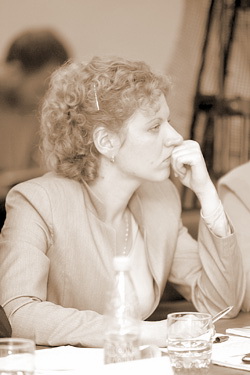
«Ситуация вокруг проектирования новых зон охраны в г. Пскове набирает обороты. Несколько раз собиралась рабочая группа из 4 членов совета, неоднократно привлекала специалистов из членов Союза архитекторов, которые имеют большой опыт работы в Пскове. Они понимают, какие ограничения и какие свободы им может дать проектирование новых зон охраны. Нам удалось связаться с разработчиком действующего ныне проекта зон охраны [ 10 ].
| | | --- | | 
Далее Ирина Борисовна озвучила весьма пространный и сухой текст, из которого следовало, что «задачи, поставленные техническим заданием, не предусматривают универсальной переработки системы зон охраны исторической среды г. Пскова, а предусматривают охрану локальных участков территории 11 памятников, что противоречит принципам охраны исторических поселений.
При разработке зон охраны в исторической части города не учтено наличие на территории других многочисленных объектов культурного наследия, их влияние на режимы и регламенты территории. Представленная проектная документация разработана без градостроительного осмысления целей и задач сохранения наследия Пскова.
Практика использования действующей нормативной документации по исторической части города не проанализирована в полном объеме. Документация не предусматривает алгоритм правовых и градостроительных задач на охраняемых территориях. Предложения по регламентам не имеют необходимых нормативных ссылок и натурных исследований. Допуски на разрешаемое повышение высотности новых зданий бездоказательны.
Не проведены комплексные исследования ландшафта и рельефа Пскова. Недостаточно проработан регламент зон охраняемого ландшафта. Проект не может быть одобрен к утверждению. Совет считает целесообразным дополнить перечень памятников, помимо 11, рядом других важных объектов культурного наследия. Заказчику и проектной организации необходимо указать точные сроки разработки охранных зон по остальным псковским памятникам».
Выслушав Ирину Голубеву, не оставившую от ярославской разработки фактически камня на камне, Андрей Турчак передал слово главе администрации Пскова Петру Слепченко, которого в данной ситуации он представил как председателя градостроительного совета Пскова.
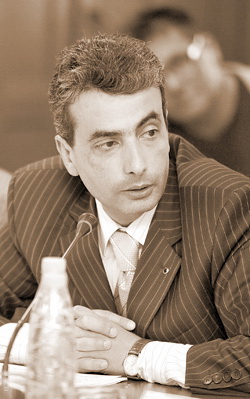
К чести Петра Слепченко, он был беспристрастен и сообщил: «Ирина Борисовна зачитала то, что было принято на градостроительном совете. Я скажу о том, что меня волнует в первую очередь. Принятие нового проекта зон охраны отменяет действие старого. Старый проект шире того, который будет приниматься. Пока у нас, у города, нет понимания, в какие сроки, когда и по каким объектам будут еще разрабатываться зоны охраны. Мы попадаем в ситуацию, когда мы можем, не имея ограничений по объектам, которые в будущем будут включены в зоны охраны, наломать дров. То есть нам придется выдавать разрешения на строительство, за которые будет стыдно. Хотелось бы понимать: когда, в какие сроки и по каким объектам такая работа будет продолжена с тем, чтобы принимать взвешенные решения», - дважды повторил свой главный посыл глава городской администрации.
| | | --- | | 
Госпожа Трунова охотно подтвердила: «Мы в сопроводительном письме на диске с материалами акцентируем внимание на этих вопросах, чтобы все сделали свои предложения в перечень».
Теперь уже Андрей Лукашев пришел на помощь Наталье Труновой: «Андрей Анатольевич, мы на карте нанесем памятники, которые сегодня есть, это поможет комитету установить объекты, для которых необходима [разработка проектов зон охраны] в первую очередь.
Андрей Анатольевич, сегодня прошло очень серьезное, живое обсуждение представленного уровня проекта, мы выходим на еженедельную и плотную работу с контролем».
Андрей Лукашев всячески давал понять губернатору, что состоявшейся дискуссии по сделанной им и его организацией работе достаточно для успешного завершения труда.
Складывавшуюся иллюзию идиллии вслед за Петром Слепченко разрушил заместитель председателя Псковского отделения ВООПИиК Лев Шлосберг: «Сегодня мы получили доказательства того, что техническое задание, которое было выдано на разработку проектов зон охраны, было ошибочным. Реальной целью этой работы была и остается, как мы понимаем, отмена ныне действующего проекта объединенной охраной зоны Пскова, с допуском в историческую часть Пскова весьма жестко действующих застройщиков. Эта позиция не принимается большинством специалистов по охране объектов культурного наследия.
Замечания сводятся к тому, что позиция государственного заказчика должна быть существенно скорректирована. По новым проектам у нас появляется 18-20-метровая застройка около объектов культурного наследия федерального значения, в пределах стены Окольного города. Мы говорили на предыдущем совете, что стены Окольного города – это неприкосновенная черта. Лукавство в обсуждении множества деталей новых проектов не позволяет увидеть всей картины в целом.
Петр Михайлович сказал о возможных последствиях такого подхода. Для органов исполнительной власти города принятие предложенных проектов зон охраны 11 памятников будет этической и управленческой катастрофой. Законных оснований отказать застройщикам у администрации города не будет, но будет понимание, что согласовывать предлагаемую застройку недопустимо. Способ исправления этой ситуации один – это дискуссия об объеме реального технического задания для такой работы. Реальная задача охраны объектов культурного наследия Пскова в рамках данного контракта невыполнима».
Андрей Турчак откликнулся с нарастающей эмоциональностью: «Спасибо, Лев Маркович, мы услышали вашу позицию. Мы разделяем опасения Петра Михайловича Слепченко. Мы готовы увеличивать количество памятников с 11 дальше. Стена Окольного города сама может быть предметом размещения заказа на проектирование зон охраны. Но государственный заказчик движется в правильном направлении! Никто не ставил и не ставит задачи открыть город для «жестких застройщиков»! Нет таких в Пскове! Вы еще не знаете «жестких застройщиков»!»
И это было похоже на обещание, что знакомство с такими застройщиками у псковичей еще может состояться.
Konstantin Minaev
1 Первую часть репортажа см.: К. Минаев. Patience of fuss. Часть первая // «ПГ», № 25 (547) от 29 июня – 5 июля 2011 г.
2 See: I. Golubev. Costs of Chaos // "PG", No. 11 (533) dated 23-29 March 2011; K. Minaev. Sunny complexes. Часть первая // «ПГ», № 16 (538) от 27 апреля – 3 мая 2011 г.
3 Государственным контрактом предусмотрена разработка проектов зон охраны объектов культурного наследия для 11 памятников: Ансамбль Кремля, церковь Богоявления со звонницей, церковь Иоанна Богослова на Милявице, церковь Константина и Елены, церковь Николая Чудотворца (в Любятово), ансамбль Спасо-Мирожского монастыря, собор Рождества Иоанна Предтечи Ивановского монастыря, церковь Успения со звонницей (в Бутырках), ансамбль Вознесенского монастыря, церковь Климента папы Римского, здание железнодорожного вокзала (памятник регионального значения).
4 Фонд «ИПУРГ» выиграл государственный конкурс, взявшись в абсолютно нереальные сроки (61 день) и за минимальные деньги (2 млн. 499 тыс. руб.) сделать работы, для которых, по мнению специалистов, необходимо не менее полугода для специализированных организаций.
5 Одной из предшествующих работ Фонда «ИПУРГ» была разработка проекта зон охраны памятников для Ростова (Великого).
6 ЗРЗ – зона регулирования застройки.
7 Речь идет о постановлении правительства РФ от 26 апреля 2008 г. «Об утверждении Положения о зонах охраны объектов культурного наследия (памятников истории и культуры) народов Российской Федерации».
8 Андрей Лукашев имел в виду аттестованного Министерством культуры федерального эксперта: директора ГУК «Археологический центр Псковской области» Елена Яковлева. Она является ответственным секретарем Общественного совета по культурному наследию. - Ed.
9 Первое заседание градостроительного совета Пскова прошло 14 июня 2011 г.
10 См. выше отзыв и замечания, представленные Институтом Урбанистики (Санкт-Петербург).