
Translated material
The director is himself
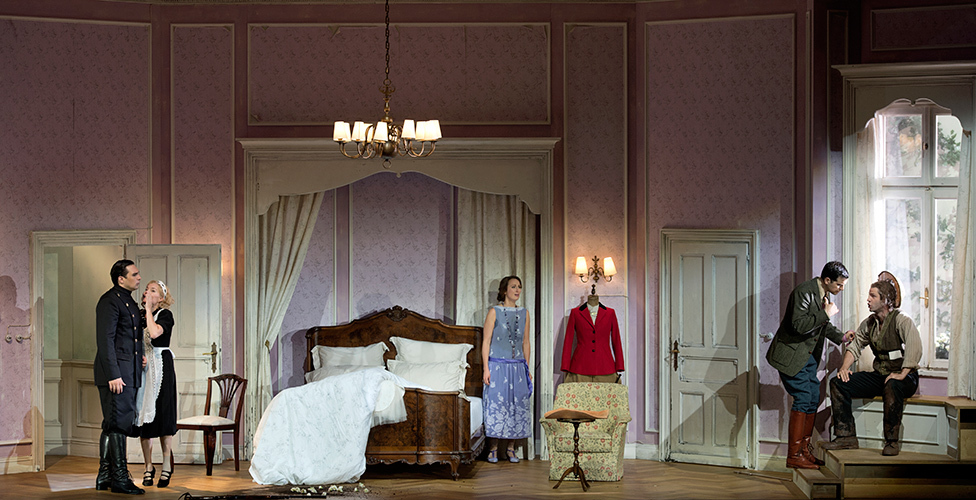
This summer, Sven-Eric Bekhtolf puts in Salzburg a third part of the Dontoma trilogy of Mozart. They did not expect much from him. The first two, “all women do this” and “Don Juan”, almost ended in failure. On Figaro, the public is solid goodwill. No buking, giking and indignation, it seems like a great performance, where no one causes a rejection. (Sometimes Salzburg is difficult to understand, especially when it comes to Mozart.)
The conductor Dan Ettinger does not cause rejection of the Vienna Philharmonic Orchestra, they play as long as familiar relatives, albeit distant, communicating more out of politeness. A random meeting, a formal interest in each other, not a binding conversation.
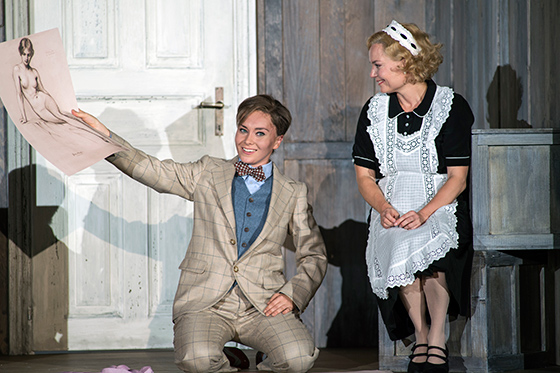
The singers are not surprised by the Ettinger, even if they do not come close to the peak of their capabilities, like Luke Pazaroni (Count of Almaviva) and Adam Plahen (Figaro). Everyone has a solid job: Martina Yankova (exemplary Suzanne), and Margarita Gritskova (convincing Karubino), and Ann Murray (Marcelina).
The singers are not irritated by the costume artist. Although Mark Bowman put everyone in outfits of the beginning of the twentieth century, all the innovations limited themselves to this. It seems like it happened by chance that it was the beginning of the XX that could be half a century earlier, and a century later.
 © Ruth Walz / Salzburger Festspiele
The artist does not cause rejection of the public. Alex Ils built a two-story house, sort of from the television series English capacity of the 1920s, where there was little change over the past century. Here are the bedrooms, and pantries, and even the attic - like in children's folding toys: you unfold a large house, and there all the insides are like in the context. For action, this attic is meaningless, but aesthetically very even nothing.
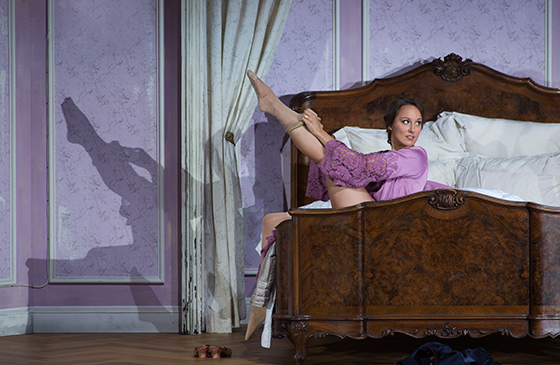
Actually, the whole performance is the same - it seems to be completely meaningless, but aesthetically not at all nasty.
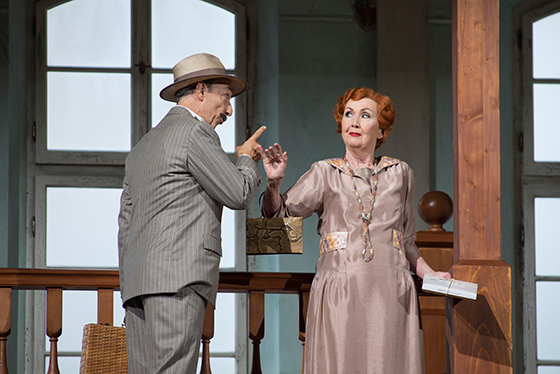
On the eve of the premiere, the director said that, this time, Mozart, thought a lot about the strength of love and feelings, and concentrated on them. At first, performers basically gather forces, and then many of them are closer to the final, it seems like it develops with the image - this applies to Figaro, and the Count, and his wife (Anette Frich generally sounds more interesting than all).
 © Ruth Walz / Salzburger Festspiele
Bechtolf has a feature that one day you begin to breathe easier. His last picture is always made with feeling and arrangement, it often justifies the previous routine. But at the same time - a strange thing - there is no point in watching only the ending. Not only because the ends converge here and all meanings appear, but it follows so logically from everything previous that without it simply does not exist. Even if there was a perfect emptiness. Like as enjoyment of water, you are especially full -blooded after traveling around the desert.
Bekhtolf is not afraid that he will be accused of attempted on the Holy - on the overgrown with meanings, interpretations and interpretations of the trilogy of Mozart - da Ponte. For him, all this additional intellectual property was perched on the body of the opera, like a stone on the neck of the drowned man. Someone will say-this is what a special view of a tradition is required, sharp, like a cut with a scalpel, an approach to the classic text, so that the source remains alive, and its own reputation does not suffer. But Bechtolf simply reduces eroticism and sensuality, which do not constitute the main content of Mozart - da Ponte, actually destroying the already ghostly unity of three operas. In Figaro, he shows himself to be a master of details, does not lose his sense of humor in separate mise -en -scenes, but this is not enough for the integrity of the look. According to these productions, you can’t say that yes Ponte is the best librettist of the 18th century, and maybe the whole history of the opera, although they would probably decorate the poster of the provincial theater.
 © Ruth Walz / Salzburger Festspiele
But, it seems, there is simply no one to stop Bechtolf, there is no one to advise him how best. By the will of fate today, albeit a temporary, but the opera-theater quartermaster of Salzburg and at the same time a practicing director is a dangerous combination, when there are only two people in the directorial: Bekhtolf and the many-year-old director of the Helga Rable-Stadler festival. She is responsible for sponsors, official and secular contacts. And with whom is Bekhtolf to talk about art? Who will stop him if what?
Of course, he observes balance. Among the premiers of this year is the obligatory modernity ( “conquering of Mexico” ), neatly, albeit with the cold, the interpreted classic ( “Fidelio” ) and “Classic for all” - in the role of the public is the “Figaro Wedding”. Harry Kupfer, shown last year, is responsible for the high style, for fashion - the renewed Trubadur Alvis Hermanis with Anna Netrebko.
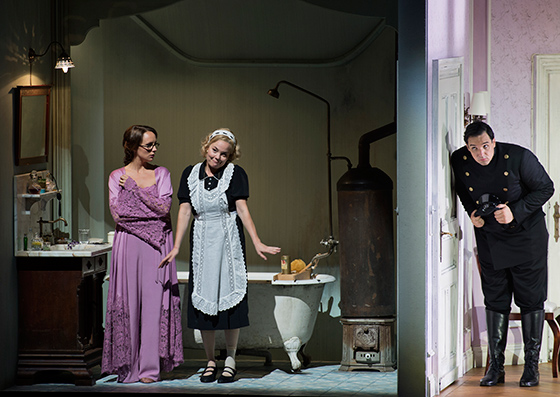 © Ruth Walz / Salzburger Festspiele
Supporters of Karayanov’s aesthetics, built around the cult of the conductor and singers, driven the direction in the back room, to the servants' room, are satisfied: finally on their street the holiday, the principles of muzzles and rugs suffer under the pressure of those in need of something simpler. But what is good for the repertoire theater in Mannheim or Zurich is unlikely to be suitable for Salzburg, and any other honestly comprehending festival. A brief life of festival productions, an increased concentration of colleagues at the premiere, special attention of the media - everything becomes part of the biography of the performance.
You can, of course, pretend that all this does not matter, but then you should not be surprised that the wife is cheating on you and even Suzanne will once go to another.