
Translated material
Paper with a seal
In the Kremlin
 Paper with a seal
December 16, 2013 Alexander Podrabinek
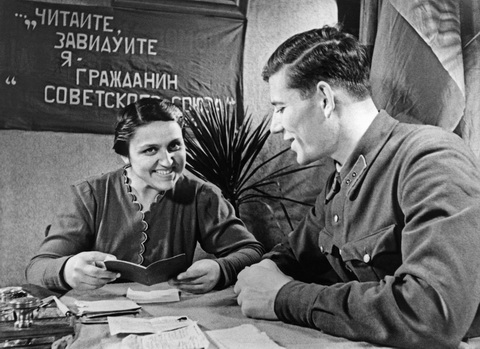
- Do you have a passport? - Suddenly menacing
Roared the doctor. “I know you, channels!”
A.I. Kuprin, "White Poodle"
Initially, the passports served as permission to travel to foreign cities and countries. In Russia, in the XVII century, an analogue of a passport was issued from the country - “passing diploma”. For a trip to another state, subjects needed to “beat a brow to the sovereign ... (or) governors about the passage of literacy,” and the duties of the governor were to issue these passing letters “without any detention”. In Europe, in the Middle Ages, travelers were given passports with a list of cities that they had the right to visit. Later, passports began to be given to all subjects in order to separate them from deserters, tramps, spies, residents of the "conceived" countries. The passport system served as protection against enemies of the state.
In the middle of the XIX century, with the development of railway transport, in Europe, passports lost their relevance. Too many people began to move around the continent. Before World War I, European borders could be crossed without presenting a passport. The passport system was then preserved only in the Ottoman Empire and Russia, where it served as an addition to the internal passports system.
In the 20th century, with the beginning of a global confrontation and strengthening of state borders, foreign passports again became relevant. This continues to this day. Meanwhile, internal passports, it seems, remains only in Russia, North Korea and Ukraine. Not every state, with suspicion of their citizens, can afford such an expensive system as an internal passport regime.
In Russia, they never spared money for state security. Vigilance has always been above all. The internal passports of subjects of the Russian Empire ceased to operate in 1923. Such a “mess” continued until 1932, when a single passport system was introduced in the USSR. The Holodomor organized by the communist power, in which, according to various estimates from hunger, from 2 to 8 million people died, contributed to mass migration in the country. People tried to escape from hunger and repression in large cities. The presence of internal passports in citizens allowed the authorities to separate those who were allowed to survive from those who were doomed to the Communists to death.
Passports were not issued to the peasants at all. They were attached to their collective farm. Caught anywhere else, they could be fined for the first time, and in the second they were put in the camp. The article 192a introduced on July 1, 1934 in the Criminal Code of the RSFSR provided for this imprisonment for up to two years.
Such a system of attaching peasants to the collective farm continued until the 70s. In 1970, the USSR Ministry of Internal Affairs issued “Instructions on the procedure for registering and extracting citizens by executive committees of rural and village councils of workers' deputies”, which wrote: “As an exception, the issuance of passports to residents of rural areas working at enterprises and institutions, as well as citizens who need identity documents certifying, are necessary.” So in Soviet serfdom the first gap was broken, and rural youth began to move to the cities where she could study and work.
In 1974, the Council of Ministers of the USSR adopted a new “Regulation on the passport system in the USSR” and the passport began to issue to all citizens of the Soviet Union. By the end of 1981, when the universal passportation ended, about 50 million passports were issued in rural areas. On this, the official mode of the apartheid on the basis of the place of residence has ended. However, the authorities have not disappeared to the authorities against citizens. The passport system continued to exist.
With the beginning of perestroika, the state’s pressure on citizens began to soften. The registration disappeared, the criminal liability for violations of the passport regime was canceled. Article 198 of the Criminal Code of the RSFSR, which punishes one year in prison for living without a passport, has not appeared in the new Russian Criminal Code. Foreign passports necessary for trips abroad began to be issued practically without restrictions.

But can something good last long in Russia? Last Friday, December 13, 2013, the State Duma adopted in the third and final reading a package of laws that restore criminal and administrative liability for violation of the registration rules, in advance-registration. This package contains a law that has no direct attitude to registration. The Code of Administrative Offenses has changed an article on liability for living without a passport or for a invalid passport. For non -passport, the fine is increased to 5 thousand rubles, and for officials responsible for improper registration or accommodation without a passport, administrative responsibility was canceled in general.
The state again tightens the passport regime, unleashes hands with officials and fetters citizens. The people, as always, under suspicion - suddenly imagines themselves free? The internal passport allows you to note everyone. And whoever tries to dodge is the court.
Photo of the RGAKFD / photo ITAR-TASS