
Translated material
DDT against the KGB
On March 15, in the music store “House of Culture”, the last presentation of the new edition of the book “100 Magnets of Soviet Rock” will be held in the series. At the “cultural” guests are waiting for “kitchen” stories from Alexander Kushnir, as well as meetings with those who worked on the book, and, possibly, with some of its heroes. The musical accompaniment of the evening will be taken by the Amaria group. Start at 17:00, the entrance is free.
And we continue to publish selected chapters from “100 magneto -albums of Soviet rock”. This time is an action-packed story about how the album “Periphery” was recorded, from which Ufa problems and the All-Union glory of the DDT group, which celebrated the 40th anniversary this year, began.
"DDT" - "Periphery" (1984)
Side a
● "We are from Ufa"
● "Fill the sky with kindness"
● "Monday"
● "Monument (Pushkin)"
Side c
● "Hippans"
● "I got this role"
● "Periphery"
● "ditties"
The only place in Ufa, where in the early 80s it was theoretically that the rock album could be recorded was the Bashkir television studio. A couple of years before the events described, the young sound engineer Igor Vereshchak recorded three compositions here performed by DDT (“Do not shoot” and two songs of Soviet composers) for the Golden Camneton of the All -Union Competition of the Golden Camlord, which was held by Komsomolsky Truth. In the remaining studio time, the musicians of DDT managed to fix 16 songs of Shevchuk on the film, which later received fame in the form of a magneto -album “Pig on the Rainbow”.
The next two years in this citadel of communist propaganda there was not the slightest chance to record underground rock groups. Therefore, in the winter of 1983, Shevchuk recorded his next album in Cherepovets, and in the summer and autumn he worked as a designer-former in Bashkir villages.
“I, like the damned, was dangled along the same periphery - doing what was then called visual agitation,” Shevchuk later recalled. “I think today I could draw Brezhnev or Lenin even with my eyes closed, but I hope this skill is no longer needed.” Along the way, he pondered new songs - the benefit of impressions was enough. ”
Most of Shevchuk's works were social sketches of the “current moment” in the Bashkir context - from a satirical look at Ufa and ending with the peripheral customs of the Black Earth Region: “Then the tractor swept, crushing piglets. / In the neighboring village there is Cyrus, they say. / All night did not close the eyes of the eyes: / The order came to us - to plant pineapple! ”
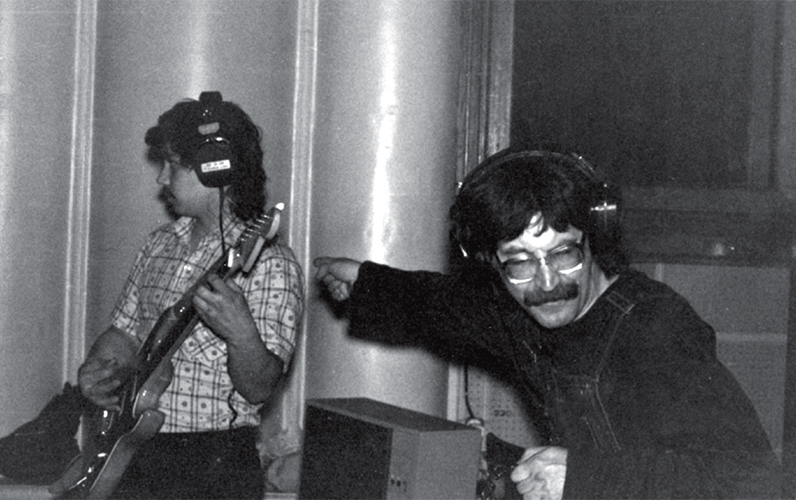
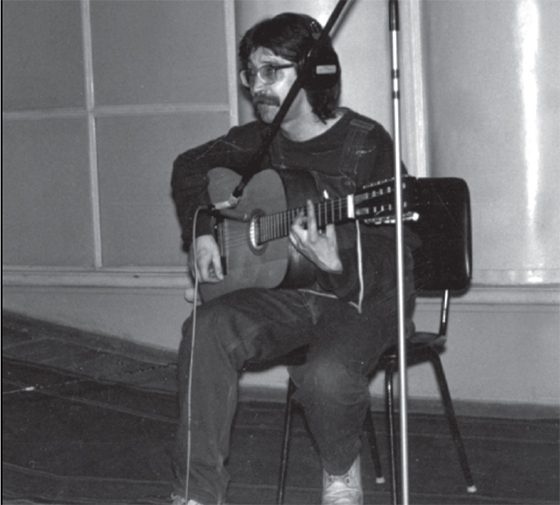 © Anatoly Voinov Yuri Shevchuk writes the composition “I got this role” (“Happy Ticket”)
In addition to the agrarian-urban sketches dedicated to the bow of the city and the village, Shevchuk wrote several software compositions that had the nature of civilian manifestos: in particular, “I got this role”, crowned with all underground rock clerks, and “we will fill the sky with kindness”-the sensed answer to Okudzhavskaya “We take up hands, friends!”.
The new program was originally created by Shevchuk in acoustics - with a hidden hope for the subsequent implementation of its main part in electricity. By that time, the composition of the group once again underwent significant changes. The DDT keyboard player Vladimir Sigachev rehearsed the entire program, made, as always, excellent arrangements, but by the beginning of the session he suddenly disappeared from the city. The guitarist of the first convocation Rustem Asanbaev moved away from the group and recorded in the underground conditions a solo hard-rock album. The last of the Mogikan, who remained in DDT along with Shevchuk, was the bassist Gennady Rodin - a man who, in the very beginning of the eighties, gathered the first composition of the group.
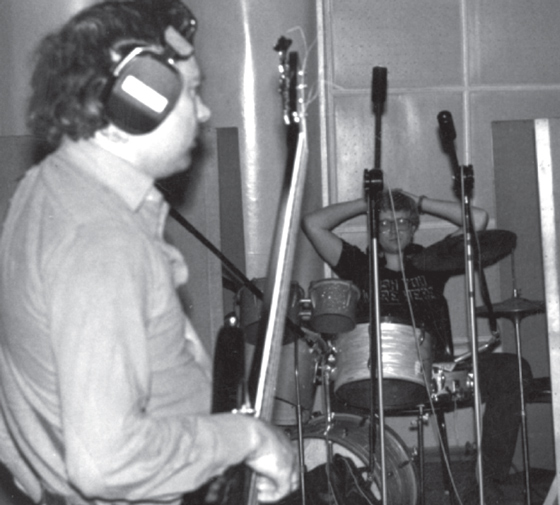 © Anatoly Voynov Gennady Rodin (BAS) and Sergey Ruda (drums)
Of the recruits, “DDT” served the greatest hopes by Sergey Ruda-the future anesthetist, in life-an energetic young man with a developed sense of humor and with a horizon atypical for the drummer of the rock band. Since collective creativity has always been cultivated in DDT, an ore with genuine enthusiasm began to supplement the concept of the future album with its own inventions - especially at the level of the semantic part and recitation.
“After the first samples, it became clear that Yura was trying to build an integral album with a clear social subtext,” Ruda recalls. - The general subject of work determined the name “periphery”, in which there was a considerable share of sarcasm. Shevchuk loved to repeat the phrase that on planet Earth cannot be periphery. “The moon is the periphery,” he said. “And on Earth, nuggets are often born in places that are very distant from civilization”.
Rudo's voice sounds in the entry to the first composition, where the question “I'm sorry, but you can’t tell me what kind of city it is? There, on the mountain? " He answers in authentic Tatar: “Eh, your mother! This is Ufa! "
Having offered several phrases as an introduction to the “periphery”, it was not aware that over time they (along with the unstable choir that performed “We All Live in UFA” in the refinement of the first composition) will become one of the identification marks of the future album.
In May 1984, Igor Vereshchak found a way to record this album. His sound engineering shifts on the television center lasted from 14 to 20 hours, and after eight in the evening the studio was theoretically free. And Vereshchak decided to take a chance.
“No one in the building GOSTERAREDIO knew that DDT would be recorded there,” Shevchuk recalls. - Vereshchak did all this illegally, at his own peril and risk. And we made our way into the building on tiptoe past the sleeping guard. ”
Despite the fact that all the equipment in the studio consisted of an old remote control and two single -channel STM tape recorders, for DDT these conditions seemed to be paradise. At first, a tool phonogram was recorded. The bass, drums and the guitar were written on one channel and immediately mixed them. Then they applied vocals, immediately mixing it.
“It was just a guard,” Shevchuk recalls. “Now it’s even hard to imagine a similar process.”
Technical difficulties were aggravated by the fact that the film was stiffly limited. Two rolls issued by Vereshchak for a month in advance excluded the possibility of any experiments with sound. Therefore, there were actually no trial takes - after several runs, the instrumental lining was recorded the first time.
The musical side of the album in comparison with the previous DDT works was full of humor and fantasy with arrangement jokes - which, to put it mildly, was not very characteristic of the work of the ensemble. The relative radicalism of the sound was given not without struggle: Vereshchak wanted the drums to be more pop and lightweight, but Shevchuk insisted on their heavy and hard sound.
Despite all the precautions, a copy of the album soon got into the Ufa branch of the KGB.
The guitar intonation of satirical drama shone the undeservedly forgotten masterpiece “Monday”. The crown of everything was the composition of the “periphery” itself, in which the witty interspersing of intercity telephone negotiations (periphery with the center and the center with the periphery), stylized under the rap recount, looked very fresh and unexpected.
... Twinnet, the strictest conspiracy (it was impossible to get out of the studio’s premises) and the superintendent work did the process of recording extremely difficult physically. After years, all participants in these night vigils could be safely awarded medals “For Military Merit”. Due to the lack of preliminary rehearsals, many compositions looked raw enough and brought to mind directly in the studio. Every night, a lot of time, effort and nerves went to set up instruments - it is not surprising that by the end of each shift, the musicians simply cut down from fatigue.
In the morning of the second day, guitarist Rustem Rizwanov, invited to reconfigure, fell from overstrain to sleep right under the piano. Everyone knew that Rustem was extremely difficult to climb, but the time was crushed, and on the album it was still necessary to fix several guitar backwater with a repeated application. When Shevchuk and Vereshchak began to wake his guitarist, Rizvanov resisted for a long time and refused to get up - not fully realizing what exactly was happening around. “Got it, dudes! Got it! " He snapped sleepily.
“Spring rain passed at night,” Vereshchak recalls. - The air in the morning was saturated with ozone, and the sky looked amazingly beautiful - a mixture of red with blue. And then Shevchuk, who was in this sleepless marathon to the victorious end, says: “Old man, let's write another song!” And on a separate film, we recorded the composition “Rain” that did not enter the album, which Shevchuk sang to the accompaniment of the piano. ”
On the third night, all the participants in the record expected an unpleasant surprise. It suddenly turned out that this shift was the last, since in the morning some kind of check and extraordinary KGB raids were expected in the building. By this moment, the group managed to record only a part of the instrumental blanks, and not one of the vocal parties was yet ready. In addition, Shevchuk did not take with him a folder with the texts of the final “ditties” to the studio. There were much more verses in the “ditties”, and only those quatrains were recorded on the film, the texts of which the musicians were able to remember in the studio. As a result, the ditties turned out to be unfinished, and a half -one album - incomplete, breaking off after one of the verses.
The idea of ending the album with the same sounds as at the beginning, namely, the roar of rams and another monumental phrase in the Tatar language, also remained unrealized. The idea with the rams belonged to Vereshchak, who, having penetrated the agricultural mood of the first composition and, apparently, recalling the mooing of cows in the Two Tractorists, found a film with a roar of a herd of sheep, recorded for the needs of local television back in 1968. Then, manually, without the help of an oscilloscope, Igor scattered these noises through the channels.
The group was lucky in only one. By pure chance in the studio on this day was the choir of Olga Klyavlin, who was planned to be recorded as a background episodic vocals (on the first two compositions) at a very different time. No less accidentally appeared in the studio on the last night and the keyboard player Vladik Sinlenlo, who simply wandered into a light and suddenly easily reproduced “under dictation” all the Sigachev arrangements.
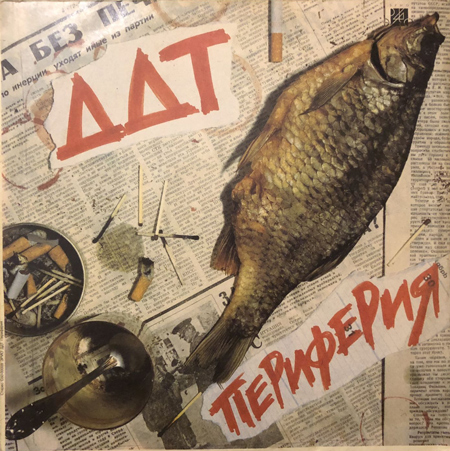 © DDT
Despite the desperate assault and mobilization of forces, Shevchuk physically did not manage to put vocals on the composition “Periphery”. Moreover, the text in it was not written to the end. Since it was already impossible to appear in the studio, on the fourth day of work the text and vocals of the “periphery” were added at home at Shevchuk, in his bathroom.
Musicians should have made Shevchuk in several places to soften the most seditious phrases. For example, in the original version of the text there was a line "Yesterday, the party organizer went crazy with hopeless longing." For all the arguments that for this phrase you can get from grateful contemporaries ten years with confiscation of property, the radically configured Shevchuk replied that "you could not throw a word from the song." Only after a multi -hour dispute, the musicians managed to persuade Yuri Yulianovich to replace the party organizer with the "Voblybuba". There were many similar examples.
A few days after the completion of the work, Shevchuk turned 24 years old. Friends gave him several dozen reels of the “periphery”, specially designed in the form of a collage from photographs taken during the recording of the album by the photographer Anatoly Voinov.
“Yura was afraid that from these pictures it would be possible to recognize where exactly the recording was made,” recalls Voinov. “Therefore, he subsequently asked me to retouch in the photographs the places where it was possible to identify the television studio.”
But, despite all the precautions, a copy of the album soon got into the Ufa branch of the KGB. Shevchuk with enviable efficiency was fired from work, called “for an interview” to the regional party committee, the regional committee of the Komsomol and directly to the KGB, warning at the end: “Another record - and the grille”.
Then, state security officers transferred all attention to the search for the alleged co -organizers of the record. As already mentioned, the KGB choice was small. Without evidence, they arranged for Vereshchak psychological pressure - starting from daily paintings in a journal that records the time of appearance and leaving work, and ending with three reprimands “for violation of labor discipline”.
“The KGB has always been very clearly able to focus on a dead man,” says Vereshchac. “If at that moment the eminent Bashkir composers had not stood up for me, it is difficult to imagine what could happen.”
The name of the sound engineer "Periphery" was secretly about ten years old.
When, in connection with an intensified desire, Shevchuk decided to hide the original, Vereshchak said that he had given him storage in a reliable place. Shevchuk, suspecting that the original was destroyed, angry and said: "Fool, it would be better if you buried it!"
All the persecution of the main characters in this story ended with the fact that Shevchuk rushed from Ufa to Sverdlovsk, and Vereshchak was forced to leave for several years to work in Siberia.
The name of the sound engineer "Periphery" was secretly about ten years old. For example, in an interview dated to the end of the 80s , Vladimir Sigachev, despite the turbulent perestroika times, flatly refused to disclose the “secret of the recording”-under the pretext that “in Ufa such a thing as publicity does not exist.” The surname Vereshchaki was first released only in 1996-in connection with the reissue of the DDT Records of the Periphery DDT Records on cassettes and compact disks. The records were produced from a copy, preserved at one time in Ufa by a man named Jimmy and restored in Leningrad Vladimir Kuznetsov.
In conclusion, we note that during the next DDT tour in Ufa, in the late 80s, the rising St. Petersburg rock star Yuri Shevchuk and Igor Vereshchak, who returned from the “exile”, met in the late 80s. “That guy came up to me ... The sound operator from the television with whom we wrote the“ periphery ”. He asked for forgiveness, ”Shevchuk recalls. - He admitted that he burned the original when these tusks began along the KGB. Damn, what a pity - after all, the ideal was the recording, from it it would be possible to immediately release the record! Okay, what is it there. He gave his hand to him: "The Lord is with you, the old man." I have forgiven everyone now. Christian . "
The whole story has a beautiful epilogue.
Not so long ago, DDT once again toured in Ufa. Taking this opportunity, Shevchuk was invited to local television, where he was awarded a professionally made copy from the original of the album “Periphery”, which was hidden during the 1984 Gabistic Street by one of the television officers.
For a long time, this film was stored in the ground, deeply buried and wrapped in several layers of paper and cellophane. She returned to her legal owner twelve years later. “At that moment I was simply shocked,” Shevchuk admits.