
Translated material
Erofeevsky descent
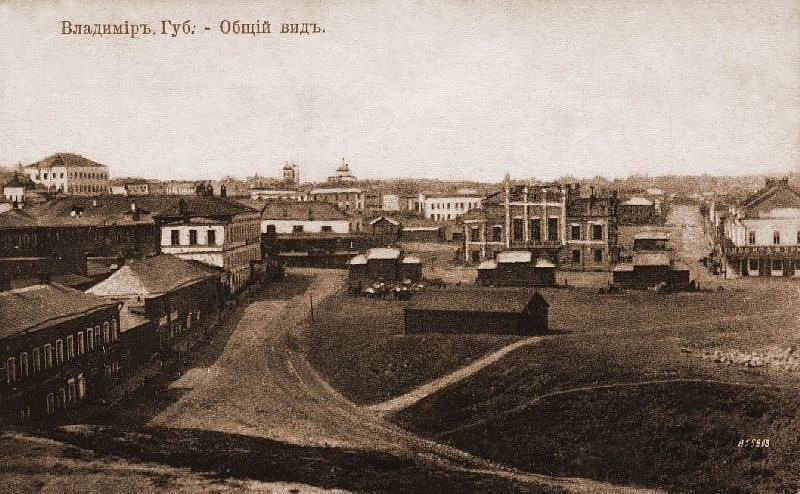
The Erofeevsky descent goes from Lunacharsky Street south to the bridge over the Klyazma River.
It is an important transport direction connecting the northern part of the city with the exit towards Murom and Ryazan. The descent takes place along the border of the two parts of the historical center: Monomakhov (Pechersk) and the new city. In ancient times, a moat passed on the site of the Erofeevsky descent.
In the XII century, Andrei Bogolyubsky builds in Vladimir a new system of earthen fortifications of a complicated type. In 1158-1164 Belts of fortress shafts and ditches around the unprotected new parts of the city of Vladimir are built. To the west of the city of Monomakhov in the boundaries of defensive structures, it includes new territories. The western part (the new city) is built up with a variety of buildings belonging to the court nobility and warriors.
Until now, powerful oak log cabins, which were clogged with stones and earth, are still at the base of the earthen rampart. On top of the log cabins, shafts of sand and clay up to ten meters high were poured. At the top of this rampart, a fortress of oak logs and patrol towers were placed. The city, surrounded by such a wall, was a well -fortified fortress.
On the eastern side of the Erofeevsky descent, the preserved section of the ancient defensive wall - the Trinity Val. It is located between the descent and Komsomolskaya Street. It is the western border of the city of Monomakhov. The remnants of the Trinity shaft were preserved to a height of 0.8-2.0 m from the trading bridge to the corner of Vorovsky Street and Komsomolskaya Street, lowering to the north with ledges. The current state of the shaft is the result of redevelopment of the city of the late XIX - early XX centuries. Now his sole lies under powerful modern strata at a depth of more than 1 m, since the Trinity Val was wrapped in 1896 during the construction of the bank building on Bolshaya Moskovskaya Street.