
Translated material
Great Silk Viking
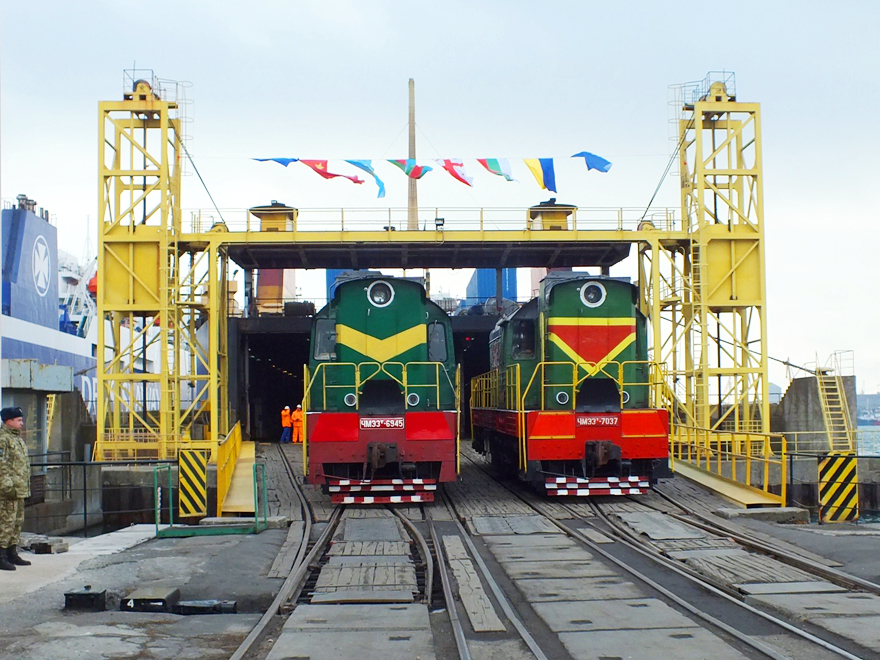
The Ukrainian government signed a memorandum of intention to combine the Silk Road and Viking projects with Lithuania, as a result of which, in the near future, goods from China and East Asia will be able to be taken to the ports of the Baltic Sea bypassing the Trans -Siberian Railway and the Suez Canal.
Unlike the Silk Road, the prospects of which for many reasons are very vague , Viking, launched in 2003, is already considered one of the most successful logistics projects in the post -Soviet space.
“Viking” is, in fact, regularly running between Ilyichevsky (a port near Odessa) and Klaipeda (main port of Lithuania) cargo team. Its path lies through the territory of Ukraine, Belarus and Lithuania, passing, including through Kyiv and Minsk. Frequency - from three times a week to two times a day.
It is only at first glance that it is easy to launch regular cargo composition. Transport science claims that this particular type of message is the most convenient for carriers and customers, but, for example, in Russia, all freight trains are still formed and set off in fact - that is, there are no guarantees that a cargo car will go from one point of the country at a certain point in time. The creators of Viking were able to turn the Soviet tradition. Moreover, 1734 km overcomes in 52 hours - speed, unattainable for cargo transportation on Russian railways.
This train has one feature - its route looks rather strange and constantly makes zigzags. This is not surprising - the main grid of railways in this region was created before the First World War, when it could have occurred to anyone that it would be necessary to connect Odessa and Lithuania. The main paths from the ports of the Baltic and Black Seas are sent to the Center of Russia, as well as to the Donbass and the Russian Black Earth, a century ago in these regions the main export sectors of the economy of the Russian Empire were concentrated.
In the year, the Viking train transports 50-60 thousand Teu (standard cargo containers), this is only 2-3 times less than international transit along the Trans-Siberian Railway and about 50 times more than it is planned to be transported along the Silk Road in the near future.
Possible synergy from the unification of two projects may be that goods from China will be able to immediately find themselves in the economic space of the European Union, overcoming the customs territory of Kazakhstan, Azerbaijan, Georgia, Ukraine and Belarus without problems.
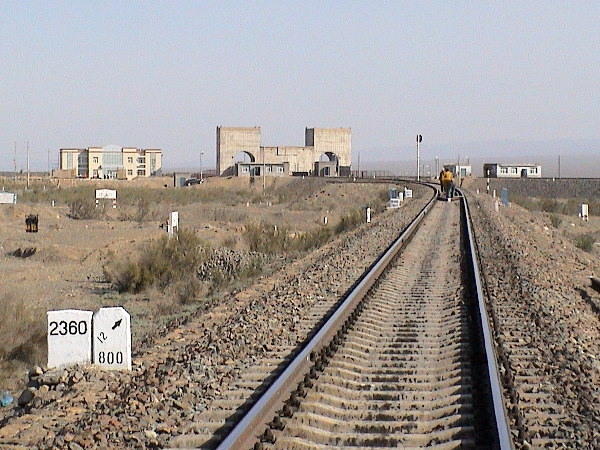 Alashankou station, located on the Chinese side of the Dzungarian gate near the border with Kazakhstan. Photo: Yaohua2000, Creative Commons Attribution-Share Alike 3.0 Unported
However, do not forget about the minuses of the project - a fairly long period of delivery of goods from East Asia to Europe, the need for a relatively frequent transshipment from the railway platforms for ferries, the need to overcome the Caspian and Black Seas canceled and, finally, geopolitical instability in the region.
However, it will be possible to judge the future of the project soon: it is not so difficult to establish the fastest transit of cargo. The only question is whether the number of users of this route will find enough.