
Translated material
Coca & Co.
Coca & Co.
How Russia secretly helps Evo Morales to win his fourth choice
The Proekt Team, October 23, 2019

Evo Morales fights for a fourth term as president of Bolivia. A group of Russian political consultants linked to Kremlin who is in charge of social networks was sent to La Paz a few months ago to help Morales, they told The Project three sources without links to each other. With this, Moscow wants to ensure that their state companies have a long life in Bolivia, mainly Rosatom.
"His results are not the highest, but there are never public scandals," with this phrase describes a Russian official, who asked to remain anonymous, the work of political strategists working for Rosatom. It may seem strange, but in Russia, electoral campaigns are not the exclusive issue of politicians, but with frequencies large state companies also get involved and hire their own consultants. Thus, the state company Rosatom, which controls all civil and military nuclear facilities in Russia, has traditionally been in charge of the elections in all cities where the company has a presence. For example, in 2016, when Russia chose the lower house of its Parliament, Rosatom hired political strategists that secured the victory of the regent Russia party united in ten cities, according to reports from the Kommersant newspaper.
In 2019, this Rosatom ability to handle an electoral campaign so veiled that no press medium would be able to detect it in five months, it was useful in Latin America.
Dr. Coca
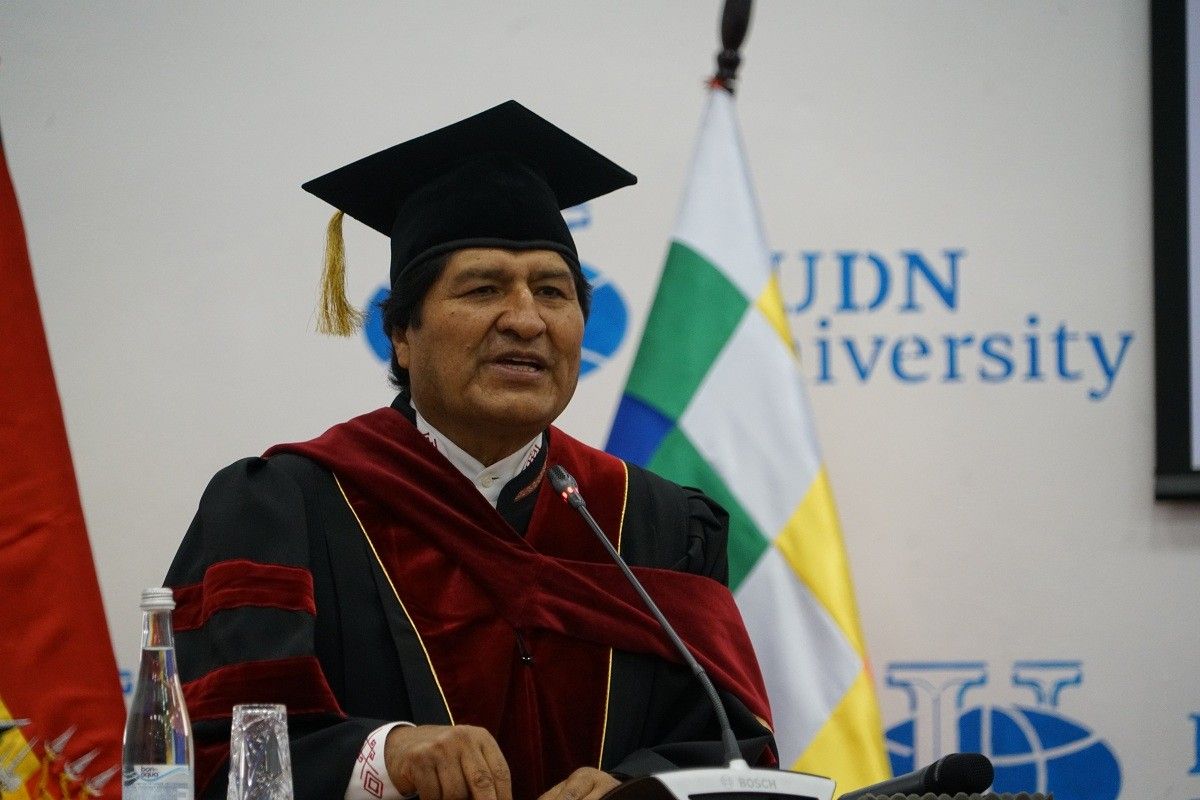
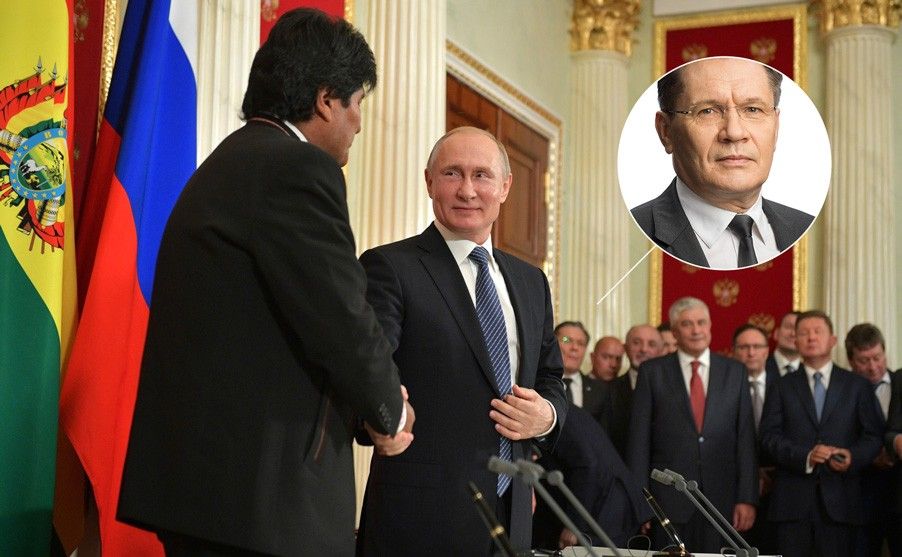
In July 2019, a solemn ceremony was held at the Russian University of Peoples Friendship (Rudn) in Moscow to deliver the title of Doctor Honoris Causa to a man who did not even have a degree and who had become famous by chewing a coca leaf at a UN conference. "Media weird Dr. Evo sounds," said the Bolivian president, fascinated with the title. Morales has ruled Bolivia for almost 14 years, a period in which Moscow has visited several times, where he has always been received with the same sympathy. After the ceremony in Rudn, he visited the Kremlin, where he met with Russian leader Vladimir Putin. The visit concluded with the signing of numerous agreements between the two nations.
Morales has held the presidency of his country for three consecutive periods, despite not being something very consistent with the Bolivian Constitution. But most Bolivians have long forgive almost everything to Morales because under his mandate the standard of life rose considerably due mainly to the rise in gas and oil prices.
However, in 2016 the situation was complicated: after a series of internal political scandals, Morales began to have more difficulty retaining his position. He lost a referendum that had been organized especially to make constitutional changes that would have allowed him to be re -elected for the fourth time. After that, he did not give up the idea of staying in power and the Supreme Court of Justice authorized him to participate in the October 20 elections.
The campaign was not easy: it was accompanied by protests in the streets that unleashed when the authorities delayed to respond to forest fires that affected large areas of the Bolivian Amazon. In such adverse conditions, the president needed to give him a hand.
Support
A man who had almost so much to lose as the Bolivian president in the elections of that country participated in the meeting between Putin and Morales: Rosatom director Alexey Likhachev.
After nationalizing the economy in its first mandates, Morales welcomed Russian companies to the Bolivian market. Thus, Rosatom has a contract with Bolivia for the construction of a nuclear center worth $ 300 million in El Alto. The Russian state energy giant Gazprom began to participate in gas production projects, and Russian helicopters (part of the state company Rostech) has a plan to sell helicopters to the Bolivian army.
If Morales lost the elections, the fate of these contracts "would be in doubt", because the new government could always change the policy "for pressures of the Americans" and deprive Russia of these agreements, a source close to the administration of the company told The Project . And there were reasons to fear a defeat of Morales: throughout the campaign the surveys showed that I was not going to obtain enough votes to win in the first round.
Thus, the Russian state nuclear company decided to support Morales, they told The Project the source close to the Rosatom administration, and a political consultant close to the Kremlin, on the condition that his anonymity was maintained. According to one of these sources, it was not the first time that Rosatom hired political advisors to help with his projects abroad. Without this, he said, contracts "broke again and again."
"When Rosatom appeared in the territory of any country, he immediately followed him environmentalist, Chinese, French, Americans, and began to shout that it was impossible to build (nuclear facilities - The Project) here." The last high profile scandal in which Rosatom was involved was in February 2018, in South Africa: the opposition and the media accused the then South African president, Jacob Zuma, of having received money from Russia to sign a contract for the construction of a nuclear power plant. The result was that Zuma lost power and Rosatom the contract. Now the company, ”says the source - sends political strategists to all of the world where it has interests to create a“ favorable information field ”.
Map of Rosatom Foreign Projects
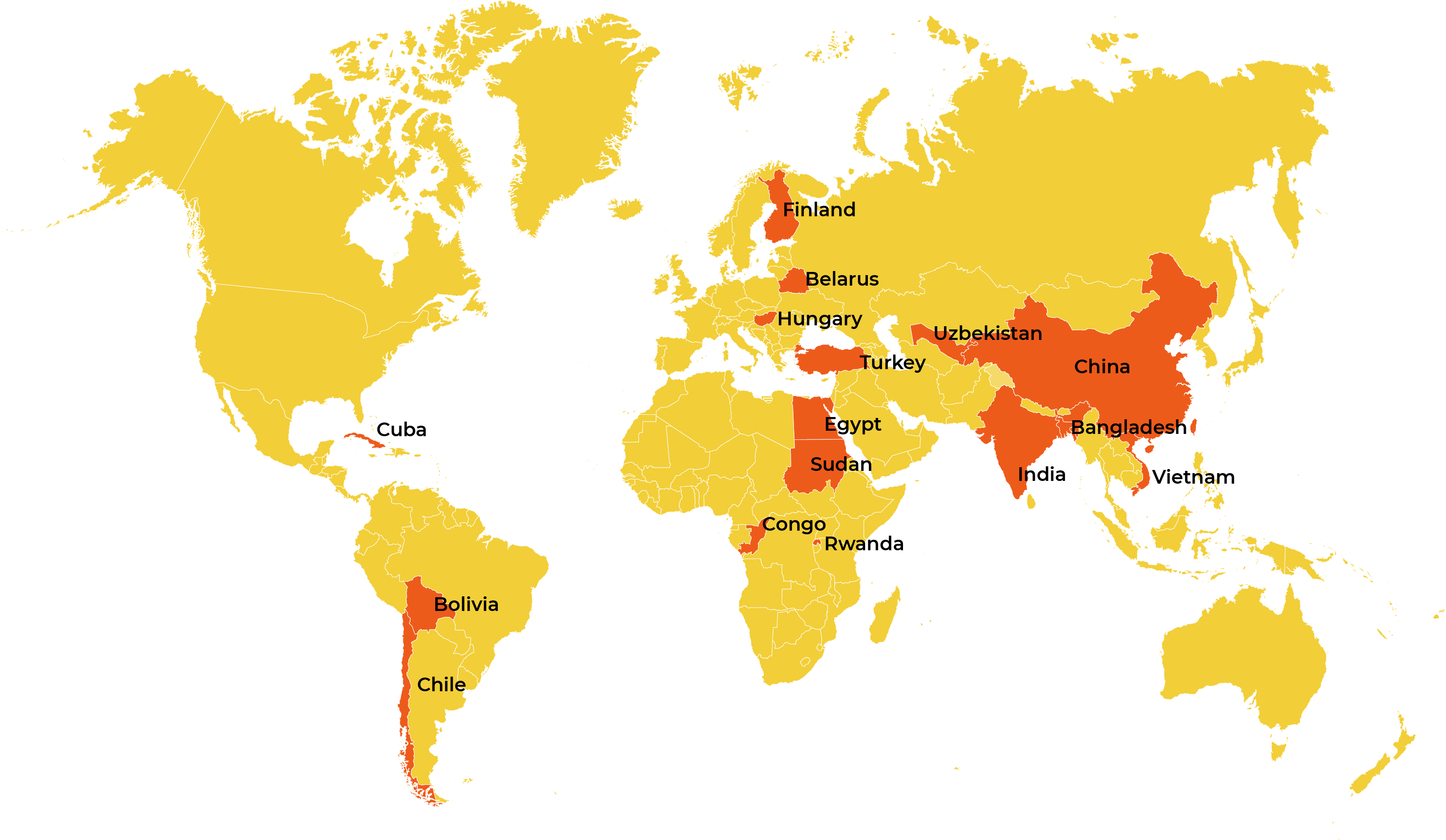
China. The first two generating units of the Tianwan nuclear power plant were starting in 2007. In 2019, Rosatom signed a contract for the construction of the seventh and eighth unit. In 2018, Rosatom began the construction of generating units in another Chinese nuclear power plant, Syudapu. Rosatom also signed a contract with China to supply radioisotopic units for the Chinese lunar program.
Uzbekistan. In 2020, Rosatom hopes to start the construction of the first nuclear power plant in Uzbekistan.
Belarus. The construction of the first nuclear power plant in Belarus began in 2011 and continues today. It is the biggest project in the history of cooperation between Russia and Belarus. The station will generate a quarter of the electricity consumed by the country.
Rwanda. In 2019, Rosatom and Ruanda agreed to launch a project for the construction of a nuclear science and technical center in the country.
India. The construction of the Kudankulam nuclear power plant, whose first generating unit was inaugurated in 2016, is still underway. That same year the second phase of the construction of the nuclear power plant began and in 2017 the construction of the third and fourth units began. Rosatom hopes to inaugurate the fifth and sixth units in 2025.
Bangladesh The construction of the country's first nuclear power plant, Ruppur, has been running since 2013. Its implementation is scheduled for 2023.
Vietnam. In 2016, the construction of the Ninthuan-1 nuclear power plant was suspended, which was going to be the first in Southeast Asia. Rosatom's director at that time, Sergey Kiriyenko, said this station would be "the cornerstone for the development of the peaceful use of nuclear energy and nuclear technologies in the Asia-Pacific region." The project was suspended after electricity consumption in the country decreased and the prices of traditional energy sources fall.
Republic of Congo and other African states. In May 2019, Russia and Congo signed an Intergovernmental Cooperation Agreement for Pacific Use of Nuclear Energy. In the last two years, Rosatom has signed similar contracts with more than a dozen African countries to strengthen their influence on the continent.
Sudan. In 2017, an agreement was signed to develop a nuclear power plant in Sudan, but since then no specific project has been launched.
Cuba. Rosatom will build an irradiation center on the island for the treatment of agricultural products with radiation, an alternative to the use of chemicals to increase the useful life of fruits and vegetables.
Chili. Uranium One Group (a Rosatom subsidiary) plans to buy 51% of the project aimed at developing the largest lithium tank in Chile, which produces the third part of the entire lithium in the world.
Türkiye. In April 2018, the construction of the first nuclear power plant in Türkiye began, Akkuyu. Its implementation is planned for 2023.
Egypt. Egypt plans to build the first nuclear power plant in the region, Al-Dabaa. The first unit of this station is expected to be launched in 2026. The project is valued at about $ 30 billion, of which $ 25 billion correspond to a loan in Russia.
Bolivia. In September 2017, Rosatom and the Bolivian Nuclear Energy Agency signed a contract to build a Nuclear Research Center in El Alto. Rosatom also signed a cooperation memorandum in the lithium industry area. Bolivia occupies the first worldwide in the reserves of this metal.
Hungary. In 2014, Rosatom signed a contract for the construction of new units for the Paks nuclear power plant. Russia also gave Hungary a loan of $ 10 billion to finish the station.
Finland. In 2014, Rosatom acquired 34% of Fennovoima and the company's joint plans to begin the construction of the Hanhikivi-1 nuclear power plant. Fine authorities have not granted a license, which has delayed construction.
In recent years, Rosatom's political capabilities have extended even more. In 2016, the company's director, Sergey Kiriyenko, went on to occupy the first submEfe position of the presidential administration. In this position he is responsible for all the internal policy of Russia and actively interacts with political strategists. At the same time, he maintained his influence on Rosatom, where he assumed the position of president of the Supervision Board.
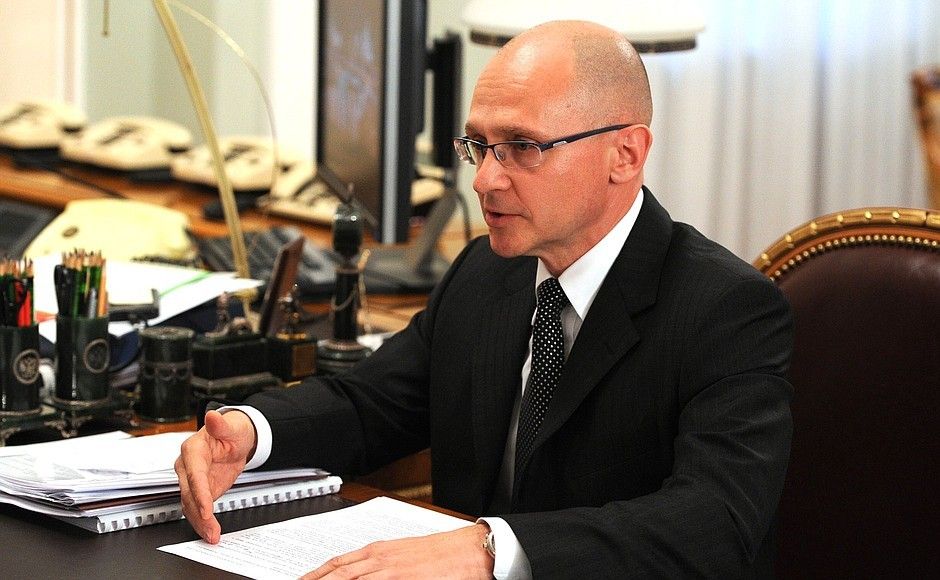
It was Kiriyenko staff at Kremlin who coordinated the selection of specialists who would be sent to Bolivia, according to two sources close to the presidential administration. However, the federal official who spoke on the condition that his anonymity was maintained, insists that the Kremlin "was only aware" of this work. The director of the Regional Department of Rosatom, Andrey Poosin, was responsible for sending the mission to Bolivia. Rosatom did not answer the requests for statements made by The Project.
Sewers
The first group of Russians that would be sent to Bolivia began to settle in January, said a political strategist that dominates organizational details of the mission. Rosatom first hired people with experience in regional electoral campaigns in Russia, and then recruited specialists with Spanish knowledge to attend political advisors, according to another source. The advisors joked saying that they were going to fight for the cocaine market, ”said a friend of political analysts - but Moscow would entrust them with a different goal.
"Social networks are like sewers," said President Morales during his campaign. And in fact, social networks gave many headaches to the Bolivian leader. When in the summer it became evident that the authorities had delayed to counteract the huge fires of the Amazon and the situation began to cause riots, Morales suddenly appeared on television firefighter dress.
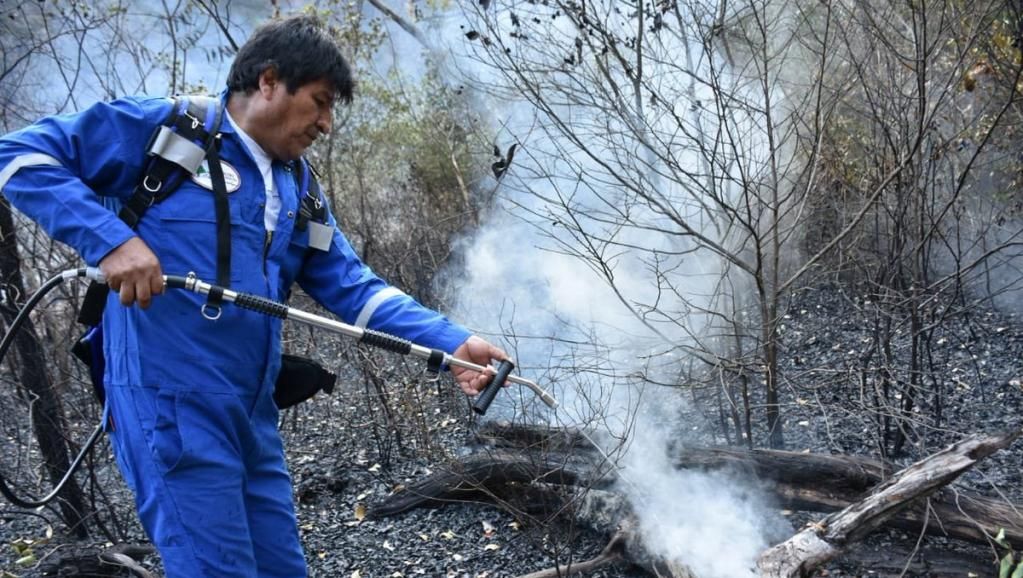
In social networks the users ripostar with memes that showed Morales shooting a water gun. Russian specialists would have to work within this "sewer." All sources consulted by The Project for this story affirmed that the main purpose of the group was work on the Internet. In particular, they took care of propagating publications on social networks that mentioned the theses of the “Bolivia for all” program of Morales, and participated in “black propaganda campaigns” against Morales' critics, said the political consultant who knows the details of the mission well.
Russian political strategists had been in La Paz since at least June 4. That day one of them, Vladimir Ryabinin, posted on his Facebook the first photo from the city. And after that he continued publishing photos from Bolivia until September 25.
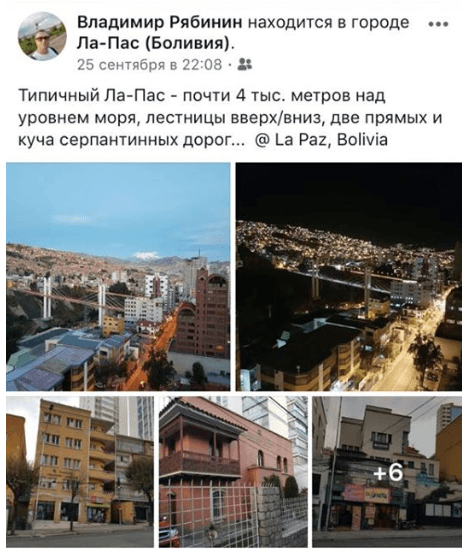
Ryabinin was in the group of about 10 Russia strategists who ended up going to work in Bolivia. This estimated was provided by a political strategist who knows the details of the mission. The rest are mostly consultants who at different times have helped the Russian authorities with the elections in the cities of Samara and Ekaterimburg. The group includes, among others, Alexander Sheremetev, a political advisor who helped the Russian party candidate united in Ekaterimburg to win the most recent elections in the state Duma.
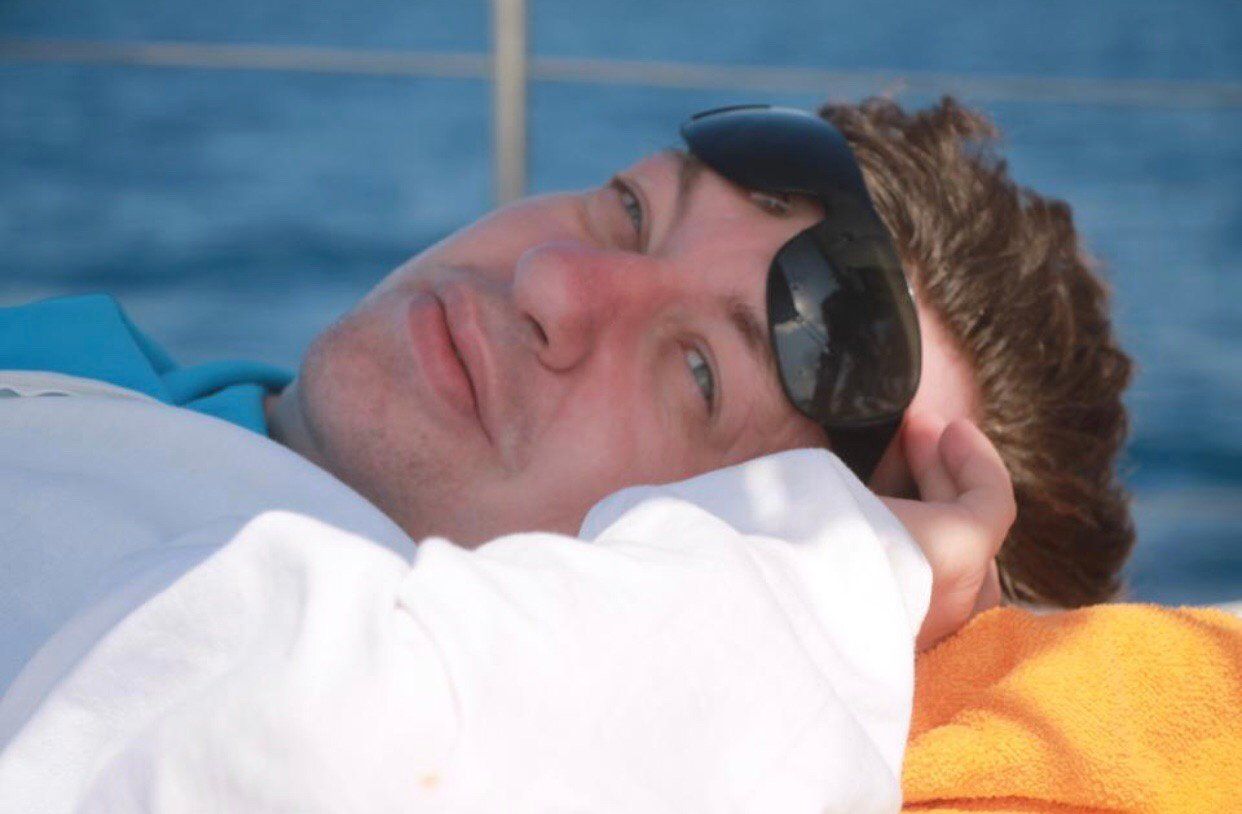
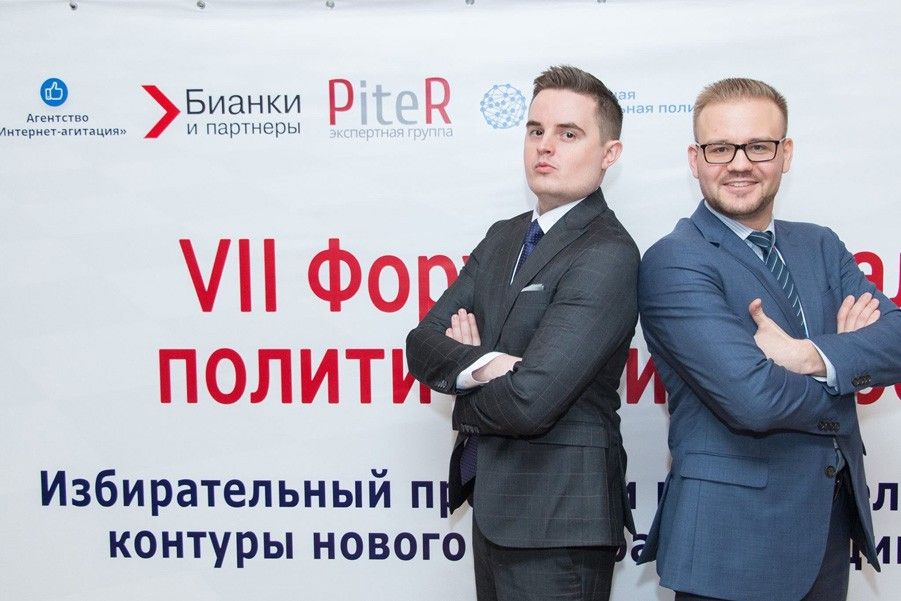
Another of the consultants who worked in Bolivia is Valery Solovyov, the founder of the "Internet Agitation Agency", the entity that in the past has interacted on numerous occasions with the Kremlin. Among other things, the agitation agency worked on the recent electoral campaign that gave the victory to Alexander Beglov as governor of St. Petersburg, including the use of false profiles on social networks, as we previously reported in The Project.
In Bolivia, Solovyov was also in charge of the use of the “El Prisma” system, according to the person who is his friend. "The prism" has been used by Kremlin officials since the beginning of the 2010, when they realized the need to monitor the blogosphere. This program, produced by the Medialogia company “analyzes the interest of the blogosphere in certain problems and warns of possible reputational risks,” according to the description that appears on the Medialogia website. A source close to the Medialogy administration said he had heard negotiations with Bolivia to provide the system to that country. A company spokesman told The Project that "El Prisma" has a Spanish version, but refused to answer a question about work in Bolivia.
The group's main political strategists returned to Moscow in October, without waiting for election day. In conversations with acquaintances, they complained that the work was difficult due to disagreements among Morales' staff. Political strategists prepared a report on the mission results. "They said the report would be delivered to the Presidential Administration," said one of his nearby colleagues.
* * *
The efforts of the Russian consultants did not help Morales get an overwhelming victory. The counting of the votes of the elections on Sunday, October 20 had not completed in the early hours of Wednesday 23, in the midst of popular protests.
It is strictly forbidden to disseminate information about this mission, it is considered very important and secret, the federal official explained to The Project. A source close to the administration of Rosatom believes that those involved in the mission fear being the object of international sanctions for participating in foreign elections.
All participants in the mission contacted by The Project flatly refused to give statements about their trip to Bolivia or explained it with other reasons. Solovyov said he had gone to work there with a corporate client. Ryabinin said he had traveled to Latin America on vacation: "And last year I was in Vietnam. Why don't they ask me about my visit to that country?"
Translated in collaboration with Inventory Project , a Cuban publication of data journalism.