
Translated material
Mom, I feel bad

How to recognize depression in a teenager?
Late autumn is the most depressive time. The mood is already being spoiled, and then the child does not leave the house for two weeks, lies with his nose to the wall or from morning to evening is stupid into the computer ... What to do if you suspect your teenager depression? How to define it and how to deal with the disease? Maria Lekareva, head of the Department of Gestalt therapy of the Moscow Institute of Gestalt and Psycodrama, answers questions of such cases
***
Maria Lekareva:
- First, it is important to decide on concepts. Depression is a clinical diagnosis that only a specialist can make. But in modern psychological publications, mentions of depression are often found, so it is important to remember that there are also depressive states, depressive reactions, symptoms of exhaustion, overwork and crisis phenomena. Sometimes drowsiness, negligence, a breakdown of strength in a teenager may not be depression as such, but a reaction to a long load or exams.
Such things:
- In what cases to loved ones should really start to worry?
-If the teenager has dramatically changed the behavior without obvious reasons, and these changes are of a protracted character, manifesting in the form of lethargy, apathy, unwillingness to do anything, to communicate with anyone for more than one and a half to two weeks.
 Series Depression Photo: Mateus Lucena/Flickr
Any self -repactions, from cuts to hair tugs, are a sufficient reason for concern. Another option for the manifestation of depressive reactions may be a sudden immersion in computer or game reality against the background of cessation of communication and activity in real life. In all cases, if the atypical behavior of the teenager lasts more than a half to two weeks, parents should seek a consultation with a specialist.
Any self -repaired regulations, from cuts to hair tugs - a sufficient occasion for concern- What can provoke depression in a teenager?
- It is quite difficult to predict in advance who may have a depressive reaction or depression develop, so we can rather talk about some categories of causes distinguished by psychologists and psychiatrists.
Depression are endogenous and psychogenic. Endogenous depression occurs without special external occasions and are more often caused by the genetic characteristics of a person, a predisposition to them can be inherited.
Read also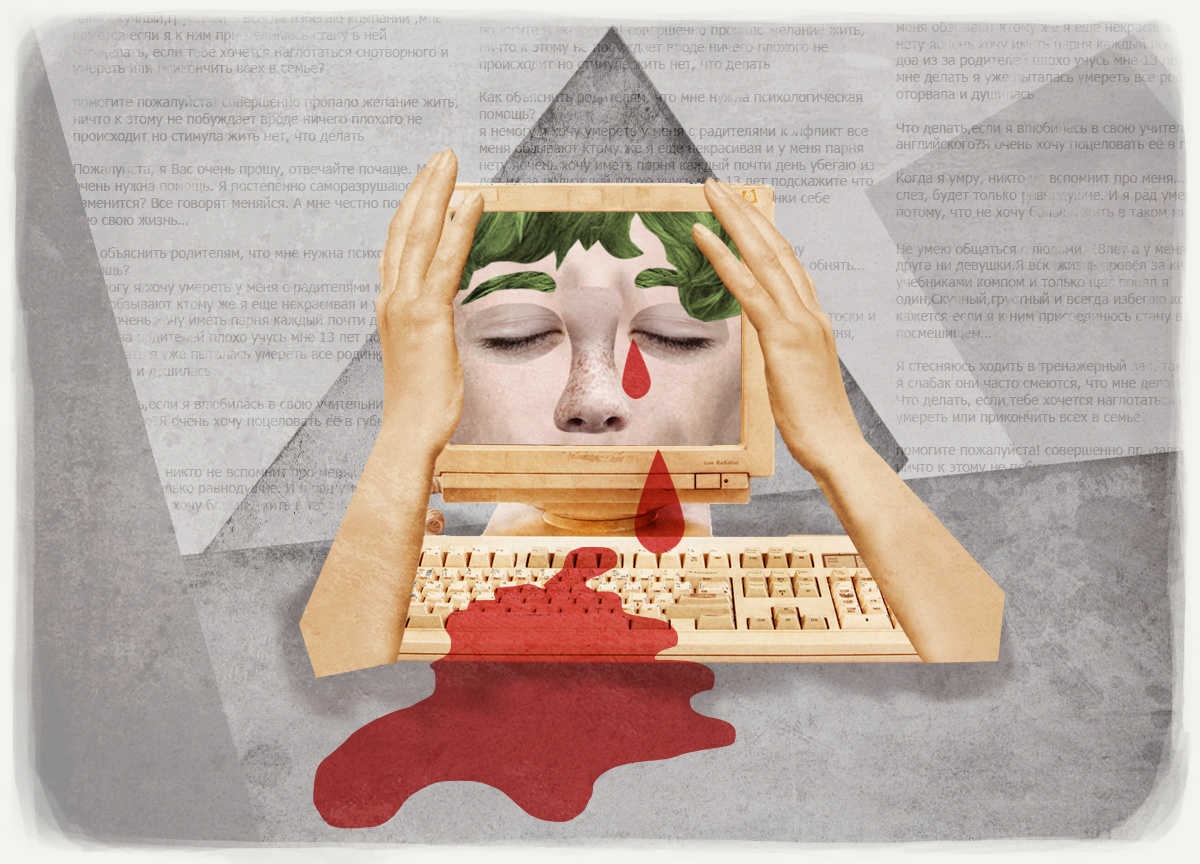 “We are addressed by children who want to commit suicide. Especially on the holidays ” Ekaterina Fedorova, the founder of the project“ Your Territory. Online ”, tells how an anonymous psychological chat for adolescents helps to reduce the number of suicides
Psychogenic depression arises as a reaction to various traumatic events with which the psyche of a teenager copes poorly: a break with friends, a scandal at school, unhappy love, public humiliation, etc. One of the causes of psychogenic depression in adolescents can be called disturbances in communication with peers in a variety of meanings. The absence of close friends or conflict with a friend, rejection, isolation, boycott, persecution, low status among peers from a significant group, all this can cause depressive reactions.
As a rule, depressive reactions are aggravated if the teenager has difficulties in relations with parents. Tough requirements, hyper -beam or indifferent detachment of parents are equally painful for a teenager. The lack of cooperation in the process of education, regular scandals or domestic violence worsen his condition. The lack of trusting conversations, the inability to get attention and support without notations and criticism exacerbate the insulation of the teenager and weaken his ability to rely on loved ones at a difficult moment.
Hard requirements, hyper -beams or indifferent detachment of parents are equally painful for a teenagerAnother factor that increases the risk of depression in adolescence is chronic stress associated with academic performance and high expectations of the family and the child himself. Sometimes parents try to realize everything that they themselves did not have, sometimes sincerely try to maximize all the data laid down in the child by nature, sometimes the teenager himself dreams of pleasing their parents. But, in any case, if he lacks his own interest, energy, abilities, will or curiosity, and he is forced to provide a high result, the teenager can be trapped: “I can’t do it, and I can’t do it.” The internal conflict of this kind can ensure the occurrence of mental breakdowns, where a depressive reaction is only a special case of possible troubles.
 Series Depression Photo: Mateus Lucena/Flickr
Another factor in the occurrence of teenage depression may be a crisis of self -awareness if the teenager cannot find some constructive answers to philosophical questions about the meaning of life and death, the purpose of a person in general and himself in particular.
There are private cases of depressive reactions against the background of post -traumatic stress disorder if the teenager was a participant or an eyewitness to the events that caused him a shock reaction: a car accident, an explosion of a house, the abduction of a person, shooting at school, bombing of the city, but in such cases, parents are as a rule, more attentive to their own child.
- And if parents ignore depressive symptoms, what can this lead to?
Read also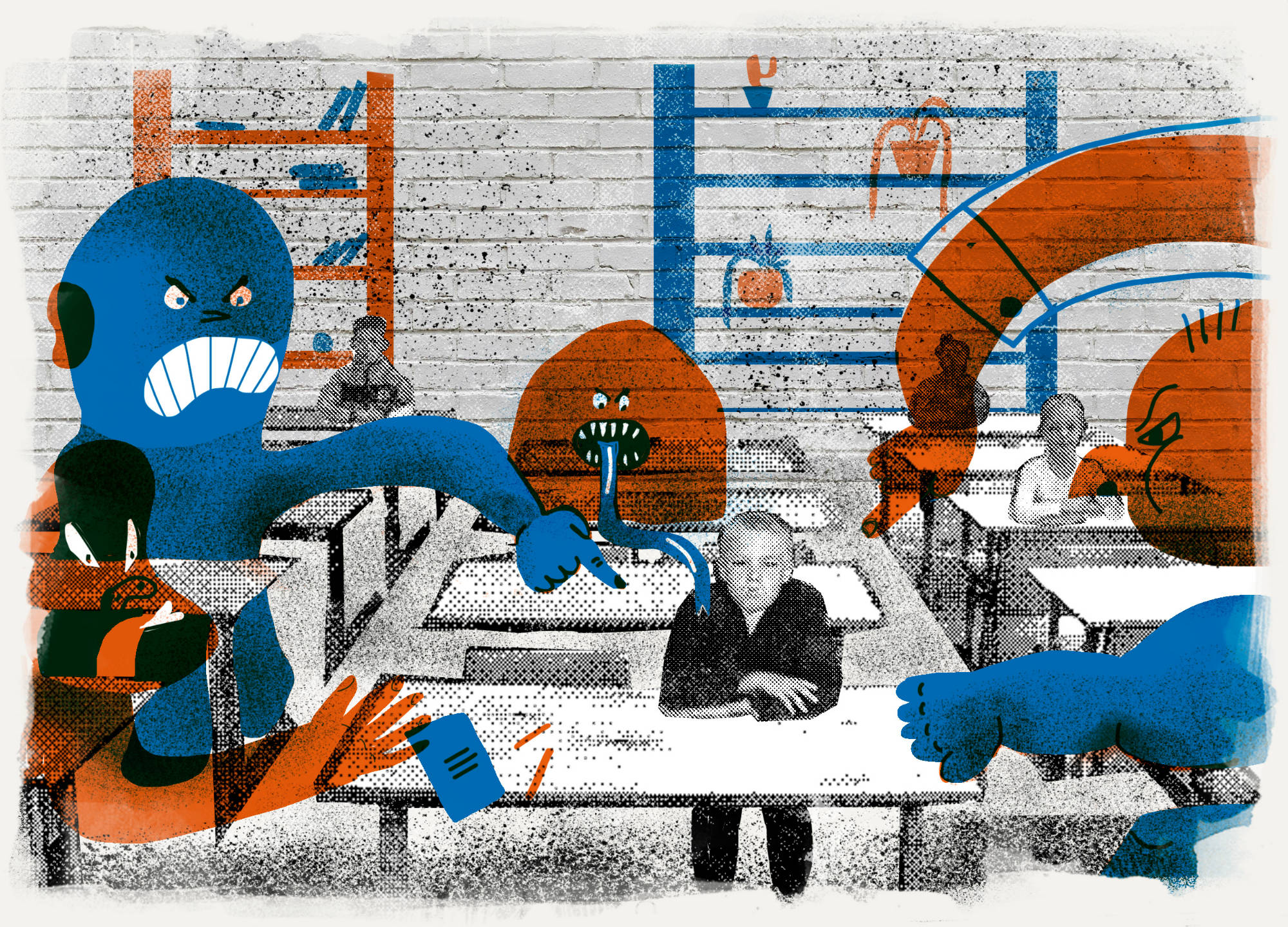 “Such a role in the class is a beating boy”, high school students talk about the persecution at school, and psychologists give advice to teachers and parents how to act in such cases
- The gradual development of a depressive state in a teenager can lead to various consequences on the intellectual, emotional, social, behavioral and physiological levels. A reduced mood background, apathy, and a breakdown of strength often lead to the emergence or aggravation of problems with study, a teenager is difficult to motivate themselves to regular classes.
Problems with study or pressure from the parents, in turn, will only increase the internal stress. Resulting, self -doubt, tearfulness, self -abasement, loss of faith in themselves can also accompany the deterioration of a depressive state, creating a painful and dreary background of mood, both in the teenager and when communicating with others.
In adolescents prone to substitution behavior, a tendency to overeating, autoagression, aversion to their own body, game or other forms of dependence can form. Some adolescents can go into internal isolation in a depressed state, feeling complete loneliness. Another part, without identifying their own interest in life and more inclined to obey, may be drawn into destructive groups in real or virtual life.
The most dangerous for a teenager in a state of depression can be considered the occurrence of suicidal thoughts and intentions. Lack of taste and will to life, inner loneliness, isolation from social contacts, longing, apathy, a gloomy view of life, a sense of hopelessness and hopelessness can move the teenager to a desperate step. Therefore, the inattention of loved ones may be fatal.
a tendency to overeating, autoagression, aversion to your own body may form- How to support the teenager in a depressive state?
- If we are talking about clinically diagnosed depression, then it is better to adhere to the recommendations of a doctor watching a teenager. With psychogenic depression, it is important to exclude traumatic factors, sometimes this means changing the place of residence, class or school, communication circle, etc. Depending on the severity of the condition, doctors can recommend a hospital or outpatient observation. In any case, the load on the teenager should be reduced, but this does not exclude any forms of activity-movement, communication, positive impressions. Parents can be interested in and ask a teenager about his interests and wishes in the most respectful form. At some point, the teenager will need to leave the house, find pleasant forms of physical activity-walking, running, skiing, dancing, bicycles, but without coercion from adults. It is important to establish pleasant communication with old friends or get new ones.
 Series Depression Photo: Mateus Lucena/Flickr
The issue with the school must be solved depending on whether it is a source of negative or depressive experiences. In any case, mental health is more important than studying for some period of time, in particular, during treatment or rehabilitation process.
The adolescent’s emergence in itself can serve as parents to think about how safe the emotional relationship in their family is, and, if necessary, seek help from a family psychologist.
- What can you advise those who suggest that their child needs help, but does not dare to contact a specialist?
- Many people are afraid of doctors, but it is known that most diseases, except for a cold, do not pass by themselves, the body needs help. If the disease is not treated, it goes into a chronic form, complications begin. The psyche is arranged in the same way, in depression, complications are possible, and since the psyche of adolescents is quite vulnerable and unstable, depression can start the development of certain mental disorders, such as bipolar disorder, for example.
It is important to take into account other possible consequences of adolescent depression left without attention. A prolonged teenage depression can affect the quality of life in adolescence and in youth. A person will lack the strength to build a personal life or pass interviews, or the performance of work duties and build a career
- How long can the treatment of depression take?
-the answer to this question depends on the nature of depression and the severity of its course. The symblomatics of a psychogenic depressive reaction can be removed after a few sessions, within one and a half to two months, and can last up to a year and up to two years;
Read also “Suicide is not some kind of deviation” psychologists, psychiatrists and sociologists about what is the cause of prodigy suicides, and why it is so important to talk with children
Treatment of endogenous depression with the full use of drug support can take several years.
Depending on the reasons for the development of adolescence, the necessary degree of family involvement in the treatment process may vary. If the reasons lie in relations with peers or with themselves, and parents simply do not have enough support, then counseling may be enough. If the reasons are primarily associated with tense relations in the family, then family therapy may be required, although it is in these cases that parents are less willing to take responsibility and are less likely to be ready for cooperation, preferring to write off all difficulties for illness and willingly brushing the teenager to care of specialists.
There were: Daria Kushnir, Natalya Fedorenko, Vika Frolova, Polina Glukhova.