
Translated material
9 /11 = 88
About the book of Mark Jurgendimeer about religious violence
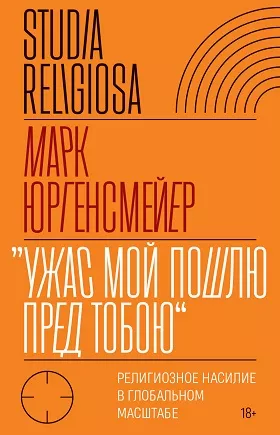
“Not all Muslims are terrorists, but all terrorists are Muslims.” We do not know who was the first to say this stupidity, but he would have to read the book of the American sociologist Mark JurgenMayer “Religious violence on a global scale”. From it, he would learn that terrorism is Christian, Jewish, Buddhist and does not know ideological boundaries at all. Eduard Lukoyanov tells about this work, recently translated into Russian.Mark JurgenMaire. "I will send my horror before you." Religious violence on a global scale. M.: New Literary Review, 2021. Translation from English Alexei Zygmont . Content . Fragment
 In the transition under Pushkinskaya Square, it is difficult not to notice the dark gray plate on which it is written: "In memory of those who died and suffered from a terrorist act on August 8, 2000." Under it is a black forged rose, real flowers are almost always lying.
It is useful to get up nearby and observe passers -by. Here is a very young guy who was in a hurry somewhere about his business, suddenly froze, looked at the memorial and crossed himself. But a completely different reaction, but no less interesting: a woman with a small child smiles at all her teeth while her husband takes pictures.
In some, a reminder of the death of random victims of terror causes an almost religious experience, for others it is only a background for a family picture. And this is quite natural, since organized violence in itself is an ambivalent thing: if you look at terrorists for a long time, then you can see insurgents in them; Depending on the views, the counter -terrorism operation can be taken as a punitive raid; Even the attack of suicide bombers with numerous victims, others can simply be called a “action”.
This obvious and at the same time cleverly elusive duality is one of the leading motives of Mark Jurgensmayer's book “My Horror I will send before you”: religious violence on a global scale ”( Terror in the Mind of God: The Global Rise of Religious Violeence ). In it, an American researcher takes on the seemingly Rene Girard in detail the described connection between violence and the sacred, but applies not a philosophical and anthropological, but purely sociological tools to give an answer to the eternal question: why people at first glance, following the best, as they believe, motives, are able to go to actions, the only purpose of which is the only possible fear and horror in the hearts in the hearts the largest number of people?
JourgenMeer is an already middle -aged sociologist of the old hardening. Following strict academic requirements, he immediately limits his study with gesture frames and almost all the material for the book takes from his own field work. In addition, from the very first pages, he clarifies that it will only be about the religious component of violence - terrorist acts carried out by secular organizations will be issued by brackets.
This is the main advantage of work and its own weak place. Global terrorism in this monograph is narrowed to certain territories: the USA, West and Northern Europe, the Middle East, Japan, Southeast Asia, India and Sri Lanka. (This is a very annoying, in my opinion, narrowing, but these are the requirements that the Jourgen -Maier himself put forward to work - obviously not from laziness, but from the awareness of his capabilities and from elementary respect for the reader, whom he does not want to once again feed the guesses and speculations.) The declared religious affiliation of the carriers of the sacred violence expands with the self -evident Islamic "Islamic fundamentalism ”to various Christian denominations, Judaism, Hinduism, Sikhism and Buddhism.
The first half of the book reminds of the largest attacks of the late XX and early XXI centuries, committed by both organizations and loners (it is important for JourgenMayer to emphasize that even terrorist amateur performances, so to speak, never remains a gesture of one person - the terrorist is almost always inspired by the example of organized “colleagues” and absolutely always needs the audience of his deed). Here is a brief information about how extreme violence finds an excuse in various religions and quasi -religious movements.
It may seem quite unexpected that Christianity opens this section, namely, the self -proclaimed defender of the traditional European values Anders Breivik, who will generally turn out to be the main character of the whole study. At the same time, Jourgensmayer himself admits that “Breivik was not a pious Christian: he was proud of the Heritage of the Vikings and called himself an“ lone ”named the ancient North German deity. However, at the same time, he felt that he was protecting the heritage of the European Christian world, and was even going to restore the Order of the Templars - the force that opposed Islamic domination in the era of the Crusades. ” So when reading the Book of JourgenMayer, you need to be prepared for the fact that by “religious” he sometimes means a purely symbolic or declarative binding to any identity. As, for example, in the case of the Catholic Irish Republican Army and its opponents, Protestants from the North Irish piano, who are also marked as Christian terrorists in the work of JourgenMayer.
This may seem a rude simplification of the same order as, for example, the reduction of the war in Yugoslavia to the conflict between the Orthodox, Catholics and Muslims. The JourgenMeier himself understands this and therefore focuses on the fact that, in fact, religious motives may not be a genuine source of violence, but can serve as its justification . And sometimes they are used to conceal the real causes of organized violence, as in the case of the same war between Irish Catholics and Protestants.
However, personally, the most interesting section of this chapter seemed not to be a particularly bloody, but extremely instructive story of American radical pro -literaants, exploding abortions and killing them. Let the actions are not comparable with the frank atrocities of Anders Breivik or Timothy Makwei, they allow the legal agencies to at least partially explain the logic that is guided by adherents of a violent solution to complex social issues:
“He [the Monk Michael Bray, convicted of a series of explosions] did not deny that religious authority has the right to condemn those who have transgressed the moral law, but explained that attacks on abortion and murder of doctors - in fact, is not punishment, but defense. According to Brey, “there is a difference between executing a doctor in retirement - and a practitioner who regularly kills babies.” The first, according to his thoughts, will be retalied, while the second is self -defense. The purpose of the attacks, according to Brey, was not to punish clinics or medical personnel for what they are doing, but to prevent new "murders of infants". "
This motive of active self -defense will more than once slip in the conversations of JourgenMayer with representatives of various aspects of global religious conflicts.
Next, we move to the Middle East, where, on the one hand, ISIS terrorists “Islamic State” recognized in Russia a terrorist organization, its activity is prohibited. We expand our ideas about the completely inhuman boundaries of cruelty, and on the other hand, the Jews-Ultra-Orthodox shoot believers during prayer and burn the houses of the Palestinian Arabs. Here-again, in my philistine view-the Jurgensmayer method gives the first serious failure, forcing him to reduce the most complicated Arab-Israeli conflict, sometimes growing into the war of all against all, to the confrontation between the Islamic movement of Hamas and the state of Israel. It is clear that the Jurgensmayer as a sociologist here is primarily concerned about the phenomenon of suicide bombers (he talks about him with the Hamas leader Abdel Aziz Razhtisi), however, the reader may have an improper idea of the very essence of the Palestinian conflict, whose bloody intricacies are involved, perhaps all existing ideological directions.
The historical and sociological part of the study in Southeast Asia is ending (violence by the Hindus and Sikhs is the material that is not particularly known in our latitudes, the first of all, this chapter is valuable) and Japan, where the JourgenMaire, I think, is clear with whom he communicates with. And here he again comes to an extremely curious allowance this time. Talking about Aum Sinrika is also known as Alef. The organization has been recognized as terrorist in Russia , it confidently marks this apocalyptic sect of New Air in the way as Buddhist. Is it because the terrorist attack using Zarin in the Tokyo metro was so spectacular in his horror that it is simply impossible to resist the temptation to include it in the study of religious violence?
In the second section, entitled “The Logic of Religious violence”, Jourgen -Maier analyzes in more detail the already stated in order to find the point of contact in the scattered material and summarize our ideas about organized violence. The most important property of terrorism for Jurgensmeyer is its performance:
“As the writer Don Delloe,“ terrorism, is one day, is a language to be noticed. ” If the terrorists were not noticed, they would simply not be. The murder in itself is not yet a terrorist attack: murders and deliberate attacks happen in most societies so often that in the news they are usually silent about them. The act of violence becomes terrorism if it instills in someone horror: the events that we hang on this label are carefully planned attacks and explosions that are performed in a certain place in a strictly designated time with the calculation to see them. Without frightened spectators in terrorist attacks, there would be no more sense than in the play that is played in an empty hall. ”
The statement is fair, repeatedly expressed by a variety of commentators after the attacks of September 11 and is not indisputable. In the Soviet Union, terrorist attacks were carried out, despite the fact that their performers could not even hope to be heard in the conditions of the most severe censorship. Explosions in Baghdad, Mogadisho or Kabul continue even in conditions when they became so commonplace that they do not attract the slightest attention from journalists. In the end, Palestinian militants continue to shell Jewish settlements and arrange sabotages of a smallest, despite the fact that this tactics proves its inefficiency over and over again and instead of fear of terrorist attacks only the response (and repeatedly enhanced) cruelty from the Israeli army. I believe that sometimes violence is just violence, and it will continue, with or without the audience, while those who want to carry it out.
However, from philosophical disgraces, JourgenMeer soon returns to the sociological. In the analysis of religious violence, the key motive for him is the idea of the world in a state of “space war”, which he finds in all cases he examined-from Igilov’s fundamentalists and “al-Qaeda” is recognized in Russia by a terrorist organization, its activity is prohibited. to the Aum Sinrika and "Christian identity." Designing this imaginary “war”, terrorists find that they, in fact, find themselves alone against the whole world. The “whole world” in this case is the concept of blurry, it can be personified in the image, for example, the United States as the embodiment of absolute evil, or can be spilled (I apologize for the expression from a completely different area) hypertension like armageddon or nuclear holocaust. “There is a war, but I am a soldier”, “We are not terrorists, we are an army”, “We are not attacked, we defend ourselves” - such is the self -identification of the most diverse heroes of the book. And then the JourgenMeer decides on impudence - he questions the theory of Rene Girar about the mymetic nature of sacred violence:
“Rather, war is a context for sacrifice, and not vice versa. Of course, the sacred war can be thought of as a mixture of sacrifice and martyrdom, when opponents are sacrificed, and associates become martyrs. However, behind all this ominous arithmetic lies also something, equally covers the sacrifice, martyrdom and much more: a cosmic war. The language of religion, as Durkheim noted, is inherent in the idea of deep and radical stress, which he described as a distinction of the sacred and profane. This fundamental dichotomy generates the images of the universal confrontation of space forces - order and chaos, good and evil, truth and lies that only copy our earthly conflicts. And to understand this antinomy allows the image of war rather than sacrifice. ”
At the same time, the Jourgen -Smayer makes maximum efforts to convincingly prove the total illusoryness of this very war, and to reduce religious terror to the notorious “banality of evil”. If you carefully listen to the terrorists (this has recently condemned in our area), they - these are genuine horror - turn out to be the same people like us, and even the most obsessed fanatics find themselves in their own, albeit unexpected, boundaries of the permissible.
So, absolutely wonderful in my clarity and indication, I find one example, which is cited by JourgenMeer. One journalist interviewed the young action movie Hamas, who tried to bring the suicide borough to act, but was stopped in time and sent to prison. In a conversation with a correspondent, he mentioned that he loves football and admires especially talented Israeli athletes. And this is what came of it:
“The journalist asked what he would do if he had been ordered to blow himself up at the football stadium, stuffed with enemies - Zionists and infidels - and the young man was seriously worried: it was clearly a sore spot. “On the football field?” He asked. “No, I could not.”
Be vigilant.