
Translated material
The emperor loves his wife
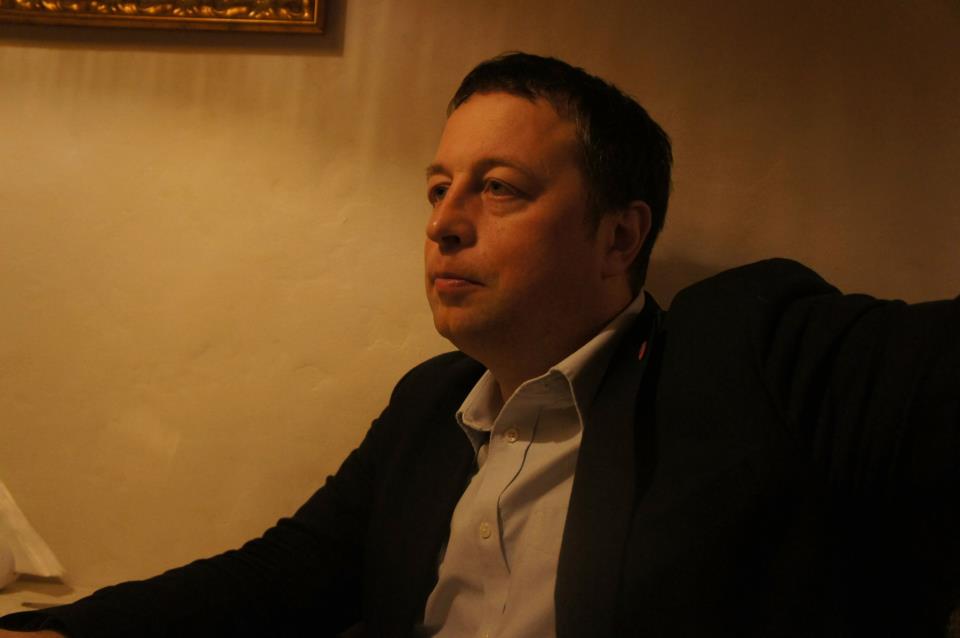
Konstantin Sonin - about the fact that as it is now, can last a long time
Prices for oil and ruble rate are falling, Russian citizens are increasingly aware that they live in an economic crisis and that it will be protracted.
President Vladimir Putin promises a quick completion of the crisis and even a slight growth of the economy in 2016, but it seems that he is not very believed .
Many opponents of Putin's regime linze the terms of his stay in power with the state of the Russian economy. It is believed that Putin’s mass support was provided by a sharp increase in welfare in the 2000s, at the time of the highest oil prices. Now, according to this logic, Putin can lose the favor of people as they fall in their income.
Professor of the University of Chicago and the Higher School of Economics in Moscow Konstantin Sonin , who, in particular, by the political economy, says that now such a connection between economics and politics is not obvious:
- There is a study, the well -known work of the American political scientist Dan Trizman, who shows a very clear connection between the popularity of Russian leaders for the past 25 years and the economic position of citizens. Until recently, this correlation was almost one to one. In this work it was shown that if Yeltsin had such oil prices, then he would have ratings similar to Putinsky. But the last two years have been forced to doubt this connection. It is possible that, since 2014, Putin already has some other support. Although its nature is not particularly clear and, I would say, it is not very clear how long this support will protect it.
Jumping to the level of 2005-2006 was easy
- How to evaluate the overall picture of the fall of the economy. How much has fallen, say, the purchasing power, income of Russians? Is it possible to say-the country rolled away by this year?
- There is an indicator called real income. The real income of Russians fell by about 10%over the year. This is not quite the same as inflation, but it is a measurement of purchasing power. And if you think in years, then this was approximately discarded by the year 2005-2006. But it must be understood that after 2008-2009, the economy and the purchasing power with it, the real incomes of citizens grew low pace. Accordingly, it was not difficult to jump to the level of 2005-2006.
Not all exporting countries are experiencing such difficulties
- In 2005-2006, Putin was in order with support if you try to connect the economic well -being and the level of political support of the leader. Now there are many negative news for the Russian economy - this is also a drop in oil prices, which can be aggravated by the abolition of the US export export. In addition, the dollar is growing, here we add the first in several years to increase interest rates in the United States. When several such news comes, Putin’s critics begin to speak - well, here, it all ended. Then other news come, and, accordingly, those who support Putin begin to say - the bottom has been achieved, the economy went in the opposite direction. Can we catch some common trend for this?
- Of course, the problem of the Russian economy is very much related to the drop in oil prices, because this is our main export, this is the main article of budget revenues and the main element, one might say, the purchasing power of citizens. But it was important for the Russian housekeeper there was a fall, say, from a level of 100 to a level of 50 dollars per barrel. And to say that the problem of the Russian economy is associated with a fall from 50 to 40 is ridiculous. It is necessary to distinguish between the scale of what can affect us. And of course, when they say that oil prices have so much influenced the Russian economy, you need to understand that oil prices are the same for everyone, but not all exporting countries are experiencing such difficulties. Norway does not worry, the UK does not worry. This is partly due to poor -quality economic management for the past 10 years.
People talk more about the economy and are afraid to talk about politics
As for how people say - this is a negative signal, here is a positive signal. There is no doubt that people interpret the news partly as required for their general sensation. They have some common feeling associated with their salary, the mood of their loved ones. This general sensation is tied to the news that they receive. But in principle, we have this, people talk more about the economy and are afraid to talk about politics. For example, it is clear that any of the millions of people who watched Navalny about the Chaika Prosecutor General is terribly outraged. Because it doesn’t go into any gate at all, how can a person associated with organized crime be responsible for the law in the country?! But talking about this, even with neighbors, is scary and inconvenient for them. Therefore, people talk about falling oil prices or about rising prices.
It seems to me that he simply does not pay attention to what he says
-Putin at a press conference talked about what awaits a short growth next year, and then waits a little more growth. Is this a realistic forecast? And if this is not a realistic forecast, then does it calm itself or try to calm itself down somehow?
- I, perhaps, have not been watching about 5 years, what President Putin says. We learned in 15 years that his words mean nothing. His actions mean a lot. But he says anything. It may be associated with reality, may not be associated with reality. I don’t even know if it happens that he specially deceives someone. It seems to me that he simply does not pay attention to what he says.
No one expects reforms from Putin
-You have repeatedly said that Russia needs some reforms. From your point of view, are there any prospects in Russia for any reforms? Because they suggest, as I understand it, some liberalization, and there are nuances. According to some, liberalization is the path of survival: the regime was liberalized, the economy improved a little, it became easier. Others believe that, on the contrary, from a certain moment, the regime, liberalizing, is looking himself.
- No reform is expected. We have been talking about this for several years. You can see three years ago - there were no reforms. Second. I must say that those measures that are expected and now require from the Putin government are not reforms, but some specific steps to improve the situation for citizens. They do not require any liberalization at all. There is absolutely nothing liberal to dismiss an official associated with organized crime, or to dismiss a person who has become a multimillionaire. For this, no liberal measures are required. To appoint a strong responsible prime minister, who will control the government, as it should be according to the Constitution and by law, there is nothing liberal in this. Say, in Stolypin there was nothing liberal, however, his appointment Nikolai II was in a similar situation a significant progress. Reforms - privatization, changes in the institutional environment - are not expected, it is not planned and no one expects Putin. This will already be carried out when the next president will be. And what Putin could do is some specific measures within the framework of the existing system, just for restoring a minimum order. For example, cancel counter-sanctions and appoint a real prime minister, dismiss corrupt officials from the Cabinet of Ministers. These measures do not require any liberalization, do not require any institutional changes. They require simply political will to make the Russians better.
Then we just have to observe and wait for it to fall apart
-There is an objection to this: if the accusations against Putin’s regime are true that it is built on corruption, that a certain class is allowed to resort to corruption, enrich his faithfulness, Putin cannot risk it, removing some kind of corrupt official. He cannot remove some officials, even if they became odious in the eyes of society.
-That is, he cannot cancel counter-sanctions, because he cannot fire Governor Tkachev, who is profitable on these sanctions due to the fact that his family owns the "agricultural holding"? Can he do nothing at all? I understand when they talk about the president as a person limited by some kind of framework, the need to support coalition. But in your reasoning, the president, it turns out, can not do anything at all. As if everything he does is due to his obligations to friends, neighbors in the country and all that. Well, then we just have to watch and wait for it to fall apart. Of course, it will fall apart. Then nothing can be done. However, in my analogy, Nicholas II so until the very end and did not remove the family from government and did not appoint a strong government.
The emperor cannot do this because he loves his wife very much
- I just wanted to say that your analogy also has sad results.
- Well, yes. Imagine that we are discussing this 100 years ago. I say that people do not need any constitution, you just need to not give the empress to influence the appointment of ministers and the decision of the office. It is necessary to appoint not an 80-year-old prime minister, but some strong figure. And you tell me that the emperor cannot do this, because he loves his wife very much. OK. Then it will be the same as then.
2014 was strongly raised the bar for what we consider crazy
-It seems to me that the correct answer to this question-yes, the king-emperor loves his wife very much. Let's try to create some model of what is happening now. You urge Putin to judge by his actions, and, judging by the actions, Putin cannot do anything. It is clear that he has some kind of logic, he was always consistent in his logic. So, he has his own concept of how to act in such conditions. We see that this concept implies the lack of concessions, in particular, spending on defense continues, the social sphere is reduced. We have already discussed the fight against corruption what was happening to her. You can make some satisfactory model, how will the welfare of the people decline? When, for example, it reaches a level that potentially, as we know from history, threatens the regime?
- It seems to me that this is not a very successful approach. Because even if the standard of living of the population decreases, as it is now reduced by 10%, this is an unlikely scenario. Even if this continues, for example, the next 5-10 years, then still the result of this decrease will be higher than the level of the 90s. And if you remember, then at the very bottom of the 90s the people did not really encroach on power. I would say that without any strong and crazy passages in the political sphere, I do not see reasons for the collapse of the regime. However, the year 2014 greatly raised the bar for the fact that we consider a crazy step. It turned out that crazy activity in the international arena does not cause any discontent at all.
This can calmly last another 10 years
- Does this mean that when Putin’s critics say that the land is already visible, already $ 37, 35 dollars, and there, you look, and $ 30 per barrel of oil; When they talk about the budget deficit, do they actually give out what is desired? From the point of view of purely economic, nothing threatens Putin?
- Yes, they give out what they want. From the point of view of the economy, Putin is threatened with many years of stagnation, threatens a slow and smooth decrease in the standard of living of citizens. But for economic reasons, there will be no uprising and revolution. This can calmly last another 10 years, and maybe even longer.
More decisive democratization in some 1989
- You wrote on the blog that at the end of the Soviet Union, in recent years, it was an economic disaster . But at the same time, the people did not perceive it as you wrote, since the corpses of horses on the street are not lying. However, that mode is surprisingly easily and quickly disappeared. And it was not a Putin regime, it was a mighty communist regime that penetrates the whole society.
-Firstly, whether he quickly disappeared and is it easy-it does not seem so to me. Of course, it disappeared much faster and easier than 100 years ago during the first Russian revolution, but at the same time I would not call it easily. It was hard, and the consequences were very serious. It is possible that more decisive democratization in some 1989, something like a velvet revolution, as in Poland or Czechoslovakia, this would save us from almost a 10-year decline, and from shooting on the streets in 1993, and from many other troubles. They clung to power for a long time, including Gorbachev. He really clung to power for a long time.
How can you be so confident before such a collapse that there will be no collapse?
“But it seemed that this regime was much more durable than he was, Alexei Yurchak wrote about this, the author of the book" It was forever until it ended. "
- It turned out that our idea of the future, the representation of citizens is a rather strange substance, depending on many factors, but little related to reality. For example, a huge number of people still believe that in the 80s there was confidence in the future. Although, it would seem, the whole experience of what these 80s ended should have to teach them that in 1985 they were just fools if they thought that there was confidence in the future. The phenomenon that the Yurchak explores was how to be so confident before such a collapse and collapse that there will be no collapse and collapse?!
There were still 10 years of degradation and agony ahead
- Now the situation is not similar? There is some foreboding that for so long it cannot continue.
- It seems to me that you and I have found a good analogy. Imagine that you are now in some 1907 or 1908. Then the unrest, of course, were much more acute. But unrest, one way or another, suppressed, some nominal reforms have been carried out, life continues. There were still 10 years of degradation and agony ahead.
People will live worse, they will work more
- And the economy does not interfere with this?
- The economy is a terrible living organism. After all, what fell apart in 1990? In 1990, the economy did not fall apart. She, of course, was then less adaptive than the current market economy. But the public administration system collapsed. What kind of economy to worry? People will live worse, they will work more, it will be more difficult, life will be shorter, they will give birth to fewer children. But people and firms will adjust. Destruction goes from public administration.
When they ask "Do you support Putin?" - This is a type of question "Are you washing your hands after the toilet?"
- You say that the last two years, apparently, Putin has existed outside the framework of that model of the correlation between the economy and the popularity of leaders.
- We really know little about Putin's popularity. On the one hand, like polls give 86% of support. On the other hand, judging by the repressive apparatus, by the number of people involved in the fight against the opposition, no one in the government and Putin himself believe in 86% of support, but are sure that everything is based on violence and propaganda. For example, it is impossible to collect people without buses without buses. If this is popular ... It seems to me when people are asked "Do you support Putin, are they satisfied with them?" -This is something like the question "Are you washing your hands after the toilet?" Because much fewer people wash their hands after the toilet, which answer the question that they wash their hands after the toilet. Sociologists know this well, but there is no serious sociology, and write 86%.
Putin has no problems with the elite and the power organs yet
- There is a fact that Putin remains in power. That is, it is supported by people. Moreover, it is interesting that people are fully realized that there is a crisis, that it is long and difficult. If, on the one hand, the economy falls, if, on the other hand, no one supports it, then Putin would not remain in power. And he remains in power-it means that some design should be behind this.
- This is a completely correct argument. For the authorities, it is very much support, for example, the power apparatus. Look what happened in Ukraine. President Yanukovych still, unlike Putin, won the competitive elections. With its popularity, at least 45-50% - there is no doubt that he was supported by a huge layer of population. But at the moment when they began to kill people, the elite and power organs refused him. In this sense, Putin has absolutely any problems with the elite and the power organs yet.