
Translated material
Gutai. Tapi. Kaprow
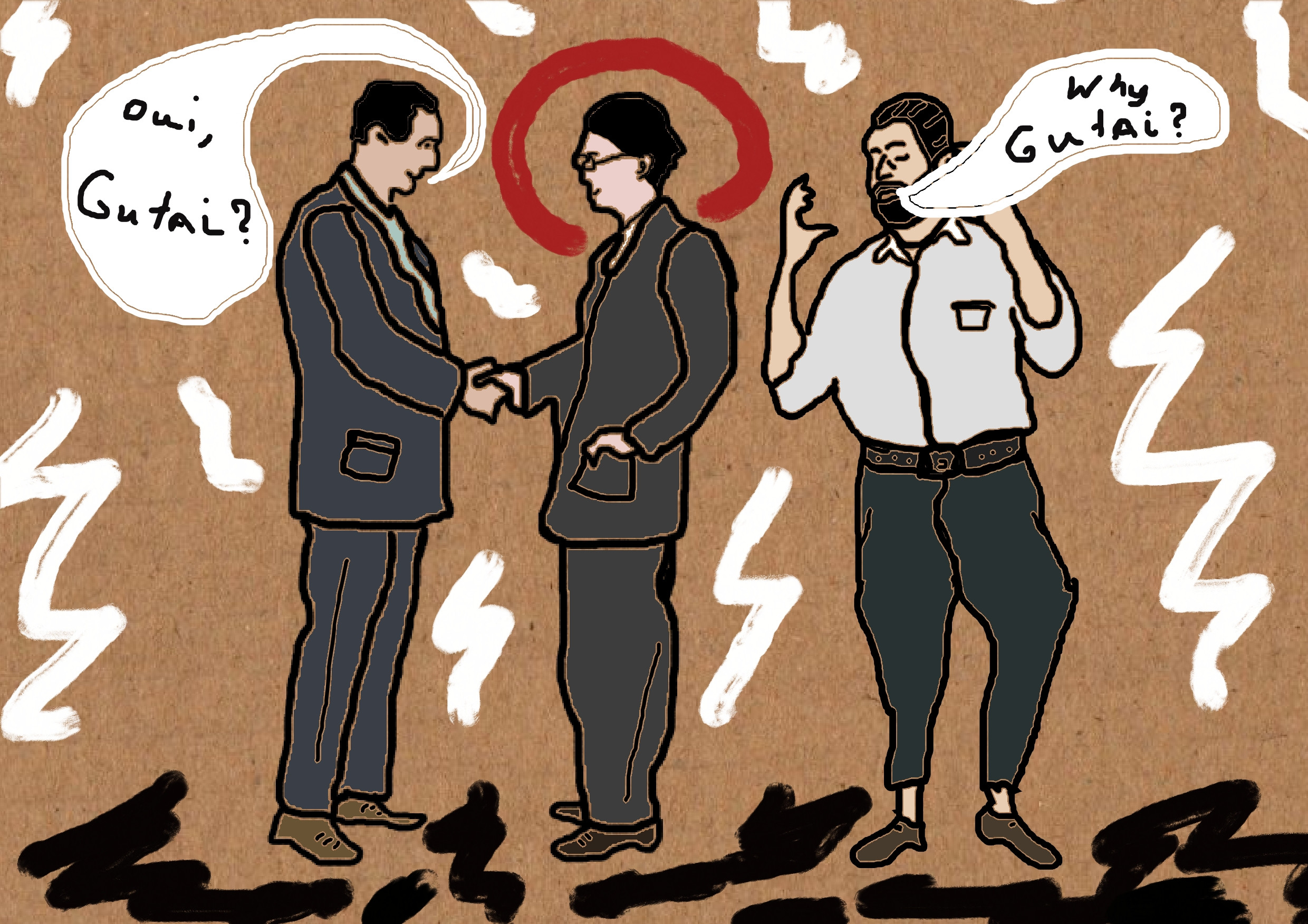
When discussing the Gutai and their activities, the two names that come up most often are Michel Tapie and Alan Kaprow. The first character was directly involved in the formation of the group, had a serious influence on them and tried to represent (in his understanding) Japanese artists in Europe and the USA as effectively as possible. The second character is also a significant personality for the group, which served as a subject for discussion of the question of the primacy of one or another artistic practice in the history of the relationship between these two creative forces.
Michelle Tapie
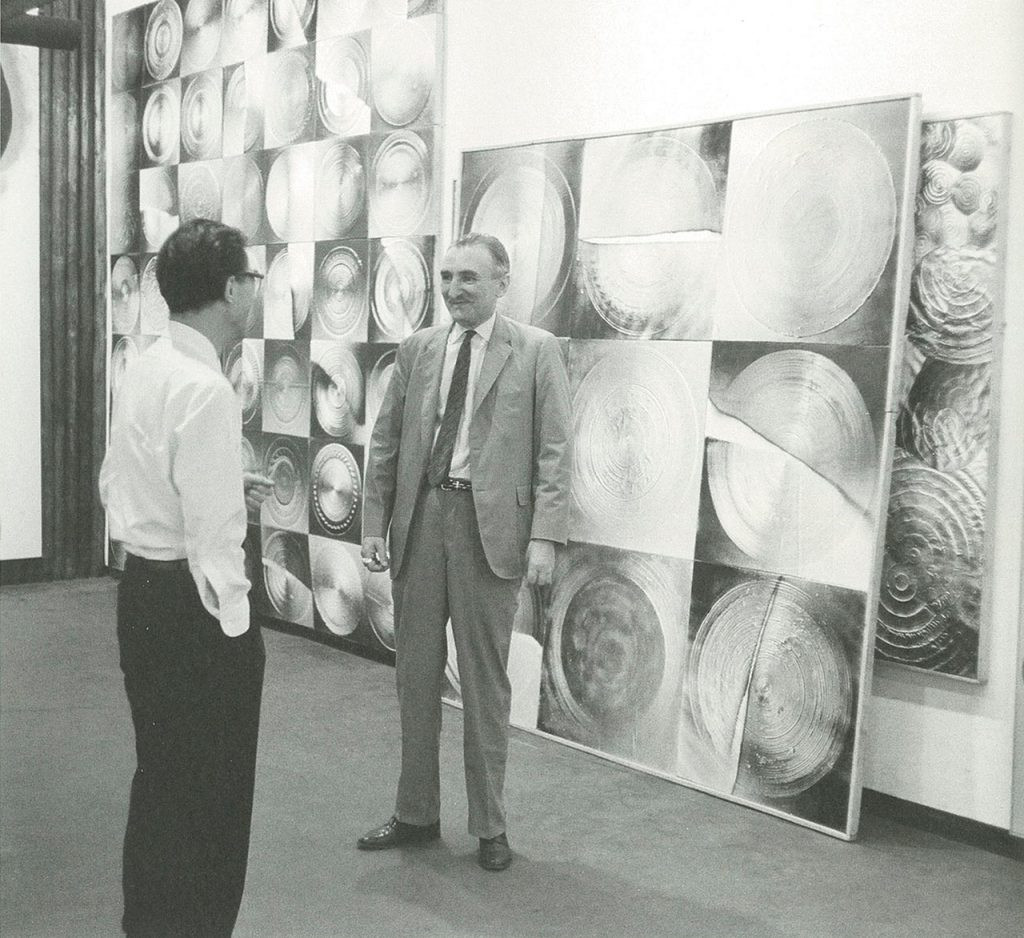
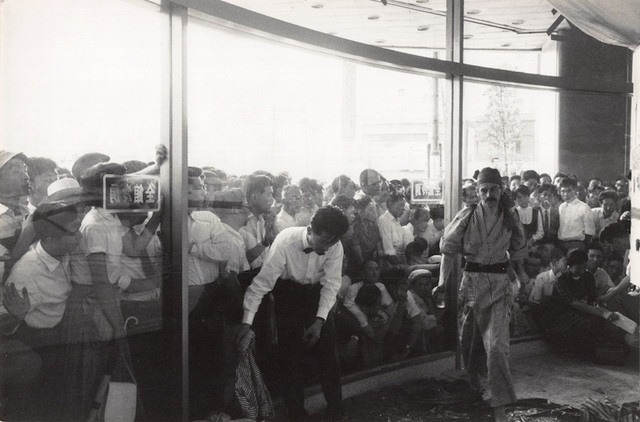
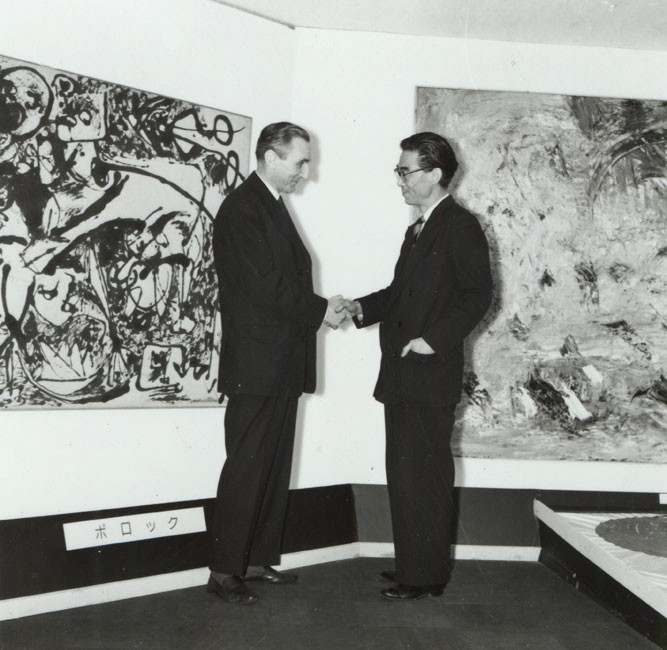
Tapi becomes aware of Gutai practices from Hisao Domoto, a Japanese artist living in Paris. Domoto, being an active distributor of the group's magazines, informed Tapi about Gutai's activities and gave him several issues of the association's printed publication. Soon, after first becoming acquainted with the activities of the group, Michel Tapie decided to travel to Japan, tentatively planning to release a joint material about Gutai and informalism, which would subsequently be published in September 1957. The following month, Tapie held the exhibition "International Exhibition of Contemporary Art - Informalism: The Birth of Another Art" in Tokyo at the Bridgestone Museum of Art. The exhibition was then also shown at the Daimaru department store in Osaka, the city near which the Gutai group was based. Toshimitsu Imai, another of the Japanese artists and friends of the association from Paris, accompanied Tapie and two artists - Georges Mathieu, Sam Francis. Invited artists gave public performances, including the famous episode of Georges Mathieu painting in public at the Nihonbashi Shirokiya department store. [1]
Tapi declared Gutai to be a group related to Informalism and immediately included them in a special section at the exhibition “International Art of the New Era” held in Osaka. In his 1957 article “In Praise of the Gutai Group,” Tapi writes: “I came to Japan to see how the idea was put into practice. What I found were attempts made to develop an idea, taken from an already completed form...shyly, I asked if I could become a member of the group." [2]
Yoshihara's response to Tapie's statement followed in his essay “Michelle Tapie. Together with us." “Tapi provided a strong aesthetic foundation for Gutai art...There is nothing more gratifying than to feel the satisfaction of his confirmation of our adventures, the quality he has already discovered in our works, and the first international recognition of our work.”
In this regard, it is worth saying that for Michel Tapie, as he himself stated, it was unexpected to see genuine Informalist painting in Japan. Another thing is that this statement seems controversial, depending on what Tapi puts into the understanding of true informalism - following the technique of work or ideological embodiment.
The beginning of informalism in Japan is considered to be November 1956 with the exhibition of “International Contemporary Art” held at the Tokyo department store Nihonbashi Takashimaya, however, it was Tapi’s arrival that accumulated enormous interest in informal painting. And if in 1956 about 60 artists from Japan and 40 foreign authors from Dubuffet to Fautrier were presented, then by 1958 the tenth Yomiuri exhibition saw the peak of informal painting. 1,500 works by Japanese artists were presented, and the exhibition included not only paintings, but also objects that became examples of the movement towards anti-art. The intervening year between the peak and the beginning of widespread informalism in Japan was called the “Whirlwind of Informalism.”
However, understanding and attitude towards informal painting developed gradually. In February 1957, contemporary Japanese art divided into two branches: the first branch used informalism as a means of individual expression, focusing more on the technical method than on ideological content, the second, on the contrary, tried to break with informal painting and looked for a path to anti-art.
Due to the peak attention to informal painting, many critics turned to the pre-war problem of the adoption of artistic practices from abroad. In particular, some, like T. Ikeda, turned their attention to the extinction of local phenomena and blind adherence to informalism:
“An inferiority complex towards everything foreign has plagued this country since the Meiji era, and it seems to have been further entrenched through the ashes of the devastation of war. The new aesthetic created in France is spreading with incredible speed among the artistic community in Japan, as if someone's lost love had somehow been found again... I was not alone in feeling lonely and disillusioned when I saw that many artists of the same generation were rushing to perfect their own paintings, as if egged on by Tapi, straight into Informalism.” [3]
One of the most authoritative magazines in the field of art, Bijutsu Tekko, also devoted material to informal painting - “West and East: tradition and modernity.” Critic Shuzo Takiguchi viewed the emergence of informalism in the practices of Japanese artists as a trigger for the development of art in Japan. The importance of adapting informalism was directly related to its expressiveness. This aspect was extremely important for the new generation of post-war artists, who were looking for new ways of expression that could be contrasted with Japan's wartime past.
Based on the results of his Japanese experience, Tapi, in October 1957, wrote the essay “Reflecting on My First Journey to Japan.” He finds it surprising that there are examples of collective work in Japan, due to the rarity of this phenomenon in the modern art world. Michel Tapie mentions a number of artists in Japan with whom he was able to communicate: Sofu Teshigahara, the founder of the famous Sogetsu school of ikebana and the arts center of the same name, the experimental workshop art group and its member Hideko Fukushima, and the Gutai group.
Tapi singles out a number of members of the Gutai group and enthuses about the quality of their work, adding that at least a third of the work he saw from the 15 artists was of outstanding quality. He addresses the idea that art in the present can no longer be anything other than international; at the same time, he points to distinctive processes for the history of Japanese art, again noting its peculiarity and otherness, which can change the artistic world of our time.
“ I feel that Japan has given birth to art of a higher order and of a different type. This country has the opportunity to play a significant role in the creative processes of today's world. Moreover, with the history of its ancient civilization, in which art flourished and gave rise to sensations that went beyond the usual work. A new aesthetics that is important in establishing that logic, without which we can no longer do anything.” [4]
However, Tapi's actions were again dependent on a correct understanding of Japanese art and its presentation in the West. The totality of Tapie's aspirations in expanding the activities of informalism and emphasizing the uniqueness of Japanese artistic culture largely worked on the same principles as the model of Japonism in the second half of the 19th century.
Tapi's visit in 1957 had a significant impact on the subsequent existence of the Gutai Association. There was a transition to painting practices: experimental works of a performative nature and installations were not accepted by Tapi and, to some extent, rejected by the members of the Gutai group themselves. Shortly before Tapi's first visit to Japan, Domoto Hisao wrote to Yoshihara that: "Tapi will hate the Dadaist elements in Gutai's work." Therefore, the decrease in radicalism in practices was also associated with Tapi’s direct attitude towards practices other than painting.
Also, some researchers highlight Tapi’s purely utilitarian-commercial views and their influence on Gutai’s work. The transition to painting made it easier to transport and display works, and acted as a reliable format for selling works by Japanese artists. And of course, visual proximity to the practices of informal painting played a role, which would subsequently play a negative role in the recognition of Gutai and the independence of their ideas and innovation of works.
Katsuo Shiraga, one of the most famous members of Gutai, wrote on this matter:
“ We have become more focused on painting, that’s for sure. Tapi came and bought our works. Being bought was the most powerful motive. We began to realize that we could sell our work. To sell, we had to make paintings...Gutai do Tapi made a lot of non-paintings, for example, works by Shimamoto, which the viewer had to feel with his back or leg. After Tapi such works disappeared. I don’t know if it’s Tapi’s fault or ours...Tapi chose the work and bought it himself. They were very cheap, but until then no one could even think about selling the works, we were so amazed. We were discouraged, but beyond that, it was a negative influence...Tapi influenced us very much. Besides, we were quite exhausted after an intense period of experimentation. In 1955, 1956 and 1957 we did new things. At the moment when we were tired, he appeared and said that painting was better. And we all went in this direction. For those who could not draw, hard times came. So it wasn't just about money. Something has changed in the work itself " [5]
Despite a number of contradictions and concessions within the group itself, it is necessary to clarify that one way or another the group worked within the framework of international communication. Tapi served as a guide for Japanese artists to realize their activities in Europe or the United States, so until 1965, Tapi's views largely influenced the artistic component of the group. They were difficult to give up, given that navigating the art world and negotiating to realize Gutai's exhibition activities was a vital part of the group.
Also, acquaintance with Tapi was reflected in the enhanced individualization of artists within Gutai. The magazine's ninth issue, published in April 1958, focused equally on the artist's personality as well as his work. Each page was accompanied by a short biography of the artist, his own photograph and an image of his work. Although earlier, in previous issues, no attention was paid to the identity of the artist and his biographical information, the images were simply accompanied by captions in English and Japanese. This would similarly be characteristic of the European model of the artist, something that was alien to the collectivist form of Gutai in its early stages.
In turn, the result of Tapi's activities was the identification of the group with informalism, and Gutai began to be perceived as its Japanese division. This outcome for the group created a lack of understanding of its practices both at the time of its work and from a historical perspective, in addition, the recognition had a negative impact on those Japanese artists who were actually involved in the activities of informalism.
A few examples of this: in 1976, Pierre Restani, in his article, criticizes Tapie for promoting Gutai and constructing its kinship with the informal painting movement. The critic called the Gutai group “victims,” those who “lost their soul,” emphasizing that this caused serious damage to the development of local practices in Japan, and Restani also mentions that Gutai’s performative works appeared earlier than the New York happening. [6]
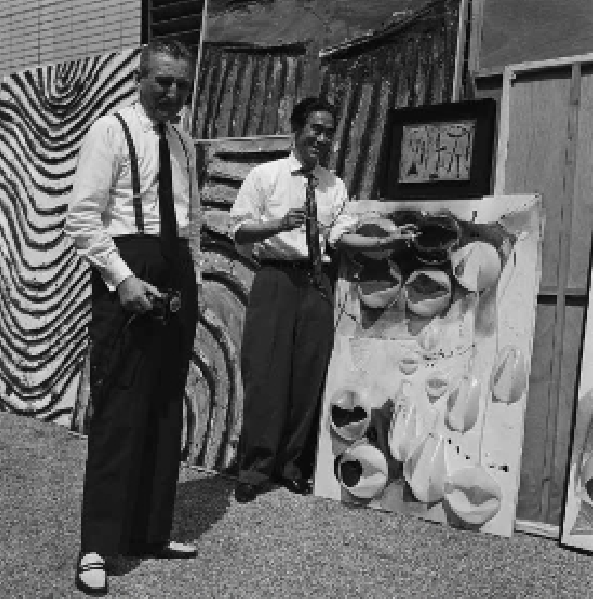
Benjamin Vauthier, in his essay “On the Subject of Gutai,” wrote that Tapi with his “suffocating embrace” also harmed Gutai to some extent: “It is not, however, because we did not talk about them in Europe as much as they deserved, or were geographically removed from us, that we could decide that this movement has no influence on modern painting and European art. This is wrong. I remember, for example, that the first time I heard about the Gutai group was in 1957 from Yves Klein, who had just returned from Osaka, where he had won a judo competition. Thus, Klein saw Atsuko Tanaka's white monochromes." [7]
The relationship with Michel Tapie gradually waned in the mid-1960s, around 1965 and the invitation to hold an exhibition with the Zero group. The increased interest of individuals and institutions in Gutai practices provided her with greater independence and broke with her dependence on Tapi’s contact base. Also, by the end of the 1950s, informalism was gradually fading away and could not compete with American abstract painting, just as Paris could no longer compete with New York.
Kaprow
The situation with Alan Kaprow was somewhat different from the tangled relationship with Tapi; in the United States, Gutai gained great fame due to the mention of the group in the book of the American artist Allan Kaprow. The mention of the practices of Japanese artists in the book “Assemblage, Environment and Happenings” served as another side to the discussion of the issue of derivativeness and secondary nature of peripheral practices.
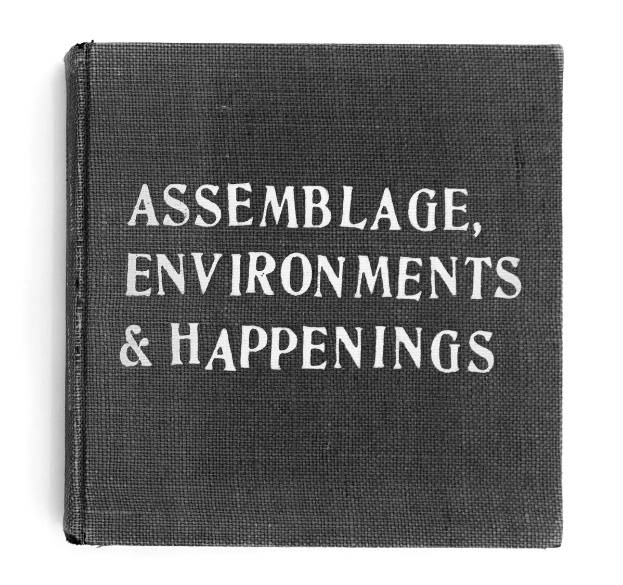
“For the record, these dates seem to imply Japanese priority in creating a happening-type performance art. Even earlier in America, John Cage held an event at Black Mountain College in 1952 combining painting, dance, film, slides, recordings, radio, poetry, piano playing and lecture. Since my own early efforts, in 1957, were done in John Cage's composition class, where he even described it, I must mention him as an important catalyst... I knew nothing about Gutai's activities until Alfred Lasley mentioned them to me two years later, and it was not until late 1963 that I received the information presented in the book. This is a rare case of modern communication failing . ” [8]
In connection with this statement by Kaprow, it makes sense to speculate on the topic of how frequent problems in communication were and whether they had a basis. Once again, the problem of the original meaning and interpretation, which can change when sent to a new recipient under the influence of time and other distorting circumstances, comes to the fore.
It is generally accepted that information about Gutai came to Allan Kaprow from Alfred Leslie, who gave him an article by Ray Falk about an exhibition at the Martha Jackson Gallery in 1958. Kaprow himself denied that he attended the Gutai exhibition or even knew about it, but this remains a possibility to some extent. Kaprow first mentions Gutai in a 1961 article published in Art News:
“In addition, outside of New York there is a Gutai group from Osaka; their activities are known in San Francisco, Chicago, Cologne, Paris and Milan; and history going through surrealism, dada and pantomime."
It was not until 1963 that Kaprow personally received photographs of Gutai practices from Jiro Yoshihara. Actually, Allan Kaprow's interest was limited exclusively to the performative practices of Gutai. The American artist did not focus on the painting activities of the Japanese group, thereby failing to recognize the connection between performative practices and painting. Despite the mention and emergence of interest in Gutai after the publication of the book “Assemblage, Environment and Happenings” in 1966, the question of recognition of the primacy of artistic practices and possible borrowing arose. [9]
Of course, the situation with Kaprow and Gutai seems most attractive due to their mutual emphasis on eventfulness, as well as the origins associated with the form of response to abstract expressionist painting. They had plenty in common: an interest in multimedia practices, interaction with popular forms of entertainment and an expansion of action painting, the opposite was true in matters of interaction with the environment. Perhaps the most appropriate way to view Gutai is as a transitional stage between Pollock's action painting and Kaprow's happenings, focusing on the fact that the use of paintings in Gutai's work was captured between the concepts of action and material.
The result of Gutai's communication with Tapi/Kaprow was a series of redefinitions of the group's practices, their relationship with prominent personalities from the Western art world, and a series of random coincidences that allowed Gutai to leave a memory of himself. However, as has already been said, this memory requires expansion and another analysis of those meanings that were modified and inclined according to the desires of those who tried to present Gutai in Europe and the USA.
Other materials on Gutai:
Gutai. Practices
Gutai. Abroad
Gutai after Gutai
---
[1] Nakazawa H. Art History: Japan 1945-2014. 2015. P. 30.
[2] Held Jr. J. Why Gutai? // SFAQ. 2012. P. 100.
[3] Nakazawa H. Art History: Japan 1945-2014. 2015. P. 30-31.
[4] Tapie M. A Mental Reckoning of My First Trip To Japan // From Postwar to Postmodern. Art in Japan 1945-1989. 2012. P. 99-101.
[5] Held Jr. J. Why Gutai? // SFAQ. 2012. P. 100.
[6] Cora B. Gutai in Europe, starting from Italy // Painting with Time and Space. 2010. P. 6-7.
[7] Held Jr. J. Why Gutai? // SFAQ. 2012... P. 108-111.
[8] Tiampo M. Gutai: Decentering Modernism. 2011. P. 90.
[9] Rodenbeck J. Communication malfunction: happenings and Gutai // Gutai Splendid Playground. 2013. P. 265-269