
Translated material
War
1635th day. In the Moscow region, one of the largest Wildberries warehouses was attacked for the second time. The book market came under attack in Kyiv
Since February 24, 2022, Meduza has been broadcasting live about the Russian-Ukrainian war. We publish your letters every day because we are sure that we need to continue talking about the war. Share with us your thoughts about the war. What feelings are you experiencing? How does war affect your life and your attitude towards the world? If you have a story related to the war, tell it . The feedback form is at the end of this article. A review of the previous day can be read here .
Russia
Ukrainian drones attacked 16 Russian regions and Crimea on the night of August 16, the Russian Ministry of Defense said. The military department reported that air defense forces intercepted 822 drones.
In the Rostov region, five people were killed as a result of the attack, said the head of the region, Yuri Slyusar. According to him, air defense forces destroyed more than 150 drones and missiles in three cities and nine districts of the region.
The General Staff of the Armed Forces of Ukraine said that in the city of Kamensk-Shakhtinsky, Rostov region, the Kamensky plant, an enterprise of the Russian military-industrial complex that produces solid rocket fuel for the Uragan, Smerch and Tornado-S MLRS ammunition, as well as for a number of missile systems and aircraft weapons, was hit.
At least 600 drones flew in the direction of the Moscow region from the evening of August 15 until the morning, said the mayor of the capital, Sergei Sobyanin. According to him, 201 drones were shot down. The governor of the Moscow region, Andrei Vorobyov, also reported about the massive attack. He stated that during the night air defense forces shot down 187 drones in Domodedovo, Podolsk, Stupino, Odintsovo, Naro-Fominsk, Ramenskoye, Chekhov, Kolomna, Kashira and Yegoryevsk.
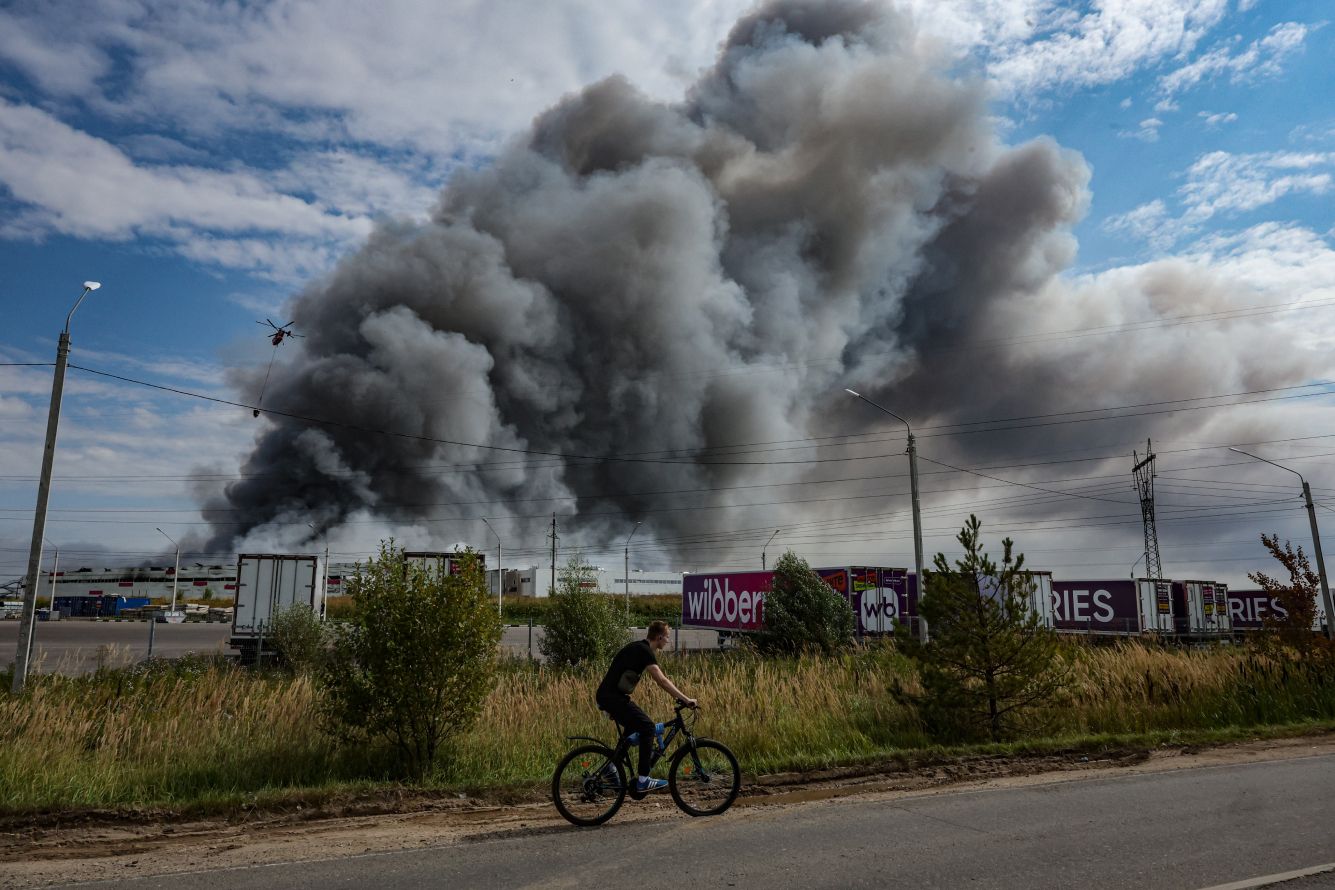
In Podolsk, a Wildberries warehouse in the Koledino industrial park caught fire as a result of a drone hit. This complex has been attacked at least for the second time. He was first struck on July 20. Then the company reported that none of the workers were injured, and the complex continued to operate as normal. Now the press service of the merged company RWB has stated that due to a fire at the facility, the logistics chains have been rebuilt.
Ukrainian monitoring channels publish videos of a large-scale fire and thick plumes of smoke from a burning warehouse. The Ministry of Defense of Ukraine claims that the Ukrainian Armed Forces disabled seven of the 10 largest Wildberries logistics centers, and the warehouse in Koledino was the largest in area - 250 thousand square meters. The same figures are cited in its calculation by the Agency, which notes that the warehouse in Koledino remained the largest Wildberries logistics center in terms of area after the complex in Elektrostal, near Moscow, burned down in July.
Due to damage to the power line in the Podolsk district, 110 private houses in eight settlements were left without electricity, said the head of the district, Grigory Artamonov.
In Domodedovo, after an attack by Ukrainian drones, a warehouse with medicines caught fire, Governor Andrei Vorobyov said. According to the head of the district, Evgenia Khrustaleva, the fire was localized, but a warehouse on an area of 56 thousand square meters collapsed.
In the Moscow region, an 83-year-old man was killed and at least three people were injured as a result of a night attack. Three more people were injured in the MKAD area (Sobyanin reported this without specifying the circumstances).
Ukraine
On the same night, Russia attacked Kyiv, as well as the Dnepropetrovsk and Poltava regions of Ukraine with attack drones and missiles.
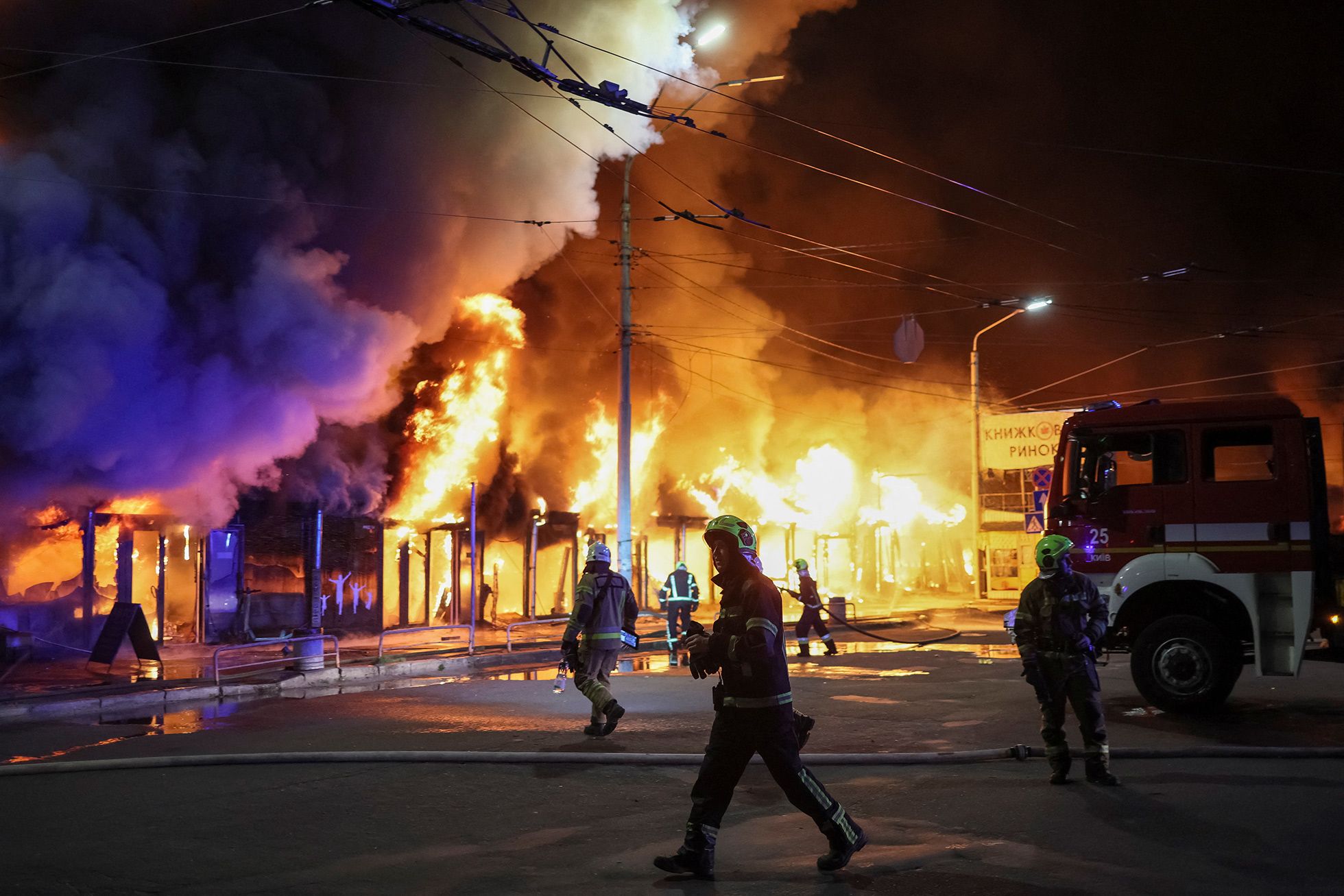
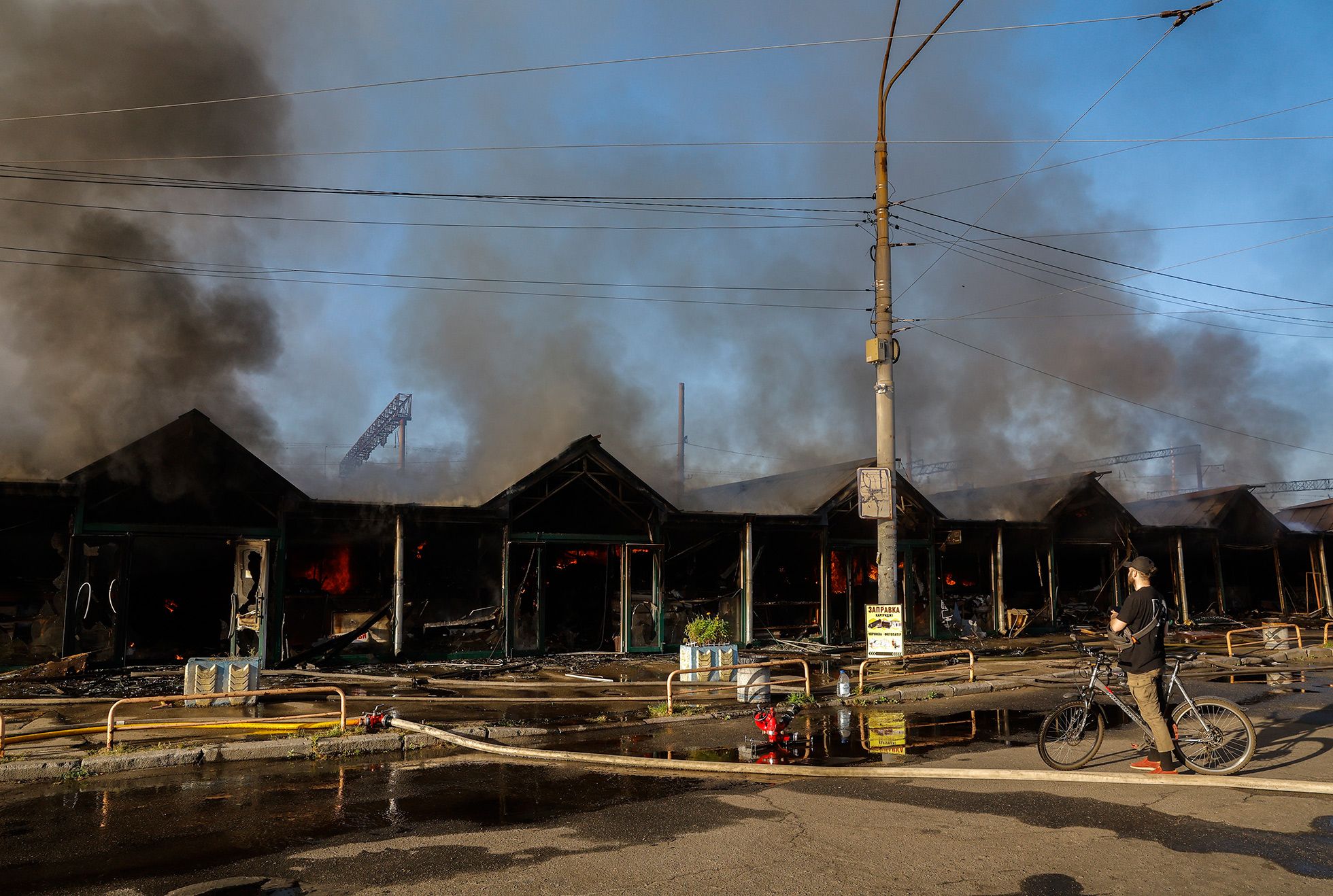
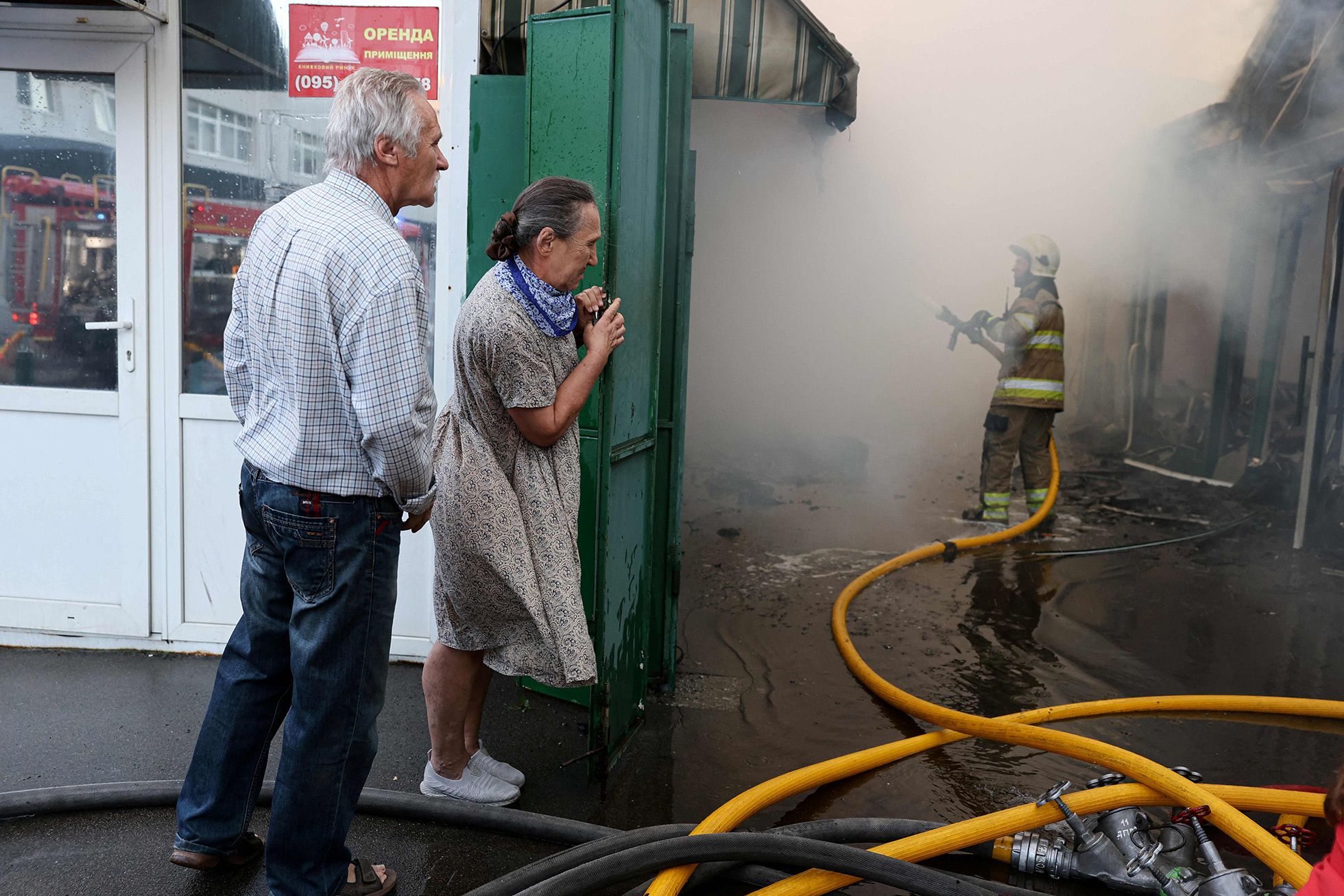
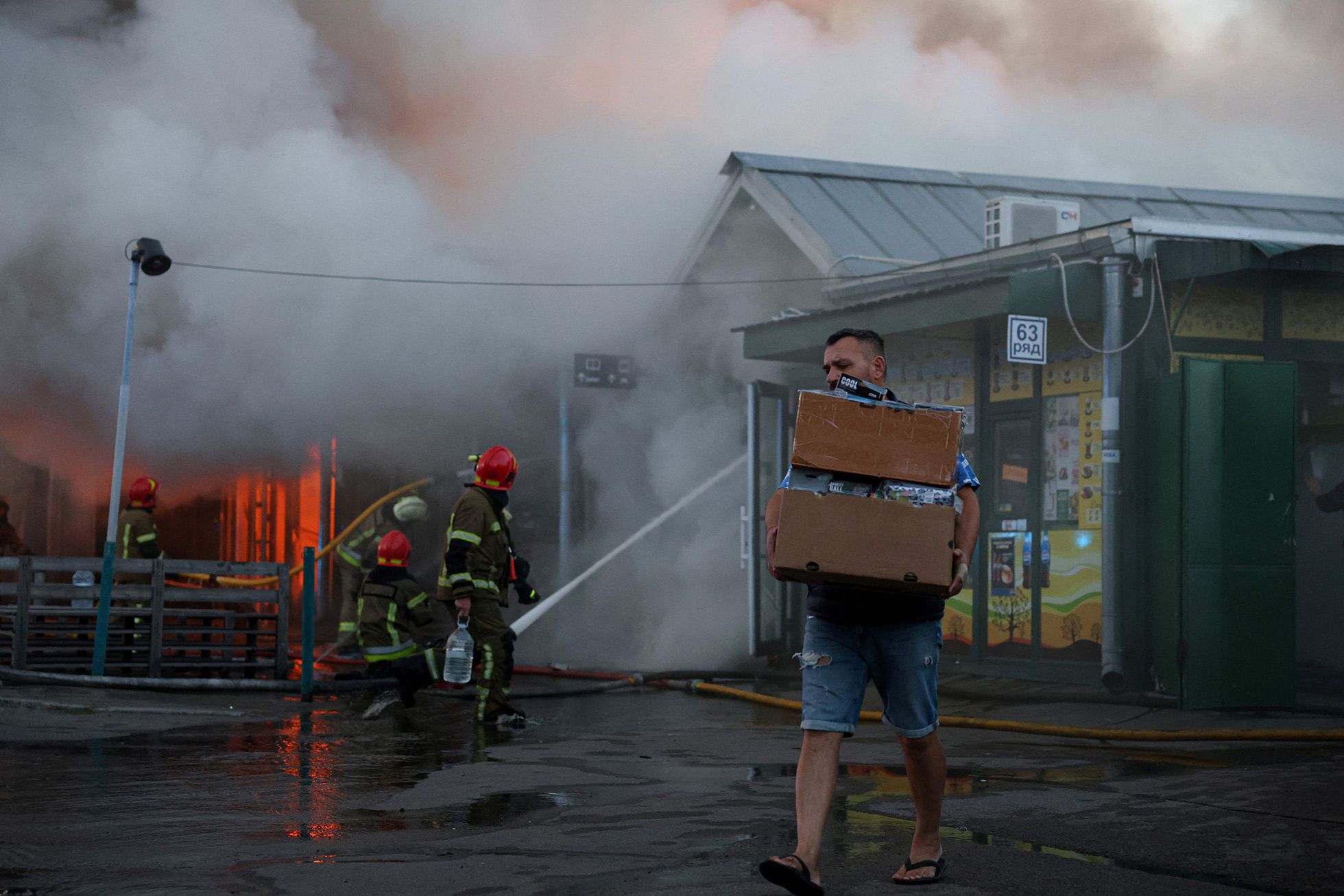
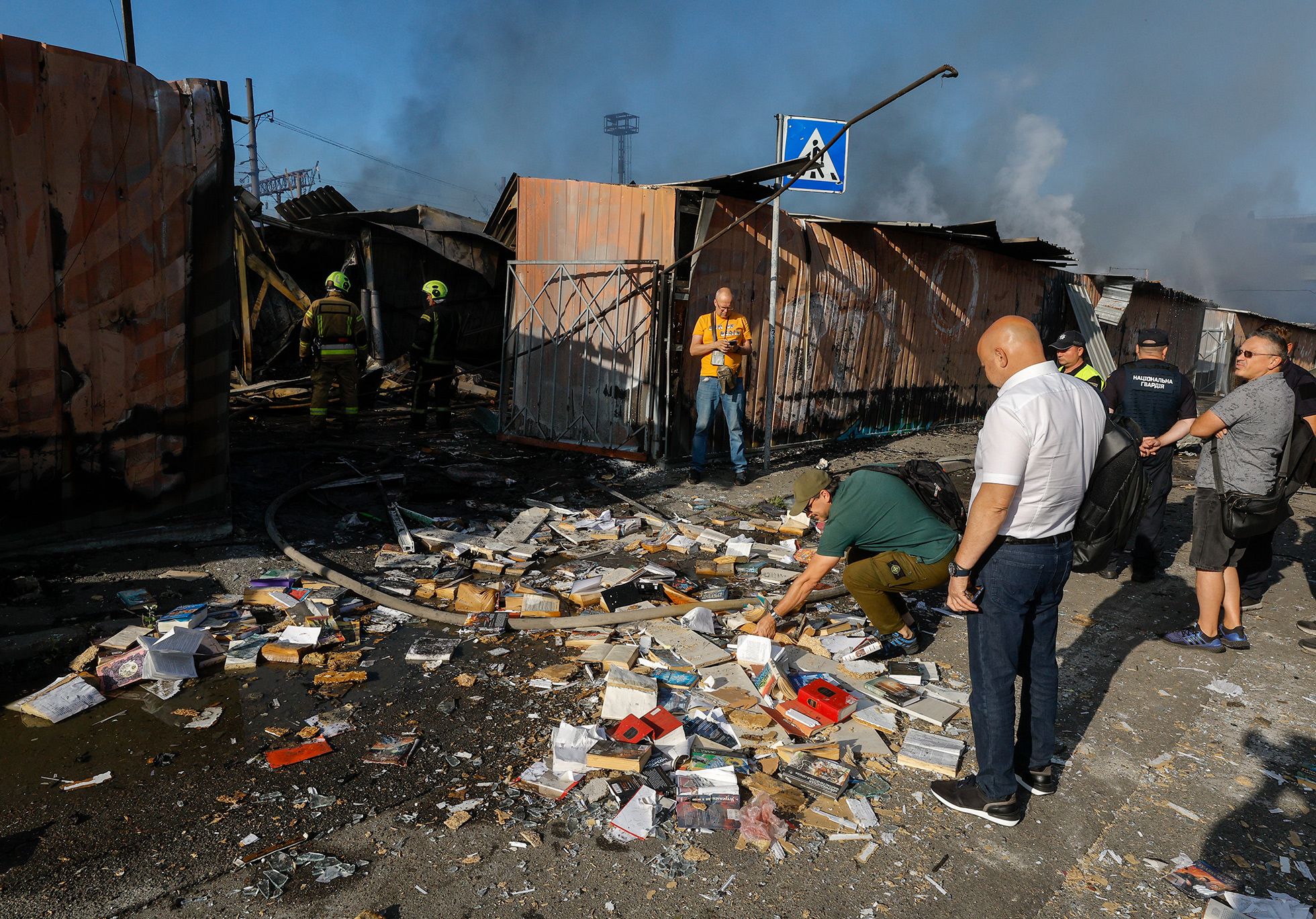
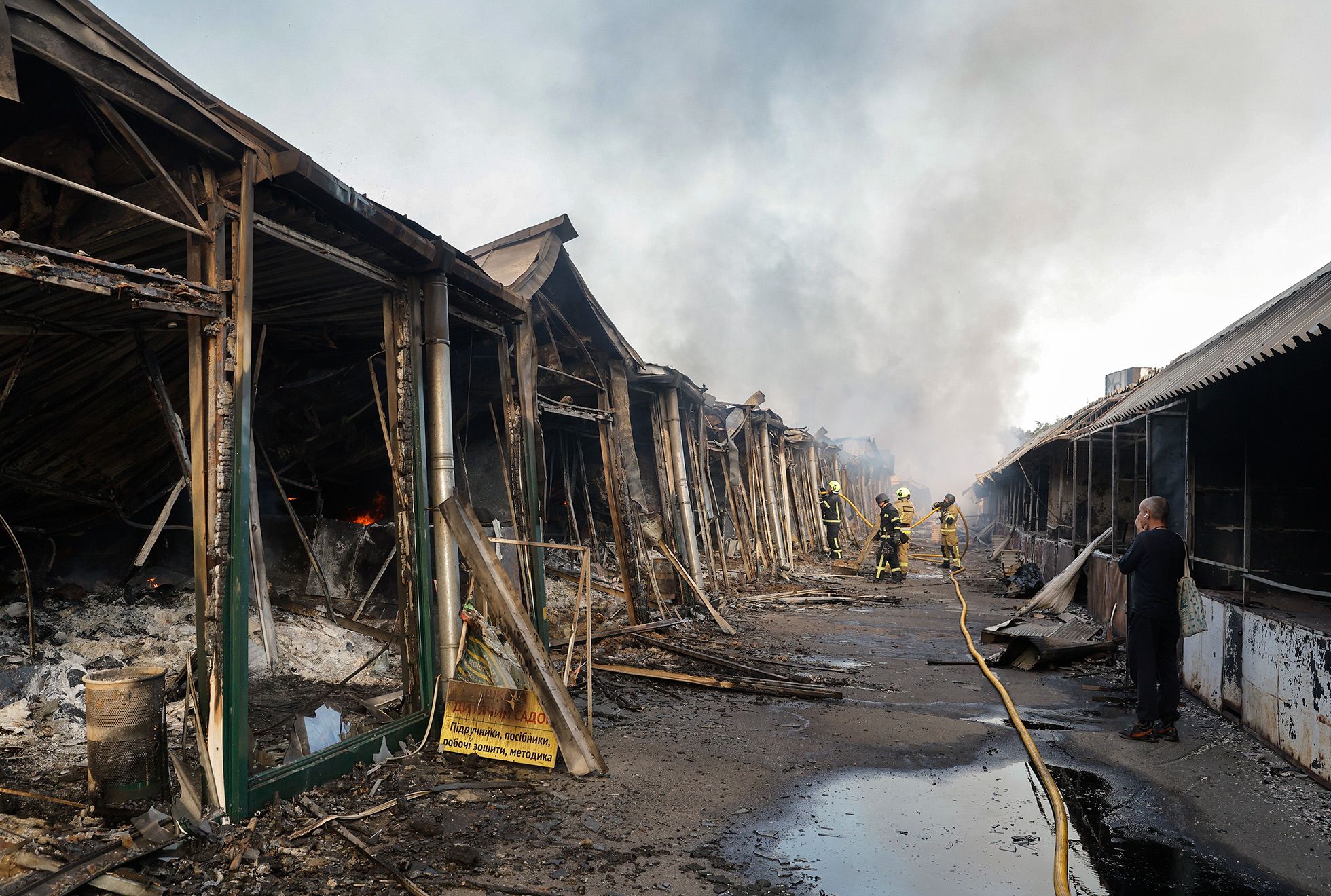
In Kyiv, the book market near the Pochaina metro station came under attack. As a result of the attack, several rows of shopping pavilions were burned out. Other stores including textiles, jewelry, clothing and footwear were also damaged. The entrance to the metro station was also damaged, reports the Suspilne TV channel.
The book market existed at this location for almost 30 years. The official opening date is March 1, 1997. At first the market was named Petrovka after the metro station of the same name, but later it was renamed as part of decommunization. “No one has anything left... Everything burned down. I sold foreign language [textbooks] for schoolchildren. We were waiting for September so that everyone would have their textbooks... But what happened happened,” Natalya, the owner of a bookstore that suffered from the attack, told Hromadske.
In Krivoy Rog, the ArcelorMittal mining and metallurgical enterprise came under missile attack. One person was killed and 13 more workers were injured. The company reported that as a result of the attack, the main production facilities of energy and blast furnace production were damaged. Production processes have been partially stopped. “We emphasize that our enterprise is a civilian facility of the mining and metallurgical industry,” the message says.
Later, the head of the Dnepropetrovsk regional military administration, Alexander Ganzha, clarified that two people were killed and 14 more were injured as a result of the night attack. 11 of them are hospitalized.
The Russian Ministry of Defense stated that the Fire Point industrial enterprise, which produces components, warheads and solid fuel boosters for Flamingo cruise missiles and the production of components for attack drones (Kyiv-111 enterprise), was hit in Kyiv. In Krivoy Rog, the workshops of a metallurgical plant producing rolled steel for the production of weapons and military equipment were allegedly hit. In addition, the Kremenchug oil refinery in the Poltava region was attacked, the Russian military department said.
War in photographs. A blow to the book market in Kyiv
War through the eyes of Meduza readers
How we choose letters
Meduza's readers live in different countries and have different attitudes towards the war. We publish your letters to see this event through your eyes. Our editors try to present all points of view, even if they do not coincide with the editorial position. However, in accordance with the Meduza code, we do not publish messages that contain “hate speech,” justify the murder of civilians, or express direct support for an aggressive war.
Anonymous reader . I live in the Far East, geographically very far from the war zone, far from central Russia. Drones don’t crash here, and there don’t seem to be any problems with gasoline so far. However, the war and its consequences exist and are felt very acutely.
I work in a hospital, cardiac rehabilitation department, and for a long time now the lion’s share of beds here have been occupied by relatives of deceased SVO participants. Patients come not only from my city, but also from nearby small towns, urban-type settlements, and villages. Every day I see dozens of grieving women who have lost their sons, husbands, brothers, fathers and other loved ones. Every day I hear from patients from different localities that the number of graves with flags in cemeteries is constantly growing, and in some places there is literally no place left to bury.
Complaints about increased anxiety against the background of SVO (not only from relatives of the victims) have become commonplace. Tired lamentations of “there is no end to this” and “when will it all end” (we are talking about war, not about the consequences of a heart attack) have also become the norm. I hear this from patients and colleagues. And I also lament wearily. I start every day with the mantra: “I do everything in my power, help the sick and grieving, do at least something to resist, maybe not the war itself, but at least its consequences.” Although this doesn’t really help anymore. The feeling of powerlessness and fatigue only grows, as does anxiety.