
Translated material
Execution or purification?
Cinema with Artem Koryushkin
Joel Schumacher's telephone booth is in touch with him
In the history of Hollywood cinema, slightly famous and even more cult films shot in very short time and modest budget. As a rule, these films go against the standards that are generally accepted at the Graz Factory, for which many spectators give them preference. Such a film appeared on Russian screens.
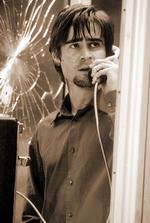
The picture of Joel Schumacher. This was influenced by several reasons.
Firstly, the fact that the film was shot in just 12 days, at very insignificant costs. Secondly, such a mega-star as Jim Kerry, Will Smith, Mark Walberg and Brad Pitt were invited to the main role, but everyone refused. And thirdly, the fact that the public interest was warmed up by the transfer of the film premiere from last November to April of the current, in connection with the so -called “Washington sniper” - a serial killer who shot random passers -by in the states of Virginia and Marriend.
The plot of the film is twisted around the telephone booth and develops in it (and around it). A certain publicist Steard Shepard is engaged in the promotion of various stars in the show business market. He does this exclusively at the expense of lies, and his whole life is woven from piles of untruth. He is lying to everyone: his wife, girlfriend, assistant, clients, all the light, justifying himself by the fact that this light is even worse than himself.
And then one day all this shell from lies comes to an end when Stu accidentally picked up a pipe of a raisingly-outlet and becomes a hostage to an invisible sniper who wants to get a recognition from the steward that he lives in a lie.
And his whole life is compressed to the size of a telephone booth.
According to many critics, the rising star of Hollywood Colin Farrell, who could be remembered by the role of Danny Wtwer's painting in the picture of Steven Spielberg, acts as a special opinion (Minority Report ”(Minority Report) acts as a special opinion (minority report).
Colin Farrell played so vividly and convincingly that there is practically no doubt in the reality of what is happening on the screen. Stu, who is in the booth, is crushing, then sharply straightened, with his unexpected laugh, turning from sobs in his voice into the rage of a desperate person who does not want to crawl out of his life shell, reminds the hero of a television show when one does not have to doubt anything, and even more so in reality the events showed.
No less convincingly played the role of the anonymous sniper Keifer Satherland, who performed his party only in a voice. Fullly this role can be enjoyed only in the original sound. The sniper itself is announced only in the last frames of the film, speaking of Stu, who survived the fear of being shot at any moment, such words that he will remember all his life.
These words are directly related to the fact that Stu had to do by the will of a person with a rifle. What was supposed to save him from the death, which, according to the hero of Suserland, he earned like a person mired in vices and generally unworthy to live. However, he cannot easily part with what has been his whole life. With what brought him to the lists of suicide bombers.
Only one thing can help Stuard, according to the sniper - cleansing in front of dozens of chambers of reporters who went to look at a person in a booth. But will this purification be humiliated throughout the country, a person who, in principle, living according to the laws of society?
Societies that need business deeds such as Shepard, capable of doing everything out of nothing. Maybe the sniper chose the wrong goal, too small for his great plans to cleanse humanity from vices? It is the motives of the sniper that many consider the plot puncture of the picture.
The police officer, captain Raymy, who was played by Forrest Whitaker, known to many moviegoers in the cult film “Ghost Dog - The Way of the Samurai), offers its help to STU. A sad policeman, trying to figure out everything, starting from his personal life experience. It is these roles that are best suited to a thoughtful Whiteker who has a very realistic player who is trying to tell about his problems.
True, the police, who came to the booth, who has a corpse of a sniper random victim, his own version of what is happening. Captain Raymy enters into negotiations with STU, suspected of murder. Now, in addition to the sniper rifle, dozens of police trunks are directed at the steward, ready to shoot at the slightest suspicious movement, which all the time provokes a sniper.
From now on, in addition to Stuu, the potential victims of the invisible shooter are all those who are near the booth: Stuard's wife, his girlfriend, Captain Raymy and many others. But only he can save himself and everyone else.
The film does not let go of the audience for a minute and keeps in tension until the final credits, after which the tension still does not subside, because long -term thoughts about life and people begin.
Despite the fact that in the film there are no “shock” scenes with cruel fights, bloody shootings, dizzying chases and such fashionable technical innovations in modern cinema as computer graphics and special effects, the “telephone booth” remains a dynamic picture flying before the viewer’s eyes literally in an instant. Dynamism manifests itself, first of all, in the development of the plot. It is difficult to predict what will happen in the next minute.
Dialogs are dynamic, in which good humor is even woven. It is on the game of actors and dialogs that the entire film was built. And only in the final, the dialogs are replaced by the running of special forces who discovered the location of the sniper, as a result of which the film loses swiftness, leading almost to Happy Endu. Or maybe this is a kind of harmonious happy finale, where there are no full -fledged winners, but there are only victims of circumstances.
As one of the advantages of the picture, it is necessary to note a good installation. The film was shot almost at the Dobermanovsky (Doberman-Dobermann, a French movie, which was famous in 1997 mainly due to high-quality installation), where the effect of swiftness is created largely by the work of the operator and the installer.
The “telephone booth” was shot by four cameras, and in some scenes they simultaneously show what is happening from different sides (that is, four “pictures” develop on the screen at the same time).
Everyone looks at this film differently. Some see just a sniper-maniac pursuing a simple citizen. Others see a positive hero in a sniper who is a symbol of something that can change the opinion of a person about things surrounding him.
If the authors of the picture wanted to make the usual film “About the Maniac”, they would get off with some simple motivation for his actions, they say, a maniac and that is said. But in the "booth" the emphasis is not on the killer, but on what is STU and what the sniper is achieving from him. Although even such a motive seems controversial.
The picture leads to the idea that a person thinks about his actions and begins to appreciate what he least paid attention to, only in moments of mortal danger, only something terrible can make him think about the main thing.
The film is undoubtedly worth watching. If not because of the game of actors and beautiful filming, then at least in order to think with Stuard Shepard: "What did I do wrong?" And try to solve this issue for yourself until someone else has done this for you.
Watch from October on a license video.