
Translated material
The price of Stalin's industrialization
The destruction of 7 million peasants, the slave work of the prisoners of the Gulag, the seizure of agriculture resources - this is the price of the Stalinist industrialization. How necessary were these victims?
Egor Gaidar
Director of the Institute of Economics of the Transition period
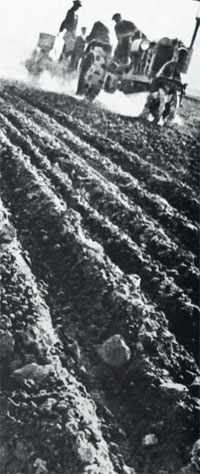
The rates of industrialization in Russia were high. As the calculations of the German situation show, Russian industry products increased from 1860 to 1900 by 7 times. (For comparison: the industrial production of Germany increased by almost 5 times at the same time, France - almost in 2.5 and England - in 2.)
The growth of the "popular income" of European Russia for 1900-1913, according to approximate calculations, was about 5% per year. The Stolypin reforms, which opened the way for the formation of individual peasant farms that were not connected by community restrictions, led to an increase in agricultural productivity and, accordingly, agrarian export. In 1911-1913, the average annual grain crop in 1911-1913 increased by almost 20 million tons compared to the first five -year plan. By the beginning of the First World War, Russia is becoming one of the largest grain producers in Europe and the main supplier of dairy products for Northern Europe.
The day before
Inevitable - as it always happens at the stages of early industrialization - the social structure of society is changing, and at the same time serious institutional contradictions arise. From 1887 to 1914, the urban population of Russia increased by almost 10 million people, basically it was a coming peasantry, which was difficult to adapt to the conditions of the city and work in factories.
Ear -shaped increase in other problems. In particular, the peasant unrest of 1905-1906, which became the result of the discontent of the peasants by the distribution of land after the reform of 1861, their refusal to recognize the property of the landowners as legitimate, the difficulties of developing mortgage lending to withdraw from the community and create individual farms. The royal regime is a nonsense. His political and state institutions were not able to cope with increasing risks of political instability, which steadily led to the crash of the regime. The First World War, which Russia was drawn into, crossed out the hope of the evolutionary transformation of the political system.
On September 8, 1916, the tsarist government adopted a law on criminal liability for raising food prices. However, the ideas formed by previous decades about the norms of the organization of the company, the need to prove in court that the increase in prices is exorbitant, did not allow it to implement it in practice. The same fate also suffered by the government in November 1916 attempts to introduce a surplus. After the collapse of the royal regime, the Provisional Government tried to continue the implementation of the policy of the surplus. As one of the Soviet historians rightly writes, "the temporary bourgeois government was forced to decree on March 25, 1917 to decree a bread monopoly and the surrender of excess bread at solid prices." “However, the Provisional Government, having accepted this decree, did nothing to implement it.” In 1928, 5.5 million peasant farms still used a plow. Half of the crop was removed with a sickle or a scythe. The norms for the surrender of grain established in the USSR in April 1930 are similar to the maximum norms of exemptions found in the history of agrarian societies. In grain regions, they made up from 1/4 to 1/3 of the gross crop, in others - approximately 1/8. The actual norms of seizure were higher. So, in 1930, 30.2% of the gross collection of grain was seized in Ukraine, in 1931 - 41.3%; in the North Caucasus - 34.2 and 38.3%; On the Lower Volga - 41.0 and 40.1%. From the note of the instructor of the NKZ of the USSR Snetkov “On the placement and device of fists expelled within the Northern Territory”: “By half April (on a certificate of regional organizations), up to 75 thousand kulak families arrived in the Northern Territory. (About 375 thousand people) are currently located in cities, a burning lane, in temporary barracks, and only a small part was sent to the place of settlement. The kulak families placed in churches and barracks live very boring, each person accounts for about 1 square. Meter of the square. The sanitary condition of the barracks and churches is far unsatisfactory, so mortality is now increasing among them and primarily among children. ” 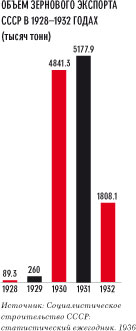 |
Grain on the blood
The key to the fate of the revolution was the issue of supplying the army and cities with food, it depended on its decision what political forces would leave the revolution winners. In order to ensure the supply of grain at least at the minimum level, it was necessary to organize forced seizure of food from the peasants. Neither the tsarist government, nor the temporary bourgeois government, despite laws and decrees, could not do this.
This is not surprising. To implement such tasks, you need a willingness to shoot or put hundreds of thousands of people in camps. The lack of such readiness in the Provisional Government and its presence in the Bolsheviks determined the fate of the Russian revolution.
Having risen in power, the Bolshevik leadership began the policy of “military communism” - the confiscation of food using military force.
On May 9, 1918, the All -Russian Central Executive Committee issued a decree that announced everyone who had excess bread and did not take it to the most, enemies of the people and obliged them to betray them to the revolutionary court and sentenced to prison for a term of at least 10 years. As happened in the history of agrarian societies, the consequence was hunger - however, unprecedented in its scale over the centuries of Russian history.
In 1891, almost 965 thousand people were starving in the Volga region. In 1921, the account was conducted by millions. At the IX All -Russian Congress of Soviets on December 24, 1921, M. Kalinin said that 22 million people were officially recognized as starving. " “Undoubtedly, at least 3 million are close to the starving, and I personally think about 5 million people. So, the disaster covered no less than 27-28 million people. ” In April 1922, the leadership of Bashkiria was forced to adopt a special resolution “On cannibalism”, aimed at “fighting corpses and cannibalism, as well as to suppress the trade in human meat” 1 .
During the NEP, the peasantry sighed for a while. The agrarian crisis, the inability to supply cities with food, peasant uprisings, signs of non -rejection of the Armed Forces forced the Bolshevik leadership to change the policy being carried out, move from arbitrary confiscation to orderly taxation, and reduce the volume of grain seized from peasants. This led to an increase in peasant consumption, reducing export in agricultural production compared to the pre -war level: from 12 million tons in 1913 - up to 300 thousand tons in 1927/28. Hence the lack of currency and the restriction of the procurement necessary for industry is a problem that will become constant for the Soviet economy up to its collapse in 1991. The question arose again: how, at the expense of what resources to overcome the lag increased over the years and the revolution from the developed states of the West?
The traditional source of capital accumulation in Russia for the development of the economy is peasant farms. However, anti -capitalist rhetoric excluded measures aimed at developing effective rich peasant farms. N. Bukharin, better than other Bolshevik leaders who understood the significance of this problem, was forced to remove his slogan “Enrich!”
Hunger as a tool
The resources of the recovery rise associated with the overcoming of economic devastation after the revolution and the civil war were gradually exhausted. Only by sharply increasing the volume of state investment, it was possible to spur the pace of development of the economy. To do this, it was necessary to increase state withdrawals from the economy and the level of tax burden, dismantle the taxation limiters associated with market mechanisms.
Some researchers reasonably believe that the consequences of the socio-economic transformation of 1928-1930, in their influence on the development of the Soviet Union and the world, exceeded what happened in 1917-1921. Undetered prices and tax on consumer goods become the most important source of budget revenues of the USSR. The willingness of the authorities for unlimited violence, repressions for the seizure of the maximum possible from the peasant population in order to direct mobilized resources to the development of industry - the stalinic accelerated modernization rod.
In January 1928, Stalin signed the Directive of the Central Committee of the All -Union Communist Party of Bolsheviks to local organizations. In it, he focused them on the use of hard measures against those who cover bread. Armed detachments requisitioned not only excess bread, but also livestock, agricultural equipment. The fists were applied by Art. 107 of the Criminal Code of the RSFSR. As Stalin suggested, 75% of confiscated bread was at the disposal of the state, 25% was distributed among the poor at state prices or in the order of long -term loan. Stalin was frank when in 1928, at the July Plenum of the Central Committee of the CPSU (B), he said that the policy of Soviet power in relation to the peasantry implies something like the introduction of tribute, the seizure of which is necessary to finance socialist industrialization.
In the Decree of the Central Committee of the All -Union Communist Party of Bolsheviks and SNK dated December 14, 1932, the “worst enemies of the party, working class and collective farm peasantry” include “sabotages of grain procurement with a party bip in a pocket, deceiving the state and failing tasks of the party and government ...” “In relation to these rebirths, enemies of Soviet power and collective farms, still With a party card, the Central Committee and the Council of People's Commissars are obliged to apply harsh repressions, condemnation by 5-10 years of imprisonment in a concentration camp, and under certain conditions - execution. ” During the campaign for enslavement of the peasantry in 1930 and 1931, 1 million 800 thousand people were deported 2 .
For 1932-1933, the population of Ukraine has decreased by about 3 million people 3 . The hunger of 1932 covered Kazakhstan, the North Caucasus, Don, Kuban, the Volga basin, and some regions of Western Siberia. Assessments of the number of hunger victims range from 6 to 16 million people. The most common - from 7 to 8 million people. The law of December 6, 1932 provided for the preparation of a list of villages, which were found guilty of sabotage. On December 15, 1932, 88 regions of Ukraine included it. Residents of these areas were evicted. The law of August 7, 1932 forbade people dying of hunger to take grain, rotting in warehouses or dumped at railway stations.
The laws of September 13, 1932 and on March 17, 1933 attached peasants to the land, forbidden to look for a different work without the permission of the collective farm leadership. Peasants who sought to break out of Ukraine, so as not to die of hunger, were returned to the place of residence. The scale of the victims of the hunger of 1932-1933 did not care much about the socialist leadership. The formed system of political control made it possible to avoid mass riots, to achieve that hunger information has been classified for many years. But state grain blanks increased from 18.5 million tons in 1932 to 22.6 million in 1933.
Slave labor
Militarism, the priority of the development of military industry, an abnormally high share of military expenses in GDP - this is exactly what is put at the forefront of the Stalinist industrialization. And the forced labor of prisoners plays a significant role in the implementation of this task, primarily in providing labor resources of large infrastructure projects. According to the Main Directorate of the camps, only the volume of capital work performed by prisoners was 5.8% of the entire amount of capital work in the USSR.
In the short term, mass repressions could reduce the rate of economic growth due to disorganization of the management system. This is exactly what happened in 1937. However, they were an instrument strengthening the regime base, demonstrated the ability of the authorities to unlimitedly use violence.
The attitude of the ruling elite to their own people resembles the characteristic features of agrarian states, conquered by other in ethnic terms, where the rigidity of the regime in relation to the submissive local rural population is maximum. Distributed in Soviet society in the late 1920s-early 1930s characteristic of Stalin as a “Genghis Khan with a telephone” eloquent.
The threat of repressions forces tens of millions of people who are not in the Gulag, in the conditions of the twentieth century, behave, like a traditional enslaved unprofitable estate of agrarian states, to come to terms with the fact that they do not have the right to choose a place of work and residence, that everything produced in excess of the minimum necessary to ensure life can be removed that they cannot dream of rights and freedoms and perceive it as they perceive it as it. Inevitable reality.
Economic growth on bones
Although the first five -year plan was completely failed, in the future, the development of events showed that this set of institutional innovations worked. In the early stages of industrialization (when the share of employment outside agriculture did not exceed 50%), they allowed to ensure relatively high rates of industrialization, industrial growth. The average annual rates of economic growth in the USSR (by national income) in 1920-1940 amounted to approximately 5.1% per year, the growth of industrial production in 1928-1941, according to various estimates, from 9.9 to 17.0% per year (data from the USSR CSS).
The factors that caused the abnormally high rates of socialist industrialization - a decrease in the standard of living of the rural population, the scale of redistribution of resources from the traditional agrarian sphere to industry - give rise to the most serious anomaly of socialist growth for decades: diverging trajectories of industry and agriculture.
Food deficiency becomes a constant problem, and their imports are a strict necessity. During the period from 1926 to 1939, the production of food per capita decreased by about 15%, which, in turn, predetermined the famine of the military and post -war years. In 1958, the import of agricultural products became comparable to its export. In the early 1960s, the USSR began on a large scale to purchase grain abroad and by the mid-eighties the largest importer of grain in the world became.
The imbalance between the development of industry and agriculture made the collapse of the USSR inevitable.
Subjective mood
How would Russia develop if the October Revolution had not happened?
The reforms that had begun still Stolypin would go on as usual, industrialization was necessary and set, but her process would drag on for twenty years. Although, of course, the First World War broke the course of economic development, made the most serious adjustments and made the fall of the royal regime, the February revolution inevitable.
Nevertheless, the standard model of industrialization would allow Russia to leave among backward countries. Yes, Russia would hardly have become a superpower - it would end up among countries such as pre -war Italy or, rather, Japan. Let me remind you: at the cost of the sovereign status of the USSR, tens of millions of citizens were the life of tens of millions of citizens.
The problem that historical science cannot unequivocally solve: the country would have passed through the Second World War if the military-industrial complex was not created, on the altar of which the peasantry, the Gulag’s economy and the economy of the USSR as a whole? I think Hitler Germany would still be defeated, although perhaps to open a second front to our allies, the United States would first have had to be earlier. Would there be a big war of war than those 27 million that they paid for the victory? Modern studies show: despite all investments in the army and military industry, by December 1941, that is, six months after the start of the German invasion, the Red Army lost 4.5 million people, of which 2.5 million were prisoners of war. That is, the army died almost completely or was captured. The total score of army losses for four years of the war amounted to more than 8 million people 4 . In other words, the USSR, despite incredible efforts, was not ready for war.
But this is not enough. Возникает и другой вопрос: а насколько война была задана? Могла ли Россия — будь она не большевистской и не сталинской — избежать войн? Известно: категорический запрет Сталина немецким коммунистам идти на выборы в рейхстаг в коалиции с социал-демократами сыграл критическую роль в том, что национал-социалисты Гитлера пришли к власти. В известной мере именно Сталин сделал войну неизбежной.
____________________________
1 О.Г. Назаров «Сталин и борьба за лидерство в большевистской партии в условиях нэпа». M., 2000.
2 Черная книга коммунизма. Преступления, террор, репрессии. М.: Три века истории, 1999.
3 Итоговый отчет Международной комиссии по расследованию голода 1932 —1933 годов на Украине.
4 Catherine Merridale. Ivan's War. Life and Death in the Red Army, 1939 —1945.