
Translated material
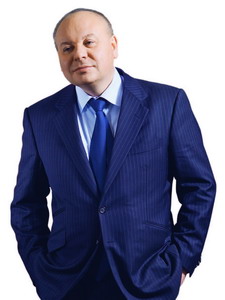
Gaidar steps ahead
The New Times No. 51-52 of December 22, 2008
A crisis is a mechanism for cleansing the economy of weaknesses. The economist’s talent is to predict the development of events, and then explain why what he predicted did not happen. But Yegor Gaidar, speaking in January at the scientific council of the Institute of Economics of the Transition period (IEPP), very accurately predicted the beginning of the global crisis. About how he succeeded and what will happen next, the director of the IEPP told The New Times
Event of the year according to The New Times
The report on the risks of the development of the Russian economy was prepared back in October 2006. It's not about the special gift of foresight. We are convinced that the cyclical development of the world economy is important for the country, which is significantly dependent on the flow and outflow of capital, on oil prices, oil products, gas and metals.
Some colleagues reproach us that we, who survived the disaster of the 90s, associated with the collapse of the Soviet economy, have a deformed consciousness and all the time we think about disasters that will not be. We were indeed forced to deal with the consequences of bankruptcy of the Soviet Union. This experience made us systematically analyze the risks of the stability of the country's development. One of the scenarios that was described in our 2006 report (the most pessimistic) is now implemented with an accuracy of numbers.
The new inexplicable world
Our risk assessment has become the basis for creating a stabilization fund, the accumulation of gold and foreign exchange reserves. If the monetary authorities had not accumulated these reserves, they would not be able to withstand the current circumstances of force majeure, how the Soviet authorities were unable to withstand after a sharp drop in oil prices in 1985-1986. Now the Russian authorities have resources that make it possible to resist the crisis, and they are trying to use them - not perfectly, but quite effective.
Today, analysts draw parallels between the current crisis and those that shook the planet in the 20th century. But we must understand that we live in a rapidly changing world. Of course, you can draw parallels with the crisis of 1907, and with great depression, and they will be reasonable. But it should be borne in mind that the world of 1907 is the world of gold and foreign exchange standard. The world of great depression is the world of the crisis of the gold and foreign exchange standard. We live in a different world where there is no frame of the gold and foreign exchange standard that allows you to ensure monetary stability, where the courses of leading world currencies are floating. How this new world works, no one really understands. No one was able to predict either the 1994 Mexican crisis, or the crisis in Southeast Asia in 1997-1998. The current difficulties are a new challenge requiring the search for adequate answers.
The main thing is the banking system
Many are looking for the origins of problems in the mortgage crisis that has erupted in the United States a year ago. However, I believe that a serious answer to the question of the origins of the current crisis can be given no earlier than a year later. This requires a special and serious analysis. Of course, the mild monetary policy in the United States, aimed at smoothing the 2001 recession and minimizing possible cyclic fluctuations, contributed to the accumulation of major problems in the American financial system and real sector. Such a policy has created a base for the formation of several soap bubbles.
If we talk about the possible consequences of the financial crisis for Russia, then the stability of the banking system is fundamentally important. When the crisis is over, it will be possible to figure out whom to punish. And during a serious financial crisis, it is necessary to maintain the confidence of depositors to the banking system. Otherwise, for the lack of this trust, we will have more expensive. Everything else - what will happen to the foreign exchange rate, with the stock market - these are derivatives.
When all this will end
No one knows the answer to the question of how much the crisis will last in world financial markets. Expert assessments show that the exit from the crisis is likely in the fourth quarter of 2009.
While we are waiting for a slowdown in growth in the real sector of the Russian economy. The outflow of capital and a decrease in energy prices create a favorable background to combat inflation. Its decrease is possible with a lag of 6–9 months. But here two opposite factors are faced: on the one hand, a decrease in capital flow and a drop in oil prices lead to a reduction in the growth rate of the money supply, on the other hand, problems in the banking system require measures to support it from the Central Bank. The monetary authorities must find a subtle balance between maintaining the stability of the banking system and a decrease in inflation.
Dear money
Our economy has to learn to live with expensive money. This means a decrease in economic growth, another situation in the labor market. The average Russian will have to live in conditions when inflation will probably be lower, the interest rate on his contributions in real calculation is higher, the growth rate of real income is lower, the chances that he will lose his workplace, higher.
Those who are busy in the commercial sector need to prepare for the fact that their bonuses will be zero. In the economy, both enterprises and individuals are important with the availability of a loan. Now it is practically absent. The measures of the Central Bank associated with increasing liquidity of the banking system give certain chances of restoring the credit market, but do not guarantee solutions to this problem. The risks that have been talked about a lot recently, including corruption in the distribution of funds allocated by the state. With these risks you need to work, minimize them. A big mistake to think that if you gave money to three state banks, then the problems of the banking system are resolved.
It is difficult to predict how the exchange rate will change. This will depend on how long the slowdown of growth in the world will be. Usually, in case of slowdown in world economic growth, financial assets are translated into securities of countries with global reserve currencies. Now reserve currencies are a dollar and euro, backup reserve currencies - pound sterling, yen, Swiss franc. The ruble is not yet a global reserve currency. If we accept the hypothesis that the slowdown in economic growth is a short -term phenomenon, then it makes no sense to lose money on commission related to a change in the structure of assets. If we accept the hypothesis that we have entered a long period of low economic growth, then the strategy should be different.
Window for reform
The world will come out of the crisis more tough. A crisis is a mechanism for cleansing the economy of weaknesses. The management of the largest companies will be improved, costs reduced, and increased product quality. Russia will have to compete in a tough world. This is a challenge, which, with the right understanding of what is happening by the authorities and the business elite, will make the domestic economy more competitive. To what extent we will be ready to answer this challenge - time will tell.
So far, it can be stated that the state, which actively comes to the economy on the wave of crisis, has a serious temptation to linger there. Let me remind you: in 1991, when the Soviet Union went bankrupt, the state almost entirely owned the economy. This burden was beyond his power. It does not seem to me that our state today is much more effective than in 1990-1991.
The crisis situation opens a window of possibilities. The crisis of the 98th year I and my colleagues took precisely as a window of possibilities. Reforms that did not go before political reasons, as a result of the crisis, turned out to be realized - from the tax to the reform of fiscal federal systems. Now the situation is similar. The crisis allows you to seriously work on the program of reforms necessary for the country, forgetting about political restrictions. Today on the agenda, pension reform, Gazprom reform, housing and communal services, a new wave of privatization, military reform, reduction in the circle of budget articles that are secret, transparency of the procedure for making state decisions, guarantee of private property, and independence of the forensic system. All this was discussed in pre -crisis times, but it was unrealistic in practice.
The crisis will lead to political consequences. To manage Russia at a price of oil $ 140 per barrel and $ 70 per barrel are different tasks. This will change the working conditions of the Russian authorities. Two scenarios of the development of events are possible - liberalization of the regime and an attempt to tighten it. I don’t know what way our country will go, but I can definitely say: if the strategy that the authorities choose is becoming tightening the regime, then this will be a mistake. The tightening of the regime can be successful in the short term. In the long run, this course only paves the way to new shocks, which in Russia of the 20th century were enough.
Therefore, I hope that the crisis will sink the Russian authorities, the elite, and citizens. That the volume of populism in economic policy will be reduced, a more sober approach to budget expenditure programs will manifest, a drum fight in foreign policy rhetoric will be less audible.
The rejection of liberal policy is expensive. The current crisis cannot be torn from the previous 200 years of economic history. They showed that the creation of liberal institutions opens the way to multiple, in comparison with the previous millennia, acceleration of economic growth. Acceleration of economic growth, urbanization, growth in life expectancy associated with the creation of liberal institutions (relatively speaking - according to Adam Smith), introduce additional elements of instability associated with changes in the global situation. But even in a crisis, it is worth remembering that while these institutions were absent, there has been no average per capita growth of GDP for millennia.