
Translated material
Boris Godunov: The beginning of the path
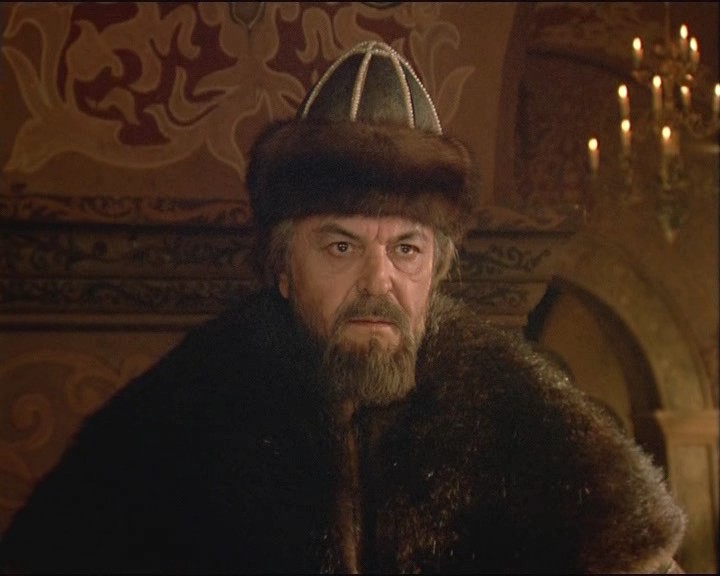
The 460th anniversary of the birth of the first in Russian history of the elected monarch - Boris Fedorovich Godunov. A person associated with the previous, faded by the dynasty only by the property (his sister, Irina was the widow of the last Danilovich-the son of Ivan the Terrible Fedor)-to the same degree: the first wife of Grozny Anastasia Romanovna-Yuryeva, as you know, was the grandfather of the first king of the new dynasty-Michael, which gave him a reason for the official one in the official Rhetoric sometimes dignify the formidable "our grandfather." Accordingly, the second Romanov - Alexei - called him "our great -grandfather."
It was enough and, so to speak, the social origin of Godunov and Romanovs
- Both that and another clan was the youngest branch of the powerful and very noble clan of the Staromoskovsky boyars, whose roots left at least in the fourteenth century.
In the Romanov clan, the Kolychevs were the older branch - it is generally accepted that their formidable, imprisoned the disgrace, drew under the root. In fact, the Kolychevs simply became a victim of their own activity in the sixties and seventies of the sixteenth century: they found themselves so to speak, in the front row of Grozny’s encirclement-not only Metropolitan Philip but also other persons, among whom were a number of leaders of the oprichnina-and therefore suffered serious losses in the period of the first large terror, when the next wave of repressions covered the benefits From the previous wave. However, not everyone died - already in the era of Peter I, representatives of the Kolychev family were seen in fairly honorable posts, the appointment of which was undoubtedly related to kinship with respect to the ruling dynasty.
As for Godunovs, they had a common ancestor with the rather famous surname of the Saburovs - it was from this kind that Solomonia, the childless first wife of Vasily III, the father of Ivan the Terrible came from. From it - Evdokia, the wife of the eldest son of Tsar Ivan - the heir to the throne Ivan Ivanovich, the very one whom Grozny killed in a fit of anger in 1581.
There is a legend that Boris Godunov then dared to intercede for the prince, for which he was also beaten by his father - however, he didn’t find disgrace: Grozny seemed to personally visited his sick Kravychy and at the same time uttered encouraging words.
In other words, Boris Godunov was the artistic only in the polemic rhetoric of his enemies - primarily the Princes of the Shuisky.
Nevertheless, by the beginning of the reign of Tsar Ivan Rodinov, he really worried about the best times - and Boris’s elevation brought him to a fundamentally new level.
It is known that the future king Boris was brought up in the house of his uncle Dmitry Ivanovich Godunov, whose lands were located near Vyazma.
If not for the quirks of Grozny - Boris, it seems, would be destined to serve according to the Vyazemsky "city list", i.e. Far enough from those places where a real career is made. However, the card fell differently: Vyazma was part of the oprichnaya lands and any noble local landowners got the opportunity to advance in the framework of the Oprichny Court-parallel to the "Moscow list".
Be that as it may, as many as five Prostynovs served in the oprichnin - Dmitry Ivanovich, three of his nephews: Boris and Vasily Fedorovich and Fedor Ivanovich, as well as the second cousin Yakov Afanasevich (by the way, by the way, numerous Pushkin also fell into the oprichnina).
The first mention of the participation of Godunovs in the Oprichny Court of the Tsar dates back to 1567 (in the same year, Malyuta Skuratov was also mentioned) - in the Lithuanian campaign, Dmitry Ivanovich was a bedding (this is quite seriously), and Boris Fedorovich was shell -off (this is much less).
That is, the future Boris I had one of the most insignificant, but already fixed in the discharge records (read: which matters for a further career and clarifying local relations) the position in the oprichnaya, created by the formidable, and not in the zemstvo, traditional hierarchy - a kind of “horseback by the horse”.
Then Boris Fedorovich serves as a market (personal bodyguard, not a bell) at Tsarevich Ivan Ivanovich, and in 1570 the rapid development of his career begins-B. Godunov marries the daughter of Grigory Lukyanovich (Malyuta) Skuratov-Belsky, the informal favorite of which at that moment is in full swing. It is clear that in order to conclude such a marriage, Godunov already had to have a certain position in the oprichnin.
R September 1570 is the recorded local dispute between B.F. Godunov with Prince F.V. Sitsky. Godunov defeated in the dispute, which, however, was attributed to the characteristics of the situation inside the oprichnina: Prince Sitsky was the brother of the wife of Fedor Basmanov, who had just fallen into disgrace.
We note along the way that the other daughter of Skuratov became the wife of Dmitry Shuisky - his brother's brother, Tsar Vasily Shuisky, one of Godunov’s main opponents.
In 1575, the sister of Boris became the wife of Fedor Ioannovich, in view of which Boris himself receives the boyars - the senior Duma rank. Therefore, in previous years, he was able to make a very peppy career, leaving behind, in particular, two younger Duma ranks - the Duma nobleman and the ringleire. This is despite the fact that none of Godunovs had ever been presented in the Duma before.
During periods of "large purges", as we know from the recent past, lieutenants often became colonels in a year or two.
However, there are opinions that the marriage of a sister with the royal son should not be understood as an unambiguous career success: then no one in a terrible dream could have imagined that Fedor Ioannovich would fall out, and a typical place for his wife’s brother is the leadership of the court of the unpromising prince. A kind of honorary career impasse.
The story, however, threw the cards in a different way - we will note that among the Russian tsars Godunov turned out to be practically the only one who, in their own practice, learned the specifics of the sovereign service, starting from very insignificant posts. The only one, with the exception of the same Vasily Shuisky, is the same age as Godunov, who first recorded in the recording of discharge books as a “Red with a big saadak” in the campaign of 1574 (but Mikhail Romanov never served before accession-although, somewhere since 1606 he had the rank of stolnik).
In the late seventies and early eighties, Godunov goes surrounded by Grozny to the fore - although it does not become those who could be called the word "favorite". In the role of the latter in the period immediately before the death of Ivan IV, B. Ya. Belsky, a relative of the late Malyuta, acted. It was him less than a month after the death of Grozny, provoking a small folk riot with cannon firing in Moscow, removed from the political (but not physical - which is new and important!) Life by the connected efforts of Godunov, Nikita Romanovich Yuryev, Ivan Mstislavsky and Ivan Shuisky - that is, the main, the most powerful clans close to the throne. This, in turn, was like the later elimination of Beria in 1953 - the former colleagues were afraid of Beria’s appeals in the struggle for power to the practice of great terror to the same extent to which their predecessors of the 16th century were afraid of the return of Belsky to oprichnia. However, to Godunov, just Belsky was the closest-so that this elimination was not such an unambiguous event in terms of obtaining points
The Championship of the authorities is a Russian game where the loser usually dies.
By this time, of course, the Godunovs not only had serious officials, but also became significant landowners, receiving estates in the Kostroma, Moscow, Staritsky, Kolomensky counties. In particular, this allowed them to make serious contributions to the guarded monasteries-not only in their "native" Kostroma Ipatievsky, but also in Joseph-Volokolamsk.
There, however, Boris Godunov not only donated, but also borrowed money there. In this monastery, Boris in the seventies gave the whole village of Neverovo in the Staritsky district, received by him, in turn, as a result of victory in a local dispute with Prince B. Tulupov, "for dishonor."
The Trinity-Sergius Monastery received one of his Kolomensky villages from the boyar Boris Godunov, as well as 1000 rubles with money-the amount at that time is almost fantastic.
So, after the removal of Bogdan Belsky, Boris Godunov becomes one of the four nobles who concentrated all the power in his hands in the country, led by the low -consuming king Fedor I. Moreover, from three of his colleagues on this club, Boris favorably differed in the maximum related closeness to the tsar, but also by personal qualities: both Ivan Shuisky, and eighty -year -old Ivan Mstislavsky and eighty -year Nikita Romanovich Yuryev (b. 1522) were people, by the standards of those times, already elderly, whose death was not far off, but life energy at the end.
On Polit.ru, notes of Leo Usyskin on Boris Godunov , Vasily Shuisky , Malyuta Skuratov , False Dmitry of the first and second were published.