
Translated material
Memory of Sergey Kapitsa
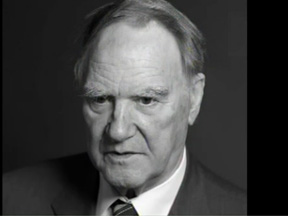
On August 14, an outstanding popularizer of science, large scientist Sergey Petrovich Kapitsa, died.
He was born in 1928 in one of the centers of new physics - in Cambridge. There, in the Cavendish laboratory, his father, Peter Leonidovich, worked at Ernst Rutherford.
The father, along with the mother’s grandfather - the shipbuilder and mechanic Academician A.N. Krylov - were participants in the commission of the Russian Academy of Sciences to resume scientific relations with abroad to Europe in 1921.
In the person of Pyotr Leonidovich, the connection was established really strong: a young promising physicist became a student of Rutherford, received a scholarship, a doctoral degree, and by 1933 a new Mond laboratory had been built specially for him.
“In the fall of 1934, when I, as usual, went to the Soviet Union to see my mother and friends, and was completely unexpected for me to return to Cambridge, I saw Rutherford for the last time and no longer heard his voice and laughter,” wrote Kapitsa later (we quoted Daniil Danin). The forcible abandonment in the USSR was compensated by the construction of a new institute and an unprecedented step - the purchase of equipment just built in Cambridge Laboratory. A comfortable gold cage was created by the scientist and his family, and six -year -old Sergei, together with his younger brother Andrei, the future famous geographer, ended up in the USSR.
The English childhood gave both a firmly learned language and a sense of atmosphere. It was lucky with the school-it was a Moscow experimental school named after Lepeshinsky. But “the most terrible was the 37th year, when in some classes half the children of parents disappeared. There, the director was such a Sekachev - an amazing person. He did everything in his power in order to soften this blow ... The children of the repressed, of course, suffered, but he tried to do everything so that it was softened, maybe even risking his own reputation and position. But he succeeded ”(hereinafter we quoted by conversation with Sergey Petrovich in the“ Adults ”cycle).
The next shock was the war. The family went into evacuation, in Kazan, where Kapitsa Sr. "created the oxygen industry, which played a very large role during the war. And I studied at school, and over two years of life in Kazan, I graduated from exterior classes. ”
The first work experience occurred there - participation in expeditions, looking for oil between the Urals and the Volga.
He received higher education at the Moscow Aviation Institute, after which he began working at the Central Aerohydrodynamic Institute (TsAGI).
It was not possible to work out for a long time in such a strategically important direction - in 1946, Peter Leonidovich went to the actual summer reference. I had to leave. Further - the Geophysical Institute of the Academy of Sciences and the help of his father in his research.
In full, it ended only in 1955: on June 3, after a meeting with Khrushchev, Peter Leonidovich returned to the post of director of the Institute of Physical Problems. Then there is a return to Fizteh, where Sergey Petrovich also came in 1956.
It was with the MFTi that the further scientific fate of Kapitsa was connected: “I He changed his direction several times. Then I was offered to take the department of general physics. And so I did thirty -five years. That era, I just consider the heyday of physical education. The rector there was Belotserkovsky, a person very important for the success of this business, and a brilliant Kudryavtsev mathematician, and I was engaged in the Department of Physics. I managed to collect at this department a completely unique team of teachers. I believe that this was my main merit, if it was at all. Together we selected the guys, so this whole system worked very efficiently ... I have not given a lot of lectures. I read the course of the mechanics in the first year, and then the main attention was paid to the department. It was 130 people - half of them were part -time.
... And most of the teachers were invited from the outside. This was my main concern: whom to invite from seventeen institutes of Moscow. These people were piecely selected. I paid great attention to this work, because it was impossible to entrust it to anyone. Lectures were given by brilliant teachers from us, and I carried out the selection and philosophy of the department. ”
The end of the 1950s-the beginning of the 1970s became in the USSR for years a sharp surge of a wide interest in physics and in the “solid” science as a whole. In 1959, Boris Slutsky prints “physicists and lyrics”, in 1962 Mikhail Romm was released “nine days of one year”. The popular science and scientific and artistic publishing is developing. In the 1960s-early 1970s, we publish our main books about physics Daniil Danin (1961-“Inevitability of a strange world”, 1967-Rutherford, 1970-1971-Niels Bor). Since 1960, Almanac began to go out "Ways to the Unknown: Writers talk about science." Since 1961, the direction of the magazine "Science and Life" has been shifted in this direction. Since 1962, the almanac-year-old Eureka almanac has been released, the book series of the same name appears.
Television, as usual, was a little late. As Kapitsa recalls, “there was an idea to organize such a program because we had a high level of popular science cinema. And popular science cinema could not get on television for a number of reasons. Just because, probably, television is one thing, and cinema is another. And we wanted to make such a scientific film panorama ... we turned from television. There was such a jeanne Petrovna Fomina. She made the program “Club of Cinema Travels”, then “In the World of Animals” - it was all her initiative. And her initiative was to make such a scientific film picture. I wrote the book “Life in Science”, probably it also served as an occasion and impetus to the creation of such a program. At first it was proposed to make such a popular science program, say, about cockroaches, or about the galaxies using films. And then they realized that it is much more interesting to show the scientists themselves. ”
This did not exclude the fact that fragments of documentary and popular science films were shown in the framework of the program. But the basis was the conversation of Sergei Petrovich with a scientist (or scientists).
The program began to go out in 1973 - and continued to do this until the very last days. In the post -Soviet years, she changed four channels.
The consumer of all this array was, first of all, the scientific and technical intelligentsia and youth, designed to replenish its ranks. For this layer and its shift, a specific information and social space with circles, special classes and schools was created, with the annotation of international scientific and technical information, shops of scientific and technical book, scientists and youth clubs (like an integral club in the Novosibirsk Akademgorodok).
“I think that we make it for those whom we call the intelligentsia, for people who somehow reach for knowledge, try to understand what is happening. I think that now it is very important for the province, when our magazines have lost the meaning that they had, ”said Sergey Petrovich recently.
The specifics of the transfer format was that not a journalist is talking to scientists, but their colleague - albeit from another field or the likeness of knowledge. Deep erudition, combined with the understanding of how to learn from childhood and supported by his own activity, how the scientist works made a conversation with an equal dialog.
The guests of the "obvious-nationwide" could be foreigners. The program has never been a nursery of scientific isolationism.
In the absence of any public discussion on television, in conditions of the buttons fastened to all the buttons (under Sergei Lapina), the Capita program became an outlet of the free flight of intellectual thought, and the example of a living discussion in the areas in which it was allowed.
The competent and rich Russian language, the culture of reasoning formed the skills of speech and thoughts among millions of Soviet viewers.
Being connected with the world scientific community, Kapitsa participated in the movement of scientists for the world - the Pagoush movement, was a member of the Roman club, uniting intellectuals trying to comprehend the prospects of world development. Partly, the continuation of this was the interest of the capita in demographic dynamics: “... when all science collapsed, we were without means and without money, then for almost a whole year I lived in Cambridge and stumbled upon this topic there. Just such a combination of circumstances. And I also did this because nothing is needed for this - these are models. There are no special computers, you just need to work with your head, think and read. ”
In 1983 - 1993 And since 2002, Sergey Kapitsa has been the editor -in -chief of the magazine “In the World of Science” - the Russian publication Scientific American. We were lucky to participate together in the events of the world summit Scientific American in Russia in 2011 (see “Window to the Scientific World” and Anna Sakoyan reports: 1 , 2 , 3 , 4 ). Of course, the summit would be impossible without the authority of Sergei Petrovich.
It is safe to assume that if you interview a random sample of Russian citizens, what scientists we have - Sergey Kapitsa will be called first of all. He largely formed this image in the people of the 1970s and 2000s.
We are media, emanating from the scientific and expert environment, in many ways we stand on his shoulders. We grew up on his programs. It is impossible to give lectures, seminars or program “Science 2.0” and not constantly look back at the experience and intonation of Sergei Kapitsa.