
Translated material
Lev Uskin: Management Works
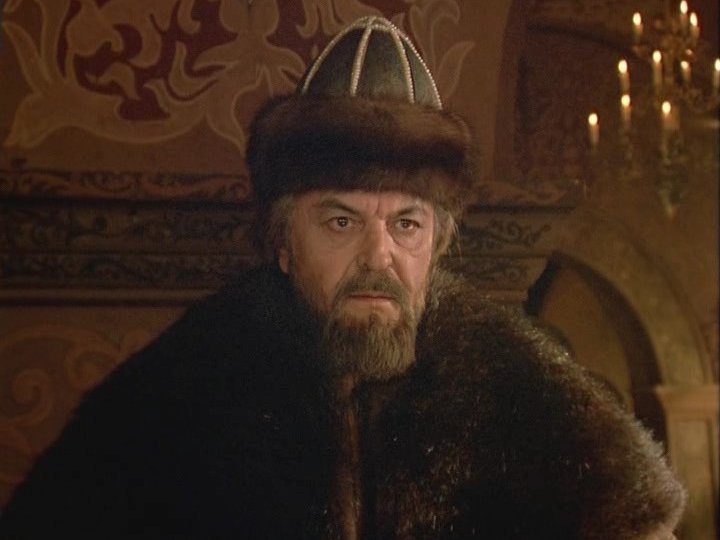
Leo Uskin 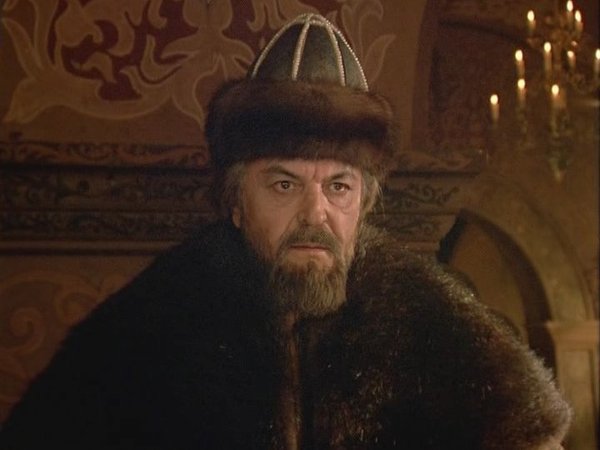 Sergey Bondarchuk as Boris Godunov in the film "Boris Godunov" (1986)
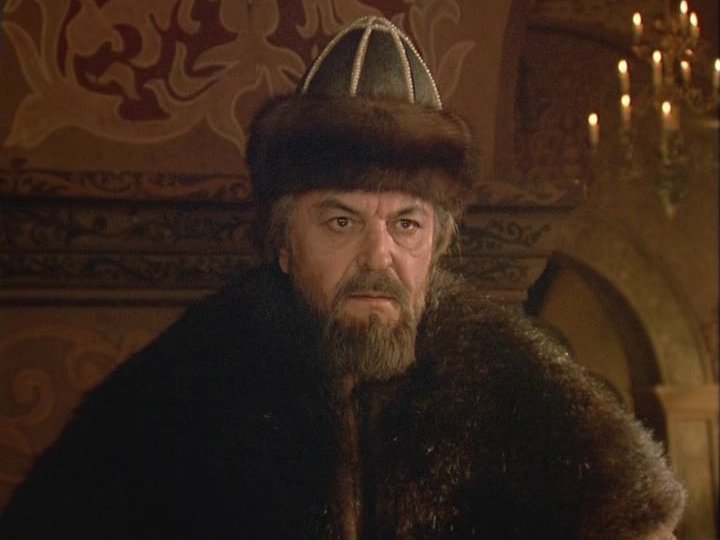 Sergey Bondarchuk as Boris Godunov in the film "Boris Godunov" (1986)
See also:
In the general array of accusations raised against Boris Godunov, one can find the usurpation of the authorities and the murder of a young prince and a lot of other terrible ones - but what was not there was accusations of managerial unusualness.
In fact, Godunov’s business qualities in the memoir and other narrative literature are either evaluated very highly, or (for the sake of ideological preferences of the author) are simply silent. Moreover, this high assessment of the mind and administrativeness sometimes sounds from the very unfriendly towards to Godunov! Yes, and objective information about the actions of the Godunov government as in the period of his "Prime Minister", i.e. In 1587-1598, so during the reign (1598-1605) it does not allow to doubt the high managerial talents of Boris.
To begin with, it should be noted that he got a bad inheritance: after the eccentricities of the formidable-cocker, the country was experiencing an unprecedented socio-economic crisis that was characterized by the desolation of a whole number of previously leading regions-such as the land of Novgorod (who knew that in comparison with the turmoil is still flowers!). The population decreased markedly and to an even greater extent - it scattered, which threatened the entire fiscal basis of the state. The “managing class”, which physically lost a significant mass of talented managers, suffered serious losses. The country's foreign policy was also deplorable: before his death, the Grozny, although he managed to end the war with Sweden and with the Commonwealth - however, there were no peace treaties. Only a truce took place. At the same time, under the control of Sweden, there was a way to the Baltic and all the territories adjacent to it with the fortresses of Ivangorod, Yam, Koporye, Korela, and a nut. In other words, the direct “window to Europe” could only serve as a tsarist decree only in March 1583 Arkhangelsk - more precisely, the new Kholmogors, as it was called then. As for the Polish-Lithuanian state, his king, Stefan Batoria, demonstrated very far-reaching expansionist intentions, almost publicly declaring the desire to fight Turkey (which he once was), but before that, to conquer Moscow, so that he would not interfere and, on the contrary, supplied resources for the anti-Turkish war, in his opinion, three will be required. campaign. Such intentions were perceived in the Kremlin more than seriously - since they were convinced both in the personal military talent of Batoria and his ability to concentrate human and material resources unprecedented for the war for their state. As Platonov wrote, Batoria in Moscow was simply afraid and wars with him wanted to avoid at all costs.
In addition to objective problems, there were no less serious subjective ones. Thus, it is worth paying attention to the task of overcoming that tinning, psychological paralysis, and, at the same time, the goators of the brutality that arise in society after decades of active terror: according to the experience of the post-plastic years, we know that although the idea of a general reduction in the level of bloodiness of internal conflicts and the struggle for power at some point really visits all the minds of the ruling top, this transition is embodied by this transition to A different type of public contract is quite gradually-and the liberal Khrushchev years have been in practice much more bloody than the reactionary Brezhnev. In this sense, it does not seem strange to the most stiffness of the morals under Godunov in comparison with the times of Mikhail Fedorovich or even Vasily Shuisky - it is worth comparing not with them, but with the predecessor, of course.
We also wrote about the deficiency of the legitimacy of Godunov regime - we add that he, of course, arose much earlier than the election of Boris, the king. It arose, and, apparently, contributed to the development of certain qualities of government. So, Godunov, perhaps, was the most active Russian monarch of the sixteenth - seventeenth centuries in terms of what we would call the social support measures of the population today. Feeling the need to find support in the lower segments of the population - not only in the Moscow Posad, but also among provincial residents - he was not limited to various kinds of manipulation of tax benefits, but also practiced active state support: he restored the wooden trade rows in the stone, conducted food interventions during the leafy periods, etc. Large -scale public work organized in history and organized in the hungry years ... Another characteristic side was the "Westernism" of Godunov noted by all. In fact, it is with this ruler that such incidents as a package of 12 noble offspring abroad for training are associated (none of them returned to their homeland - which, however, is understandable, taking into account the circumstances of the Time of Troubles) or the first articulated intention to establish a university in Russia (of course, using imported components). In the same vein, it is worth perceiving the persistent attempts of the Tsar-Udunov to intermarry with European ruling houses and, in general, very intense diplomatic and personal contacts with foreigners, during which the question of cultural imports: technologies, specialists, valuable artifacts have repeatedly raised. On the one hand, all of the listed to some extent is the result of the Achovaya international position of Russia after Grozny - it was simply possible to expand and deepen international contacts for all radii from state self -preservation. On the other hand, the observation is itself suggests that quite often in cases where the Russian regime does not feel sufficient support inside the country, but, on the contrary, feels some serious vital danger, it somehow turns face to Europe. So it was under Peter, and before that, under the small regime of Princess Sophia, in the reign of Fedor Alekseevich, the insignificant environment of which could not boast of rooted to the traditional Moscow structures of clan power, especially under False Dmitry the first or under Yeltsin. This phenomenon, however, should not be understood as a simplified - its essence in intuitive traction to connect to the institutional wealth of the West, the system is more regular, and therefore transparent and, therefore, controlled and safe. Change the agenda along the subjects along the subjects, directing their actions and aspirations for other, new, safer rails. In full, this trick was fulfilled only by Peter - he, of course, requires a separate, more thorough conversation, here we limit ourselves to what has been said.
In general, speaking of Godunov, a rather integral image of a practitioner’s manager arises: not too sophisticated in ancient Russian bookstream (which was repeatedly noted by witnesses-with the formidable there was a bright contrast, however, it was not for nothing that Klyuchevsky called the formidable to be torn by reality a book theoretician ...), but at the same time very curious to all new trends and in this regard quite in this regard. competent. We add the personal official experience that we already mentioned-and we get a rather decent portrait of the ruler-technocrat, possibly optimal in the situation of the then devastation and loss of landmarks.
In 1600, having already become the king, Boris Godunov again subjected the repression of Bogdan Belsky and the relatives of Nikita Romanovich Zakharyin-Yuryev, that is, the Romanovs. The first seemed to be withdrawn from Tsarev-Borisov, the border town of which he was sent to "put" at the mouth of the Oskol River. Bogdan took up the matter with energy - using to a large extent even his personal human and material resources. Perhaps this seemed suspicious from Moscow: just recently, “said by the Okolnichi” Belsky, they recalled, arrested, tried and sent in conclusion somewhere in the Volga region. However, this was not the last somersault in his fate - under the impostor, he would still return to Moscow and even become a thought boyar.
Romanov was worse. At the end of 1600 - early 1601, a large -scale provocation was organized against them: the treasurer of Alexander Nikitich - Bartenev - threw the "roots" into the treasury, after which he informed S. N. Godunov, who was allegedly engaged in Vorozhny. It was an extremely serious accusation - using it, the entire Romanov clan was disgraced, and Fedor Nikitich, the future Patriarch Filaret, was perceived by Godunov as a person who had the same formal rights to the throne to the main target of repression. Fedor was tonsured in monks and sent to the Antoniev-Si monastery near Kholmogory. Ksenia and her mother, Maria Shestov, also tonsured his wife. The children of Fedor - Mikhail (future king) and Tatyana, as well as relatives of Alexander Nikitich were exiled to Belozero. Alexander Nikitich himself - "To the Studen Sea", Mikhail Nikitich - in the Perm Territory, where he was kept in prison, Ivan Nikitich - in the Single, Vasily Nikitich - to Yaransk. Of all the Nikitichi, only Fedor and the Younger, Ivan, already survived, already in 1602 returned from exile to Nizhny Novgorod. Others died in the manner characteristic of the Godunovsky reprisal - "negligence of their bailiffs." There is a version that the reason for the anti-Roman repressions was the appearance of rumors about the impostor-Godunov could consider False Dmitry the project of Fedor Nikitich, since Otvyev seemed to have once served with the Romanovs.
Apparently, these repressions against the later reigning dynasty made Godunov in the framework of Romanov’s officialism ambiguous: on the one hand - it seems to be the king, the character is sacred, on the other, the king is not quite righteous, moreover, random. Holding the ascending the “right” king to climb into the throne. It was such ambivalence that allowed Pushkin to write his immortal play, not at risking a carefully observed poet's matured poet.
On Polit.ru, notes of Leo Usyskin on Boris Godunov ,Vasily Shuisky , Malyuta Skuratov , False Dmitry of the first and second were published .