
Translated material
Interrogation with addiction for Alexei Navalny
What program the head of Rospila goes to the election
“Change Russia, start with Moscow” is the slogan with which the founder of Rospila goes to the election of the mayor of the metropolitan metropolis. Unless, of course, the court of the city of Kirov, the Investigative Committee of the Russian Federation and the municipal deputies of the capital does not stand in his way. What is behind a catchy slogan - the experts gathered in the editorial office of The New Times asked Navalny in the usual style for him over the past year - interrogation with addiction. Participants:
Alexey Navalny, candidate for mayors of Moscow from the Party of the RPR-Parnas
Evgeny ACS, founder and rector of the architectural school march, professor of the Moscow Architectural Institute
Mikhail Blinkin, Director of the Institute of Economics of Transport and Transport Policy of the Higher School
Maxim Katz, deputy of the municipal assembly of the district of Schukino in Moscow
Vera Krichevskaya, director, television producer
Mikhail Peskov, deputy of the municipal assembly of the South Tushino district in Moscow
Ksenia Sobchak, member of the opposition coordination council, author and host of the Sobchak Live program on the Rain TV channel
Oleg Tomarovsky, Reia Animator of the Scientific Center of the Russian Academy of Sciences
Journalists The New Times
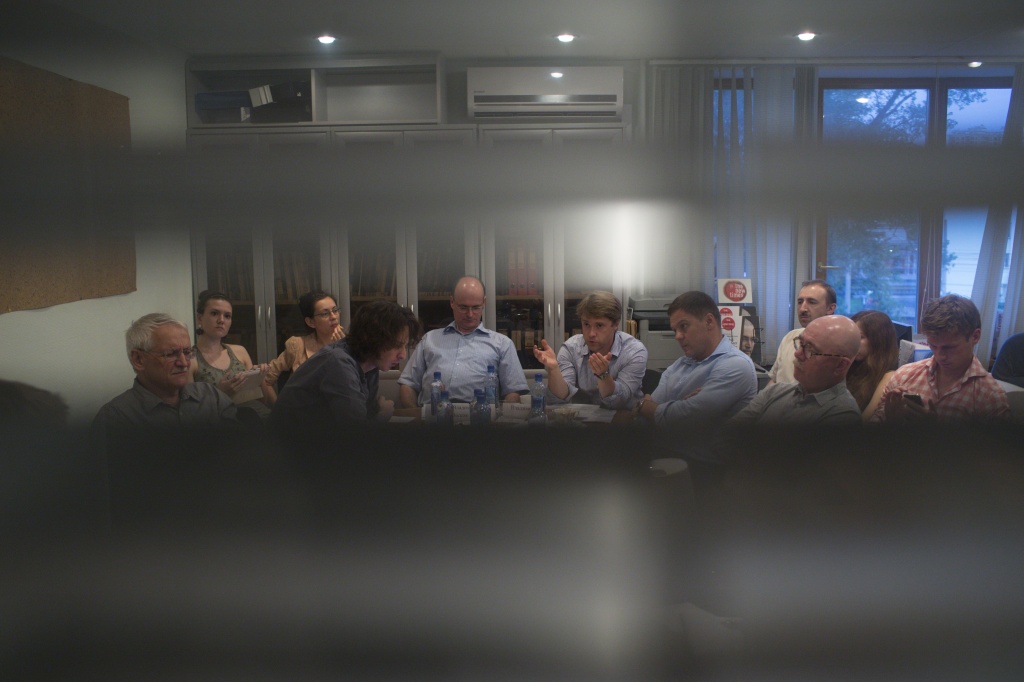
"What is this guy, Navalny, knows about the life of Moscow?" - Experts and journalists are listening to the opposition’s election program as amended by The New Times, on June 25, 2013 The New Times: Alexey, after Mikhail Prokhorov refused claims to the post of Moscow mayor, the result of the action scheduled for September 8, was a foregone conclusion. Your chances of becoming a registered candidate for well -known reasons are also small. However, since you claim the role of the opposition leader and say that you have a program, I would like to understand, and with what, in fact, are you ready to go to voters?
Alexei Navalny : For me, one of the most important tasks of participating in this campaign is the destruction of that sickening myth that the opposition has nothing to offer that it can only criticize, but you will not get a constructive from it. Rhetoric of power: Navalny-yes, he fights corruption, and this is not bad, but he has nothing to offer. Therefore, my team and I decided to enter these elections and offer our program. The main thing in which is not how many pipes can be laid - well, we will not compete with Sobyanin, and if he says that he will lay 152 meters of pipes, then we give more! - 154. The main thing is a program about the principles of management and selection of people. The basis of everything is moral principles: not to lie and not steal-this is the first, and the second is meritocracy when selecting a managerial team, that is, the choice of not “their own”, not those with whom he studied, have been giving up, but professionals who will come to power not in order to build another house or give friends to give profitable city contracts, but in order to realize their ideas for the benefit of everyone. Pure power and European quality of life - this can be realized in Moscow and this can then become a model for the whole of Russia. I believe that people with correct moral, ethical approaches, they can change a lot. And only they can actually change something.
Team
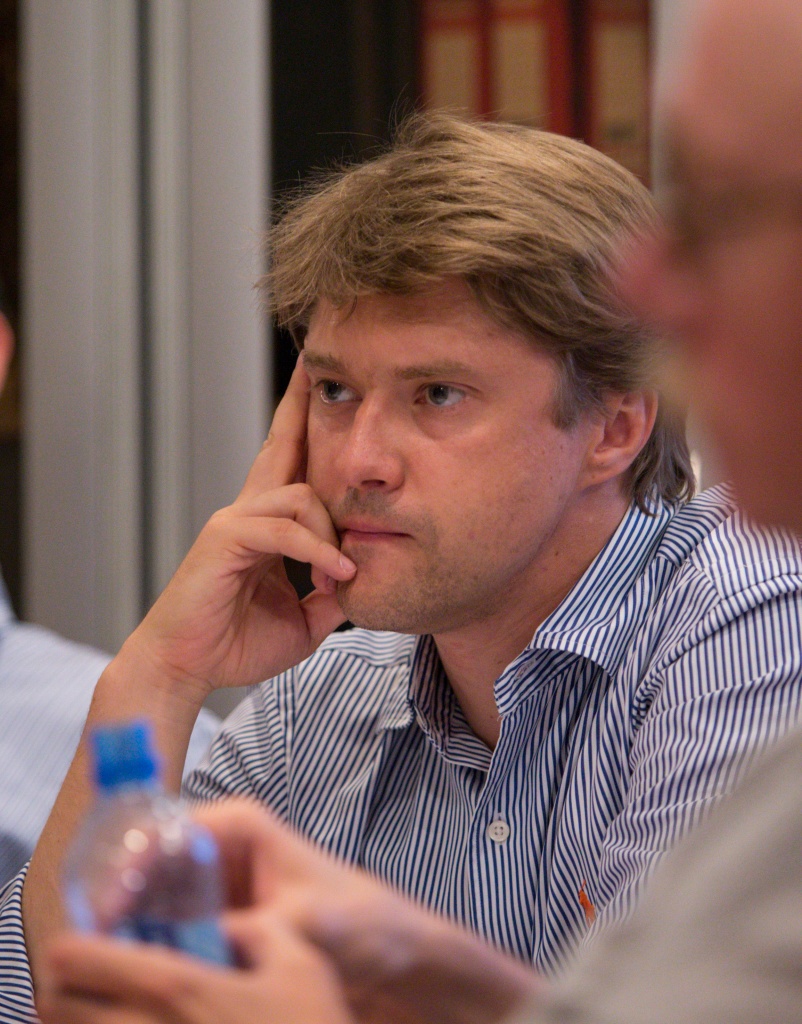
Vladimir Ashurkov (in the center) is one of the key members of the Navalny team. Together with economists Sergei Guriev and Ekaterina Zhuravskaya, he was engaged in writing the election program
** The New Times: ** Who is your team?Navalny : You see some here-Leonid Volkov, chief of staff-he is a deputy of the Yekaterinburg City Council, a startup, a creator of mass of different web services, a venture investor. Vladimir Ashurkov, Executive Director of the Foundation for Combating Corruption, Property Management Specialist, and generally top-class manager-together with Sergey Guriev and Katya Zhuravskaya, he was engaged in endless spelling and rewriting our program (The New Times wrote in detail about Vladimir Ashurkovo) . It’s not in this audience to tell me that Moscow is a richest city with a budget of 1.6 trillion rubles: in terms of each Muscovite, including children, this is 140 thousand rubles a year, almost like in New York, and three times more than the London budget. With such money, we can make life in our city comfortable for both young, elderly, and for wealthy and for the poor, and for people who, due to various medical problems, are difficult to move and live in general. However, this money is now spent monstrously inefficiently, the city is developing in the paradigm of the sixties. But it is completely useless how Sobyanin and even Mitrokhin from Yabloko do, to list the problems of the problem-to eliminate traffic jams, to expel migrants ... They will not eliminate and do not expel, because first it is necessary to build power in the city differently: that is why our program is based on politics issues, and not where to do what parking.
The New Times: “In a different way”-how is it?
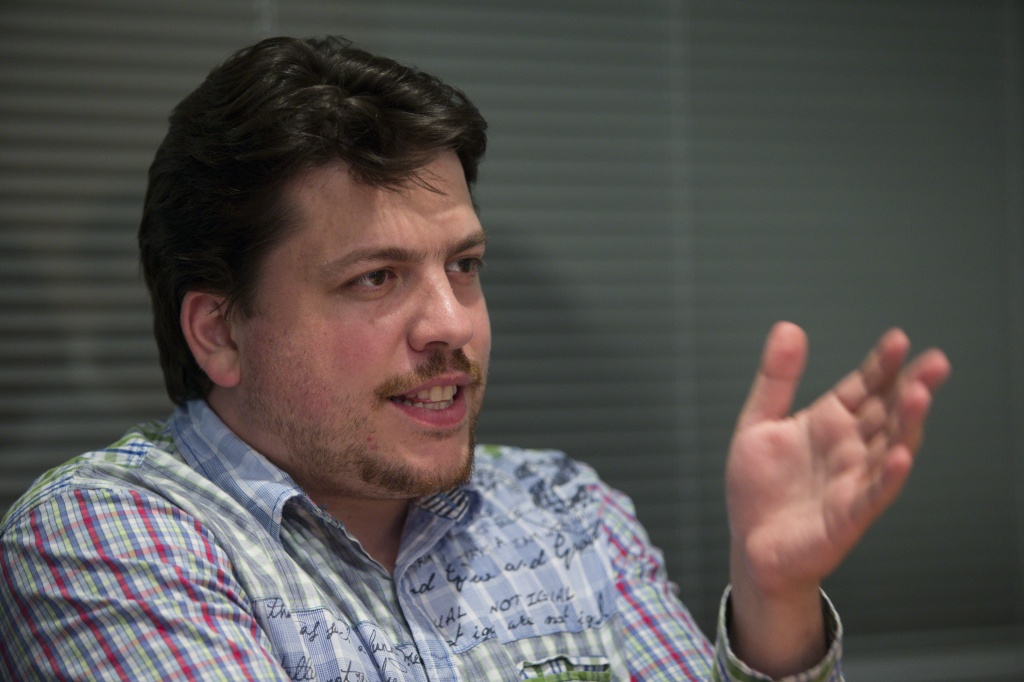
Deputy of the Yekaterinburg City Duma and IT specialist Leonid Volkov-chief of the election headquarters Alexei Navalny
Morality and power
Navalny: Moscow by the population exceeds the middle country: in the daytime there is - that is, those who live here and those who come to work - 15 million people. And everything is decided on Tverskaya! At the level of local self -guarantees - an insignificant number of issues. And I am convinced: it is down that a large number of power and financial resources must be transferred down - and part of the taxes on individuals, and property tax; To conduct local referendums - that is, introduce direct democracy and thus move both money and power where people live, where every day they go to work or lead the child to kindergarten or school.
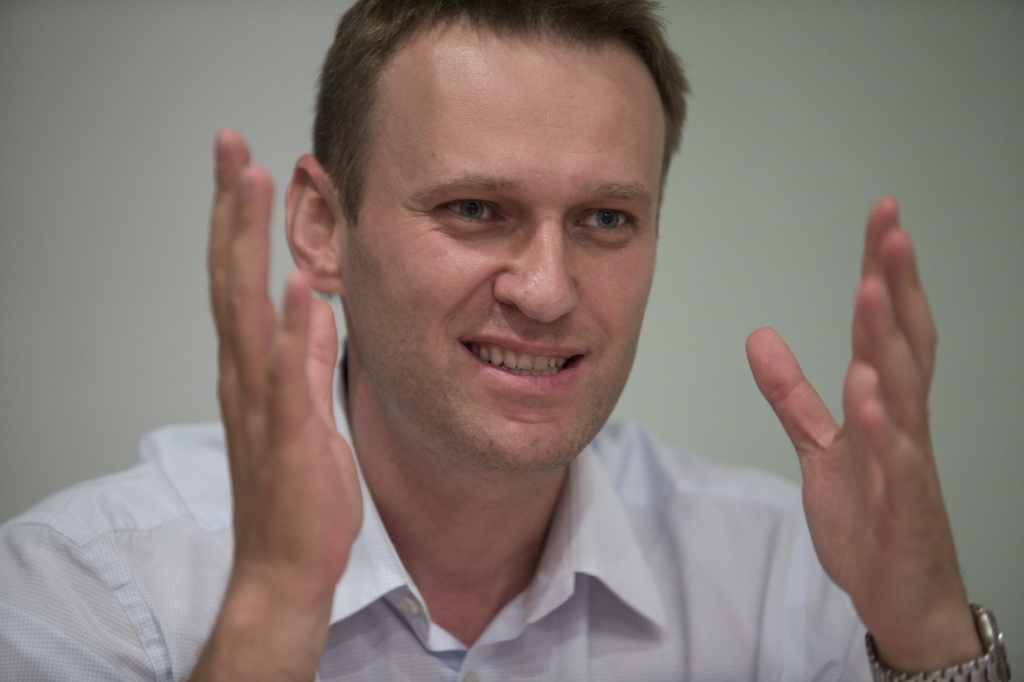
Alexey Navalny: "We must move money and power to where people live"
Oleg Tomarovsky, a resuscitator: but still, what will you do in terms of the development of the city, transport?
Navalny: Moscow develops in a voluntarist way, based on momentary decisions that are made by certain people endowed with power at this point in time. I believe that Moscow needs a new master plan. I believe that Moscow is so rich that it can actually recreate or make a new semblance of the institution of the general plan, where to invite the best urbanists and the best specialists in this field. We must make this plan over the next 2-3 years, and it is not a pity to spend money on it: we will attract the best experts in the world, urbanists, and it will still be cheaper than the construction of one denouement. Within the framework of this, it is necessary to solve the transport problem: those colossal money that is spent on grandiose projects a la reconstruction of Leninsky Prospekt must be redistributed towards the construction of the capillary network, that is, the boundaries of the districts, punctures under railways, and so on. I see you are smiling because I broadcast your thoughts - in fact, my task as a politician is exactly in order to hear the positions of specialists and find the possibility of implementing their plans.
Evgeny Ass, architect: everything is right, this is politics. I completely agree with you that it is necessary to revise the urban planning policy, that it is necessary to attract modern urbanists. The only thing I would like to warn you from is the use of the words "General Plan." There is no need to do a new general plan-they are no longer made anywhere in the world, we need a strategy, a master plan.
Navalny: Thank you, I'll take it into account.
Traffic jams, traffic jams
Ksenia Sobchak, member of the COP opposition, TV presenter: Can I have a question of a simple Muscovite? It seems to me that the problem of transport in Moscow is reduced exactly that in all large megacities: you need to minimize the number of personal transport, introduce taxes on personal transport within the city, paid parking. Such measures are not taken in our city, because they obviously are unpopular and will not have support from the population. So you, as a candidate for mayors, are ready for these unpopular, but obviously the necessary measures to go, transfer people to public transport, taxi, minibuses and so on?
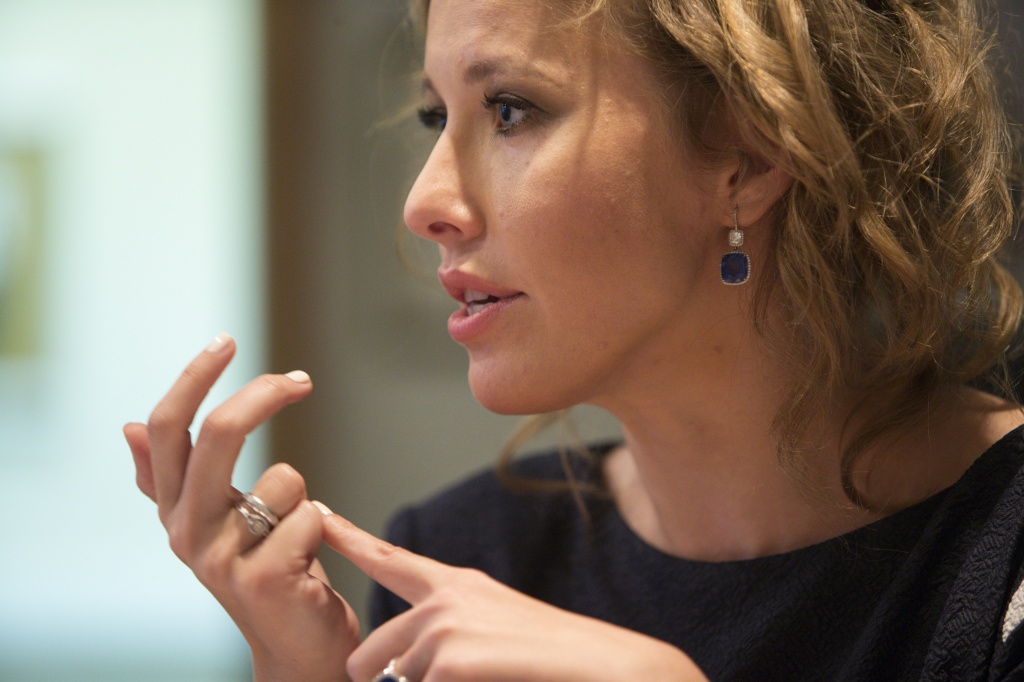
Ksenia Sobchak: "So are you ready to go to unpopular measures?"
Navalny: when London was introduced in the city center, many were against it, after 2-3 years, this measure enjoyed the support of the majority.
ACS : Only the mayor who came up with this was carried out forward, a man was wonderful.
Sobchak: Are you ready for such measures?
Navalny: I must admit that the city hall applies a lot of effort to limit spontaneous parking. It is clear that the center of Moscow cannot accommodate all those personal cars that want to enter this center. There can be no spontaneous parking in the city of the city, there can be no shopping center "European", which stand in six rows of parking vehicles. This is not even urbanism, but simply an elementary, normal work of the traffic police. They can eliminate these parking lots tomorrow. And fairly effective restrictive measures will lead to streamlining parking lots. It is impossible to come to Manhattan and easily shoot, and in the center of Moscow it should be so.
The New Times: On Manhattan? You can: $ 21 per hour for parking - and no problems.
Navalny : That is why there are some taxis.
Sobchak: So are you ready to implement such a program in Moscow?
Navalny: I'm talking about her, Ksenia. Even near the houses in my Maryino, parking should be ordered. And this should be a decision of local communities - district or house councils: allow to park in the yard or not allow, enter a parking fee here or not to enter. Because there are only 20 places, and there are much more people in the house.
Mikhail Blininkin, specialist in transport policy : I remain without work: Ksenia says everything correctly, and Alexey. Moscow traffic jams is an absolutely artificial phenomenon. Imagine that a beer bank in Moscow will cost a ruble. What is the end? Beer deficiency. A trip from Mitin to the center by Mercedes is cheaper than by public transport: gasoline costs less than 40 rubles, and two trips on the metro - 60 rubles, plus a ticket for a tram. The result is obvious, and with this idiocy it is time to finish. The fact that in Moscow it is necessary to regulate issues with parking space, the price of owning a car, this is all on the surface.
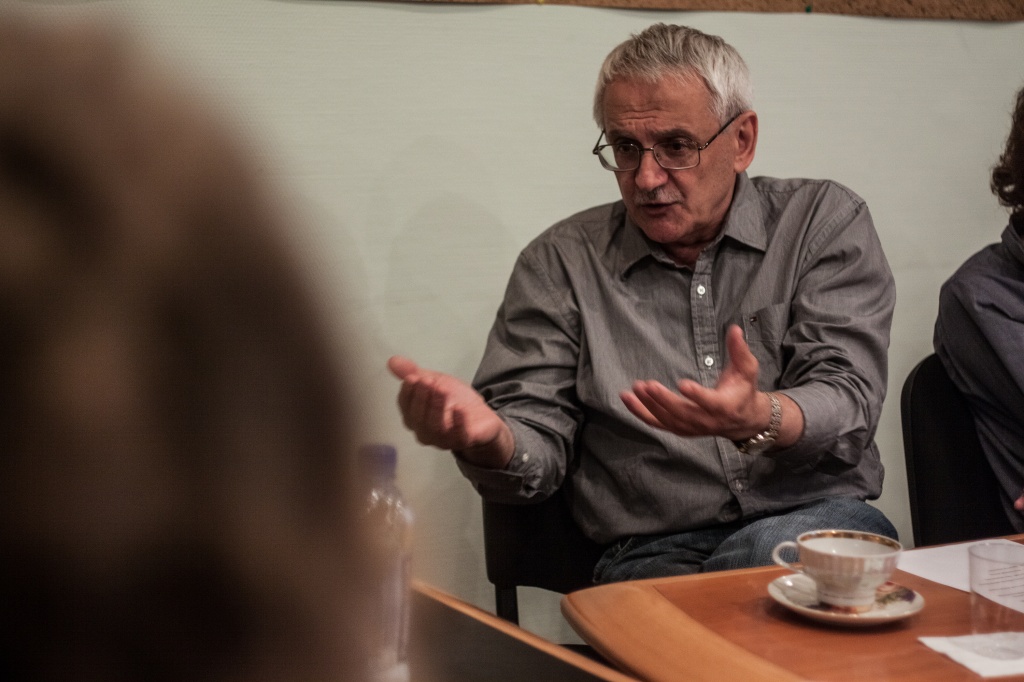
Mikhail Blininkin: "Moscow traffic jams - absolutely artificial phenomenon"
Navalny : Do you think the current government is able to realize these measures?
Blinkin: If they do not want the city to get up tight for a week at all, some things will still be decided by any power. This is an objective thing. The solutions all lie on the surface. But if everything is obvious in transport policy, there is a consensus, all the same say, then in a construction policy there is constantly some kind of nonsense like that you can take Leninsky Prospekt and convert it to Hyway. Well, the stupidity is obvious.
Navalny: So they can refuse this stupidity? What do you think?
Blinkin : God knows him. Because ... when you become the mayor, only experts come to you and they say: Leninsky Avenue is narrow, let's expand it, and you agree: yes, narrow. And then other experts come, like me, and they say: this is stupidity is unusual. Who will you listen to? How will you make a decision? How will you differ from the same Sobyanin? Are you more honest? You will not take bribes? Very good. But and the decision-how will you make?
Navalny : In our program, a clause is recorded that all projects worth more than three billion rubles, they must undergo an independent international examination. It’s easier for us to spend five percent of the cost of the project than to eagerly throw billions.
Blinkin : One second. You say a lot of money. But this is so far the favor of the federal government. With one stroke of the pen, the largest vertically integrated companies will begin to pay taxes not here, but in Tyumen or in Khanty-Mansiysk.
Navalny : This is not entirely true. Of course, it is possible to reduce the tax base in Moscow, but in general, we have the structure of the Moscow budget is such that this 1.6 trillion cannot be turned into a trillion - this is simply impossible.
Mikhail Peskov, municipal deputy : here an important step will be the introduction of real estate tax, and Moscow will then receive a stable source of income.
Municipal democracy
Blinkin: Now about municipal democracy. If we follow the path of local referenda, then, I'm afraid, any construction sites will stop in the city.
Navalny : I agree, the question is difficult. Here we must clearly determine what should be attributed to local powers, and what is the competence of only the city. Temple or clinic? Clinic or new school? Combine schools, not to unite schools? I have a wife in the school of the school’s trustees, our school is attached to another, and she is still a kindergarten. There is a whole scandal. Here they are, questions of the local referendum. And let's say, the construction of a city network - for example, a tram, laying the road through your area is already a matter of urban planning.
The New Times : People living on Leninsky Prospekt, against turning it into the highway. There should be a referendum?
Navalny: Leninsky Prospekt is the largest highway, on which the traffic in the city of Moscow generally depends. Therefore, taking out the brackets, it is necessary to redo it or not - this is not a question of a local referendum, of course. How can residents defend their interests? Now - practically nothing. In a normal situation, the mayor, who wants to re -elect, he must act in the interests of the city, and not in the interests of a construction company that grows a tunnel or overpass. People exert pressure, if the pressure is effective, the authorities are changing their decision. Another question is that the solution under pressure will not necessarily be the best, but in this case the normal mayor should go to the people who are unhappy and talk to them. It is necessary to go ten times - it means that I will go ten times.
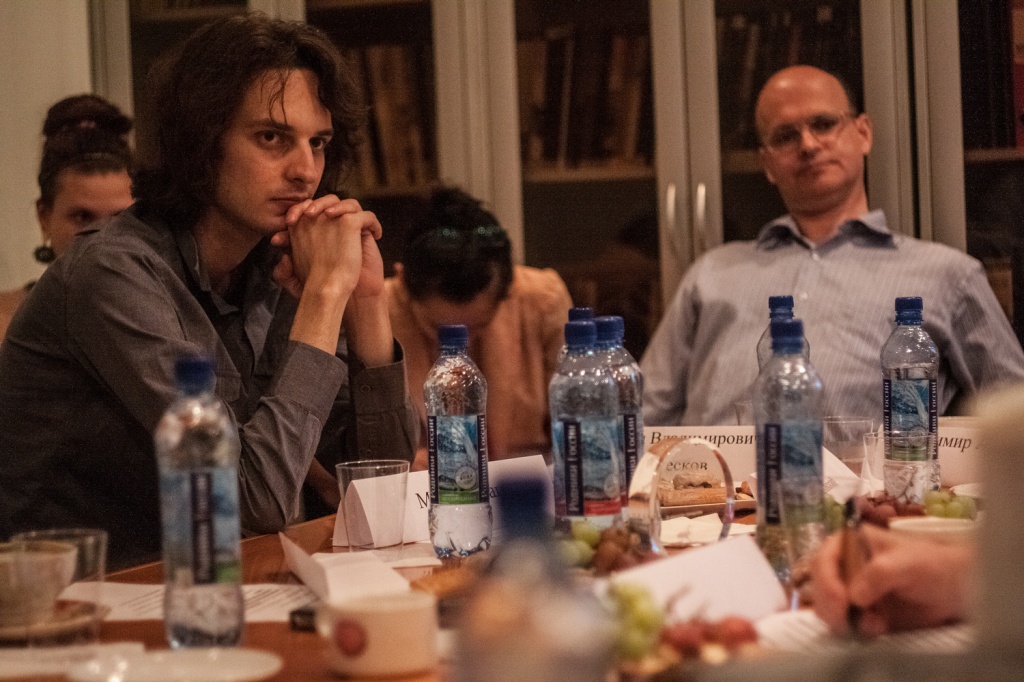
Experts in different areas demanded from Navalny answers on all points of his election program
The face of Moscow
ACS: An extremely sore topic is the preservation of the historical center. Because the catastrophe that happened in Luzhkov times - it has already happened, it is necessary to preserve what is left. Because in Moscow, what I call the “resource of identity” is on the verge of destruction. Now the third -grade buildings, and not just monuments, require preservation. Otherwise, the center of Moscow will simply lose Identity - a picky. Thank God, both Sobyanin, and chief architect Sergei Kuznetsov understand this. The second problem is industrial zones, the third is the development of the periphery. And the most important question is the relationship of urban planning with developers. Do you imagine this side of the question?
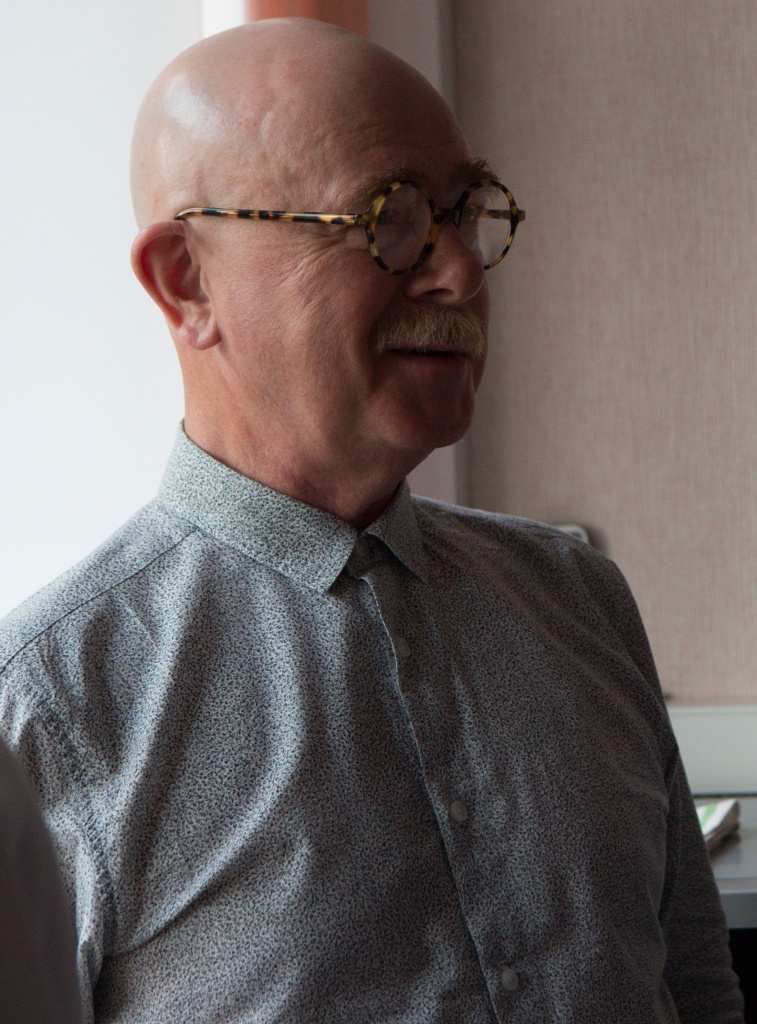
Evgeny ACS: "There is no need to do a new general plan-they are no longer made in the world anywhere, we need a strategy, master plan"
Navalny: I am very well represented: for many years I worked in the Muscovites protection committee as a lawyer, I endlessly sued the builders, representing the interests of the inhabitants, and just as an activist ran, I broke the fences. Of course, Sobyanin pushed the construction mafia that was under Luzhkov a little. But, from my point of view, he brought here another mafia. And, according to my observations, the level of corruption there is not at all inferior to what was before.
As for the issues of historical monuments, it seems to me that it is necessary to expand the circle of experts, to dispose of these issues beyond the exclusive competence of the Moskomnature and similar structures, to invite representatives of the local community to discuss representatives of the local community: arkhnadzors, public organizations, all sorts of zealots of old Moscow, photographers and so on - they should sit and discuss all these things together with specialists, professionals.
And yet - about developers. I consider it absolutely stupid and vicious practice of this Luzhkovsky type of development, when we load you with some kind of social function, and you will build a shopping center there. Reconstruct us “Luzhniki”, and we will allow you there a million square meters. This is nonsense.
Tomarovsky : In principle, these words have already been uttered.
Navalny : Words - yes, spoken, but this is not done: “Luzhniki” - an example of this. The real pressure of the construction complex, it is less than under Luzhkov, but nevertheless developers, builders, lovers to build a million square meters of something-they are the main engine of certain construction projects. And it should be different: if the city needs an object, it must build it with city money, without any encumbrances in the form of commercial development. Commercial development - separately, stadiums - separately. Otherwise, it is muddy water and endless corruption.
ACS: This is all right. Sobyanin called this section of his program “Comfortable City”. Do you have any other slogan on this?
Navalny : This slogan pronounced this slogan.
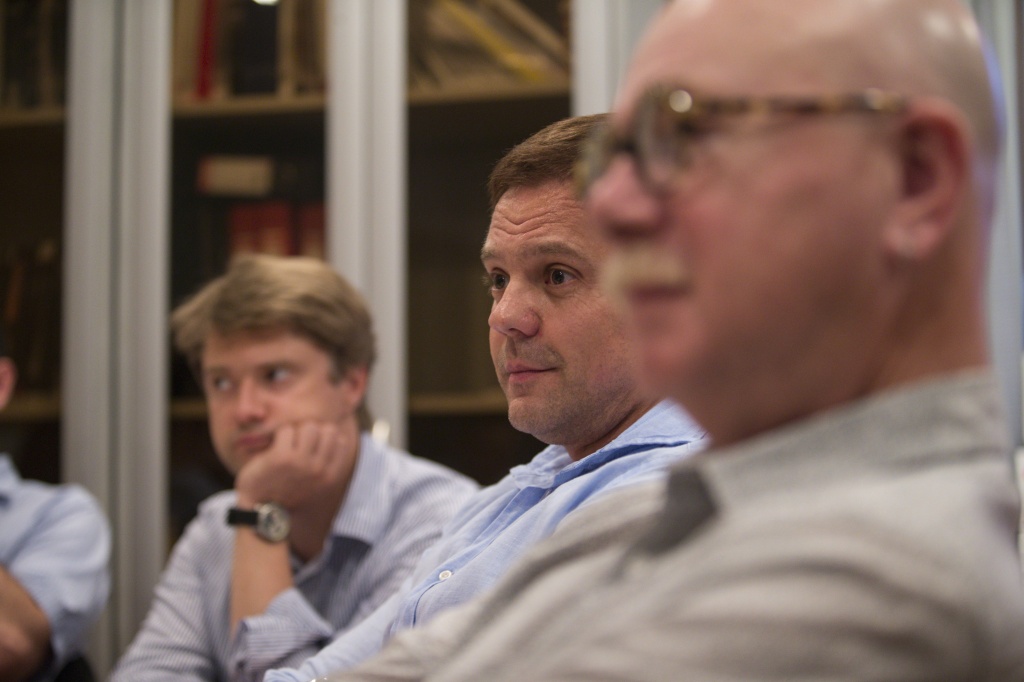
From left to right: Vladimir Ashurkov, Oleg Tomarovsky, Evgeny Ass
Blinkin : Can I have a small replica? In the area of urban system, it is necessary to dilute, figuratively speaking, a meat processing plant and an animal protection society. The structure, within the framework of which the Vice-mayor for construction is simultaneously the head of the Moscow Architecture Committee and, through three hands, the head of the chief architect of Moscow is a constant conflict of interest.
Navalny : This is absolutely correct. I believe that in the structure itself-linear-staff-the government of Moscow, in principle, in principle, there is a constant and endless conflict of interest, hence-corruption, ineffective decisions and the crazy price of any issue.
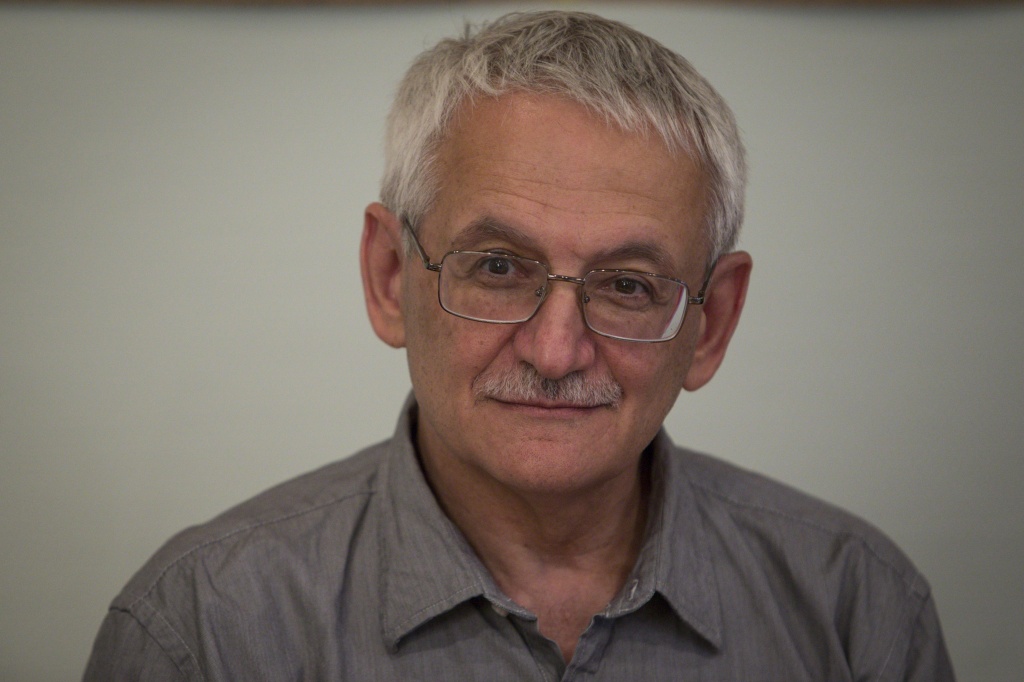
Михаил Блинкин не только задавал Алексею Навальному трудные вопросы по предвыборной программе, но и давал советы, как лучше сформулировать ее положения
Болезни большого города
The New Times : Нелегальная миграция — тема № 1 в заявлениях всех кандидатов, в том числе и тех, кто когда-то изгонял вас из «Яблока» за национализм. (The New Times расследовал , как столичные чиновники наживаются на мигрантах).
Навальный : Все соцопросы показывают, что этот вопрос больше всего заботит москвичей. Потому все и высказываются по нему с большей или меньшей степенью жесткости. Мне кажется, подход должен быть основан исключительно на законе. Закон нам сейчас позволяет ввести достаточно эффективные меры по борьбе с ростом нелегальной миграции. В первую очередь мы должны понимать, что главный работодатель для нелегальных мигрантов — это мэрия Москвы и дальше вниз по вертикали. Why? Потому что это выгодно. Вот смотрите: средний дворник в Москве, согласно статистике, получает 46 тыс. рублей. Но дворник, например, в моем дворе — он то ли таджик, то ли узбек — получает 18 тыс. рублей. Я у него спрашиваю, почему так мало? Ответ: разницу забирают себе люди из ДЭЗа или управляющая компания. В ответ на это мы введем простую меру: данные о привлечении иностранной рабочей силы, вплоть до имен и зарплат, должны быть опубликованы. Те предприятия, которые будут уличены в использовании неоформленной иностранной рабочей силы, должны дисквалифицироваться в плане городского заказа. То есть если тебя поймали, бюджетных денег ты не увидишь, а поймать тебя будет легко, потому что имя этого дворника и его зарплата должны быть опубликованы на сайте, и каждый знает, что у него работает дворник Али, у которого зарплата 48 тыс. рублей. И Али сам это знает, между прочим.
Максим Кац, муниципальный депутат : Разве это не будет нарушением права на частную жизнь?
Навальный: Без его разрешения — нарушение, но если это условие приема на работу, то ты сам решаешь, хочешь работу — значит твои данные будут обнародованы, нет — извини.
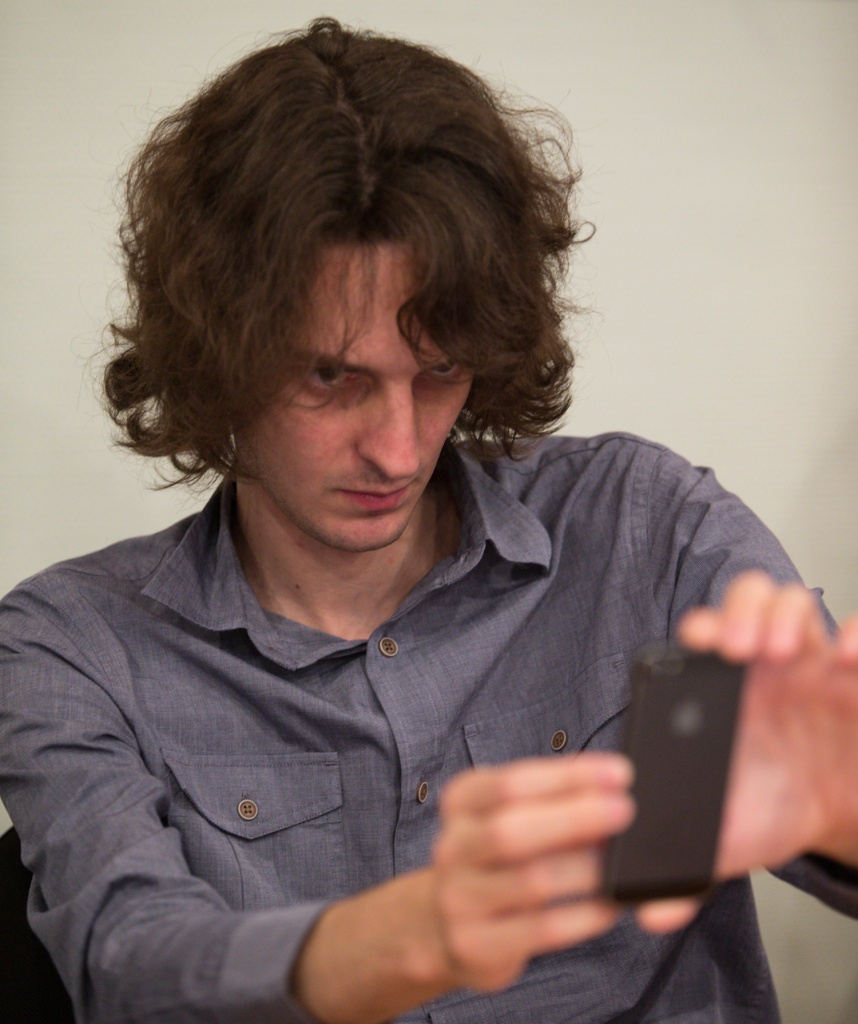
Максим Кац, основатель «Городских проектов» и постоянный обитатель твиттера
Кац : Это соответствует Конституции?
Навальный: Абсолютно соответствует. Если мы выведем эту проблему на свет, если все будут знать, какая зарплата у дворника, если он будет платить с нее социальные налоги, если постепенно возникнут у них свои профсоюзы, которые будут защищать их права и не позволят жить в скотских условиях и без медицинской страховки, то это будет всем выгодно. Управляющие компании будут стремиться к увеличению производительности труда, дворники — получать нормальные деньги, а бабушки, живущие в этих домах, станут естественными контролерами — тысячи бабушек, вместо того чтобы интересоваться жизнью соседей, будут пристально следить за каждым новым дворником, а муниципальные депутаты — вести списки, проверять миграционные карточки и так далее. Вторая важнейшая мера — недопущение образования миграционных гетто, как, например, у меня на Борисовских прудах, где есть общежитие, в котором все говорят на тюркских языках. Мало того, что туда ездят за наркотиками, но это не позволяет мигрантам социализироваться, их дети не имеют возможности нормально выучить русский язык. Мигранты приезжают семьями, 7-летний ребенок, вместо того чтобы ходить в школу, помогает отцу на стройке, в результате он не поступит в институт, и выбор у него будет между грязной работой и сами знаете чем. Ничего, кроме межэтнического напряжения, такая ситуация не создает. Если мы не решим эту проблему сейчас, то через десять лет у нас будет то же, что в США.
Собчак: Мне кажется, что с этим как раз многие согласятся. Если вы посмотрите заявление Собянина, очевидно, что он тоже будет на мигрантской теме строить предвыборную кампанию. Но есть, на мой взгляд, некая грань. Вот в связи с этим хочется узнать, при каких обстоятельствах, в связи с чем Алексей Навальный, кандидат в мэры города Москвы, пойдет на «Русский марш»? Или не пойдет?
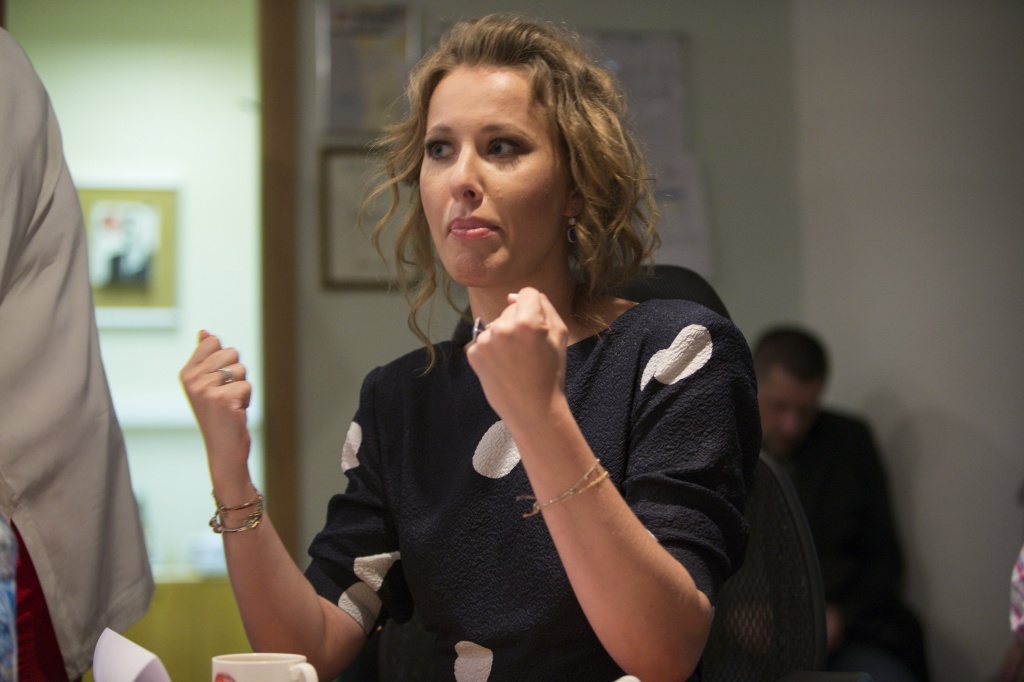
Ксения Собчак настаивала на прямом ответе на вопрос, пойдет ли Навальный, будучи мэром, на «Русский марш» — да или нет
Навальный: В 121-й раз специально для вас, Ксения. Есть проблемы, связанные с притоком мигрантов, национальной преступностью, с Кавказом и так далее. Эти проблемы существуют, их нужно обсуждать, их нужно решать. Пути их решения нужно искать в рамках тех программ, которые мы пишем в том числе. Пытаться игнорировать эти явления и маргинализировать эту повестку приведет ровно к обратному результату. Какой лозунг программы Собянина? «Главное — москвичи». Вот представьте себе такой лозунг где-нибудь в Екатеринбурге или Тюмени. «Центр Э» тут же наедет, скажет: что здесь за сепаратизм такой?
Собчак: Я о грани: ты не считаешь, что «Русский марш» — это маргинальное действие?
Навальный : Грань маргинальности мы смещаем сами. Я эту дискуссию готов вести со всеми, и я ее веду со всеми. Я ее веду в своем дворе, я ее веду здесь. У меня не существует аудитории, которая слишком маргинальна для ведения этой дискуссии. Я ответил на вашу попытку затроллить меня «Русским маршем»?
Кац : Вопрос про «Русский марш» остался не отвеченным. На прошлый марш ты не пошел — сказал, что болен. А на следующий — пойдешь?
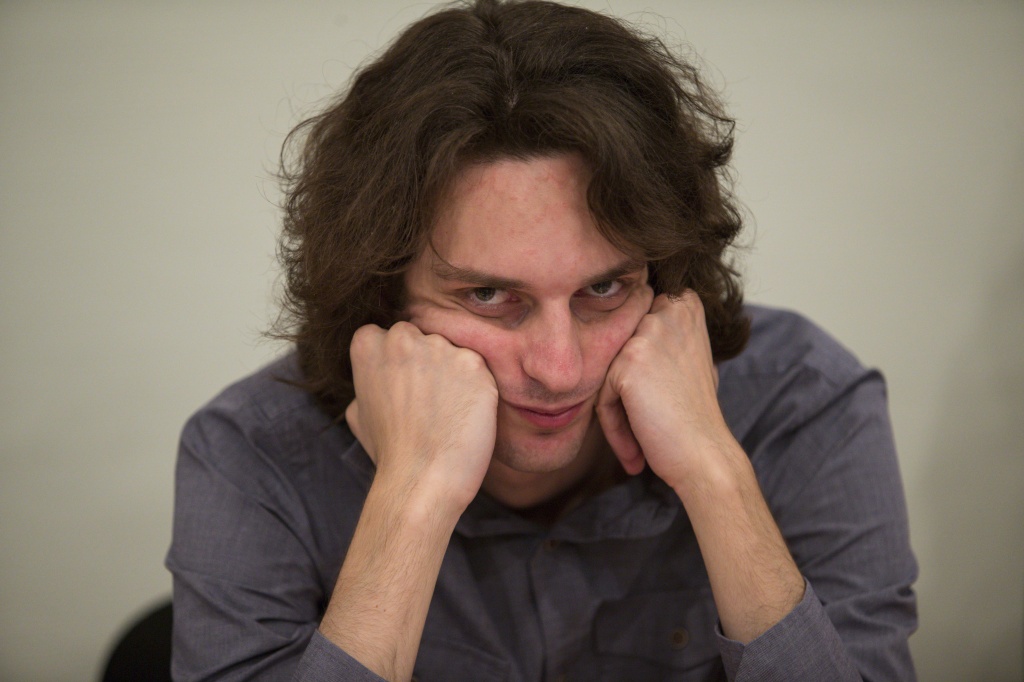
Максим Кац также добивался однозначного ответа на вопрос о «Русском марше»
Навальный: Я много раз отвечал на этот вопрос. Максим, ты ломишься в открытую дверь. Я ходил на «Русский марш», и я буду ходить дальше. Другой вопрос, что то, как выглядит «Русский марш» сейчас, он выглядит неприемлемо для многих. 87% москвичей по опросам обеспокоены темой нелегальной миграции, обеспокоены темой притока наркотиков. Эти все проблемы есть, просто на «Русский марш» выходят мычащие школьники, которые сформулировать ничего, кроме зигов, не могут. А туда должны прийти нормальные люди, которые смогут объяснить этим школьникам, в чем корень проблемы и почему всякими дурацкими и мерзкими лозунгами она никогда не будет решена.
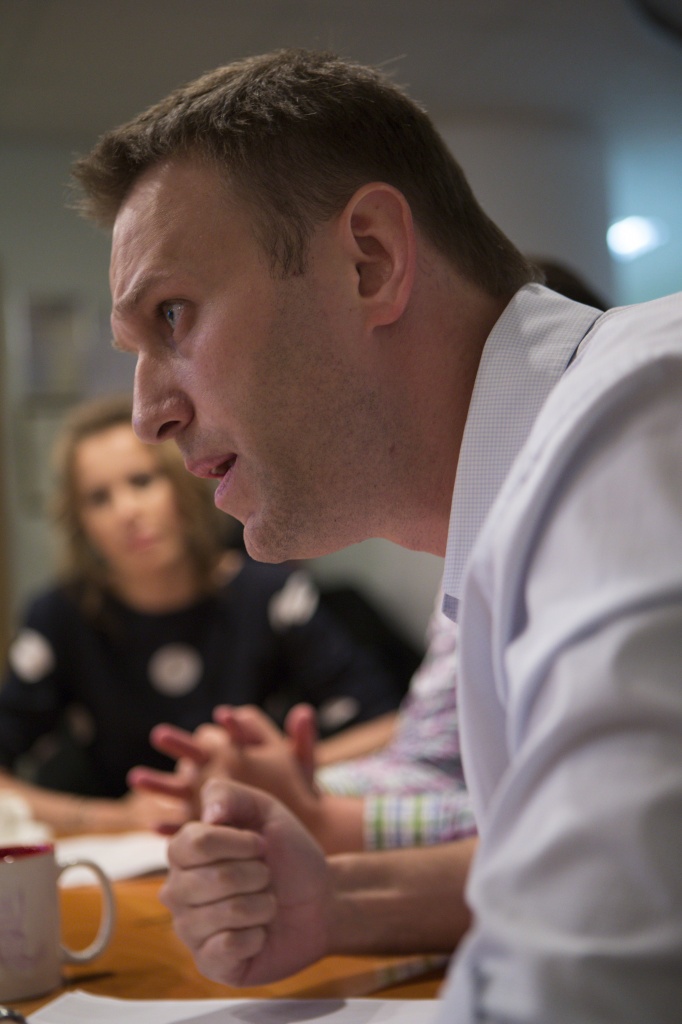
Алексей Навальный: «Я ходил на «Русский марш», и я буду ходить дальше»
Собчак : В этой логике вы должны идти и разговаривать с членами «Единой России». Людей, которые разговаривают с властью, людей, которые говорят, что они хотят изменить власть изнутри, клеймят позором, называют мурзилками и обвиняют в том, что они поддерживают бандитский режим. Почему тогда не пойти на митинг «Единой России» на Поклонную гору и не попытаться превратить ее в Болотную? Вам не кажется, что у вас двойные стандарты?
Навальный : Никаких двойных стандартов нет. «Русский марш» — это стихийное политическое явление. Ты в этом стихийном политическом явлении действуешь на равных со всеми остальными. «Единая Россия» — это власть, которая бьет своих оппонентов дубинками и сажает в тюрьмы. И все те условно приличные люди, которые пытаются нам доказать, что внутри «Единой России» они что-то могут изменить, это абсолютные лицемеры, к сожалению, которые выступают ширмой для адских совершенно жуликов и воров.
Вера Кричевская, режиссер : А если в Москве возникнет протестное движение мусульман, потому что им плохо здесь живется, готовы ли вы будете выйти на их марш, чтобы образовывать мусульманские массы так же, как вы считаете необходимым образовывать «мычащих школьников» — ваши слова — на «Русском марше»?
Навальный: Политик, а тем более мэр города не может делить москвичей на своих и чужих — разговаривать надо пытаться со всеми. А если масштаб проблем выводит людей на улицу, мэр тем более просто обязан идти к ним и разговаривать.
A housing issue
Песков: Не понимаю, почему мигранты или транспорт на первом месте. Я думаю, что людей прежде всего волнуют цифры в квитанциях квартплаты, которые они каждый месяц видят, и видят, как они растут. Алексей, если вы станете мэром, будут ли снижены тарифы на услуги ЖКХ?
Навальный : Тариф не должен быть уменьшен или увеличен, тариф должен быть рассчитан. Я считаю, что тарифы в Москве завышены, потому что качество тех услуг, которые мы получаем, не соответствуют этим тарифам. Одна из причин: инвестиционная составляющая при формировании тарифа, она абсолютно закрыта, не прозрачна, и в 99% случаев она раздута. Мы считаем, что никакие новые тарифы не могут и не должны вводиться без независимого аудита этих тайных «инвестиционных» программ.
Песков: То есть тарифы будут снижены?
Навальный : Их нужно рассчитать.
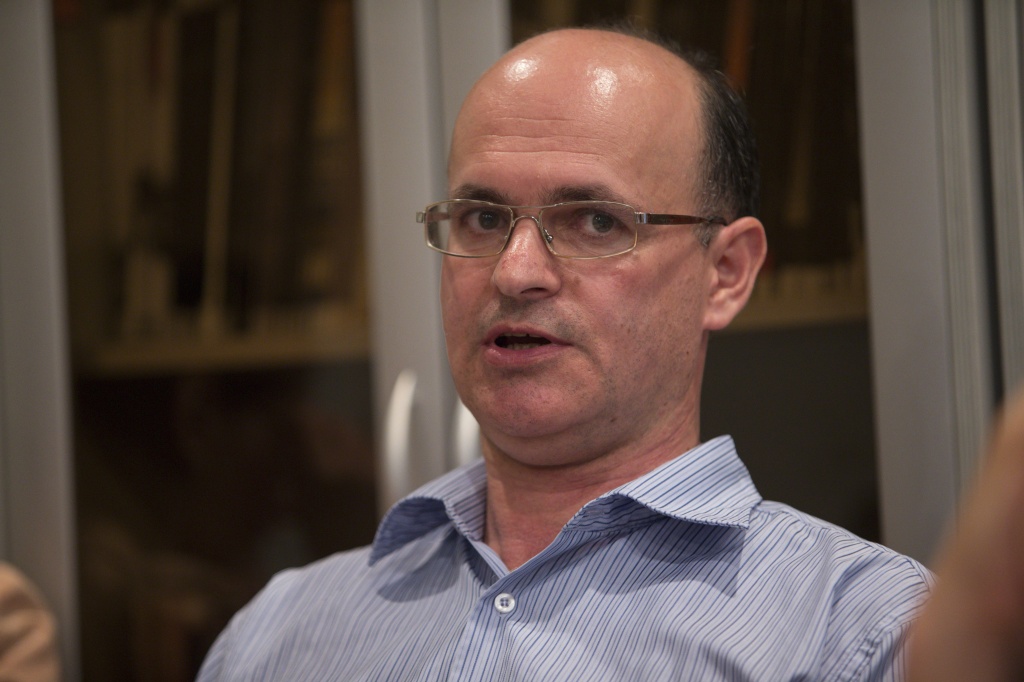
Михаил Песков: «Людей прежде всего волнуют цифры в квитанциях квартплаты»
Песков : А как вы будете бороться со сговором управляющих компаний?
Навальный : В Москве нет сговора управляющих компаний, потому что, в принципе, существование управляющих компаний в Москве — это один большой сговор. У нас практически все управляющие компании — это ДЭЗы. У нас уровень реального частного сектора в сфере управления ЖКХ, он просто ничтожный, это везде одни ДЭЗы, которые подчиняются районным управам. Фактически — чиновники. Поэтому тут даже антимонопольщикам невозможно найти сговор, потому что сговор — это принцип функционирования системы... А вы депутат из Южного Тушина? Вы за кого, кстати, подпись поставили?
Песков : Я подписался за Митрохина.
...и больничный
Томаровский: Алексей, вы реально видите проблемы со здравоохранением в Москве?
Навальный: Еще как. У нас, по статистике, на медицинское обеспечение любого москвича выделяется денег в четыре раза больше, чем в другом субъекте Федерации. Причем излечиваемость, выявляемость болезни совсем не больше, чем в других субъектах Федерации. У нас на поликлиническое обслуживание, на каждого здесь сидящего... Как вы думаете, сколько на вас в год тратится на поликлинику? 24 тыс. рублей на каждого человека. Поднимите руки те, кто в этом году ходил в районную поликлинику. Одного человека вижу. Поэтому первым пунктом нашей программы записано: сеть современных и качественных поликлиник, доступных москвичу.
Томаровский : У Собянина написано, что нужно построить 60 поликлиник дополнительно.
Навальный : Ну конечно, он их должен строить. У меня в Марьине, знаете, какая дикая очередь в поликлинику? Why? Потому что не хватает врачей общей практики. Поэтому я не буду строить 60 поликлиник. Задача в том, чтобы сделать сеть поликлинического обслуживания доступной каждому. В первую очередь иметь — воспитать, нанять, обучить — большое количество врачей общей практики, чтобы каждый москвич знал имя врача, который его обслуживает и который закреплен за его семьей.
Томаровский : На это нужно как минимум семь лет, а лучше 12. А сейчас вы что будете делать?
Навальный : Мы будем систему дополнительного лекарственного обеспечения заменять всеобщим медицинским страхованием. Мы будем развивать технологии, которые заменяют стационарное лечение.
Томаровский : Это один в один написано у Собянина.
Навальный : И?.. У Путина в программе «Стратегия 2020» тоже написана масса правильных вещей. Только почему-то у нас рост экономики — 1,6 и капиталы, как подорванные, бегут.
The question is unanswered
The New Times: Вы ни разу не высказывались по поводу гомофобных законов, которые приняла наша Дума. Why?
Навальный: Законы эти — набор бреда, когда путаются уголовные преступления и просто личная жизнь людей.
The New Times: Вы мэр, и вам приносят заявку на демонстрацию за права геев, и?..
Навальный: У всех людей есть право собираться. Но каждому должна быть обеспечена безопасность. Учитывая, какую ярость вызывает этот вопрос, лучше всего проводить такие демонстрации где-нибудь на стадионе.
Кричевская: Это та же риторика, что и у московских властей, которые отправляют наши митинги в гайд-парк в Парке Горького!

Алексей Навальный сидит с режиссером Верой Кричевской
Why is Navalny?
The New Times : Мы приглашали на эту дискуссию представителей среднего московского бизнеса. Все отказались. Cause? Будут проблемы, если они сядут за один стол с Навальным. Но вот что любопытно: ряд собеседников из бизнеса говорили, что будут голосовать за действующего мэра, потому что управлять городом должен человек, который знает, как, например, в городе устроены инженерные коммуникации. А Навальный, говорят они, этого не знает.
| | | --- | | График предвыборной кампании * Сбор подписей и прохождение муниципального фильтра — до 10 июля 2013 года После предоставления кандидатом всех документов и подписей, заверенных нотариусом, у горизбиркома будет 10 дней на их проверку Агитация в СМИ начинается за 28 дней до голосования — 12 августа 2013 года и заканчивается в ночь на субботу, 7 сентября 2013 года * 8 сентября — единый день голосования
|
Навальный: С этой точки зрения давайте оставим Лужкова навсегда. У нас, например, в Московской области в большинстве городов сидят мэры аж с 87-го года. Они уже с каждой трубой сроднились, они каждую трубу купили. И в десять раз дороже. Поэтому это абсолютно лицемерная и глупейшая позиция представителей бизнеса. У нас в команде есть люди, которые... Вот Владимир Ашурков, он занимался управлением активов «Альфы», он сидел в совете директоров крупнейших ретейлинговых компаний. И у нас есть четкое понимание, что нужно делать в Москве для того, чтобы улучшать бизнес. Есть рейтинги. В первую очередь рейтинг «легкости ведения бизнеса». Вот если мы посмотрим этот рейтинг применительно к Москве, мы увидим, что есть топ — 30 городов мира, Москва находится на последнем месте. Москва по легкости ведения бизнеса уступает крупнейшим городам Пакистана, Египта и Замбии. У Путина в программе и у Собянина в программе написано, что Россия сейчас в этом рейтинге находится на 119-м месте, а они хотят за три года подняться до 20-го. Но они никогда не поднимутся, потому что в этом рейтинге есть, например, условие подключения к электросетям, по которым Россия находится на 143-м месте. И сделать с этим при нынешней власти ничего нельзя, потому что подключение к электросетям — это взятки. Следовательно, и здесь главный принцип нашей программы — не врать и не воровать — абсолютно принципиален.
Кричевская**: Каждый вопрос, который мы обсуждаем, сводится к коррупции. Но что вы будете делать с этой армией чиновников, которые годами привыкли именно к такой системе власти? Люстрация? Something else? И почему я, избиратель, должна поверить вам, что у вас получится лучше, чем у Собянина?
Навальный : Потому что у меня, у нашей команды уникальный и успешный опыт борьбы с коррупцией и неэффективным расходованием средств, причем в условиях, когда у нас нет никакого властного ресурса. This is the first. И второе: бороться с коррупцией можно только одним способом: к власти должна прийти команда, которая живет по принципу — не врать и не воровать. И это — мы.
фотографии: Василий Попов, Александр Земляниченко-мл.