
Translated material
Feast of disobedience
Features of the autumn elections
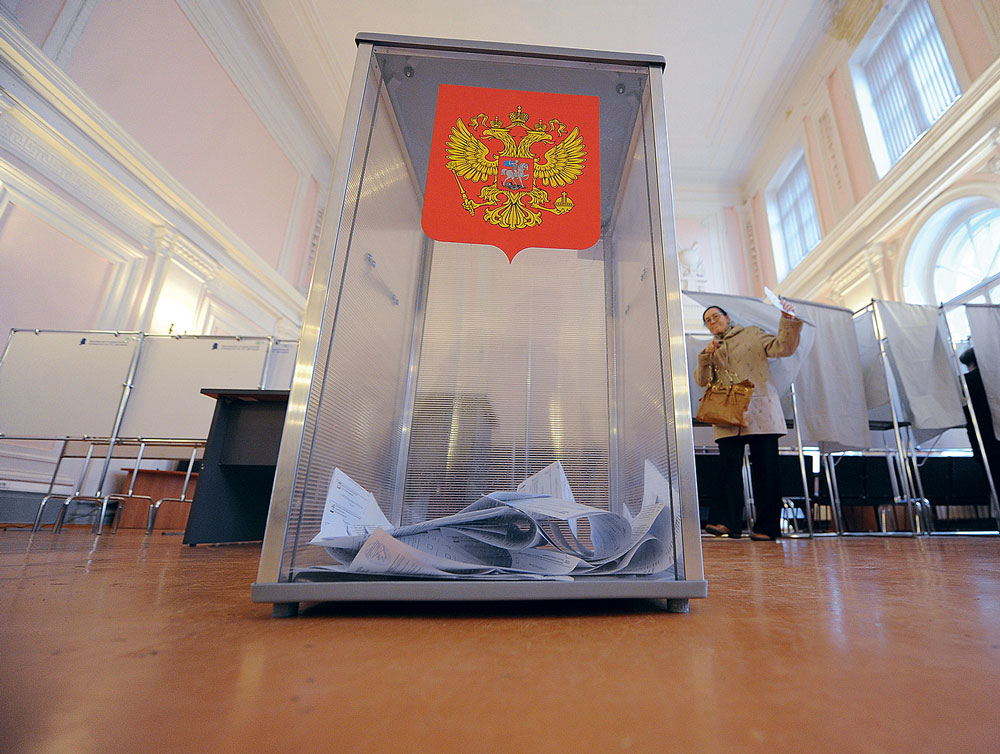
On September 8, a single voting day introduced a noticeable revitalization into Russian policy. The authorities tried to play competitive elections with the people, and the people, or at least its most active part, unexpectedly imposed its rules in this game in this game. After that, even analysts close to power spoke of the inevitability of real, rather than decorative liberalization of the regime.
Summing up the results of the September elections, The New Times found out what, from the point of view of sociology and statistics, is noteworthy Muscovites who voted for Alexei Navalny; Boris Nemtsov asked why he had the mandate of the Yaroslavl deputy; I found out on the spot why the inhabitants of the Pacific Petrozavodsk loudly rolled in the election of the mayor of the uninstall, and figured out where Sergei Sobyanin could take saving 1.37% of the vote
Autumn accents
The current campaign was held according to the new rules: the elections of all levels are now organized once a year, not two, and the one voting day itself was postponed from the second Sunday of October for the second Sunday of September.
Two characteristic features of this campaign are also associated with the main innovations.
Firstly, the places where it was necessary to vote for someone has accumulated more than usual. On September 8, 8 governors and 16 regional parliaments were popularly elected, and in the capitals of the constituent entities of the Russian Federation - 8 mayors and 12 city thoughts. Secondly, agitampania during summer vacations and voting in the midst of gardening work predictably turned into a low explicit of voters: in the regional level elections, it amounted to 25-30%, and at municipal ones-another 5-10% less.
The governor’s elections were held without surprises - thanks to the municipal filter, which in the province, unlike Moscow and the Moscow Region, was used to the fullest. Therefore, the current leaders mainly received from 70% to 80% of the vote. It also turned out to be traditionally with regional parliaments: it still does not shine according to the United Russia Parties (in 9 out of 16 regions its result is below 50%), but it compensates for the shortage due to single-mandate districts.
But municipal elections brought several sensations. The most loud of them, of course, were the victories of the opposition Evgeny Roizman (Yekaterinburg) and Galina Shirshina (Petrozavodsk) in the mayor’s elections. In Krasnoyarsk, the majority of places in the City Council were received by the Patriots of Russia party, supported by the authoritative local businessman Anatoly Bykov. And in Volgograd, a scandal broke out in the election in the City Duma in connection with numerous violations of elected legislation by the election commissions, in connection with which the opposition demanded to cancel the election results.
Finally, the 2013 campaign was of particular importance for the party members: 54 parties took part in it, and the parliamentary old-timers, perhaps for the first time in 15 years, had to encounter so many competitors-both real and outright spoilers. And not everyone managed to confirm their class: let's say, “Fair Russia” did not overcome the established barrier barrier in seven regions, and the LDPR in four. At the same time, several new or restored parties received their fractions in regional legislatures-in particular, the “Civil Platform” (Kalmykia and the Trans-Baikal Territory), “Homeland” (Arkhangelsk Region), “Communists of Russia” (Khakassia), RPR-Parnas (Yaroslavl Region).
Photo: Vladimir Smirnov/ITAR-TASS