
Translated material
There will be something
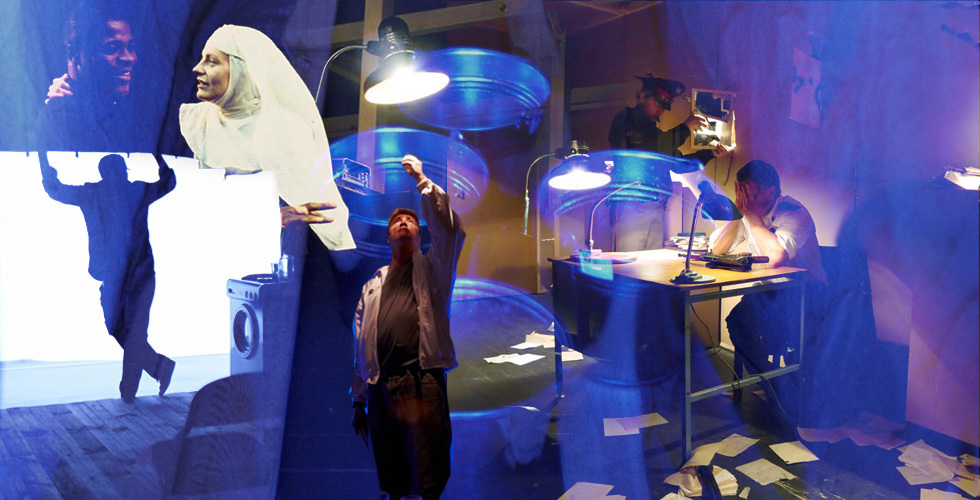
This is how it is on Russian stage: the new season starts gradually, gradually, like reluctantly-the troupe is leisurely returning from vacations, roll their everyday repertoire, wait for the autumn exacerbation of festival and gastrointestinal fever in order to go out of the first case to the first frosts. Violating this unwritten, but steadily observed tradition from year to year, the current September passes under the sign of several prime minister strategic for the cultural process (among the most important ones - the capital's debut of the tandem Dmitry Volkostralov and Pavel Pryazhko and the Moscow Art Theater Marat Gatsalov with the “fairy tale that we can, and thereby setting the tone for everything) The 2013/2014 season, which, judging by the situation in the situation in the theater market, promises to be very, very hot. Moreover, the main expectations are by no means connected with the prospect of specific artistic achievements: judging by the conjuncture of past seasons, the domestic scene is experiencing difficult times of flamelessness, aesthetic and style crisis - it is no coincidence that the main hopes in the repertoire plans of Moscow theaters are entitled primarily to the performances of foreign masters like the November premier “Measures for the measure” of Declana Declana Donnellan at the Pushkin and December Hamlet Theater Robert Lepage in the Theater of Nations. With a high degree of probability, it can be assumed that the agenda in the next year and a half will determine not private plots of creative success or failures, but the global process of personnel and semantic renewal of the entire theater system.
In order to feel all the exclusivity of the moment, it is enough to turn to the mean facts that talk about how unprecedented, which has no analogues in the history of the latest cultural policy, Russian theaters have survived in the last few years in general and over the past spring in particular. Measured on the threshold of changes Petersburg - Andrey Mogeliy headed the BDT and promises to release two new works until the future summer (for December, the prime minister based on Alice in Wonderlands is planned with Aliso Freindlich and Oleg Basilashvili, under the curtain of the season, the chernyshevsky’s novel “What to do” will be released), at the end of the year, presentation Gatsalov, several weeks ago officially entering the powers of the chief director Alexandrinka-2. It is shaking the theatrical Moscow - it is difficult to assume how the fate of the Stanislavsky Theater and the Dramaturgy and Directions, headed by Boris Yukhananov and Klim , will be formed, which will be achieved by a group of graduates of the theater leader, preparing a large -scale research project, dedicated to the anniversary of the Taganka Theater. Attention will be focused on the work of the Khudruks who have already managed to take the first steps in new positions: where the “Gogol-Center” Kirill Serebrennikov and the Lighting Association of Mindaauagas Karbauskis, who was energetically starting at the beginning of the year, will move at the beginning of the year, will carry out work on errors following the results of the not very productive first season of the renewed Ermolova Theater Oleg Menshikov.
In the coming years, the theater will work at, so to speak, a long distance, focusing not on the result, but on the process.
For a long time remaining motionless, the domestic theatrical organism came into motion - the beginning of the tenth became the era of perestroika for the Russian scene. Obviously, in the near future, she will affect those troupes that emphasized from the modernizing trend-like the metropolitan small theater, whose conservative art policy, judging by the plans for the new season, decorated with the Lermontov "masquerade" in the production of Boulevard affairs Andrei Zhitinkin, degenerated into something completely intimidative. It is easy to guess how painful and traumatic these inevitable metamorphoses will be - not only in the first, but also in the future, when the competition between market participants will become much more intense. That is why it is pointless to demand special effectiveness from this season: in the coming years, the theater will work at, so to speak, a long distance, focusing not on the result, but on the process. At the same time, almost the most important and positive feature is the fundamental impossibility of predicting the outcome of the case, which begins with many unknowns looks. Perhaps the most characteristic feature of the Russian theatrical reality of the past years remained annoying predictability, the dull pre -prediction of roles assigned to the main characters. Today's alignment does not mean anything like this in principle - yesterday's radical avant -garde artists under the influence of circumstances are quite capable of taking a course on moderate traditionalism, and carefully starting conservatives, on the contrary, can go to the search for the front line. For the first time in many years, we enter the new season, not knowing what to expect from it - and this is a big plus in itself.