
Translated material
What to prepare for after Biryulev?
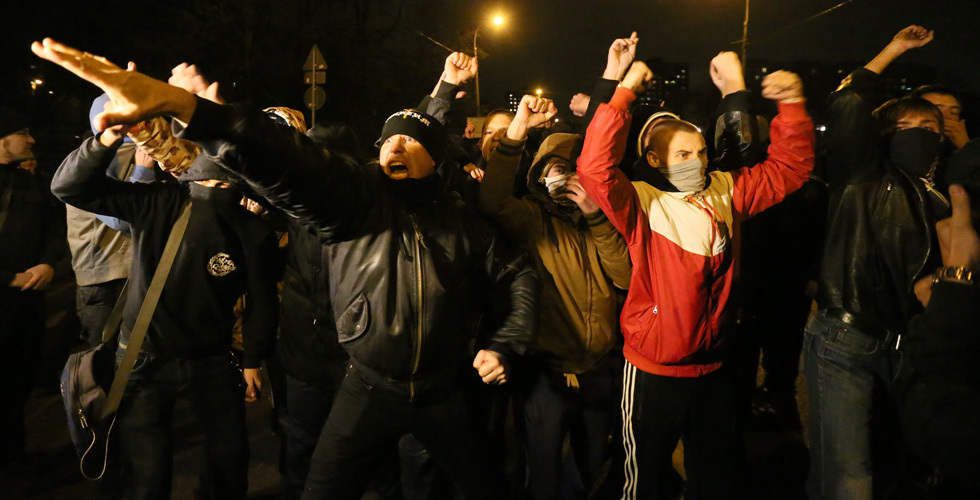
COLTA.RU continues the weekly section “Responsibility”: the respected people answer a question that is ardently discussed in recent days. This week there were even three related to Sunday events in Biryulev :
1) What does a pogrom in Biryulev mean you?
2) What to prepare for after Biryulev?
3) How to avoid repeating the conflict and its growth?
Mitya Aleshkovsky
Vasily Gatov
Katerina Gordeeva
Hasan Huseynov
Alexey Kazakov
Oleg Kashin
Alexey Kozlov
Modest Kingov
Igor company
Ilya Dewarer
Vitaly Kurennaya
Sergey Medvedev
Stanislav Minin
Dmitry Navosha
Dmitry Olshansky
Gleb Pavlovsky
Sergey Shargunov
Ruslan Khestanov
Mitya Aleshkovsky
photojournalist
The pogrom in Biryulev does not mean anything. It is not clear whether this next action was organized by the authorities or by someone, in general, it does not even matter. This is the result of the federal policy of the state and the federal policy in the North Caucasus, firstly.
And secondly, this is the result of the fact that they do not in any way fight corruption in the Ministry of Internal Affairs, the FMS and other services. If it were impossible to pay off each cop with a bribe, buy a work permit, pay for everything, migrants would not go here. They come here precisely because the law can be violated here. That is why there is a huge number of violations of the law. That is why there are some problems with ethnic crime allegedly. Or not supposedly.
As for the figures of ethnic crime, it is obvious that there is no individual problem of ethnic crime in the country and in Moscow in particular. In the country, this figure, in my opinion, is 1.6%, in Moscow-4.7% of the total number of crimes was committed by visitors from the CIS. That is, this problem is far -fetched, it is very much inflated by political figures. It was used in the elections as one of the trousers played. Nevertheless, candidates spoke about this in the elections to the mayors of Moscow. They even created a concentration camp. Where is he now?
It is obvious to me that people fight this way with the investigation, and not with the problem, not with the cause. And the reason is corrupt officials, corrupt police and a corrupt Federal Migration Service. The reason is corruption, not migrants. If laws worked in our country, there would be no problems. Both people who amuse the vegetable base, or people who call for the introduction of the visa regime with the countries of Asia, perform, in fact, the same useless activity that is simply aimed either at some kind of populist or political benefit. This activity will not lead to anything. If we now close the border for people from Central Asia, they will go to us from countries with a visa -free regime, for example from Montenegro or from Serbia. And they will fill in the same way all jobs, and we will have exactly the same migrants, but already from Moldova. The vacant jobs will still be filled with migrants, and again there will be a problem with the fact that migrants will not have enough salaries, they will be deceived, employers will throw them out without money, they will constantly find themselves in a difficult situation and look for food for themselves and their families by any means.
You need to understand that the problem is not solved by such methods, it is solved in legal ways. It is necessary that the law work. Nobody wants to understand this yet.
And the pogroms in Biryulev are absolute horror, and to win the lawlessness of lawlessness is stupidity. She will not lead us to anything good.
Vasily Gatov
journalist
1) It is not such a simple question as it might seem (after all the expected answers are “nightmare”, “horror”, “war”, and so on). After all, I have not been there as an observer, or as a participant in events, respectively, I have to based my opinion on what journalists have developed, official and unofficial. If we assume that the news television channels and agencies did their job fully and removed the atmosphere of events, we saw a local protest against the accumulated injustice, the “hump” of which sat some external forces (they were generally called “nationalists” and “football fans” in reports). At the same time, injustice is not only a specific murder, but a large set of different insults that are spilled in the Moscow outskirts.
The meaning of such "explosions" is a rather complicated object for evaluation; On the one hand, these are such formidable warnings to society and its institutions about the existing injustices (i.e. diseases), on the other hand, unfortunately, this is “examples for imitation”, especially in a situation where such injustice literally penetrate the city and the country.
2) I do not presume to predict. Until now, in such situations, after the release of negative energy, it was possible to take the situation under the control of law enforcement officers, bring down the intensity of emotions (it is a pity, of course, that all this is a post -fact). Kondopoga, Sagra, Manezhnaya and other pogrom stories have so far been somehow modified, suppressed and “divorced”. I do not have any special illusions regarding the abilities of the Moscow authorities and the police, but as a citizen I hope for the best.
2-3) If we talk about a longer term than today, tomorrow, unfortunately, there is no particular clarity in the program of action. And hardly anyone can offer reasonable solutions in a situation that is poorly understandable and poorly studied. There is no state or Moscow policy regarding integration, rather the opposite: there is a populist idea that manifested in the last mayor’s elections - “to clear the city from migrants”; In general, this was nothing more than Bickford Cords to explode the situation. In general, while riot police shares a crowd of potential pogromers and those who can become their potential victims (even if it’s not very effective), this is one situation. But, according to the reporters, unlike the swamp, the fighters listened much more carefully to the rhetoric “Russia for the Russians” and obviously in no hurry to protect the “people who came in” and “cleanse” even the attackers on them.
Katerina Gordeeva
journalist
I will probably start from the end.
In an amazing way, we have intolerance - in every sense of the word - in the place of the same national idea that they have been looking for and cannot find for so long. Intelligence is indulging at all levels: it doesn’t think so, it doesn’t dress like that, the wrong orientation, doesn’t sleep like that, doesn’t sit like that. And even more so when this person does not speak like that, not in your language, and lives, as it seems to you, in your house.
This triangle is a place where a person will not live by good free will: between the two highways in the industrial zone and the cemetery. And it became a haven for a huge number of migrants. A person who is good at who has not gone somewhere there in search of a better and bright life will not live there. But at the same time, this is the territory of Moscow and the territory of the state of Russia, and as if everyone believes that it is our territory. This is one side of the issue. And the other side of the question - no one wants to understand and know about the people who came here to live, about these migrants. And no one climbed into their heads, and no one was interested, and no one considers it a duty to talk with them. But it is clear that where they came from, a kind of paradise, a kind of island to which we need to strive, is the place where we live, because we live clearly better than them. And this place that they can occupy, even if this is the market, is already compared to the place where they were, for them is light. And this point of view must be understood, yes. We use the fruits of their labor. Look at our planted flower beds, at our cleaned streets, remember what was 10-15 years ago, and it will become clear that we use the fruits of their work, we walk along these cleaned streets, these streets sprinkle us in winter. This is not the councils do it, migrants do it with their own hands. They build houses and are engaged in all that dirty work, which, it seems to us, does not correspond to the high rank of a citizen of the Russian Federation. They provide our more or less comfortable existence with you.
What happened was supposed to happen because the quantity at some point goes into Buch, because there are so many (migrants), and everyone has so unpleasant, so uncomfortable. And, oddly enough, these clean streets and these beautiful lawns do not make life in this city and in this country comfortable, pleasant, friendly, in every sense of the European word. And, not having the opportunity to express their protesters in power, people express their protest, bring down all their anger at those who are weaker, who are lower on the social ladder, to those who at this second three steps from you are dangerous.
I took the son of our janitor, Tajik, because he accidentally caught my eye on the street. It turned out that a boy of more than seven years never went to school. He was not taken to school, because he is nobody. Here is his dad here is a janitor, and he is nobody. And no one is going to take this “nobody” to school. And I would like - at least from the point of view of my concern for my children, such a cynical, selfish point of view - so that he knows the Russian language, because he lives with me in the same yard. I would like him to be educated, well, at least somehow, and this, in my opinion, will protect me and my children from the possibility of his unzilized manifestations. Agreeing (and we agreed voluntarily) to the fact that we live all together, we must give them the opportunity to study, be treated and use the benefits of civilization, to which they, whatever one may say, have reached. This is the first.
And the second, it seems to me, Biryulovo is a continuation of the arena, and others will be behind Biryulov. It will not be in Moscow at all, it will be universally, because this nationalist theme, the theme of a strong boot, beating on someone else's unshaven muzzle-for some reason it is always successful, not very condemned from above. This traffic jam will be torn out, and the whole protest and all the discontent of the current situation that is in the country will result in this hole. And if the authorities did not hear several thousand protesters with quiet intelligent voices, she will probably hear that protest with loud launched shoes. Only it will be very scary, really scary.
Hasan Huseynov
philologist
What is happening in Biryulev, no one really knows, because there are no media trusting confidence, and instead of examination - opinions. Including mine.
This is not a spontaneous manifestation of the crowd (both pogroms and “folk gatherings” are usually organized), but this is not “provocation of special services” (although these very special services are capable of provocations). Most likely this is precisely the combination of many factors - extremely convenient to conduct the teachings of riot police and the police. The teachings, I must say, are quite successful. They showed that state power is still able to suppress both potential rebellion in their own rows and an accidental excess from the inhabitants of some outskirts.
Moscow as a whole is a slave-owned city, and the friction between slaves and the lumpen-testis of the outskirts arise at the moment when the lumpen notes that the slaves gradually turned into freedomed and began to richly rich, while the ranks of the lumpen industry are replenished at the expense of, on the contrary, the poor are the time for the creation of “folk squads”. This scheme was observed in the late 1980s on the territory of the former USSR. The task of the state, apparently, is designated as simultaneous suppression of this initiative, and unorganized, lower slavery. Since there is no civil society in Russia, the only force abandoned to solve this problem is riot police and the police. It seems to me that this power is experienced for stability.
Alexey Kazakov
journalist
1) There is already an answer in the question. Yes, this is a pogrom, but there are no good, kind, necessary pogroms. Dot.
There is only one problem-when on Saturday a friend on Facebook called on a Russian gathering, for some reason the hand did not reach out in a noble disgust to immediately exclude it from friends. To do this, I would have to first move out of the apartment in the quiet Arbat Lane and return, for example, to Mikhnevskaya Street, which is near the Biryulyovo-Passenger station and where I lived my first eight years. When you live in an old -flowered one, the closure of the largest vegetable base of the city is rather an annoying fact: what will happen to my cilantro in my beloved Dorogomilovsky market? And a friend still lives in my native Biryulev, which over these decades from the orderly ass of Moscow turned into a real ghetto. And to throw him and the rest of the pogroms in the face that they are “fascists” and “nonhumans”, something does not work. Their hatred and xenophobia, unfortunately, is easy to understand. It only remains to say: guys, relatives, you went wrong somewhere, destroy the refrigerators with the coal on the vegetable base-it's stupid, and hitting the defenseless Tajik on the face of a defenseless Tajik is an inhuman crime. You need to converge if not at the city hall, then at least for the prefecture or at the police department. At the Biryulevsky Internet forums, two years ago they warned that this vegetable base would sooner or later explode the district. Symbolically, of course, like Grandfather Hassan, who was related to this outlet, handed everyone away from the other world. Now, it seems, this vegetable base will rush throughout the country.
2) I would very much like to make mistakes, but I’m afraid that the main thing is that we will understand in the near future is how helpless our police are and how unprepared it is for real resistance. If this happens, it will be a very terrible discovery.
3) the visa regime with Central Asia and the interned Vietnamese camps are unlikely to help here. This city needs both migrants and vegetable bases. Recipes that come to mind sound somehow unconvincing due to their evidence and banality-regulated migration, convenient schemes for legal labor relations, the fight against slave labor and the fight against corruption, it is time to get out of the shadows, and so on.
Oleg Kashin
journalist
In order to avoid continuing the Biryulev events, it is obviously that several apartments must be given to the riot police who participated in the cleaning on Sunday, to allocate some more money to the “E” centers and, for example, to monitor social networks and take some more traditional measures aimed at strengthening the state. Perhaps new pogroms will be able to avoid if the defendants in the “swamp business” put each for each two or three years in excess of the planned one. It is also worth thinking about that in 2018 to Vladimir Putin to be elected to the President of Russia again - it is known that he protects us from pogroms. Unfortunately, the alternative looks just like that, and it is unlikely that I am saying something sensational new-about the fact that it is the authorities that protects us from pogroms and fascism, consensus in society has existed for many years. Another thing is that each time it is becoming increasingly difficult to explain that power is better than people who smashed the Trade Center for Biryuza. In general, I suspect that the people of the “turquoise” in a sense are better than people in the Kremlin, and that it seems to me indisputable-the right to manage the area of these people is incomparably more than that of the appointed head of the council and, especially from riot police. If the residents of the district themselves chose their power and, for example, the sheriff, many problems could have been avoided - but whoever will allow them, we are afraid of pogroms to such an extent that everyone is ready to endure at all.
Alexey Kozlov
Businessman, author of blog "Butyrka-blog"
Biryulovo showed that our police, thinking about their pockets, are not able to protect citizens. The problem is not in residents of Central Asia, although more than 50% of the guests of Moscow prisons are not citizens of the Russian Federation. There will be no them, there will be residents of other regions of the Russian Federation, and not only the Caucasus. The problem is deeper - the police and other law enforcement agencies are well aware of what is happening. There is no real civil control over the work of our security forces. This is the main problem. The security forces are not afraid of us, but the authorities. Their career does not depend on us, but for now it will be so, they will spit on us.
Modest Kingov
historian, publisher
1) Another act of social protest, packed in protest against ethnic crime and passivity of law enforcement agencies. Another act of “forced feedback” with the authorities, which can not hear otherwise.
2) It is necessary to prepare to increase the number and mass of such protests. I repeat: the authorities clearly showed what she hears and sees only this.
3) You can’t avoid continuation quickly. Neither England nor France still escaped this. But this can be introduced into some framework-by radical decriminalization of the police.
Igor company
journalist
1) In content, this is the decomposition of Russia in miniature. The rebellion that was supposed to happen. A logical intermediate result. The form is the ordinary outskirts of “Aksion Direct”: the inhabitants of Biryulev are not inclined to reflection.
2) There will be no serious, really conditional conclusions - the power system in its current state is incapable of this. Everything will be limited to local gestures and decisions: I am waiting for the indicative output of the base, for example, behind the Moscow Ring Road, well, and pairs of Nagonyaev and dismissals at the district/municipal level - this is our favorite way to demonstrate that the situation has been settled. As for the level of the federal ... Perhaps we will hear about the creation of some next council or special commission, we may receive a couple of amendments to the law, well, for example, about employment. Yes, what's the difference, nothing will work anyway.
3) He cannot be avoided.
Ilya Dewarer
journalist
1) By itself - nothing. Not the first and not the last. And it will be worse. The most sad thing is that we still cannot even discuss the problem of migration normally. If in a decent company, try to start a conversation about nationalism, then they will look at you as an idiot. Слушайте, у нас в школах уже каждый второй ребенок, кажется, считает нормальным ненавидеть кавказцев, у нас слова «чурка» и «хач» скоро в словарь Ожегова войдут, а мы при этом делаем вид, что все нормально. Ну давайте и дальше делать вид, что эта проблема есть только в головах у каких-то там националистов, — а рядом будут за взятки приезжать миллионы несчастных, нищих жителей Средней Азии, которые будут работать в рабских условиях, которых будут бить и которые будут селиться в никем не контролируемых гетто. При чем тут национализм вообще? Я хочу, чтобы людей, приезжающих в Москву, учили — языку, элементарным правилам, чтобы они встраивались в общество, а не отдавали паспорта непонятно кому и не селились по 100 человек в одну квартиру. Я хочу четкой и понятной стратегии, государственной, извините, воли. Другое дело, что взяться этой воле совершенно неоткуда — наша власть виртуозно перевела тему: мы теперь обсуждаем геев, православие, приемных детей. Что угодно, только не настоящие проблемы.
2) Понятия не имею. Думаю, будет еще одно Бирюлево — в любом другом городе страны. А потом еще. А потом, не дай бог, какое-нибудь Ставрополье за вилы возьмется. The devil knows him. Вообще еще пара лет, и честные выборы в стране будет действительно страшно проводить, может, в этом и есть стратегия.
3) Самый очевидный и недостижимый пример — Нью-Йорк, который сплошь состоит из мигрантских замкнутых районов. Вот тут китайцы, там все в иероглифах и жарят лапшу. Через дорогу уже Италия, через реку правоверные евреи уже лет сто живут, на море — русские, в Бронксе — пуэрториканцы. And so on to infinity. И все как-то уживаются, войн нет, зато можно съездить на окраину города во вкусный ресторан. Нет, конечно, гарантии, что тебя там в темное время суток не побьют, но так и на черта туда ездить в темное время суток. И что-то мне неизвестно про таджикские рестораны в Западном Бирюлеве. Другое дело, что для Москвы это утопия. Для того чтобы здесь стало как в Нью-Йорке, нужно другое прошлое и другое настоящее — это и власти, и людей касается. Так что ничего хорошего я не жду.
Виталий Куренной
философ, культуролог, публицист
События в Бирюлеве — не первые и, к сожалению, не последние. Какое-то рубежное значение придавать им, на мой взгляд, не следует, однако они являются симптомом очевидной болезни российского общества, которая находит себе самые разнообразные проявления. Не только российского, разумеется, — аналогичные события случаются повсеместно, но сейчас не об этом.
Эта болезнь — недееспособность государства, несоблюдение тех правил игры, которые им самим заявлены и закреплены конституционно. В этом отношении Бирюлево и Болотная — явления совершенно одного порядка. В первом случае речь идет о соблюдении права на жизнь, равенстве перед законом и судом, во втором случае — о честных выборах, основанных на том же самом равенстве гражданских прав. Проблема, однако, заключается в том, что эта фундаментальная болезнь — невыполнение конституционных прав — всегда рискует получить (и получает, кстати) неадекватную политическую перелицовку, когда, например, самоосознается, а затем реализуется в форме этнического конфликта или, если говорить о втором примере, — в форме требования передачи власти некоему «новому поколению» и т.д. Конечно, нарушение базовых естественных прав, таких, как право на жизнь и неприкосновенность, — вещь более фундаментальная, а потому и более мобилизующая и брутальная по характеру реакции. В случае Бирюлева (являющегося в то же время и символом огромного социального пласта российской жизни) все это усиливается массой социальных и экономических проблем, которые именно молодежь чувствует и переживает острее всего. И всегда найдутся силы на политическом рынке, которые постараются обратить эту спонтанную брутальность в выгодную для себя политическую форму этнического коктейля Молотова. Очевидно также, что силовому государству такая форма удобна, поскольку позволяет, во-первых, не ставить вопрос о своей собственной дееспособности как государства в правовом, социальном и прочих аспектах, а во-вторых, перевести проблему в плоскость легальной силовой борьбы с экстремизмом и проч. То есть довести дело до столкновения с законом, а затем по закону же и решить вопрос карательным образом — как и в случае с излетом «болотного» движения, кстати. Разумеется, нельзя не отметить и то, что в рамках недавних московских выборов тема мигрантов и этничности была подогрета тактическими играми основных кандидатов на должность мэра. То есть все предпосылки для того, чтобы возмущение выливалось именно по лекалам этнического конфликта, были не так давно заготовлены и пущены в дело на уровне публичных политических формулировок. Что ж — получите и распишитесь.
На мой взгляд, в этой ситуации критически важно вернуть постановку вопроса с уровня ложного конфликта к существу проблемы: действенность основных конституционных прав, основанная на дееспособном государстве.
Sergey Medvedev
Professor of the Department of Comparative Political Science of the Faculty of Applied Political Science NIU High
1) Погром в Бирюлеве означает для меня развал государства в РФ, которое: а) неспособно контролировать миграцию и рынок труда; б) неспособно бороться с коррупцией в правоохранительных органах; в) неспособно противостоять мятежам, погромам и прочим проявлениям народной стихии. Государства хватает только на разгон Триумфальной и Болотной, с реальным протестом оно в принципе неспособно справиться, это колосс на глиняных ногах.
2) Готовиться к нарастанию протеста по линии этноконфессиональных разломов (Кондопога, Сагра, Пугачев, Бирюлево, далее везде). Пока это отдельные вспышки, но в случае ухудшающейся социально-экономической ситуации они могут объединиться в более широкое неструктурированное движение, противопоставить которому власть не сможет ничего.
3) Избежать подобных конфликтов можно путем создания выборной ответственной власти на местах и борьбы с коррупцией в полиции, ФМС и с нелегальным рынком труда.
Бороться надо не с мигрантами путем обвальных проверок, а с их покровителями во власти и работодателями в бизнесе. Также надо жестко контролировать различные «сходы», «соборы», народные дружины, отряды самообороны и «русские щиты». Эти органы стихийного народовластия в основном противоправны, неконституционны и подрывают государственный строй гораздо сильнее, чем любая «болотная» оппозиция.
Станислав Минин
journalist
1) Для меня это драматическое и травмирующее событие. Оно означает, что в России невозможно общежитие людей разных национальностей, а дискурс националистов становится доминирующим. При этом нельзя сказать, что провалился какой-то проект общежития. Его просто никогда не было, сейчас мы вкушаем горькие плоды этой пустоты.
2) Готовиться нужно к новым подобным вспышкам насилия и агрессии, периодичность предсказать не возьмусь, но, похоже, они будут все более частыми. Новые средства связи облегчают организацию погромов, а полиция не вызывает ничего, кроме презрения: ни страха, ни надежды. Одновременно политики будут седлать эту волну, умеренный национализм вообще станет хорошим тоном.
3) Боюсь, что надежных мер профилактики сейчас нет. Их следовало принимать лет 15 назад. Не хочется это говорить и писать, но, похоже, остается лишь ощущать падение, надеясь, что дно не слишком глубокое.
Dmitry Navosha
journalist
Никаким сюрпризом происшедшее не выглядит, новостью не является. Просто Бирюлево поближе Пугачева и Кондопоги, репортеры туда добираются быстрее, лайв-трансляцию оттуда наладить проще — потому это и воспринимается как отдельное событие. А на самом деле это продолжение событий, давно происходящих и не собирающихся заканчиваться. Не верят люди в дееспособность и неподкупность органов; проблемы национального характера от их замалчивания не рассасываются сами собой; те же выборы не рассматриваются людьми как возможный способ как-то свои проблемы решать.
Никакого простого выхода из очевидного политического и социального тупика, да и экономического теперь тоже, я не вижу. Никакого оптимистичного прогноза на ближайшие пару лет у меня нет, ситуация будет только ухудшаться — банально нет сейчас каких-то оформившихся сил, способных на адекватные решения и постепенное выправление ситуации. Просто считаю важным констатировать: 13 лет «стабильности», нефть дороже 100 долларов за бочку, управляемые из Кремля медиа и суды, защищенное до предела политическое поле — все это не гарантирует ни безопасности, ни экономического развития, хотя многие думали иначе. Rather, on the contrary.
Дмитрий Ольшанский
publicist
1) Это восстание тех, кого можно назвать русской общиной, протонацией, пролетарско-мещанской средой и т.п., против соседства, которое их категорически не устраивает и от которого они не видят ничего, кроме проблем.
2) Готовиться нужно к тому, что таких историй будет больше, а в следующей политической эпохе это противостояние вообще станет одним из главных сюжетов времени.
3) Чтобы избежать продолжения, следовало бы превратить нашу страну в государство, у которого есть государственные, а не коммерческие интересы. Но это невозможно, а потому «политика открытых дверей» будет продолжаться, а недовольство людей — расти.
Gleb Pavlovsky
political scientist
Я не думаю, что это можно назвать погромом. Это, несомненно, массовые беспорядки, очень острые, но вызванные, на мой взгляд, растущей очевидной слабостью политической системы, системы власти, которая поглощена тем, что играет, изображает силу, изображает поддержку, но не может ни защитить, ни поддержать никого. Поэтому я не вижу ничего особо нового, кроме того, что здесь совпало несколько, так сказать, факторов — или можно сказать, что эти факторы были продуманы заранее, я не знаю, но так или иначе это слишком удачная случайность: вечер воскресенья, погожий день, толпы возвращающихся с дач, и все это рядом со станцией.
Событие не является чем-то новым, оно не отличается от целого ряда других политических всплесков, как этнических, так и на Болотной. Я не готов называть его этническим — это политический конфликт, который происходит при отсутствии не только правовой системы, но и даже нормального полицейского государства. Кто бы в нем ни участвовал, он будет приобретать хаотическую и, в общем, хамскую форму, но это цена, которую мы платим за то, что не имеем, строго говоря, государства.
Sergey Shargunov
Writer, journalist
Конечно, это еще и социальный взрывчик. Чувство большой несправедливости и ощущение повсеместного зажима будут на самых разных уровнях аукаться поколенческим бешенством.
И все-таки давайте прямо об основном мотиве бирюлевцев.
Как рассуждает обычный житель? Что в голове у абсолютного большинства? But what. «Раньше эти ребята были с нами в одной стране, но жили у себя, потом они отделились, но зато поголовно переехали к нам. Вдобавок грабят, насилуют и убивают». Можно считать подобные рассуждения ужасными и гротескными, но лучше честно видеть реальность. Она такова, что миграция абсолютно неконтролируема и лавинообразна. И когда об этом говорили несколько лет назад, то говорившего клеймили за нетерпимость, а теперь это азбучная истина. Да, приезжают не от хорошей жизни, но здесь труд приезжих обычно рабский, живут они в диких условиях, а ночами многие из них идут на дорогу с кистенем. Дешевая рабсила выгодна ее владельцам и аффилированным с ними чиновникам, на граждан же государству плевать. Вот население и ропщет — и будет роптать все злее. Люди ценят безопасность, и если государство ее обеспечить не может — они начинают бунтовать. И тут мантры не помогают — ни официозные («наведем порядок»), ни благопристойные («главное — любовь и дружба»).
Власть устраивает показуху: сейчас прошерстят мигрантов в Бирюлеве, с пафосными речами попозируют разные деятели, опять те же персонажи покричат на ток-шоу на федеральных каналах, может быть, арестуют какого-то «иностранца» за убийство, наверняка арестуют «зачинщиков беспорядков», а принципиально ничего менять не будут.
Когда государство не способно ничего сделать — поднимается низовая, темная, слепая ярость.
Значит, рванет снова и снова.
Руслан Хестанов
профессор кафедры наук о культуре НИУ ВШЭ
В бирюлевском кризисе мое внимание привлек характер публичных дебатов по двум проблемам. Во-первых, интересно, как разворачивается поиск универсального виноватого, «козла отпущения». Вторую проблему я назвал бы проблемой «универсальной отмычки», связанной с поиском первопричины не только бирюлевских беспорядков, но много шире — первопричины глубокого кризиса, в который погружена вся страна. Ведь Бирюлево легко вписывается в серию этнических народных протестов — Манежка, Кондопога, Пугачев, Капотня и пр.
Начну с виновных. Разные политические силы называют трех главных виновников. Это, во-первых, этнически и культурно чуждые мигранты. Во-вторых, органы власти. В-третьих, правые экстремисты и сторонники погрома.
Очевидно, вина будет распределена правосудием в зависимости от ресурсов влияния. Более всех этим ресурсом располагают органы власти: аппараты пропаганды, судопроизводства и следствия и вообще монополия на насилие. Соответственно вина будет распределена между мигрантами и правыми экстремистами. Правые экстремисты и им сочувствующие — это граждане России, то есть заметная часть электората. И здесь вполне ожидаемо, какой будет политическая работа властей. С одной стороны, власть будет играть на изоляцию экстремистов и на индивидуализацию уголовного преследования. С другой стороны, она постарается присвоить лозунги правого популизма.
Таким образом, индивидуально карая правый экстремизм в уголовном суде, власть поддержит радикализм правых как политическую программу. А это станет решающим обстоятельством в том, что универсальными виновниками будут назначены в конечном итоге мигранты. Для многих из нас такое решение вопроса об универсальном виноватом вряд ли будет сюрпризом. Оно вполне соответствует курсу консервативной политики.
Теперь об универсальной отмычке.
Вот лишь малый набор тем, которые были подняты в связи с убийством Егора Щербакова и беспорядками в Бирюлеве: электоральные спекуляции власти вокруг миграции; правый национализм и футбольные фанаты; введение визового режима со странами СНГ; идентичность русских; снабжение Москвы продовольствием, неупорядоченная торговля и рынки; коррупция местных органов власти; нарушение санитарных норм, торговля наркотиками; иностранная рабочая сила и рынок труда; пассивность полиции; преступность и высокий уровень насилия; возрождение практик погромов.
Люди не уверены в себе, в своем будущем, в своей власти, в своих соседях. Только напуганный человек может считать, что столь пестрый набор проблем имеет общий знаменатель — этничность. Только в охваченном паникой разуме может появиться мысль, что мир будет восстановлен с водворением этнического порядка.
Тем не менее практически любая общественно-политическая дискуссия сегодня выруливает на тему этничности и миграции. Создается впечатление, что где-то в ней и кроется решение всех проблем нашего отечества. Бирюлево — это еще один симптом большого страха, в котором живет наше население.
Страх — ключевое препятствие к политической зрелости нашего общества. Где страх — там управление подданными, там не стоит ожидать появления политики.
Можно уговаривать власть работать над совершенными ошибками, «раскрывать ей глаза», уличать ее в двойной морали. Но такая педагогическая стратегия бесперспективна. Чтобы началась политика, нужно иметь представление о том, как справиться со страхами населения.
Подготовили Юлия Рыженко, Глеб Морев, Тамара Великоднева