
Translated material
Dudochka or jug
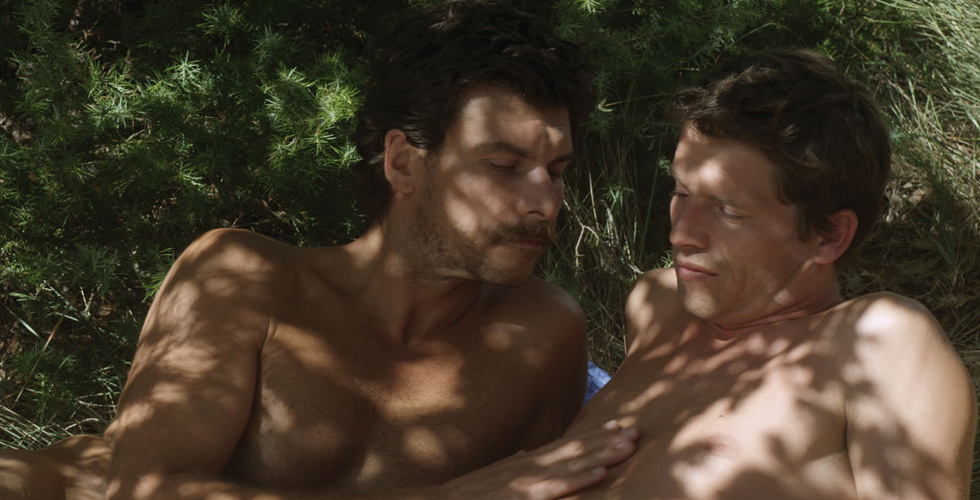
On November 7, the winner of the last Cannes festival, the three -hour love epic of Abladetif Keshisha “Adeli’s Life”, is released in the Russian rental. The super -emotional, naturalistically removed story of love and parting of a naive schoolgirl (and after - teacher) Adelie and artist Emma is full of frank scenes of lesbian sex and socially significant culinary rituals (heroines come from different social layers, but love smoothes Mesalyans). Keshish's film became an unconditional favorite Russian criticism, who did not notice (or simply ignored) another picture on a similar topic - “stranger by the lake” Alena Girodi, bashfully hidden by the qualifying commission in a parallel competition “Special View”. This much more chamber and in many ways an even more frank picture represents an alternative view of a relationship (in fact - not only homosexual ones). The weekly chronicle of the action-packed events taking place on a nudist gay fuel is a rather sarcastic statement of the impossibility of really close relationships (at least in gay-comic), although each frame of the “stranger” is literally scored by the scenes of intimacy in all possible poses and configurations. For obvious reasons (gay-porno scares heterosexual criticism more than lesbian-porn), the “stranger by the lake” remained the subject of admiration for the narrow circle of the Sinefils, who examined the fierce novel of the two naked men of a universal drama. Taking advantage of the reason, we resume the festival discussion about what is really heterosexual-gay triller Girodi or lesbian-epos Keshish.
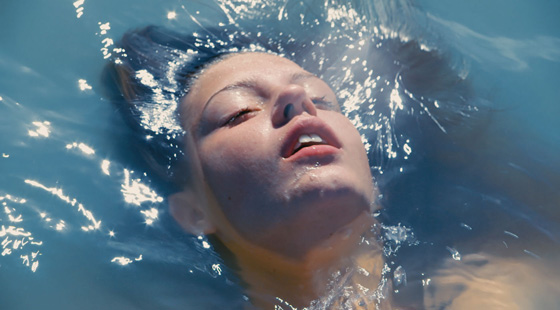 © Frenetic Films Frame from the movie "Life Adele"
“A stranger by the lake” Alena Girodi was the second event of the last Cannes after the “life of ADLEL”. However, “after” is not a completely successful word: in the conditional festival race, the Girodi film is also a gay drama, but with the murders-did not follow, but in parallel. As if from the wrong side of the festival, in the alternative contest "Special View". Keshish took home the main award of the main competition, the pleasure of which he was a lot of subsequent scandals, Girodi received a prize for directing and Queer Palme .
On the sidelines of the festival, there was talk about how lucky Keshisha was: the “palm branch” handed over to Spielberg to the anthem of lesbian love was, as it were, the final chord, the last argument in the fierce discussion around the Tibaya law about the same -sex marriages that unfolded in French society. The film was raised to the shield, declared a LGBT movement manifest. Two manifestos are always crowded in history, and the “stranger” remained, in the words of its author, “the ped-de-film for the do.” The society, busy with Keshish, did not notice Girodi, and only the Sinefilians like Luke Mullah sang a laudatory song to him - into the void.
“The Life of Adeli” and the “stranger by the lake” actually connects a lot, but even more shares. They have a common topic. Both stories, formally, being a lesbian drama and gay-drama, respectively, talk about the curse of love in general. The melodramatic line in them is absolutely universal, it can easily correlate with its experience and any heterosexual viewer. But the views of the two directors on the phenomenon of love vary dramatically: in both cases, the desire has a disease, but Keshish has a sacred disease that ennobles his carrier, erasing the difference between social strata (the director in every possible way emphasizes the class difference between the Adele and her mistress Emma), the girodi grins bitterly over the insuriality of the eternal dyspre love with ideal, asexual, and real love, which has become a desire - incurable and blinding, leading to self -destruction and self -abasement.
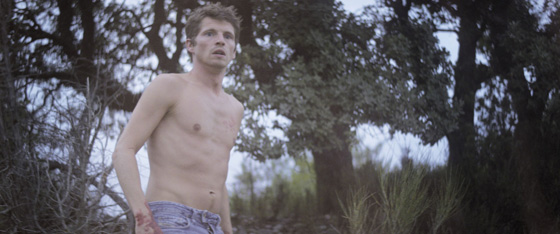 © Xenix Filmdistribution Frame from the movie "stranger by the lake"
Girodi and Keshish, social and career background, is also generally similar. Alain Girodi, a man of workers-peasants from the south-west of France, from the town of Vilfransh-de-Roerg, a region known to the narrow circles of cinema, the tradition of transgressive cinema-Estash, the brothers Larrye, Girodi himself, well, the young shoot that recently arose around the Middle Meter Festival in Briva. “Stranger”-his only secondly produced tape (the director was finally lucky to find a like-minded person, the widow of Maurice Piala, who was even able to connect the Arte channel to the project). Abladif Keshish is the son of emigrants from Tunisia, a man out of nowhere, also seems to be a representative of social lower classes, who has done a long and difficult path to the “ditch” (“l'esquive”) , the first work noticed by critics.
For Girodi, his proletarian roots (as well as his sexual orientation) is rather a source of eternal inspiration: what is there to be shy if fate gave you a chance to see the flaws of the world through the eyes of an insider? Class issues are of little concerned about him, because in love, as Limonov wrote, “men and women of one tribe, one genus - animal.” The heroes of the “stranger” differ from each other only by brands of cars, which they carelessly throw on the lawn near the nudist beach - otherwise they are equal and similar: naked, lonely, they are satisfied with fleeting sex with strangers.
But Keshisha class inequality does not give rest. It is an occasion for whining, idefix (even foods are in class relations in its film), a source of frustration; I experienced this frustration in my skin Lea Seydu on the set of "Adeli Life". There is some kind of populist messianism in all this. Keshish’s class background is part of the more general moralizing discourse, and he also does not speak about love, but preaches: loudly, with hysterical intonations of a street-horlopan street. But at the rally there are no halftones and nuances - and the film Keshish does not have enough polyothys, omissions. This is the main problem of "ADLIA LIFE"-discussing about something important and ambiguous the director turns into a road pointer.
 © Frenetic Films Frame from the movie "Life Adele"
He indicates, of course, to Calvary, because love for Keshish is almost a godfather, and sex is a fight with nothingness, filled with humanistic pathetics. Before us is an epic drama, a detached demonstration of human suffering - the heroes are writhe, as if they were frying over low heat. Keshish non -stop throws the viewer in close plans, knocks tears and snot out of actresses with a stick; This is not a School of Stanislavsky, this is the school of Grandfather Durov. Everything is very serious and straightforward, the director does not leave the viewer either for thought or doubt. The film has only one function - an illustrative, and the famous seven -minute hardcore between Lea Seydu and the exarpopoulos Adele - this is not an artistic, but political necessity. In the film about the same -sex love, tolerance can not be demonstrated without sex.
Girodi has a different approach, in a verse pragmatic. Polornographic plans below the belt in the “stranger” are also more than enough-in fact, the film begins with the full-Frontal of the director himself, who spent near the water (shooting the Hitchcock thriller, Girodi could not deny himself the pleasure of Camoo). There is a lot of sex in the film, but simply because there are a lot of it in life. It would be a pity to give sex to the random of pornography, let it stay better in the territory of love. Love, whose possibility Girodi is not at all sure. More precisely, this desire for love is unshakable and invulnerable, but love itself ... It is difficult for it to fight for her rights in the world, where the sexual revolution led to the complete alienation of man from man. It is so easy to reach the body of another today, but never to the soul - never. As one of the heroes of the "stranger" says, the antagonist Michel, a lover,-if you and I sleep together, this does not mean that we must have dinner together. But Girodi does not make drama out of the sad laws of life. His cinema is tragicomic, the whole pathos of a love intensity here is removed by Michel’s grotesque mustache. Beautiful and ugly, sublime and low in life - long -standing neighbors. Girodi settles them nearby already in his first work-a short film of the 90th year "Heroes of Immortal." An anecdote about two losers awaiting at night in a remote village the phenomena of poetry capable of illuminating their banal life suddenly develops into an existential drama.
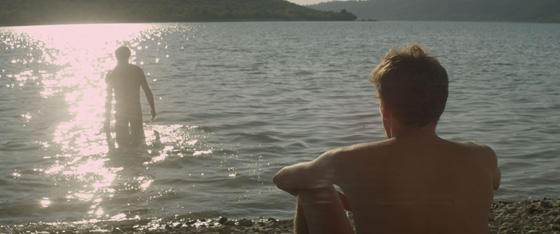 © Xenix Filmdistribution Frame from the movie "stranger by the lake"
The main trump card of the "stranger" is the same mock triviality, calculating modesty. Girodi is very accurate and stingy in his own means - just say that he uses a large plan (yes, mustache) only twice! Only then, closer to the second half, you begin to understand the whole poetry of the film, hidden under the waters of the lake, in the quiet surface of which is reflected and refracted at all conceivable corners, the unsteady truth of what is happening on the shore. Henry Toro at Walden wrote that the lake is the eye of the Earth. The endowment of the lake with anthropomorphic features and magical qualities is not uncommon in a romantic tradition, to take at least a “lake school”. Girodi, like a real romantic, is true for this tradition, for him the lake is a metaphor for a certain place of reflection in our soul. There we are absolutely honest in front of ourselves - but it’s hard to look there and reluctantly. The lake, whose strangers are fucking, is the border between gay-comet and the world of funny nuclear families (they bathe on the other side), and the dark whirlpool of desires, in which something terrible and unpronounceable is hidden (and this is not a som-human, legends about which the sunbathers retell to each other). Finally, the lake is an indifferent to human dramas and tragedies the reality that was before us and will be after - unlike the noise around the “golden palm branch”.