
Translated material
Non/Fiction-2013: What to see, whom to listen to?
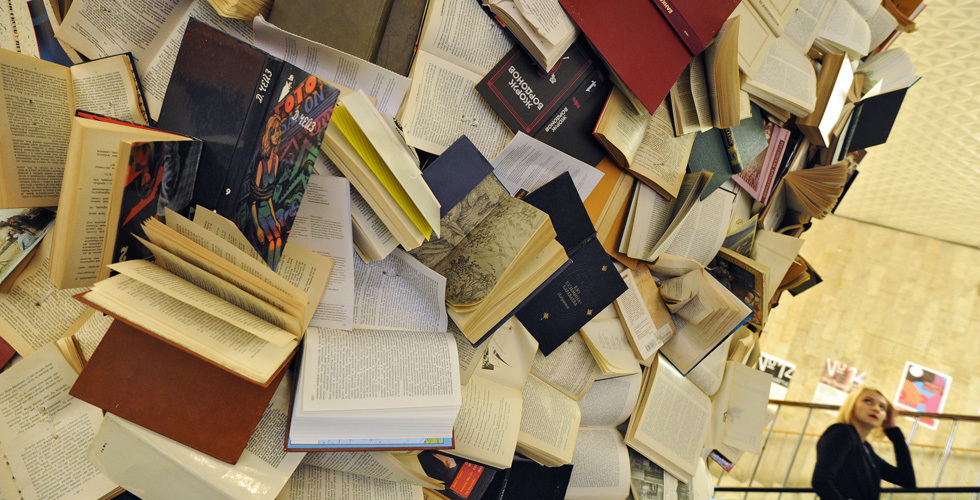
For many years, Non/ Fiction has remained in the fact of the most saturated and interesting book fair in Russia. Especially for her, publishers timid the yield of flagships and bestsellers, long -awaited books and surprises. Eminent guests from different countries come here, crowds of readers gather here. COLTA.RU prepared an overview of the most interesting events of the fair, which will allow you not to break between the stands - although, alas, without overlays it does not work: sometimes the most important presentations and discussions take place at the same time.
This year, the honorary guest of the Fair is Switzerland, and the program of numerous events related to it, Colta.ru published in a separate material . Non/ fiction has another special guest - the Netherlands; You will find events with the participation of Dutch authors in this review.
As usual, there will also be a lot of talk about the future of book publishing, its glorious prosperity or inglorious dying - for example, lecture by Su Dolanki on Electronic Books (November 28, Copyright No. 15, 17:00) and a seminar with the long name “Stimulation of book publishing and organizing translations into foreign languages of the work of the peoples of the Russian Federation during the implementation of the Federal Antimonopoly Service “Culture of Russia (2012-2018)” ”(on the same day and there, 13:00). In the literary cafe at the same time, minds will be gathered, deciding how to deal with piracy on the network. On November 30, the Readrate project will be presented at the fair; They promise "sensational statistics on reading in Russia, as well as unique book ratings based on exclusive data."
 © Yuri Martyanov / Kommersant
Artistic prose
Poetry
Actually non-fiction and science
Memoirist
Art and photography
Children's program
Magazines, lectures, discussions, awards
Artistic prose
Meeting with Japanese prose writers
November 27, 16:00, 17:00
Literary cafe
The first Russian translations of their novels to Non / Fiction came Kaga Otokhiko and Hideo Furukava - authors of different generations and different scale. Otokhiko is an 84-year-old living classic, the author of works about the history of the 20th century and the Second World War; His novel “Sentence”, telling about the painful life of a sentenced to execution in the cell of suicide bombers, was translated into Russian. The topic is not new at all (Hugo, Stephen King, etc.), but her Japanese decision is at least interesting. Hideo Furukawa is the author of a younger (born in 1966), who is focused, by his own admission, to the work of Haruki Murakami; His novel "Squirrel, Voice!" (The draft translation of the first chapter performed by another translator can be read here ). A professor at the University of Tokyo University Numano Mitsuyi and Russian literary critic Alexander Kantsev talk with writers.
The best novels of Northern Europe
November 29, 12:00
Author's hall, hall number 15
It is assumed that this will be a two -hour view/educational program dedicated to the main events in the latest literature of Norway, Sweden, Denmark and Finland; The cultural attache of the Embassy of Finland Helena Auto-Meloni and Russian translators participate. Surely this event will be interesting to both translators from the languages of Northern Europe and the readers who value this literature.
Presentation of the collected works of Varlam Shalamov in seven volumes
November 29, 13:00
Press Center
Without a doubt, one of the most important events of the fair. The new collected works, like the previous ones, were prepared by Irina Sirotinskaya - a literary critic and a friend of Shalamov, the author of memories of him. It was her that the writer bequeathed the rights to his works. Unfortunately, Sirotinskaya did not live before the seven -meter exit: she died in 2011. The meeting, of course, entered the whole terrible Shalamov classic - “Kolyma stories”, “glove”, “essays of the criminal world”; the story "Fourth Vologda" and the anti -Roman "Visher"; In separate volumes, poetry, essays and notebooks, correspondence are highlighted. For the researchers of Shalamov, apparently, the seventh will be the most interesting where rare publications from periodicals are collected, as well as previously not published texts (including only the recently found story “At Flora and Lavra” ) and materials from the FSB archive - that is, denunciations of the writer. Publishers indicate that, despite the fact that this is the largest collected works of Shalamov, he cannot be called complete.
Conversation of Konstantin Milchin with Herman Koch
November 29, 15:00
Seminars zone No. 1, hall No. 8
Herman Koch is a Dutch writer, the author of the seven novels (and “dinner” is not the last of them: the following, “Summer House with the Basin” has already been published in Russia); In addition, he released several collections of stories and essays. "Dinner" is a psychological satire; The time frame of the novel is really limited only by the dinner of two married couples in a restaurant. “The banal table conversation that has begun gradually develops into a drama, and terrible family secrets appear on the surface one after another: it turns out that the children of the audience are involved in a serious crime, and parents are discussing how to fragrance. A conversation with a prose writer is conducted by Konstantin Milchin, a member of the jury of the Nose Award and the literary observer of the Russian Reporter magazine.
In the ring of time. Presentation of the archival novel by Natalia Gromova “Key. Last Moscow "
November 29, 17:00
Author's hall, hall number 15
Natalya Gromova is one of the best researchers of the Soviet literary process of the 1920-1950s; Her books “Knot” (about the fate and friendship of Soviet poets) and “Goyage” (about how the Soviet literary life “divided” writers - on the example of critic Anatoly Tarasenkov) - fascinating humanistic works based on archival and memoir evidence. The Dilogy “Key” and “Last Moscow” was printed in “Banner” ( 1 , 2 , 3 ) - this is a nonlinear narrative in which the family chronicle is mixed with conversations, research, impressions of reading literary archives, thoughts about the Moscow culture that made up the soil of Russian culture. This Moscow is no more; The task of the archivist is to resurrect at least her shadow.
"I lived life ..." Presentation of the first edition of the letters of Andrei Platonov
November 30, 13:00
Author's hall, hall number 15
To attribute Platonov’s letters to non-fiction-the hand does not rise. The meeting of letters was prepared by the main modern publisher Platonov - Natalya Kornienko ; For publication and comments, many archival materials were attracted. It can be expected that the book is full of Platonov’s life: from letters to his wife ( amazing , who are even ashamed to read as if you are present at a sacrament) before a “repentant” letter to Stalin and appeals to the Soviet leadership with prayers to return the arrested son.
Presentation of the book by Elena Kostyukovich "Zwinger"
November 30, 14:00
Seminars zone No. 1, hall No. 8
Elena Kostyukovich is known primarily as a translator of all novels Umberto Eco. Published at Corpus "Zwinger" is its first artistic work. This is also in a sense “Archival Roman”: the hero discovers the memories of his grandfather, who found the great canvases from the Dresden Picture Gallery (Zwinger-the Dresden Palace in which the gallery is located). Further events acquire a detective continuation. The release of the book, as on purpose, coincided with the publication of information about one and a half thousand confiscated paintings of the modernists who found Cornelius Gurlitt in a private house . An excerpt from the novel can be read here .
Presentation of the book “French, drawn by themselves. Parisians "
November 30, 15:00
Press Center
Despite the fact that the book was released in non-fiction series, this is precisely artistic prose: “physiological essays” and stories about typical representatives of Paris-or rather, representatives. The completely original almanac “The French drawn by themselves” occupies several volumes, only “female” essays were selected for the Russian publication. From the book you can find out how the life of Parisian thrush, actresses, midwives, housewives, social lioness and others proceeded. Among the authors - both the journalists and the authors are not known to anyone today: Balzac and Jules Zhanen. Translations were made by the participants in the seminar of Vera Milchina, the author of the book “Paris in 1814-1848: everyday life” published in the same year. That book was included in the short list of the Enlightener Prize; "Parisians" can serve as an addition to her.
Presentation of the book by Dmitry Bykov “Quarter. Passage "
November 30, 16:00
Multimedia hall
What is it is difficult to understand. Dmitry Bykov was previously seen in literary mystiments (the novel “Onegin Code” under the pseudonym Brane Down, written in co-authorship with Maxim Chertanov-as it recently turned out , this is also a pseudonym), but here is something completely unimaginable: “Tens of publications in forty-seven countries were needed, the“ quarterly ”boom in the USA and Latin America, The conference in Oxford, so that the book published under the pseudonym Ivan Solution (Ivan Solution) attracts the attention of the domestic publisher and entered the native language. ” Ivan Solution does not find any writer either Google or Amazon; We also heard nothing about the “quarterly boom” in the USA. Maybe this is not the same bull at all? But it is unlikely that “AST” would be published by another, and the style is felt: see an excerpt on “reading” . Judging by this passage, in the period from July 15 to October 15 (next year?), The reader proposes to perform a certain sequence of actions for which, among other things, “a thing related to your mistake”, “a thing belonging to the deceased” and the “political map of the world”. Okay, intrigued.
Meeting with Martin Emis and Native Boman
December 1, 15:00
Seminars zone No. 1, hall No. 8
For the modern English classic, Martin Emis, Russia has always been important, although there is no need to expect any good words about it from him. Ned Boman is a young English writer, the author of two novels, one of whom received several awards, and the second was in the Long List of Boker. In the annotation on the Fair's website, the performance of writers is characterized as vaguely as possible: “They will share their experience and talk about the features of work in the genre of major prose.” Be that as it may, Emis knows how to speak alive; I had heard him in New York, and it was entertaining. Another opportunity to meet with Emis and Boman will appear on December 2 at the Pashkov’s house .
Poetry
Presentation of anthology Evgeny Yevtushenko “The poet in Russia is more than the poet” (1st and 2nd volumes)
November 27, 17:00
Press Center
Non/ fiction this year is few poetic presentations, but even if there were many of them, it would be worth mentioning the anthology of Yevtushenko. In 2013, a lot of Yevtushenko was talked about - in connection withthe award of him the “Poet” award and, of course, the film by Solomon Volkov. For Yevtushenko, the activity of anthologist is one of the key. There were already “stanzas of the century”, now “ten centuries of Russian poetry” are released, equipped with a new heading - the most famous line of anthologist; The selection of each author is accompanied not only by the essay, but also by the Evtushenko poem: here, for example, Naiman , but Lipkin . Before us is the project personal and self -affirmative, but at the same time claiming to draw up the canon and cultivation of youth; A noble desire to tell you about great poetry, but also a persistent desire to connect your name with every phenomenon. "E. Yevtushenko collected all the best that was created by the poets of Russia in its entire thousand -year history ”; I wonder if Vvedensky will be in the last volumes? And the Sun. Nekrasov? Did Yevtushenko devote to the poem and them? (Quite possible, by the way.)
"Poets and geography: we draw a poetic map of modern Moscow"
November 29, 16:30
Playground "Territory of Knowledge", Hall No. 25 (T-Zone)
The event is attributed to the children's program, but it will probably be interesting to adults (and maybe so: more interesting for adults). Poets of different generations are trying to define modern Moscow and with the help of their poems to draw a common map of the city. Mikhail Aizenberg, Dmitry Kuzmin, German Lukomnikov, Andrey Rodionov and Fedor Svarovsky are participating. Moderators are Linor Goralik and Masimo Maurizio.
Presentation of the book of Gintaras Patatskasa "Small Divine Co.".
November 29, 17:00
Literary cafe
Gintaras Patatskas - a Lithuanian poet and a prose writer, experimenting with various, including massive, genres; Anna Gerasimova (Umka) translated into Russian into Russian. In 1991, that is, in a completely different life, in the publishing house “Soviet writer”, a collection of Patatskas in its translations was published. The current bilingual edition is a poem. The presentation program promises tricks and dances. Here is one of the poems of Patatskas in the translation of Gerasimova ( along the link - the original):
Summer
I used to think and now weak
I feel everything from soup to dessert
And do not hide from that
who created the world in the image of the concert
He wanted to sound a saxophone
Bell bells of rattles
Scrap metal is a lot of megatons
The war passes to the guns
empty parade of inglorious changes
Masons in the sky mold pyramids
chewing sea stones Demosthenes
On the run from the overtaking femid
The gaze of the gaze in the ozone hole
You don't think but feel like a bird
So soon the fuss will end with the body
And summer will return to our village
Presentation of a poetic two -volume: “In the rooms of the gardens” Philip Zhakota and “Garden of the Universe” by Olga Sedakova
November 30, 17:00
Press Center
Olga Sedakova , the Russian reader, probably does not need to be represented. Philip Zhakota (b. 1925) is one of the most famous poets and translators of Switzerland, writing in French. Jakota and Sedakov are connected by a long -standing friendship, and a double collection (all the translations of the Swiss poet here belong to Sedakova) - confirmation of this. In addition to Sedakova, the artist Tatyana Yang and Boris Dubin, who also translated Jakota, will perform at the presentation.
Poetry of the XX century: from Koktebel to Chile
December 1, 15:00
Author's hall, hall number 15
The new editions of the Center for the Book of Rudomino will be presented here, and among them - the collection of poetic translations of Bunin and the bilingual collection of the classic of Chilean poetry Gonzalo Rohas (1917-2011; after his death, two -day mourning was declared in Chile). In Russia, Rohas has still translated little; A small “favorites” in the translations of Natalia Vanhanin was published in 2004. However, many Muscovites may know Rohas: his poems were printed on the walls of the “poetic” train in the Moscow metro . One poem by the poet with the Russian translation of Andrei Travin can be read here .
Actually non-fiction and science
Presentation of the book "City Movements of Russia in 2009-2012: on the way to political"
November 27, 16:00
Seminars zone No. 1, hall No. 8
The collection of articles, published in the “New Literary Review”, which quickly responds to political events: the book “Angry Observers” was published only a couple of months after rallies on Bolotnaya Square and Sakharov Avenue. The new book, compiled by the director of the Collective Action Institute, Karin Cleman, mainly tells about the experience of regional city movements; Many of them originated even to every marsh. These movements are listed in the passage on the UFO website.
Presentation of the book by Julia Strakovich “Digital. What happened to music in the 21st century "
November 28, 12:00
Press Center
Julia Strakovich is a sociologist of music and a culturologist. Apparently, her book is not devoted to that, it kills or saves the music “Digital Sound”, but how the modern musical market works, how it adapts to the situation when the huge majority of listeners download music for free. “Digital”, according to the author, gives rise to a “new economy, new morality and a new person”. The book will be presented by Artemy Troitsky.
Alexander Auzan about his new book "Economics of all"
November 28, 16:00
Press Center
The new book of one of the most authoritative economists of Russia Alexander Auzan was created on the basis of articles on the institutional economy published in Esquire magazine. Auzan writes: “It is necessary to rely on institutes”; At the same time, considering the company or the state institute, you should not exaggerate its reliability: “There are no firms, states and households - there are different combinations of people.” In the “economy of everything” that the reviewers are praised for accessibility and fascination, it is told about “why the world is a gathering of irrational and immoral opportunists and how to survive in such a world”; As much as you can judge, Auzan manages to make the reader have reasons for optimism. Two chapters from the book are available for free on Ozone.
Presentation of the book of Dick Swaab “We are our brain” and a conversation with the author
November 29, 17:00
Seminars zone No. 1, hall No. 8
The release of this book “Publishing House of Ivan Lumbach” has been announced for a long time; Now she finally appeared. Dick Swaab is the famous Dutch neurobiologist who studies both the development of the brain at the embryonic stage and the behavior of the brain that controls human life. One of the most famous statements by Swaab is about the absence of a person of free will; Roughly speaking, our brain makes a choice before its awareness occurs. Before going to the presentation, you can read an excerpt from the book “We are our brain” about the sexual differentiation of the brain : research in this area at one time led to the Professor of Swaab received threats from Dutch homosexuals, although it would seem that the book does not say anything offensive to them: the pr tendency to representatives of their gender is laid in the brain even until birth.
Conversation about Amsterdam
November 30, 16:00
Seminars zone No. 1, hall No. 8
Герт Мак — исследователь и популяризатор нидерландской истории, делающий в Нидерландах примерно то, что Питер Акройд делает в Англии; вполне логично, что в России и Акройда, и Мака выпускает одно издательство («Издательство Ольги Морозовой»). Книга «Амстердам: один город — одна жизнь» — это исторический путеводитель; история голландской столицы здесь прослеживается на основании архивных документов и свидетельств современников.
Презентация книжной серии «Тетрадки Gefter.ru»
30 ноября, 18:00
Авторский зал, зал № 15
Глеб Павловский отстранился от активного участия в политической жизни (или мы так думаем) и теперь выступает исключительно в роли эксперта по российской/европейской истории/историософии, а издательство «Европа», которое в 2000-е выпускало среди прочего литературу вполне агитационного свойства, кажется, окончательно сделалось «академическим». Будут представлены книга диалогов Павловского с Александром Филипповым, работа Славоя Жижека «Накануне Господина» — о будущем левого проекта в связи со все большей актуальностью радикализма — и книга Андрея Тесли «Первый русский национализм… и другие».
Презентация книги Ольги Розенблюм «“…Ожиданье большой перемены”: биография, стихи и проза Булата Окуджавы»
1 декабря, 16:00
Литературное кафе
Ольга Розенблюм — доцент РГГУ, директор Центра адаптации и обучения детей беженцев и вынужденных переселенцев — защитила кандидатскую диссертацию о ранней биографии Окуджавы; теперь выходит книга. Розенблюм интересны в первую очередь именно молодые годы Окуджавы, время становления тем и мотивов его поэтики; биография восстанавливается с помощью его стихов и прозы. Существует хорошо известная биография Окуджавы, написанная Дмитрием Быковым; в ней он ссылается на тогда еще не опубликованную работу Розенблюм. Теперь книга наконец вышла — и это очень хорошо: у нас есть две биографии Окуджавы, толкующие (в основном) о разных периодах его жизни — и толкующие по-разному.
Мемуаристика
Презентация книги Вадима Делоне «Портреты в колючей раме»
29 ноября, 14:00
Зона семинаров № 1, зал № 8
Вадим Делоне (1947—1983) — поэт, один из участников демонстрации на Красной площади 25 августа 1968 года . Его мемуарный роман «Портреты в колючей раме», повествующий о трехлетнем тюремном сроке, который Делоне получил за выход на Красную площадь, издавался неоднократно; в интернете его можно прочесть, например, здесь . Тем не менее новое издание — событие не рядовое, и купить эту книгу стоит. Кроме романа здесь опубликованы архивные документы, связанные с демонстрацией, и довольно много фотографий. Послесловие к «Портретам» написал Эммануэль Каррер, автор недавнего романа о Лимонове. На презентации выступят брат Делоне — художник Сергей Шаров-Делоне, режиссер фильма «Пять минут свободы» Ксения Сахарнова. Возможно, по скайпу скажут несколько слов здравствующие участники демонстрации — поэт Наталья Горбаневская (чью книгу о демонстрации 25 августа и ее последствиях «Полдень» тоже хочется горячо рекомендовать) и правозащитник Павел Литвинов. В конце презентации издательство Ad Marginem передаст «Комитету 6 мая» книги, собранные для узников Болотной площади, — можно ли зрителям поучаствовать в этой акции, к сожалению, не сообщается.
Презентация книги Олега Дормана «Нота»
30 ноября, 15:00
Мультимедийный зал
«Нота» — фильм, монолог дирижера и альтиста Рудольфа Баршая (1924—2010), записанный кинорежиссером Олегом Дорманом и затем превращенный в книгу. От книги Дормана ждешь многого после знакомства с «Подстрочником», одним из самых удивительных бестселлеров последнего десятилетия; по отрывкам в интернете ( 1 , 2 , 3 ) понимаешь, что ожиданиям суждено оправдаться. Устная история, монологи свидетелей века — вообще бездонный кладезь; замечательно, что это пользуется спросом. На сайте «Устная история» есть множество видеоматериалов, по увлекательности не уступающих монологу Баршая.
Презентация книги воспоминаний Антонины Пирожковой «Я пытаюсь восстановить черты. О Бабеле — и не только о нем»
30 ноября, 17:00
Авторский зал, зал № 15
Антонина Пирожкова прожила огромную жизнь — 101 год; три года назад она скончалась в США . В 1934-м она стала женой Исаака Бабеля. Спустя шесть лет Бабель был расстрелян. Пирожкова добивалась его реабилитации, занималась публикацией его наследия. В ее воспоминаниях рассказывается о времени жизни с Бабелем — и о времени запрета на упоминание его имени. «Не только о нем» — это и о тяжелой работе Пирожковой, которая была одним из ведущих инженеров, отвечавших за строительство станций московского метро. Из рецензии Михаила Визеля: «Автор одинаково ровно пишет о решенной в 14 лет сложной математической задаче; о том, как начальник Кузнецкстроя заставил ее работать у себя, просто запретив продавать ей обратный билет; о том, как Бабель предложил ей переехать к себе; о рождении дочери и о необходимости 17 лет жить в коммуналке с алкоголиком, за которым приходилось проверять, закрыл ли он газ. Это может казаться бесчувственностью, но нет — это просто твердая порода». Отрывок о встрече с Бабелем можно прочитать здесь .
Презентация книги Людмилы Улицкой «Детство 45—53: а завтра будет счастье»
30 ноября, 18:00
Зона семинаров № 1, зал № 8
Книга, составленная Улицкой, напоминает об еще одном проекте: сайте 050353.ru , запущенном к 60-летию со дня смерти Сталина. Если там смерть Сталина и реакция на нее — центральные события, вокруг которых разворачивается нарратив, то здесь годом смерти Сталина обозначается граница периода, за которым начинается уже другая жизнь. Характерно, что большинство респондентов Улицкой этого не осознают: книга состоит из небольших рассказов, полных бытовых подробностей и передающих в первую очередь ощущение — трудного, но детства (в котором детям приходилось заниматься совсем не детским трудом и принимать совсем не детские решения).
Искусство и фотография
Лекция-перформанс и презентация «Энциклопедии русского авангарда»
27 ноября, 17:00
Зона семинаров № 2, зал № 17
Давать какие-то прогнозы о том, как будет выглядеть лекция-перформанс художника-иллюстратора Александра Житомирского , я не рискну. Должно быть, это будет интересно; а вот об «Энциклопедии русского авангарда» , составленной Андреем Сарабьяновым и Василием Ракитиным, это можно сказать наверняка. Коллектив авторов работал над двухтомником более 12 лет и постарался систематизировать русский авангард во всех изобразительных формах; всего в энциклопедии рассмотрено более 1500 работ. Труд фундаментальный; пишут, что вскоре появится и третий том, «обобщающий».
Презентация книги Аркадия Ипполитова «“Тюрьмы” и власть. Миф Джованни Баттиста Пиранези»
27 ноября, 17:00
Авторский зал, зал № 15
Не позавидуешь тем, кто захочет попасть и на «Энциклопедию русского авангарда», и на презентацию Ипполитова. Новая книга автора прошлогодней «Особенно Ломбардии» посвящена истории замысла серии офортов Пиранези «Тюрьмы» ( Carceri) — мрачных архитектурных фантазий, рождавшихся в обстановке, когда отношение к тюрьме в Европе менялось, а идеи разумного устройства общества подвергались поверке скепсисом. Ипполитов читает офорты Пиранези как важнейший «культурный текст», оказавший мощное и подспудное влияние на европейское искусство и архитектуру; об этом влиянии — и выставка , которая открывается в Петербурге 3 декабря. Отрывок из книги можно прочесть здесь . Ипполитов доказывает, что работы Пиранези вызывают вполне определенные и современные ассоциации, и делает вывод: «мир Пиранези сегодня существует как факт».
«Маус» Арта Шпигельмана
1 декабря, 13:00
Зона семинаров № 1, зал № 8
О выходе по-русски «Мауса» написали, кажется, уже все на свете, и я не буду повторяться. В основу комикса легла история отца Шпигельмана, выжившего в Освенциме и Дахау; евреи, немцы и представители других народов изображены аллегорически — мышами, свиньями и так далее. На русский «Мауса» перевел Василий Шевченко, совладелец магазина комиксов «Чук и Гик», — и с этой удачей его можно только поздравить. Было бы здорово, если бы когда-нибудь вышел по-русски и «Метамаус» — подробная книга о создании «Мауса» и о реакции на него.
Children's program
Презентация книги Джованнино Гуарески «Сказка на Рождество»
27 ноября, 16:00
Зона семинаров № 2, зал № 17
Гуарески, один из известнейших итальянских писателей XX века, автор юмористических рассказов о священнике доне Камилло , сочинил свою «Сказку» в 1944 году в немецком концлагере. «Ее вдохновили три музы: Голод, Холод и Ностальгия. Я писал ее, скрючившись на нижней полке двухэтажных нар. Над моей головой, на верхнем ярусе, где жил Артуро Коппола, шумела музыкальная фабрика. Я отсылал туда свои только что вылупившиеся строки, голые, озябшие, и они возвращались ко мне одетые в мягкую и теплую, как ангорская шерсть, музыку». На русский «Сказку» перевела Ольга Гуревич. Отрывок из книги можно прочесть здесь . Книга будет также представлена 28 ноября и 1 декабря на детской площадке «Территория познания».
Практическая философия для детей
27 ноября, 18:00
Детская площадка «Территория познания», зал № 25 ( T- Zone)
Мастер-класс философа Оскара Бренифье, уже приезжавшего в Россию. Бренифье учит детей задавать себе разнообразные правильные вопросы (от «Что такое я?» и «Что такое добро и зло?» до «Почему я не делаю то, что хочу?» и «Почему я хожу в школу?»). Методика философа — помочь детям поставить эти вопросы и начать отвечать на них; такая майевтика для самых маленьких. Бренифье — автор многих детских книг , на которые, как говорят, большой спрос.
Разговор о книгах «верю / не верю»
28—29 ноября, 15:00
Детская площадка «Территория познания», зал № 23 (Детская зона семинаров)
Экспертный совет детской программы ярмарки говорит с детьми о том, чему мы верим и чему не верим в книгах. Теоретически это может быть очень полезный разговор — о разграничении правды и вымысла, о фантазии, науке и даже политике. В первый день разговор идет с младшими детьми (примерно шестилетними), во второй — с детьми постарше (лет одиннадцати). Третья встреча, для подростков от четырнадцати лет, пройдет 1 декабря в 14:00 в зале № 25.
Презентация литературного журнала для детей VINSKI
29 ноября, 12:00
Зона семинаров № 2, зал № 17
Финский журнал VINSKI занимает нишу, у нас, кажется, не существующую: литературный журнал для детей от 7 до 12 лет — то есть не журнал, публикующий собственно детское художественное творчество (такие есть — «Барсук» и «Стержень» ), а издание, помогающее читателям этого возраста ориентироваться в текущей словесности. Дети здесь пишут статьи и рецензии, интервьюируют писателей. На non/ fiction будет показан русский выпуск журнала .
Легенды и мифы московского метро. Встреча с Натальей и Василием Волковыми
30 ноября, 11:00
Детская площадка «Территория познания», зал № 23 (Детская зона семинаров)
Тема у книги Волковых «Метро. Подземный город» — самая выигрышная: какому ребенку не интересно посмотреть на огромную транспортную систему в разрезе? Что до легенд и мифов — их московскому метро тоже не занимать; романы и игры серии «Метро 2033» внесли сюда свой вклад. Впрочем, вряд ли авторам «Подземного города» придется рассказывать о гермозатворах, скорее уж — о работе эскалаторов. Родительские рецензии на книгу — в основном положительные; есть, правда, и те, кому книга показалась недоработанной.
Презентация книги «Денискины рассказы: о том, как все было на самом деле»
30 ноября, 14:00
Зона семинаров № 1, зал № 8
Книга, выходящая к 100-летию Виктора Драгунского, — «Денискины рассказы» с комментариями самого Дениски, ныне известного писателя Дениса Драгунского. Автобиографические рассказы Драгунского-младшего резко контрастируют с произведениями его отца; любопытно, что получилось здесь — не разрушена ли магия, интересны ли будут такие комментарии детям.
Встреча с Андреем Жвалевским и Евгенией Пастернак
30 ноября, 14:30
Стенд А-2, издательство «Время»
Встреча приурочена к 10-летию совместного творчества белорусского писательского дуэта. Жвалевский и Пастернак презентуют свою новую книгу «52 февраля» : «не совсем для детей, скорее для подростков». Из книги так и лезут приметы современности: анекдоты из «ВКонтакте» и щекотливость сексуального просвещения. Кроме того, 1 декабря в 13:00 Жвалевский и Пастернак проведут в «тинейджерском» зале № 25 конкурс «Смерть мертвым душам»: команды участников будут соревноваться в скоростном написании фанфиков по классическим литературным произведениям.
Презентация комикса Хэла Фостера «Принц Вэлиант во времена короля Артура»
1 декабря, 13:00
Детская площадка «Территория познания», зал № 23 (Детская зона семинаров)
Еще один знаменитый комикс, впервые выходящий по-русски. «Принц Вэлиант» , созданный Хэлом Фостером в 1937-м, выходит до сих пор — в октябре появился 4000-й стрип . Издательство Zangavar , известное выпуском оригинальных комиксов Туве Янссон, подготовило пока только один том фостеровских комиксов 1937—1938 годов. Вэлиант — придуманный Фостером рыцарь Круглого стола, и его приключения нарисованы с образцовой любовью к деталям. Комикс перевела Валентина Кулагина-Ярцева, что уже само по себе о многом говорит; может быть, никогда комиксы по-русски не изъяснялись таким звучным и богатым языком. Несколько русскоязычных страниц можно найти здесь .
Журналы, лекции, дискуссии, премии
Другой СССР: дискуссия на полях 11-го номера журнала «Знамя»
27 ноября, 16:00
Press Center
Очередной тематический выпуск «Знамени» посвящен советской эпохе и способам жизни в ней — в основном речь идет о жизни глубоко неофициальной. Помимо уже упоминавшегося романа Натальи Громовой здесь стоит обратить внимание на мемуары Александра Подрабинека «Диссиденты» и переписку Виктора Некрасова, Льва Копелева и Раисы Орловой.
Презентация первого номера журнала «Стасис»
28 ноября, 18:00
Литературное кафе
Из аннотации события: «“Стасис” — международный рецензируемый академический журнал по социальной и политической теории, в редакционную коллегию которого входят влиятельные интеллектуалы из Восточной, Центральной и Северной Европы». Главным редактором нового журнала стал философ Артемий Магун, декан факультета политических наук и социологии Европейского университета, и «Стасис» — именно детище этого вуза. В концепции журнала отмечается , что греческое слово stasis означает одновременно и «застой», и «революцию», что характеризует состояние современности. Миссия журнала — вывод российского интеллектуального письма на мировой уровень, преодоление интеллектуальной зависимости России и Восточной Европы; вероятно, решение сделать журнал двуязычным прямо связано с этой целью. На презентации в Петербурге Магун отмечал «подводные камни», связанные с изданием подобного журнала; возможно, эти же доводы будут еще раз проговорены на московской презентации.
Москва-2050: будущее города
29 ноября, 18:00
Зона семинаров № 2, зал № 17
Известные архитекторы и исследователи (Юрий Григорян, Григорий Ревзин, Даша Парамонова, Куба Снопек) говорят о том, какой будет Москва в середине XXI века. «Какого размера будет город? Что произойдет с историческим наследием?» — страшно себе представить; «Изменятся ли модель городского управления, городские функции?» — ох, хотелось бы. Прогнозы на полвека вперед редко сбываются в точности, но, с другой стороны, профессия архитектора предполагает долгосрочное планирование: скорее всего, от основных городских ориентиров москвичи и через сорок лет никуда не денутся.
Презентация журнала «Логос» (№ 3, 2013): «Теория большого сериального взрыва»
30 ноября, 12:00
Зона семинаров № 2, зал № 17
«Логос» — одно из ведущих философских/культурологических изданий в стране — впервые обратился к телевизионной поп-культуре в прошлом году, выпустив ставший уже знаменитым номер с блоком о «Южном парке» внутри и с Кенни на обложке. Презентация нового номера будет оформлена как «встреча анонимных сериалоголиков», которые признаются в своих guilty pleasures и заодно обсудят феномен возвышения сериалов — безусловно, важнейший в истории кино 2000-х—2010-х.
Лекция Михаила Ямпольского «Поэтика как модель истории»
30 ноября, 18:00
Мультимедийный зал
Михаил Ямпольский — это всегда интересно. В последние годы философа и культуролога занимают такие области, как история эмоций и история визуальности; в книгу «Пространственная история», изданную петербургским киноведческим журналом «Сеанс», вошли три его новых текста. Лекция приурочена к выходу этой книги.
Comment-party проекта «Эшколот» на тему: Сатана, Азазель и всякая другая нечисть
1 декабря, 14:00
Зона семинаров № 2, зал № 17
Проект «Эшколот», занимающийся просвещением в области традиционной и современной еврейской культуры, пригласил нескольких ученых, писателей, журналистов и художников к рассуждению о культурных образах Сатаны, Вельзевула, Левиафана «и прочей ближневосточной нечисти». В ЖЖ «Эшколота» перечислено несколько хрестоматийных текстов, о которых может зайти речь. Comment- party , видимо, предполагает скорее общение с залом и мозговой штурм, чем продуманные сольные выступления по теме. Среди участников: Линор Горалик, Станислав Львовский, Леонид Кацис, Мария Каспина. Для посещения дискуссии требуется онлайн-регистрация ; на сайте обещан привлекательнейший бонус: для тех, кто зарегистрируется не позже чем за три дня до события, вход на ярмарку non/ fiction — бесплатный. Сделка с дьяволом, натурально.