
Translated material
Nostalgia for the expert
On November 28, at the Non / Fiction International Fair, the Classic- XXI publishing house will present the book by Julia Strakovich “Digital. What happened to music in the 21st century. ” It sets out a chronicle of dramatic changes that have occurred over a couple of decades of the digital revolution with the recording industry, the musicians' shop, a community of journalists and consumers of their product. The book is about the crisis of the recording industry, about the war for copyright, about the split between musicians and listeners in connection with digital piracy, about the practices of micropatronage and crowdfunding, about the economy of the gift, about the viral birth of new stars, about the boom of love and musical overproduction. COLTA . RU represents a chapter from this book dedicated to a new function of criticism and musical experts. Printed with abbreviations.
An increasing number of specialists, and ordinary listeners are wondering: what if technology is not at all a solution to the problem of suppressing information noise? However, if not technology, then what? The answer suggests itself: if not technology, then, of course, a person . Longing for a living adviser, according to the person, by the personal beginning, is felt more and more distinct against the background of the rapid development of impersonal recommendatory algorithms. This longing breaks through now and then by taking the most naive forms-as in the Tastekid musical service, which called its filtration mechanism “Emmy” and presented it in the form of a painted girl, who, as if in a friendly manner, invites the user to pay attention to a particular artist. It is clear to everyone that the advice of Emmy is the same machine analysis, but still deal with a human being - albeit fictitious - it turns out to be much more pleasant than the recommendations displayed in the corner of the screen. It is even more pleasant if this human being is not a drawn girl, but a real figure with the name and authority in the musical world - and now Peter Gabriel becomes the face of the navigation service of The Filter . Of course, the service itself is a typical hybrid system, but this legendary musical person represents it in public space, discussing the two waves of the digital revolution: “ The first wave is freedom of choice, the second is freedom from choice ” [I] , and now it already seems that this is not technology, but he himself, using The Filter, gives this freedom to the listeners.
All the same longing for the adviser from the flesh and blood sounds in the revelations for which the author of the book “ Cult of The Amateur ” and a strict critic of Web 2.0 Andrew Kin called buyers at the final sales before closing the latter from the Mogican-music stores selling compact disks. “What will you miss? He asked. “After all, the choice on the Internet is much more.” “Sellers,” they answered him among other things, “local consultants who really love music, really know it and are always ready to help ...” [II] A threatening figure, scaring the beginners with his contempt for any incapable of pronouncing the name Furtwengler without a hitch, the disappearance of which Alex Ross was so happy, does not seem to be so infernal at all. People like to listen to authority, expert, specialist - and no analytical mechanisms seem to help them make up for the loss. So Kin himself echoes the same: “Artificial intelligence is a bad replacement for taste. No program can cause the unconditional confidence that we experience for the Financial Times (Financial Times) , A.O. Scott ( New York Times ) , Anthony Lane ( New Yorker ) or Roger Ebert ( Chicago Sun - Times ) - thoughtful, talented, backed up decades of learning and experience. No algorithm will provide no literary analysis that is in the texts of London and New York Book reviews, or those musical knowledge that can be found in the reviews of Rolling magazines Stone , Jazziz or Gramophone " [III] .
A longing for the authority of a professional is spilled in the air - and now the Mediaunbound hybrid is trying to combine traditional navigation algorithms with expert selection, and the MOG resource adds full -time editors, trying to imitate at least partly Rolling Stone and Jazziz ...
In the appeal in the realities of the digital era to the help of critics, editors and other figures similar figures, a clear contradiction literally screams about himself. The joyful exemption from the information barrier, the triumph of his own free choice, approved by the digital revolution, does not fit with the need for an expert who will show you the only right decision and explain everything. The expert seems to be part of the former, fading the media world. His omnivor, the installation of a good one from the bad, the great from mediocre is little acceptable in the conditions of the winning niche culture. His reputation is also soaked with engagement, a connection with the very vertical of the musical power, which by the end of the twentieth century became too strong, plunging criticism and musical journalism into the space of advertising and PR. The horizontal, egalitarian nature of the digital revolution rejected what was called the "dictatorship of experts" with enthusiasm. Yes, there were convinced elitars, following Andrew Keen, claiming that with the advent of recommendation - especially collaborative - expert dictatorship systems were simply replaced by "idiots dictatorship" [IV] . However, no matter what they say and no matter how nostalgic for a wise specialist in all, reality has changed irreversibly. This is best illustrated by simple statistics: ORPHEUS Research Media Research , which demonstrated such a clear discontent of the listeners with navigation services, nevertheless recorded: still rely on traditional media with their critics and authorities is ready to no more than 14% of music lovers [v] .
Artificial intelligence is a bad replacement for taste.
However, the same elitological model, as it turned out, can be organized on the new media post. At least PitchFork resource is a striking example of this. Initially, it was more like a variation on the topic of the next musical blog, but quickly grew to a large -scale platform representing the news, exclusive interviews, a lot of reviews - essentially became a network analogue of a large music magazine with a giant audience of 3.5 million readers per month [vi] . Its influence turned out to be no less gigantic - in PitchFork Media, critics with considerable success play the almost forgotten role of the runs of destinies. Their laudatory review of the debut album of Arcade Fire causes an explosive increase in orders for it, and the estimate of 0.0, set by the work of Travis Morrison , “ Travistan ” , leads to the collapse of sales and the artist’s entrance to blackclists of Internet radio stations. PitchFork assumes the expert’s function in the most traditional sense: he is not concerned about dividing into niches and makes judgments based on “good taste in general”; He is merciless to digital democracy, the wisdom of the crowd and other similar things. He always knows the correct answer and if the public gives the public the right to judge something himself, then only in a joke-as in the story with a review of Rainbows Radiohead , where an empty graph was ironically at the scene with a pop-up prompt “Its Up To You” -however, already with the second click of the change in the categorical “ case 9.3, of course. "
In essence, PitchFork Media is a typical hierarchical, vertical system. Despite his obvious inconsistency with the logic of a horizontal digital culture, he manages to be extremely popular, but it is precisely because of this inconsistency that he still inevitably becomes an exception than the rule. This, however, does not mean that the same exception is doomed to be in digital reality and the figure of the expert in itself. In fact, even discarding nostalgic sentiments and reasoning exclusively rationally, it will be necessary to admit: today's musical overproduction and information chaos make the need for examination more acutely than ever. That's just its role - and even the content itself - in the current conditions is seriously changing.
A musical expert, which so needs the digital era, is significantly different from the classical critic. It embodies completely different skills. Its authority is already determined not so much by the ability to express deep judgments about the most resonance phenomena of culture as the ability to find a pearl among a global information riosity. He is not so much a professional commentator as a professional musical “archaeologist” who devoted his life to listening to huge arrays of disordered musical material and having a unique property - the ability to not lose any interest, no taste, or intelligence.
An expert of a new type no longer seeks to explain, his task is not to help understand, but to help find. He is a guide of a person in the world of boundless information - “Information DJ”, as Yuri Saprykin called him. “ Life Jokey ” - as Peter Gabriel prefers to express himself. He filters, he rakes the stables. By the way, the same trends can be traced, it seems, almost everywhere. The reasoning of literally all - from journalists to artists - about the role of criticism in the modern cultural process is replete with mesh in the spirit today: “People who filter information flows and separating grains from the charters are now occupied by the place of critics, such as editors of art blogs. And criticism turns into a separate marginal type of artistic creativity " [VII] .
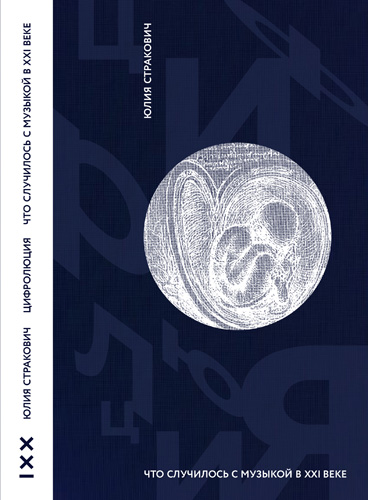 © Publishing House "Classics-XXI"
A person like Andrew Kin, who dreams of a professional explanation, a competent interpretation, such a turn of events will undoubtedly plunge into despondency. However, in general, there is nothing absolutely radical in it. A critic as a pioneer - the model is not that completely new, and experts who prefer it appeared not at all yesterday. “Who is the greatest musical critic in Russia? - asked at one of the public lectures Yuri Saprykin and answered himself: - Of course, Artemy Kivovich Troitsky. " [VIII] . And then he continued: “Who can recall the text that Artemy Kivovich Troitsky wrote for any musical occasion over the past twenty, ten years? There is no such text. The talent and power of Artemia just in the ability to choose and imagine that his audience should see and hear. He does not pronounce a large number of words, does not write long texts about music, while objectively and is certainly the best in his profession. There are really a lot of things that are easier to show what to tell. " [IX] .
In the same lecture, Saprykin tried to bring out a kind of formula for the ideal muscle of the digital era. This, in his opinion, is not the one who creates content himself, translating his understanding in the form of extensive texts, but one who, firstly, selects the content of the content and, secondly, spectacularly presents, animates it, thereby interested in the listener.
By the way, about the selection of suitable. The digital expert differs from the traditional critic in that it does not just filter, not just seeks a worthy, but is also guided in this search not at all the principle of universality, which determines what is good and what is bad for everyone. It completely and completely belongs to the era of a long tail, almost always based on the extremely specialized interests. He is focused on his own audience. At the same time, a specific way that he interacts with her can take a variety of forms-from a personal auditologist, where stories about the most interesting of the latest musical discoveries are regularly laid out, to no label or audio/video leadership. There are more and more similar stands today, and there are no lack of those who are ready to broadcast from them. The emergence of a community of musical experts of a new type is a long time not just a theoretical opportunity. It really exists - both as many enthusiasts acting on their digital venues, and sometimes even as a holistic system uniting loners in a large -scale network project.
A characteristic example of such an association is the Hype Machine resource, created in 2005 by the Russian emigrant Anthony Volodkin and is a space where information about hundreds of existing auditologists with a certain authority flows. Hypem . COM works under the slogan “Every day thousands of people around the world are written about the music that they love - and it all turns out to be here”, in fact, representing a full -fledged recommendation service that studies everything that musical bloggers who follow the latest updates of their pages, which collects links to the laid out MP 3 , and then gives their users the opportunity to meet them, listen to the radio stock, mark it as a radio record I like, etc. At the same time, although the Hype Machine has consolidated charts showing how often this or that track was added to the beloved in the last week or three days, the system offers not everything and not everyone - the same nichety and personalization plays its role here. In order to get recommendations, form his own feed of new music, each listener must first indicate his interests. At this stage, the system largely resembles a typical content filter that leads the search for formal parameters like genre belonging-only at the output the user receives an indication of not specific works and artists, but at certain blogs, that is, in fact, those experts, those “melody-diggers”, the opinion of which it would be worth trusting. The navigation model itself in musical abundance becomes a compromise here: on the one hand, the listener does not refuse freedom of choice - at least the choice of his own arbitrarily specific cultural niche, but he delegates the right to conduct further excavations in it - and this other is not an algorithm that automatically counts the data, but a person. A person who is enthusiastic, competent, capable of finding a standing, spectacular to submit it, and besides, by definition, the eliminated mechanical selection, like a cold start or inability to judge quality from the classic problems.
It is difficult to say how much such a balance between the vertical of professional criticism and the horizontal of the boundless democracy of the network is stable, however, it seems that it turned out to be at least in demand. The Hype Machine audience is growing day by day. And there are a great many other attempts to create a recommended service based on new experts today. In fact, such attempts have already formed a separate layer in cultural filtration - and the layer is by no means homogeneous. At least two main layers, two directions are easily distinguished in it.
A musical expert, which so needs the digital era, is significantly different from the classical critic.
The first combines the resources based on the fact that, no matter how far, the network expert is far from traditional critic, they should still become the original authority assigned to this role recognized as a recognized professional. In the balancing between the vertical and the horizontal, a larger roll is taken towards the vertical, a certain elitarism. This direction belongs, for example, Slacker . COM is a personalized radio similar to other similar projects on the proposed functionality, but completely different in its mechanism. Just like Pandora or Last . FM , it studies the taste of the listener, determines its niche, but then it issues recommendations, based on the opinions of specialists, with this niche closely related and deeply revered in it: those whom Slacker calls “Tastemakers” - “Taste lawmakers”. “Wave”-that is, in fact, the niche, called “Grange 20 years later,” is controlled by Marco Colinz, who was the Musical Director of the CNDD CNDD during the heyday of the grange in the 90s, at different stages, who worked with religious groups like Nirvana or Weezer , included in the rock and rolling hall of Glory. The Dubstep/Breaks/DNB direction is supervised by Pati Ben-the famous San Francisian producer and DJ. No less outstanding figures are also managed by the rest of the “taste sites”.
These figures, however, can be selected in a slightly different way - for example, in the project 14 Tracks are the same music store consultants, about the loss of which the interlocutors of Andrew Kin lamented. More precisely, one of the stores is a specialized online trader Boomkat.com . 14 Tracks itself . COM , while the resource is undoubtedly navigational, but arranged quite atypical. He does not so much give the user to find the best in his favorite niche as it helps to quench among the many niches - thereby the expert method. In fact, Boomkat consultants only once every one or two weeks offer a new selection consisting of 14 compositions, in their opinion, ideally-and in the best light-representing some extremely narrow genre. Everything seems to be extremely simple, but the help of the listener is great-instead of wandering in confusion among many tags of the letters of recommendation (“downtempo”? Or “Daunbit”? Or is Dab still?), He can, having spent quite a bit of time, even make an idea of the most exotic niches, to understand whether they are close to him, and if so, to find out where to start. 14 tracks of electronic jazz; 14 песен с нигерийскими корнями; 14 композиций, написанных под влиянием Анджело Бадаламенти; 14 микротональных произведений, понятных неподготовленному слушателю, — музыкальная эрудиция новых экспертов велика, а фантазия и вовсе почти безгранична.
Еще одна характерная модель применения навыков профессионалов в культурной фильтрации — практика музыкального кураторства, начавшая в последнее время набирать обороты в сети. Как правило, куратор — это авторитет, который приходит в тот или иной уже готовый проект, чтоб отбирать и представлять внутри него материал, заслуживающий внимания в первую очередь. Таким образом работает, например, The Free Music Archive . Сам по себе он представляет собой масштабную библиотеку независимой музыки, которая распространяется ее авторами бесплатно, а заодно — площадку для сбора благодарственных платежей и музыкальных краудфандинговых инициатив. FMA — не навигационный сервис, но исполнителей и произведений на нем сконцентрирована масса, большинство из них отнюдь не общеизвестны, и слушателю нужно как-то ориентироваться. Возможности для этого две: выбрать жанр, а затем поиски в нем вести самостоятельно — либо довериться мнению одного из приглашенных кураторов. Кого именно — можно решить по вкусу, на сайте их ровно 100, причем чаще всего это не конкретные люди, а целые музыкальные организации: радиостанции, культовые для определенного круга; небольшие концертные площадки, имеющие успех в определенной специализированной нише; клубы; популярные инди-лейблы из Америки, Европы, Японии, с Ближнего Востока. Диапазон кураторов широк: от организаторов крупнейшего фестиваля Primavera Sound до создателей программы камерной музыки в The Isabella Stewart Gardner Museum ; от HALAS Radio , вещающего из Израильского центра цифрового искусства, до блога Excavated Shellac , посвященного граммофонным записям фольклорной музыки со всего света. Каждый из них имеет свои приоритеты и свое видение того, каким образом должен фильтроваться музыкальный поток. Слушателю же лишь остается понять, чья репутация для него более весома.
В конечном итоге ни одна из сегодняшних возможностей и технологий вовсе не обещает идеальной работы и решения всех связанных с музыкальным перепроизводством проблем. Ни один современный фильтр-советчик — будь он программным алгоритмом или живым человеком — не может отсеять весь информационный шум и не упустить при этом ничего по-настоящему ценного. Но это, в свою очередь, вовсе не значит, что вся столь бурно развивающаяся система рекомендаций совершенно неэффективна. В сущности, идеально справедливый отбор — не цель, а утопия: к нему, так же как и к идеально справедливой экономике, музыкальная культура не приближалась никогда. Быть может, особенно далека от него она оказалась как раз накануне цифровой революции — во времена, когда фильтрацией заведовали едва ли не исключительно музыкальные иерархии. Что же до перепроизводства и погружения в хаос, то наиболее здравым, похоже, является взгляд, высказанный в свое время Андреем Гороховым: «Да, существует много музыки. Да, произведена масса хлама. И процесс этот неостановим. Но проблемы в этом никакой нет. <…> Невозможно знать всего? Но и не надо. Никто не знает “всего”. Хорошо бы знать “кое-что достойное интереса”» [x] .
Презентация книги Юлии Стракович «Цифролюция. Что случилось с музыкой в XXI веке» пройдет 28 ноября в 12:00 на Международной ярмарке non / fiction в пресс-зале ЦДХ .
[i] Цит. по: Kiss J. The Filter: Peter Gabriel hails online filtering service as digital 'life jockey'// The Guardian, 3 June, 2008. URL: http://www.guardian.co.uk/media/2008/jun/03/digitalmedia
[ii] Keen A. The Cult of the Amateur: How blogs, MySpace, YouTube and the rest of today's user-generated media are killing our culture and economy. London, Boston: Nicholas Brealey Publishing, 2008. Pp. 102-105.
[iii] Keen A. The Cult of the Amateur. P. 32.
[iv] Ibid. P. 35.
[v] См. http://www.cliomusic.com/are-music-recommendation-services-working
[vi] Официальная статистика Pitchfork Media: http://pitchfork.com/ad/
[vii] Алексей Шульгин, художник, руководитель мастерской «Новые медиа» Московской школы фотографии и мультимедиа имени Родченко. Cit. By: http://os.colta.ru/art/projects/160/details/21213
[viii] Цит. по: Юрий Сапрыкин: «Кого возьмут в будущее». URL: http://os.colta.ru/society/world/details/17429
[ix] Там же.
[x] Ответы А. Горохова на вопросы «Музыкальной газеты». URL: http://www.muzprosvet.ru/interview.html