
Translated material
Coroner: In Litvinenko, there are serious evidence against Russia
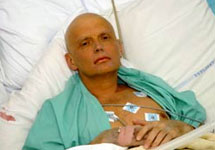
The British investigation has serious evidence of the involvement of the Russian authorities in the murder of a former FSB officer Alexander Litvinenko. According to BBC News , the corresponding conclusions of the coroner Robert Owen, leading the case, were published on Tuesday in the London court. At the same time, Owen finds no reason for the statements that the British authorities could prevent the death of Litvinenko.
At the hearing in the high court of London Ben Emmerson, the lawyer of the widow of the late Marina Litvinenko, again raised the question of a public investigation of the case. The refusal of the head of the Ministry of Internal Affairs of Teresa May to conduct such an investigation, according to Emmerson, "in a clear way contradicts the interests of society" and irrational from the point of view of the law.
At the end of November 2013, the British authorities completely classified the Litvinenko case . The high court of Britain canceled the decision of Owen, who was about to openly submit part of the documents on the case. The coroner claimed that declassification would make the trial "fair and meaning." Earlier, the British authorities refused to conduct a public investigation.
In December, the representative of the Litvinenko Foundation Alexander Goldfarb said that most potential experts and witnesses in the case evaded testified in court . The lawyer of the court Martin Lloyd Smith could not contact the professor of physics Norman Domby, who in 2007, at the request of lawyers, Marina Litvinenko, found that the Polonium-210, who poisoned the ex-employee of the FSB, was produced at the Avangard plant in Sarov. Smith was also unable to communicate with the American physicist Peter Zimmerman, who stated in an interview with the Russian origin of Polonia, and the ex-head of the nuclear security department of the IAEA Nielson, who, in position, had to engage in the Litvinenko case in 2006.
Historian Yuri Felstinsky, co -author of Litvinenko, based on the book "FSB, explodes Russia", according to Smith, agreed only if he was paid for this. The court rejected his proposal, as payment for testimony in court violates the legislation, but agreed to compensate to Felstinsky related to the trip. The historian refused to testify.
Also, former Soviet intelligence officers, Oleg Gordievsky and Oleg Kalugin, refused to speak in court.
Seeking by the Royal Prosecutor's Office of Great Britain on charges of the murder of Litvinenko Andrei Lugovoi and Dmitry Kovtun refused to answer questions of the lawyer. Lugovoi said that he did not intend to give any explanations and make any statements, and Kovtun said that he would testify within the framework of the video from the video.
Maxim and Walter Litvinenko, the brother and father of the deceased, also ignored invitations to testify in court.
Alexander Litvinenko, who left for the UK in 2000 and received a British passport in October 2006, died on November 23, 2006 in a hospital in the University College of London. After his death, the specialists of the British Health Protection Agency said that they discovered a significant amount of Radioactive element of the Polonium-210 in Litvinenko.
In October 2011, the Corror Court of the London district of St. Pancraz resumed an inquiry on the fact of the death of Litvinenko. Earlier, the Royal Prosecutorial Service of Great Britain said that he had enough evidence to charge the murder of Litvinenko to the former officer of the Russian special services, and by that time the State Duma deputy from the LDPR faction Andrei Lugovoi.
For several years, Russia refuses to extradite a meadow at the request of the British court. In March 2013, Lugovoi himself refused to participate in the London investigation, saying that he did not see the opportunity to achieve justice in the UK.