
Translated material
What to download this week?
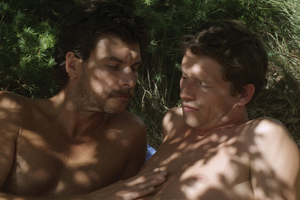
"Stranger by the lake"
Director Alain Girodi
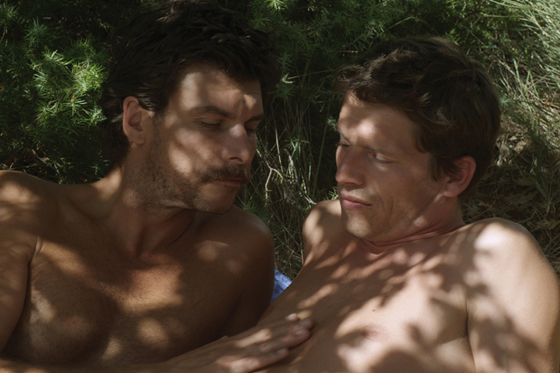 © Les Films du Worso
Six months ago, the “stranger” was still considered the Sinefilian alternative to Adeli's Life Keshish (the Cannes did not dare to put the picture in the main competition, and the “stranger” went in a parallel “special look”; more about this collision can be read here ). But over time, the hype and scandals subsided, and now it is already possible to say with confidence that the film is good in itself, outside the Cannes context. This is an ironic and at the same time rather sad observation of the life of a spontaneous gay-comic gay, which has developed on a nudist beach, has a universality that leads him out of the gay film for the Quire community. The chamber severity of mathematically calculated directing is combined in the “stranger” with frivolity in the show of sexual scenes, and a somewhat voluntarist and conditional detective tie - with extremely accurate observations of the nature of attraction (and incompatible friendship with it) in general.
“All the Heavenly Svets” (“All the Light in the Sky”)
Director Joe Swinberg
 © Swanberry
Once upon a time, the main amateur of the amateurish mubcor movement, Joe Swinberg turns into our eyes into a master of thin and accurate melodramas. “All celestial luminaries” is a less spectacular film than his recent Romkom at the Beaty Pibrick, but perhaps more suffered. The focus here is a forty -year -old actress, tormented by idleness in her coastal house. Possible roles, possible loves, barely outlined conflict with a person who had arrived to stay with a niece (also an actress) - none of this is materialized into action, act, event, but neither the director nor his heroine see anything terrible in this. Growing up, according to Swinberg, allows you not to take vanity and yourself seriously - a thought that would be expected from the author who debuted in the cinema scene of masturbation in the shower (with him in the main role).
"Blind Detective" ("Blind Detective")
Director Johnny, then
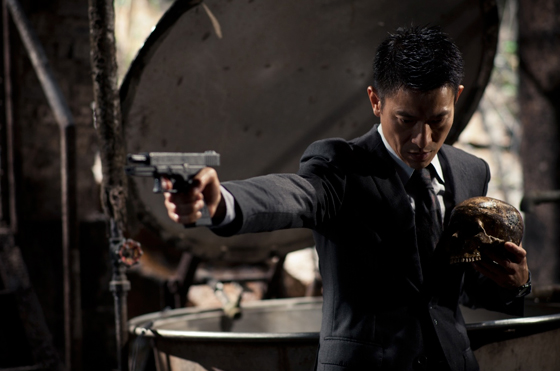 © China Film Co.
One of the most amazing films in the career of a master of gangster choreography is a hysterical slaptic, built that his main hero (played by Andy Lau Hong Kong Kong Kong Congon) is completely blind. Johnny did not disdain a comedic genre before - but in the Detective he builds it to the Absolute, proves that with the help of emphasized bad jokes about stench soup and the complexion of girls going to volleyball players, you can tell any story: for example, about the investigation of serial murders with dismemberment and cannibalism.
"SHILDA of StRAW")
Director Takashi Miika
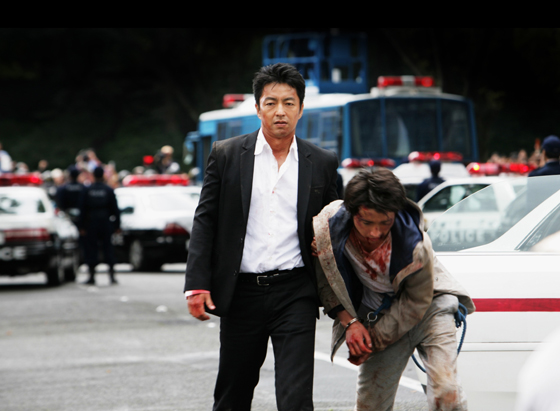 © Nippon Television Network Corporation
The serial killer wore the granddaughter of the richest man in Japan, and he in response declared a multimillion -dollar reward behind the criminal's head. The country announced the hunt, and now the fugitive is looking for refuge in the police station in a remote prefecture. Now he needs to be taken to court in the capital. Three context police officers take an oath of fidelity to the law and take up an almost impossible task-to make a maniac-man through a country where every quiet layman can be a killer. A typical conflict for samurai tragedies between a sense of duty and a sense of justice is of an excessive Dostoevsky character in Miik’s film: the criminal behaves defiantly, does not feel any remorse and strives to strangle someone else on the road, so the spirit is not a letter-the law requires his immediate liquidation.
Park Street ("Parque vía")
Director Enrique Rivero
 © Una Comunión
The touching postcard from the past is the “slow cinema” of the second echelon (however, notorious from the first), which took the main prize in Locarno six years ago. Everything as we once loved: the haircut of the lawn and washing of the windows in real time, socio-explorational problems, a little hellish sex, a little God. The action (more precisely, demonstrative inaction) of the film takes place in Mexico, in the walls of a frozen hotel, behind which the main character, a small man with large corns on his legs. To create some intrigue, we give out a spoiler-with a boring look of a caretaker there is one dream, which he will still take closer to the final.