
Translated material
Russia has no laughing
It has been exactly a year since the time that Ukrainians were recorded in the Nazis. In Ukrainian public opinion, a new trend. To scold Putin’s last words, not a Duma, not militants and the Russian army, and not even a slave Russian people as a whole, but just that part of it, which is not with Putin, and even with the people and the army about Ukraine does not agree. It’s not that their allies in Russia are independent people and unions areware areware - but those who are able to hear and convey. Reply not a cry to a cry, I am not a word to you, but you are two to me, but a thought of a thought. This is just not necessary.
In Ukraine, they write a lot in columns and social networks: what kind of muck is this “rain”, “echo” - the Kremlin litter, corrupt Venediktov, this immoral “elephant”, the fascist “Snob” and the imperial “Vedomosti”, the occupier Navalny, the aggressor of Khodorkovsky. Evgeny Kiselev, seven years as a Ukrainian TV presenter, hint that he is Moscow, but there is no trust in such. The Ukrainian publicist on the rain is a conversation in such a way as to wound precisely the audience and the leading “rain”: you think you are others, you are the same, you may be even worse. You, Russians, disguised as people, are worse than Dmitry Kiselev and Strelkov-Girkin, and you go to the marches not for peace, but for Parmesan. One of the main things that was heard from Ukraine this year: for us there is no difference between propagandists and honest, between the authorities and you, between ready to talk and hear and not ready. Those who hear this are offended and offended. The goal has been achieved.
What is the goal? Interrupt communication. Why are “pretending people” worse than Girkin? The fact that they hear and enter into dialogue. And this is not required. Do not need a dialogue. No communication is needed. We want to hear only ourselves. How to interrupt the dialogue? Send those who are ready for him through the communication channels insult.
In the same way: everyone watched, as not only young and old “psovalians”, but also smart, educated, able to figure out what, Russians repeat the same educated, subtly sensitive, modern Kievans: Nazis, Naziki, not a language, not a nation, not a country.
An insult to other people's ears and shower here is not a side effect, not a righteous anger that accidentally spilled over his borders. Not a indulgency of spirits. Very distinction. Just perfumes need to give a damn about the soul.
Old literature knew that curses at the hour of prayer are the best that blocked the communication channel with the creator of the sky and the earth. However, he and the Creator, so as not to pay attention to such trifles: the curses of Job were also perceived as prayers. But a man is weaker than the Creator: he gets worse for a prayer for prayer.
Our times are the times of insults and insults. The world is more complicated than two camps of the forces of light and the forces of darkness, respectfully communicating under the fear of mutual destruction and simply out of habit of this fear. But I do not want to understand the difficulties. I would like to justify myself, do and hear what you want.
Insulting and resentment is the best way to achieve this. The insult and resentment cover the eyes, cover the ears with righteous anger, indignation, and chagrin. Insult and resentment are used as a method of breaking communication. When the hearing of the interlocutor is open, but in his open ear, insults, ear and eyes are closing in his attentive eye. Just due to instinct (although with ears, of course, it is more difficult to manage). I don’t want to think about what I heard, I want to wipe and protect myself. There are not meanings in the memory, but the act of communication itself, after which you will see a napkin and say: “Well, have you seen? Well? Is it possible to talk to them about something? ”
If the parties do not want to hear each other, but cannot interrupt communication, because the set of their virtues includes openness, polyphony, the multiplicity of statements and opinions, it is conveniently effectively interrupted by communication, sending a spit on the communication channel. If the set of virtues attributed to themselves is the ability to listen to others, but I don’t want to listen to them, I only want myself, insult - the best way out of the situation.
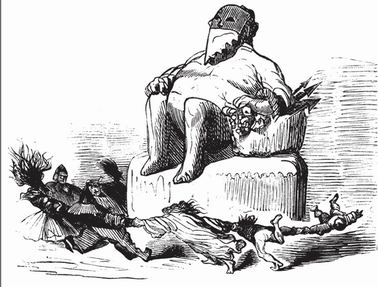
The heroes of the film “Assa” in one of the touching scenes communicate through the visualized communication channel - a cardboard pipe like a drawing tube - “Community Tyub”. Here, we are in touch, we hear each other, we understand each other, there are no obstacles. The insult sent to the community of Tube should score, shut him up, stop communication. To form a cork, while maintaining the visibility of the existence of the channel. Here he is, a channel, here she is - Tube, don't you see? But what is going on is not related to communication. This is its opposite.
Message, co-communication, involves communication. There is no communication, and co-communication cannot be conveyed.
He promised to listen - and do not want to keep your word? He promised to take into account another opinion, but if you want to adhere to the only right one? Sent through the communication channels insult. Well, you see, we ourselves said: we would be happy, but they, fascists, Bandera, rashists, imperials, goropa, hegemonists.
The whole communication of the parties to the main conflict of Eastern Europe and one of the main ones - the world is built on the exchange of insults - the harder, the better they work: Lugandons, Rashists, Hu@Lo, Rashka, Dill, Maidauna, Daunbas. Interrupt, interrupt communication. Shoot Tube as soon as possible.
Diplomacy of the 21st century
The insult is conveniently replaces, imitates communication when I have to communicate, but I don’t want to. And this is a situation of international relations, any diplomacy. There, of course, you can’t call the interlocutor a “drill”. But the norms of etiquette are so strict that polite, but a noticeable deviation from them will be very offensive.
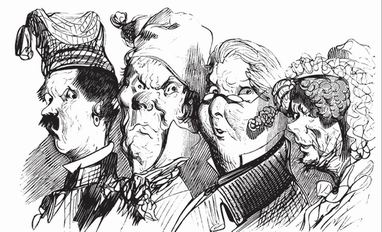
An anecdote about an experienced diplomat, who runs the note of the young attache “A dirty monkey is written through“ E ”and separately,” is almost literally executed in modern diplomacy. Of course, her diplomacy, language.
And then it can be seen that the insult is an extremely targeted thing. Boris Yeltsin insulted the Irish in 1994. At the airport in the wind-Prime Minister and other officials, including women, a path, flags, journalists, an orchestra, honorary guard. The plane sat down, Yeltsin did not come out. And Reynolds on board was not allowed to go up to save his face, to pretend that he had a meeting on the plane.
Or the same Yeltsin: in Sweden, at the reception of the king, with all the honest people, he began to marry the then candidate Boris Nemtsov’s successors to the Swedish princess, demanded that the shelter dance and kiss. And he wrote Sweden to countries that fought on the side of Hitler. And he said at a press conference: we will return the islands to the Japanese. Then they thought to all the Kremlin how to take this nonsense back. It was awkward and embarrassing, but did not worsen relations with the West. All these were very offensive things, but not intentional. Their victims were offended, they were at a loss. But no one spoke about this as the symptoms of confrontation and the signs of a new Cold War. A real insult is possible where the relationship is already bad. Putin may be more delicate than Yeltsin. But any of his jokes already falls on the bare nerve. The insult is always targeted. We can say the “goats” so that no one will be offended, you can - the “gracious sovereign” so that you want to call to a duel.
How many powerful spitting Putin sent to the Communication Tube - and about a grandmother who would be a grandfather, and by circumcision to journalists, and about the first wedding night, where the process is important, and not the result, about the fact that the Berlusconi would not have loved if he had not loved the girls, but the young men that the recently convicted President of Israel was raped, we raped the real muzhk, we were a real muzhk, we were a real muzhki, we were a real muzhk They did not expect this from him and we envy him. Here, however, there was an irony: we know these rape your rape - we wanted to put them for a policy, sewed a matter through women. But it is precisely this assumption for the country of Israel, its politicians, his ships and citizens that are even more offensive than offensive to women, and for noble men “well done man”.
Russian diplomatic rhetoric fluctuates between goats and gracious sovereigns, Western in relation to Russia - too. Putin needs to show the West that he is not alone, but the rest of the world that Russia and the West at least have disagreements, but relations are normal, workers. The West must show that nothing like this: abnormal. Therefore, the well -educated West is also proceeding to insults.
The Canadian prime minister gives a hand to Putin with the words “Sweep from Ukraine”, and his spokeswoman tells reporters about this. Australia Foreign Minister, the hostess of the twentieth, is thinking aloud through newspapers whether to call the president-the participant of this very “twenty” or not. Thirdestepic officials are sent to meet him. Sleep in a hotel, worse than those of dear guests. The laws of hospitality at such meetings prescribe the owners about guests and guests to respond well with each other, and this rule was broken. Although Putin was present personally, he was in the position of a man, about whom all the time they speak among themselves and with the press for the eyes in the third person. At the events they look unwell, go into groups without his participation, and he is looking for who to approach, or proudly floats past. Then he throws everything and leaves before everyone else, none of the major officials escorts him at the airport. He defiantly presses his hand to the policeman: I am with the peoples of the world, and not with politicians.
At first everyone went to him; But since the Don stallion was usually handed him from the rear porch, only along the big road they will hear their homogeneous drogi, - they were offended by such an act, all the friendship stopped with him. The channel is interrupted.
The era of insulted feelings
The Latin word for “insult” - Contumelia, is associated with the adjective Contumax and the verb Contemno, Con + Temno, C + Cut, almost literally corresponds to one of the Russian verbs with the meaning of the insult to “cut”. Greek Prosbole, from Pros + Ballo, to + throw, the prefix meaning the direction of action, and the verb “throw” are also clear in their internal form: to throw something into someone. He scornfully threw it. There are even Russian vulgar correspondences like a rude “sketch”.
Insult in Russian - according to the very structure of the word - something that should make a person feel sorrow. Sadness, longing, sadness. Latin and Greek talk about the insulting - about his action. Russian - about who has been insulting. About his feelings: about offended and offended.
The time of insults in Russia corresponds to the era of resentment and insulted feelings. Search for offenders and topics for resentment. Russian public speakers of recent years have been leading not only in terms of insults applied, but also in terms of the offenses recorded by them personally, Russia, Orthodoxy, our great history, national, religious, sexual and other best feelings. As a colleague Ivan Davydov noted, entire numbers of modern Russian newspapers, entire news releases can consist of public insults. "Today, deputy X was offended by ...". “The Governor Y was hit by a statement about ...”, the representative of the commission stated such and such that he was deeply offended by this and that, this one who was indignant, he had increased, he demanded apologies, she to call for an answer. Russian public speakers complain, indignant, grumble, puff up like a mouse on a cereal.
Their sensitivity increased unusually. Souls are thin like lace of delicate young ladies. Russia seems to them a place of golden, deceased place, but there should be neither sadness nor sighing. And once with a sigh - and this is easy for us - they require an answer. However, which of the sufferers to punish, and to whom to give satisfaction? Some suffer from the fact that Putin returned, others would suffer if he had left. I suffer greatly from the fact that the owners of Moscow apartments hang air conditioners on the facades of houses, depriving any architecture meaning. The owner of the apartment suffers from the fact that the neighbor has, but he does not have - and hangs his rusty suitcase next to the ionic capital.
Moral suffering does not depend on the act of dashing, but on the subjective perception of his actions to the victims, but this thing is shaky and indefinite. The category of moral suffering, firstly, is not quantified: how to measure them? Secondly, Nulla Poena Sine Lege does not meet the principle (“There is no crime or punishment without an accurate law”): a potential offender cannot accurately predict what his actions will deliver an insult to feelings. That is, this composition of the crime does not depend on the act, but on the subjective assessment of the victim.
Mr. Twizer with his wife, daughter and monkey suffered from the fact that they were in the same hotel, and even on the same floor, turned out to be a black man. "Where they rent out the numbers black, we cannot stay for a minute." Monkey, perhaps, did not suffer, but who asked her.
One suffers from the type of girl without a scarf and in a short skirt, the other from the fact that the girl dressed in accordance with the Orthodox dress code: eh, beauty disappears. Europeans suffer when they see minaret and women in their streets in the veil, and the husbands of women in the veil - from the fact that there are advertisements on the streets, and on advertising shoulders, speeches, candles and hips, hips around - and on every corner sits on the Frenchman, and everyone drinks burgundy. And the Frenchman drinking him suffers from noisy American tourists who are so stupid in his bistro Coca-Cola and their American coffee. Afghan Taliban morally suffered from the presence of gigantic Buddhas on their native rocks, all the rest - from their destruction. And here is the stop: in the second case, there is a fact of destruction -theity.
Religious suffering is generally an inexhaustible topic. A person who has never been churching, does not even imagine the degree of sensitivity and, accordingly, the ability to suffer, which the practitioner develops in himself. For a person who has come from the outside, - well, the temple and the temple, the service as a service. But in fact - no. Orthodox person in the temple is able to suffer from literally everything. From the fact that the priest gave the wrong exclamation or reduced something in the service, from the fact that they read slurred or, on the contrary, Russify individual words, from the fact that it is not according to the rank or, on the contrary, too much according to the rank. Fans of ancient Russian piety suffer from churches from lively -like icons of the synodal period, more similar to enlarged Catholic cards, and polyphonic Partesus singing, from choirs that roller composer concerts. Fans of the service, familiar from childhood, suffer from attempts to introduce elements of Christian antiquity into use.
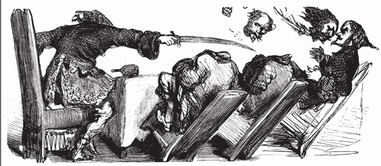
A zealous parishioner, as a rule, wears a certain ideal service, an ideal temple atmosphere in his soul. Only such is he ready to admit his and suspiciously refers to any other that seems to him a deviation. I have seen many such absolutely Orthodox people who are intently and prejudicely looking around in someone else's temple - is everything all right? Is there damage to piety? Is not the “non -exposure” here the priest, “Catholicofil”, “Private Uniat”, “sympathizing with the schismatics”, “non -Orthodox views”, is the Protestant of the eastern rite ”? Or, on the contrary, is it obscurantist, a fundamentalist and a Black Highway? And, in particular, I know many Orthodox Christians, who both the service and especially the palace atmosphere in the Cathedral of Christ the Savior cause significant moral suffering. Shouldn't Christians deceive each other? Or wait for common for all the Last Judgment?
This is in the walls of the temples, where worldly storms and passions should be less than in the world. And then what is happening behind their walls?
Lila, Lila! I suffer from an ugly longing, I languish, I die, go out of a fiery soul.
Here is the corpus delicti. We will dry only Lila or also accomplices - night, moon, lilac, rose, nightinga, light breath, trill, whisper?
The young Werther suffered very much. We will dry Froilyain Lotta. Achilles experienced moral suffering due to the taken captive of the Briseis. But it was necessary not to show off, not to arrange the sabotage of hostilities, which led to the death of a friend, but to send Agamemnon to the bunks. And in general - a gang of Hector on trial.
Adam and Eve lived well in paradise, but morally suffered from meaningless prohibitions. Is this a paradise or a colony for young offenders? And as a result, both exiled to hard labor using particularly cruel methods of punishment: “You will give birth to children in illness; In the sweat of your face you will eat bread. ” There is every reason to sue the creator of the sky and the earth.
The injured guard has problems with sleep, his defender says. Not his first.
It does not sleep, the nanny: it is so stuffy here! Open the window and sit down to me. Give me, nanny, I have a pen, paper.
Isn't it to write a complaint to the district prosecutor's office? A simple Russian Orthodox girl with family values suffers from the actions of the whip and cosmopolitan brought up by the Catholic abbot. Pushkin did not graduate from Onegin, but if the torment of the jurisdiction, in the last chapter Eugene, should be applied to the court for moral suffering, and General Gremin file a response for an attempt to destroy the centuries -old family foundations.
However, moral suffering is an inevitable and absolutely necessary part of human existence, the Condition Humaine in its purest form. In the Christian context, they can be considered a consequence of the fall, but then they are the very consequence that makes a person look around and understand that something is wrong with the world. Physical suffering for this is too rude a tool. Outside the Christian context, moral suffering is an important mechanism of creation, often its starting point. Moral suffering is the desire of something else that is not in the world-from God to the new technology, new music or a new poem.
And it is strange that the logic of atonement through suffering is touching officials and defenders of the Orthodox Great Russia applied exclusively to their offenders - let them suffer, sit, think and clean up - and do not apply to themselves. From the point of view of legal accusation of moral suffering, it seems to me much as doubtful, and from the point of view of the worldview, it is generally not good. No one promised Orthodox Christians life without suffering in the current century. Yes, and they themselves do they themselves feel at all without sin, which could be redeemed with some kind of suffering-at least exclusively moral, even a couple of sleepless nights?
Insult as a government connection
An insult may be that it closes the communication channel. However, in a paradoxical way, it can be what opens it - in the case when the bearer of strength and glory is addressed. This is his check for accessibility. Closes resentment, condemnation, repression, torture, execution or not. If not, then he hears and can talk to him. Antiquity knew and used such ritual triumphal insults with might and main. When Caesar was triumphantly in Rome, nasty things sang about him-as before about the consuls-victorious and legates, and after that about the emperors (though completely ritual).
Hide your wives: We lead to the city of bald lecherous. The money occupied in Rome, you damped in Gaul. Caesar conquers Gaulov, the nick -somede Caesar; Today, Caesar triumphs, conquering Gaul - Nicomed does not triumph, conquering Caesar.
What in later Europe was considered an insult to Majesty, that in Asia it would be punishable by a brutal execution in Rome was a form of exaltation. The nasty things sang about the winner in the triumph situation. Insult and honors, two extremes, converged. And the communication channel opened. I brought the winner to Earth. Do not arrive. He was able to listen to this, which means that you can listen to the rest - and the unpleasant truth and the request. "The boys took away a penny, led them to slaughter them, as you stabbed the prince Demetrius."
The same goals at the ritual of washing the legs with the Roman pope or the Patriarch of Constantinople, the same function in medieval jesters and holy fools. The communication channel, which could be interrupted by greatness, was opened thanks to the insult of Majesty.
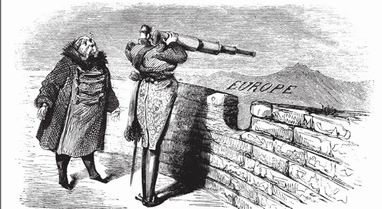
At first you will not notice, but in the modern world there are quite a lot of insults of the triumph. If we undertake to draw up a world map of correctness - who can be insulted in the world, and who cannot - it turns out that it is possible to be strong and weak. You can win the winners or those from whom, according to the totality of experience, they are waiting for victories. It is impossible for those in whom they see obviously losing side, the side, which is unlikely to master, overwhelm, will prevail. If we, Russia, claim the role of winners, of meaning, strength and glory, we must be prepared for insults. The winners are not judged, they are insulted. They are insulting for triumphs and Victoria - long -standing, new and simply potential, for having fun a brave Ross, but a brave American has fun no less. Insult - recognition of the defeat before reaching the ring.
Insult - a satellite of power
The peoples are divided into those that you can joke over, and those over which it is impossible. We, thank God, belong to the first.
In 1991, the Russian girl Lyuba married Pan Dziubinsky and settled in the Polish village of Storkovo, and in 2010 sued Tereza Zoliza for calling her a abusive word Ruska and lost. “This is a death sentence for me. My husband’s relatives will turn my life into hell, ”exclaimed Love Dziubinsk, leaving the court. “My path is far away, my path is heavy, my fate is terrible.”
In our “dear Russians”, Yeltsin put into circulation. And among the Poles we are called so for a century. Not only the country of Rosja, but also its inhabitants Rosjane, and our language is Rosyjski. (На правильном украинском, кстати, тоже будут росияне и росийска мова.) А слово ruski является, говоря филологически, пейоративом, то есть ухудшительным вариантом: можно сказать «еврей», а можно — «жид», можно «украинец», можно «хохол», одно будет нейтрально, другое пейоративно. А по-польски можно сказать rosjanin, а можно ruski.
Кстати, в английском кроме Russian есть слово russky, не столько оскорбительное, сколько звукоподражательно-ироническое. Впрочем, некоторые английские словари помечают его как offensive, оскорбительное. Для американцев правых взглядов оно звучит почти как commies (коммуняки). Наше начальство, может, про это не знало и называло «Русский дом» на зимней Олимпиаде в Ванкувере Russky Dom. А может, знало, но просто пошутило.
Кто сам обзывается, тот сам так называется. Сама ты, золовка, руска. И всей деревне сказать: «Сами вы руски. И мама твоя руска, и дедушка у тебя руски, и кот у вас еврей». А что еще им скажешь? Даже не жаловавший поляков Достоевский называл их просто поляками, в особенно ответственных сценах — «полячишками». Но это в литературе, а в народе как-то ничего такого нет. Есть слово «лях», но на прозвище оно никак не тянет, звучит почти респектабельно. «Кто устоит в неравном споре: кичливый лях или верный росс?»
Слова мигрируют из нейтральных в ухудшительные. Еще в XVII веке в русском языке слово «жид» было нейтральным (как в современном польском), а в конце XVIII столетия раввины обращались к матушке Екатерине, чтобы государство в отношениях с общиной его не использовало. Слово «негр» в английском и французском было нейтральным — стало обзывательством, за которое и срок можно схлопотать.
Слово Weib в современном немецком звучит примерно как наше «баба», а в XVIII веке означало просто «женщину» в ее, так сказать, гендерном отличии от мужчины. Das Ewig-Weibliche zieht uns hinan («Вечная женственность тянет нас к ней») — так заканчивал Гёте своего бессмертного «Фауста». И совсем не имел в виду «бабистость». Так слова расплачиваются за церемонность, которой был окружен в старые времена женский пол. Высокое хочется снизить, пафос сбить, чем выше забрался, тем больнее падение. «Никомед не торжествует, покоривший цезаря».
Сейчас ту же судьбу переживает слово Frauelein. Преподаватель латыни, уехавший в Германию, был срезан своей немецкой коллегой по кафедре: «Я же не называю вас «Херрляйн» («господинчик») оттого, что вы не женаты». А вот француженки любого возраста по-прежнему не против, чтобы их называли «мадмуазель».
Слово «руски», возможно, когда-то тоже не было обзывательством. Ruś и означало примерно то же, что Русь у нас — домосковскую и немосковскую Россию. Обидное «руски, руска» в Польше, кстати, одинаково может относиться к представителям украинского и белорусского народов. Слово «руски» — конечно, ругательное, но уж если поляк захочет как следует приложить москаля, то поляк, как и украинец, произнесет загадочное «кацап».
Польская история напомнила мне другую, которая произошла в конце прошлого года на дальнем конце света и потому не попала в наши новости, а зря. Осенью 2009 года новозеландское телевидение и радио лишилось сразу двух ведущих, вернее, одного лишилось, а другой вовремя покаялся. Журналист Майкл Соус в своем утреннем ток-шоу назвал генерал-губернатора Новой Зеландии сэра Ананда Сатьянанда «толстым индусом». В современной Новой Зеландии генерал-губернатор — безвластная представительская должность вроде президента в парламентских республиках Европы. На эту синекуру парламент избрал сэра Сатьянанда, политика из смешанной индо-фиджийской семьи, чтобы продемонстрировать расовый плюрализм и терпимость современной Новой Зеландии. Лоус же повел себя несознательно: он сравнил упитанного губернатора с Мистером Креозотом, отвратительным и прожорливым персонажем из «Монти Пайтона». «Он как-то не очень вяжется с нашим представлением об индусе. То есть я не хочу сказать, что все индусы попрошайничают на улицах Дели, но тут прямо как будто человек добрался до шведских столов лет в 20 и с тех пор так оттуда и не уходил», — весело щебетал Лоус в шоу «Доброе утро».

А ведь буквально за день до этого с гостелевидения Новой Зеландии TVNZ уволился ведущий тамошнего утреннего ток-шоу Breakfast Пол Генри. В Новую Зеландию приехала из Индии министр Шейла Дикшит готовить Игры Содружества (бывшего Британского содружества) в Дели. Во время своего телезавтрака Генри несколько раз на все лады смачно и ухмыляясь произнес ее фамилию именно так, как она читается английским глазом и слышится английским ухом — Dick Shit, дик шит, дерьмовый хер (вместо того чтобы корректно произнести его как-то вроде «Диксит», как оно звучит на хинди). То есть поступил ровно так, как поступает весь российский МИД и все российское ТВ с госпожой Псаки, которая на самом деле произносится «Саки» с долгим «а», по тем же правилам, что psalm или psychology.
Пол Генри заметил по ходу: «Я узнал про нее несколько дней назад, и с тех пор мне весело, но ничего, нормальное имя, она же из Индии». А там, ясный shit, полно алмазов в каменных пещерах. «К нам приехала госпожа Говнохренова, нет, ну послушайте, ничего страшного, вполне нормальное имя, там у них — в Индии. Я узнал про нее недавно, и с тех пор у меня хорошее настроение». Так это звучало бы в исполнении Сергея Доренко, местной разновидностью которого является Пол Генри.
Министерство иностранных дел Индии выразило протест по поводу этого «расистского и нетерпимого высказывания». «Шокирует, что такие некорректные взгляды звучат в эфире ведущего СМИ в многонациональной демократии, какой является Новая Зеландия. Такие реплики абсолютно неприемлемы и должны быть осуждены всеми благонамеренными людьми и нациями», — говорилось в заявлении МИД Индии. Должны — значит будут. Премьер-министр новой Зеландии назвал этот эпизод в эфире «печальным и достойным сожаления».
Оба новозеландских ведущих известны самым неформальным стилем ведения эфира, за него и любимы. Лоус, как и Генри, несут забавную чепуху на грани грубости обо всем и обо всех на свете — своих и иностранцах, и прежде всего о белых новозеландских политиках. Но именно реплика про толстого индуса удостоилась специального осуждения со стороны премьера, и Лоусу пришлось извиниться, хотя руководство радиостанции его поддержало, а Генри (за которого тоже сперва вступился его канал) — и вовсе уволиться.
Если бы Лоус и Генри шутили про британцев, про русских или про американцев (не афро) — этого бы никто не заметил. Про японцев — пожалуйста. Вот был ресторан «Япошка», стал «Япоша», но вроде бы японское посольство тут ни при чем. Пьяный русский, англичанин с лошадиными зубами и жирный янки попали на необитаемый остров. Над испанцами тоже можно, только так, чтобы это не приняли на свой счет эмигранты из бедных латиноамериканских стран. С китайцами уже сложнее. Вроде бы всех обошли, а могут обидеться. Не отошли еще от прошлого бессилия. А с африканцами, арабами, иранцами, индусами и прочими представителями развивающихся стран — с ними только серьезные отношения с целью брака. Представители бывших угнетенных народов лишены равноправного места в мире, а тут еще разные юмористы это будут подчеркивать. Кому смех, а кому и грех.
Однако благодаря усилиям борцов с оскорблениями помимо их воли складывается вот какое уравнение. Когда они борются с шутками против себя, они ведь консервируют то состояние, против которого восстали Махатма Ганди и его наследник Джавахарлал Неру и остальные борцы с колониализмом, угнетением и неравноправием.
Это ведь над убогими смеяться грешно, над обиженными и обделенными, над униженными и оскорбленными. И вот индийцы кричат на весь мир: «Над нами смеяться грешно». И заставляют повторить это и новозеландского премьера, и СМИ со всемирной аудиторией.
Степень национального достоинства народа измеряется не числом выигранных процессов и не количеством запрещенных к употреблению слов, а способностью к самоиронии и спокойному восприятию шуток над собой.
Нормальный, не чересчур испорченный идеологиями англичанин, итальянец, немец и сам пошутит над собой и своим народом, и не обидится, если это сделают другие. А вот индус (мексиканец, африканец) может обидеться не только на прозвище, он может обидеться просто на слово «индус». И даже представитель великого, всех затмившего Китая может обидеться на слово «китаец».
Да, скифы мы, да, азиаты мы, да, руски мы, да, кацапы мы, да — Плюшкин и Обломов, Чичиков и Хлестаков, преступление и наказание, волки и овцы, Чапаев и пустота, Чук и Гек, человек и кошка, Бобчинский и Добчинский. Хорошо смеется тот, кто смеется над собой.
Хорошо, что верная Люба проиграла суд пани Дзюбинской. И хорошо, что МИД России не направил по этому поводу ноту протеста в Польшу. Это значит, поляки смотрят на нас не сверху вниз, а как на равных и даже наоборот — как на тех, кого надо срезать. Польский суд подтвердил, что Россия, слава богу, находится в числе наций, в отношении которых можно шутить.
А вот наши публичные спикеры, наши государственные журналисты, наши депутаты, министры, дипломаты хотят прервать это блаженное состояние. Хотят превратить нас в тонкокожих индийцев, в бывшую колонию: в людей, которые, оскорбляя сами, обижаются на любую шутку. Из сильных сделать слабыми, обидчивым, убогими.
Кстати, сам Путин (и его бесчисленные говорящие отражения) оскорбляет Украину, потому что здесь проигрывает, вернее не выигрывает так, как ему хотелось, по собственному плану. И Прибалтику — потому что хоть и мала — под натовским зонтиком вне досягаемости для его победы. И Европу, потому что знает, что она в действительности — не то, что он про нее говорит, а несмотря на все кризисы и все сексуальные свободы место по-прежнему сильное, экономически развитое, удобное для жизни, с хорошими продуктами, ухоженными стариками и твердой валютой. Так вот ей!
Оскорбление — спутник триумфа. Обида — спутник поражения. Самая оскорбляемая в мире страна — Америка. Потом Англия и вообще Западая Европа. Израиль — в третьем мире и среди левых. Россия — в Восточной Европе. Китай и Япония — в Восточной и Юго-Восточной Азии. Самые обидчивые и они же самые оскорбляющие — бедные страны третьего мира, молодые нации и государства, бывшие колонии, народы без государств. Кружевная обидчивость наших официальных спикеров находится в абсолютном и непримиримом противоречии с их же претензией на силу, славу и значительность России в мире.
Нация малая и слабая обижается, средняя — оскорбляется, посылает ответные оскорбления обратно или другому, более беззащитному адресату, сильная — отвечает на оскорбления подчеркнутой вежливостью. «Что это там шумит в прихожей, Бэримор?» «Москва-река, сэр».