
Translated material
The investigation of the death of Litvinenko will be carried out publicly
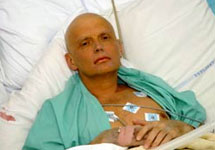
The British government will conduct a public investigation (Public Inquiry) of the death of a former FSB officer Alexander Litvinenko. This was stated by the head of the British Ministry of Internal Affairs Teresa May, reports the BBC.
One of the main objectives of the investigation is to find out whether the Russian authorities are involved in organizing a crime. According to British analysts, the investigation can even more complicate London’s relationship with Moscow.
“Cynicism, lies, treachery, meanness,” the main suspect in the case of the murder of Litvinenko Andrei Lugova commented on the decision of the British authorities. “The British Femida pulls out the business of Litvinenko from the sleeve precisely when political expediency comes,” said the meadow Interfax. “Now, in connection with the current situation in the southeast of Ukraine, the West increases pressure on Russia, personally to the head of state Vladimir Putin.”
In February, a collegium of three judges of the high court of London satisfied the complaint of the widow of Litvinenko Marina about the government’s refusal to investigate the role of the Russian authorities in the murder of her husband. May decision not to conduct a public investigation in the Litvinenko case recognized the court insufficiently reasoned.
In a public investigation, the coroner Robert Owen, a leading court inquiry, also insisted on a public investigation. The court admitted that Owen brought good arguments in favor of such an investigation.
At the end of January, in the high court of London, the conclusions of Owen were published on the involvement of the Russian authorities in the murder of Litvinenko . According to the coroner, the inquiry has convincing evidence of this. Then Marina Litvinenko’s lawyer Ben Emmerson once again raised the question of a public investigation of the case.
At the end of November 2013, the British authorities completely classified the Litvinenko case . The high court of Britain canceled the decision of Owen, who was about to openly submit part of the documents. The coroner claimed that declassification would make the trial "fair and meaning."
The public investigation was refused even earlier. In July, Mai Owan’s letter was published, in which the head of the Ministry of Internal Affairs, explaining his decision, referred, in particular, to the factor of “some foreign partners” of Britain. At the same time, May assured that this factor was not in its decision neither the only nor key.
Alexander Litvinenko, who left for the UK in 2000 and received a British passport in October 2006, died on November 23, 2006 in a hospital in the University College of London. After his death, the specialists of the British health protection agency said that they discovered a significant amount of radioactive element of the Polonium-210 in the deceased body.
In October 2011, the Corror Court of the London district of St. Pancraz resumed an inquiry on the fact of the death of Litvinenko. Earlier, the Royal Prosecutorial Service of Great Britain said that he had enough evidence to charge Litvinenko to the former officer of the Russian special services, and by that time the State Duma deputy from the LDPR LUBUSY faction.
For several years, Russia refuses to extradite a meadow at the request of the British court. In March 2013, Lugovoi himself refused to participate in the London inquiry, saying that he did not see the opportunity to achieve justice in the UK.