
Translated material
Without “long” money
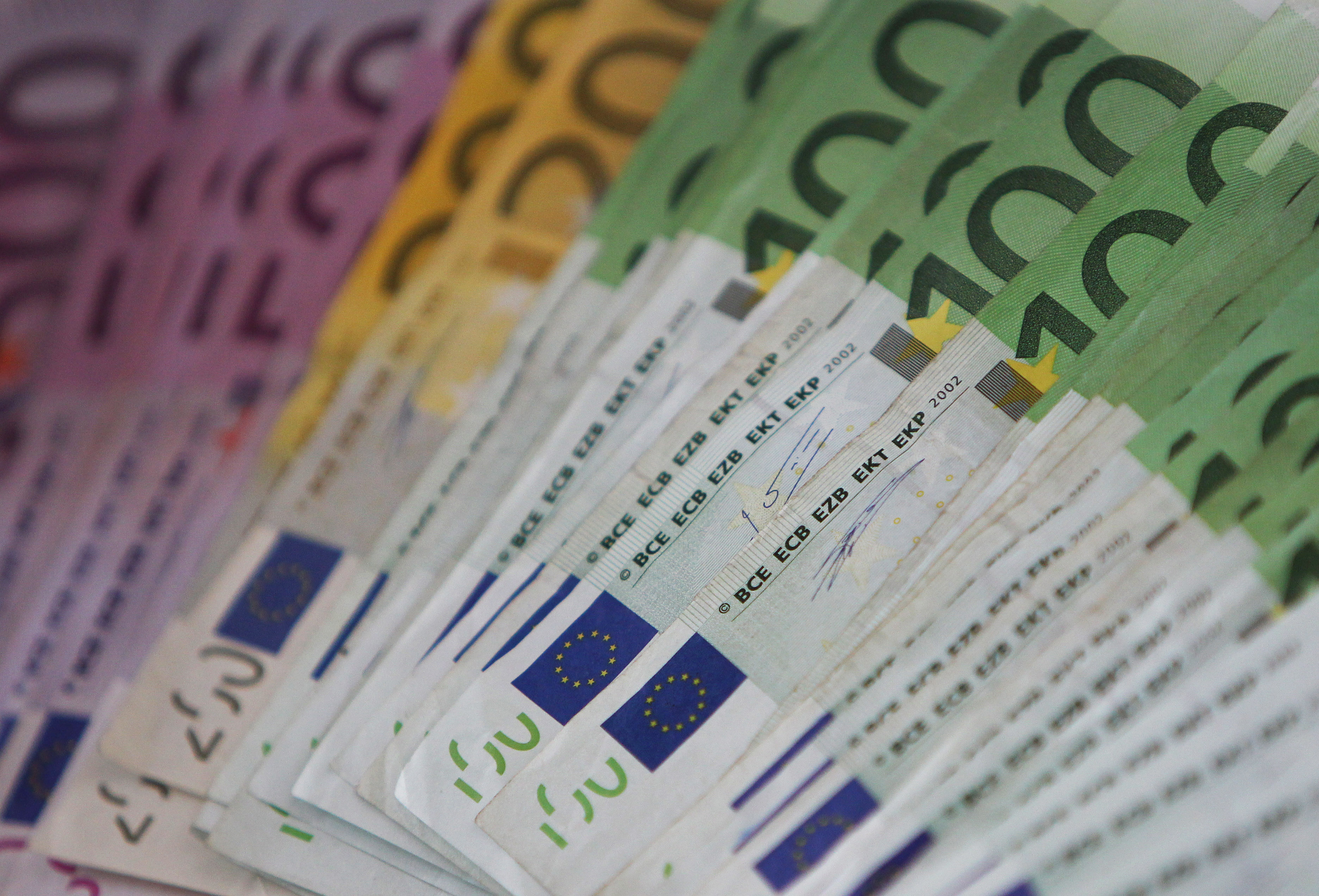
Russian companies, if Western debt markets close to them, will remain to be hopeful for the state. Like five years ago ...
The expansion of Western sanctions, similar to those that the United States was introduced last week with respect to four large Russian companies and banks - Rosneft, Novatek, as well as Vnesheconombank (VEB) and Gazprombank, can deprive a large business in the country of the usual source of long -term borrowing, and medium and small businesses - affordable financing of local banks. The domestic debt market of Russia, approximately coinciding in volumes with foreign bonds of Russian companies, offers them only 4-5 times more “short” borrowings. And in its current form, if the western markets close, it is unlikely to “digest” the sharply grown domestic demand for borrowed funds.
The consequences of the closure of international borrowed capital markets Russia, like many other countries of the world, fully experienced at the peak of a recent global financial crisis. Moreover, the closure of almost instant - in a matter of days after bankruptcy in the United States, the Lehman Brothers investment bank in mid -September 2008 .
The world debt markets, which have become in the pre -crisis years of economic growth for thousands of companies in many countries of the world the usual and seemed inexhaustible source of cheap loans, went slammedly in front of them. There was no money not only for new projects, but even to refinance already accumulated debts.
Thus, all three main components of the economic growth of Russia will suffer, which can easily drive the Russian economy into a recession.
In 2009, Russian companies and enterprises had to pay approximately $ 100 billion only on the account of the current service of their external debts, mainly dollar and short -term. And against the background of the follow -up of the ruble, this turned out to be much more difficult to do this than only a year earlier.
Back in the fall of 2008, the government announced that it would provide Russian companies and banks - not everyone, but corresponding to certain criteria - $ 50 billion precisely in order to help them hold the necessary payments in 2009 to serve their current external debt. However, from this money, companies and banks received only 11 billion, after which they actually turned the program.
In 2009, Russia's GDP collapsed by almost 8%, industrial production was 9%, and the investment of companies and enterprises in its own development is almost 15%.
Today, in the case of the West, in the case of broad “sector” sanctions , that is, blocking access to Western debt markets not to individual companies and banks, but already entire sectors of the Russian economy, especially financial and oil and gas, the effect may turn out to be comparable to the one that manifested itself as a result of the 2008-2009 crisis, the main economist of the investment company believes “BCS” in Moscow Vladimir Tikhomirov . It recalls that both of these sectors not only generate most of the profit throughout the Russian economy, but the main part of the country's external corporate duty is also concentrated in them.
The “information effect” associated with sanctions already imposed or possible is manifested not only in Western debt markets, but also in Russian.
“Moreover, many of these debt obligations - relatively short -term, requiring refinancing,” continues Tikhomirov. “And if foreign debt markets for the companies of these sectors will close, they will most likely have to turn to the state for help, since the domestic debt market in Russia itself is not comparable with foreign ones.”
Apparently, the largest companies and banks, which today have the opportunity to occupy abroad, can count on direct assistance to the state, like five or six years ago. Accordingly, all the rest that occupy money in the domestic market will be faced with tightening the conditions of new financing.
Many Russian companies, average in terms of business and even very large, but not related to export, are traditionally focused on the domestic loan market, Tikhomirov agrees. According to him, these include the company's consumer sector, mechanical engineering, construction, as well as small and medium financial companies and banks that are not able to place their own debt obligations in foreign markets and therefore focus on internal borrowings. “It is clear that in the conditions of the closure of Western debt markets, this domestic market can be“ overheated, ”says Tikhomirov.
Asian vector
The financial sanctions of the West, if we allow the scenario of their widespread use, theoretically Western markets are limited, leaving open to Russian borrowers, again - theoretically, markets of other countries of the world, primarily in Asia. Although the question remains open to what extent those local financial companies and banks that have their own business in Western markets - in the USA or Europe will be ready to borrow the money by the Russian borrower?
In the form in which this market exists today, “digesting” new volumes of demand, especially for “long” money, it will be very difficult
In theory, Russian companies, of course, can consider the issue of reorientation to Asian debt markets, but in practice the scale of such operations is still too small to fully compensate them for falling funding in dollars or euros, said Dmitry Dudkin, head of the Discolitical Markets of the Uralsib Capital investment company. Russian banks, for example, have already placed their bonds in Asian currencies. But so far all these borrowings have not exceeded several percent of the total amount of debt obligations of the banking sector.
Or, recall, the same “Rosneft” was able to attract large “pre-export” financing in China in order to repay short-term loans taken earlier to pay for the purchase of shares of the TNK-BP oil company, Dudkin continues. But all these examples, in his words, are only some special cases. The development of the “Asian” area of financing of the business of Russian borrowers is the issue of the next 5-10 years, but not the next year or two. “For the time being, it was not necessary to say that the Asian markets could seriously compensate for, if it comes to that, falling out funding from the West.”
Even now, after such a sharp last fall, many Russian bonds are traded at prices above the previous, March levels.
Finally, the transition from some debt markets to another “under pressure from circumstances” may have a very real price. New creditors, realizing that the borrower has no choice, predictably laid this circumstance to the interest on the loan, addicting its subsequent service.
Indeed, if Russian borrowers are forced to leave Europe and the United States markets to other regions of the world, such a transition is unlikely to do without increasing the cost of borrowing, the analyst of debt markets from the investment and financial house “Capital” in Moscow Vladimir Kharchenko . Much, of course, will depend on how vast sanctions can be in terms of Russian companies and which countries they will affect. But, probably, in the Asian markets, the opportunity to occupy in the same volumes that they are used to in the Western markets will not have Russian companies.
“Another thing is that Russian companies have no urgent need for new foreign loans today,” continues Vladimir Kharchenko. “Many Russian borrowers, especially large ones, current loans are relatively“ long ”, and the process of their service is stretched in time.”
Debts and payments
The total external debt of Russian non -financial sector companies by July 1, 2014, according to the Bank of Russia, amounted to $ 443 billion. On the expense of servicing these debts, they have to pay $ 58 billion in the second half of the year, that is, 13% of the current amount of debt.
Russian banks have accumulated external debt for $ 206 billion, according to which from July to December it is necessary to pay $ 26.5 billion, that is, about the same 13%.
In the case of the West, sanctions against entire sectors of the Russian economy, especially financial and oil and gas, the effect may turn out to be at least comparable to the one that was manifested as a result of the 2008-2009 crisis.
It so happened that 2014-2015 is generally not very burdensome for Russian borrowers abroad, from the point of view of the volume of upcoming repayments, says Dmitry Dudkin. For example, for those four companies that have already fallen under US sanctions, they amount to $ 15 billion a year. Moreover, the main part of these payments is on the debts of Rosneft. Accordingly, Novateka, VEBU, and Gazprombank, repayment will come significantly smaller.
In principle, the same can be said about many other Russian companies, the expert believes. The fact is that in 2010-2012 they made a lot to restructure their debt portfolios, their general “lengthening”. And now, according to our estimates, even if the sanctions will completely block Western financing to Russian borrowers, in the next two years they will cope with the service of accumulated debts, Dmitry Dudkin continues. “But if access is really blocked, this will certainly lead to an increase in the outflow of capital from Russia. And then the maintenance of accumulated corporate debts will occur largely due to the reserves of the Central Bank, which in this case can be significantly reduced in the next two years.”
It is clear that in the conditions of the closure of Western debt markets, this domestic market can very quickly be “overheated”.
The introduction of the United States of restrictions on attracting long -term borrowing (for more than three months) in the American market for four Russian companies immediately affected the current market quotes of debt obligations and other Russian borrowers abroad. In particular, bonds of the banking sector fell strongly, Vladimir Kharchenko explains, although this is partly due to the range of the deadlines for their repayment: the further it is, the stronger the current falls of the quotes of these papers are. But in general, the wave of “correction” went through bonds of almost all Russian issuers, including the Eurobonds of the state.
It should be borne in mind, however, that the quotes of many Russian bonds have grown significantly for the preceding the introduction of sanctions for several weeks - after they fell very much in March. That is, the current correction began with levels of much higher than four months ago.
“Their recent growth was so strong that many issues of Russian debt papers not only recovered after the March fall, but“ left ”much higher,” Kharchenko continues. “Therefore, even now, after such a sharp last fall, they are traded above the previous, March levels.”
Domestic market
The scenario of a possible expansion of Western sanctions to “sectorals” suggests, in theory, the switching of Russian companies now borrowing abroad to the domestic, Russian debt market. Interestingly, these markets practically coincide in their total volumes. As Dmitry Dudkin notes, the accumulated volume of the domestic bond market in Russia is almost $ 200 billion in terms of recalculation, and the accumulated volume of Russian bonds located in foreign debt markets is estimated at about the same amount.
The development of the “Asian” area of financing of the business of Russian borrowers is the issue of the next 5-10 years, but not the next year or two. In the meantime, it could not be used to say that the Asian markets could seriously compensate for, if it comes to this, falling out funding from the West.
However, according to the conditions, they vary strongly. If in foreign markets the most characteristic period of placing debt obligations for Russian borrowers is about 5 years, that is, quite sufficient to create mechanisms for the debt refinancing, then in the domestic market-only 1-1.5 years, Dudkin explains.
Significantly expand the current capabilities of the domestic debt market could be focused on the actions of the financial authorities. Among these, for example, the implementation of a certain Russian version of “quantitative mitigation”, according to the model of Western countries. For example, the Central Bank itself or a certain state -created financial structure purposefully redeems bonds produced by Russian companies, or invests in large infrastructure projects, which will attract borrowed funds, predicts Vladimir Kharchenko.
According to him, such measures would give the Russian debt market to some extent to adapt to the surge of domestic demand for borrowed money if the Western markets close for Russian borrowers. “But in the form in which this market exists today,“ digesting ”new volumes of demand, especially for“ long ”money, it will be very difficult,” said Kharchenko.
Even if the sanctions are completely blocked by Western financing to Russian borrowers, in the next two years they will cope with the service of accumulated debts.
In principle, the option of replacing foreign exchange debt obligations of Russian companies with ruble, if the Western sources are closed for them, and Dmitry Dudkin adds as the most realistic for them. However, the domestic debt market, according to the mood of investors on it, is very dependent on external conditions. Therefore, for example, the “information effect” associated with sanctions already introduced or possible is manifested not only in Western debt markets, but also in Russian.
If we keep in mind any significant replacement of foreign exchange obligations of Russian borrowers with ruble, most likely, you can’t do without the support of the Central Bank, says Dmitry Dudkin. Although the release funding will be replaced, in the inevitable additional issue in this case, of course, will manifest itself in the rate of expansion of a monetary proposal in the country. “This, in turn, will accelerate inflation and put pressure on the ruble .”
If the access is really blocked, this will certainly lead to an increase in the outflow of capital from Russia. And then the maintenance of accumulated corporate debts will occur in many respects due to the reserves of the Central Bank, which in this case can be significantly reduced in the next two years.
To weaken such an effect, the state will have to save on something. Including, apparently, on some social expenses and salaries to state employees, which will become an additional brake for domestic consumption-in addition to the inevitable tightening of the conditions of bank lending in the country, both companies and individuals.
And if companies also lose the opportunity to refinance their debts from foreign sources, or these opportunities will be at least limited, they will have to serve already accumulated debt from their own revenue - naturally, to the detriment of any investment programs, Vladimir Tikhomirov adds: “Thus, all three main components of the economic growth of Russia will suffer, which can easily drive the Russian economy into the recession ".