
Translated material
How to fix the spinal cord
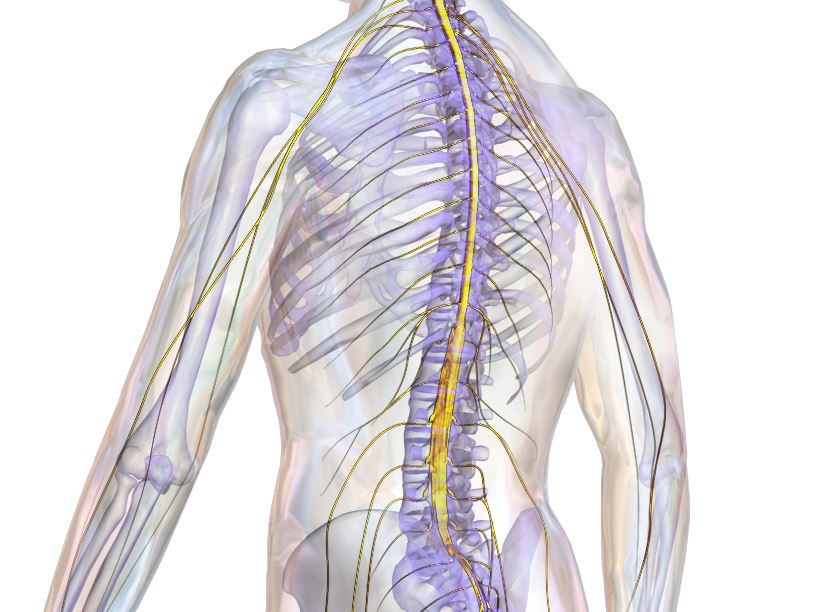
The original method of treating damage to the spinal cord is offered by scientists from California. The method consists in inhibiting a protein active in the neurons of the spinal cord, which should allow them to begin to grow again, and the introduction of salmon fibrin into the spinal cord - an insoluble protein that could form a frame for the growth of new neurons.
In order for the multicellular organism to be alive, healthy and worked as expected, it is necessary that all the cells of this organism are subject to a single plan. For example, most cells, perhaps, besides epithelial cells and blood cells, should not be shared slowly or at all. In a recent work, it was shown that the rapid increase in the number of neurons leads to a person who has forgotten previous events. That is why, according to the authors, people remember little of the first few years of their lives. The loss of memories is not the worst thing that can happen due to too active cell division. Malignant tumors usually grow from cells, which, thanks to the mutation, have learned to share and grow faster than they were supposed.
In order for the cells not to be divided too fast, they look after several different mechanisms. One of these mechanisms is launched by a protein called PTEN . PTEN is phosphatase, that is, an enzyme that can delay the phosphate group from proteins. As a rule, the accession of the phosphate group makes the protein active, and the delay - inactive. By their nature, phosphatase is opposite to kinaza, which attach a phosphate group to proteins. The complex multi -stage cascades of chemical reactions in living cells lead to the fact that kinase accelerates the growth and division of cells, and phosphatase is slowed down. The fact that the increased activity of kinase can lead to the formation of tumors, and how they try to deal with this, can be read in our material about tyrosinkinase inhibitors. Thus, PTEN phosphatase ensures that cells do not share too quickly. Mutations that make it less active, completely inactive or simply absent in a cage are found in many malignant tumors. For example, in 70% of cases of prostate cancer, at least one copy of the gene is inactive or absent.
On the other hand, theoretically current state of science allows you to disconnect any gene temporarily and in a limited number of cells. And this can even help fight serious diseases.
Damage to the spinal cord can have very serious consequences. Since the signal is transmitted from the brain along the spinal cord to all other organs, if it is damaged, it turns out that the signals stop entering the nerve fibers below the damage site. This leads to paralysis and the loss of conscious control over your own body. The situation is complicated by the fact that neurons of the spinal cord are normal in an adult, therefore, do not have the ability to regenerate.
Gale Lewandovsky decided to check whether the neurons would begin to share if the PTEN is turned off in them, which usually responds in the cells for not sharing. Road experiments were successful: neurons really began to share.
However, to get the cells that consists of an organ, in a Petri cup, does not mean making a new organ. In addition to the cells themselves, it is also necessary to recreate its three -dimensional structure. Typically, such a structure is laid even at the stage of embryonic development in the interaction of cells of different types. In the nervous system, where the connections between specific neurons are especially important, the spatial structure is of particular importance. Then the protein of fibrin came to the aid of scientists. Fibrin is the main component of the thrombus. This is a long polymer fiber formed when stitching monomers - fibrinogen protein molecules. It is insoluble and has a certain rigidity. In an earlier study, the authors showed that it fills the cavities well formed with damage to the spinal cord.
This time, the researchers came to the conclusion that if you turn off the PTEN and introduce fibrin at the same time, rats of the front limbs are restored in rats, which was absent due to damage to the nervous system. Such recovery did not occur when using these approaches individually.
Further, scientists would like to find out whether such treatment helps only if it is used immediately after damage or it will be possible to help patients who have long been injured and suffering from its consequences.