
Translated material
Maxim Russo: Zika fever
Maxim Russo 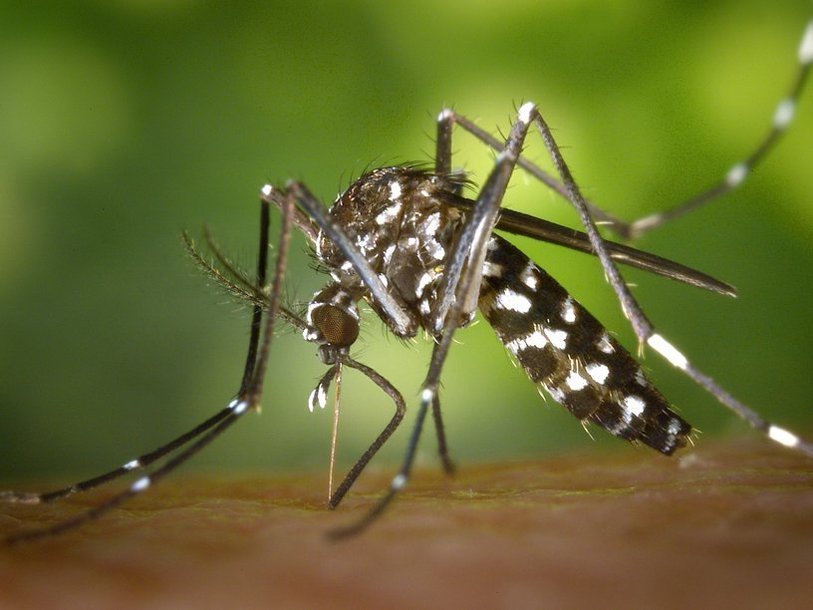 Mosquito Aedes Albopictus Wikimedia Commons
 Mosquito Aedes Albopictus Wikimedia Commons
In 1948, scientists discovered a new type of virus that causes a disease in African monkeys. Since the virus was allocated by macaca-roses living in the zika forest in Uganda, it was called the Zika virus, and the disease caused by him is a zika fever (zika fever). Periodically, people's infection in the countries of Africa occurred: Uganda, Tanzania, Egypt, the Central African Republic, and Sierra Leone. They also noted in Asia (India, Malaysia, Philippines, Thailand, Vietnam and Indonesia). In 1968, in Nigeria, the virus was first allocated in humans.
The manifestation of ZIK's fever consists in a rash that occurs on the face and body, and then spreading to other parts of the body, conjunctivitis, headache, joint pain and back, a feeling of fatigue, a slight increase in temperature, chills are also possible. In general, the symptoms of ZIK's fever are similar to the symptoms of another African tropical viral disease - Denge’s fever , but they are much softer. The disease lasts about a week.
Scientists have found that the carriers of the virus are mosquitoes of the genus Aedes , which also spread Denge's fever. In general, this disease, due to its rarity and comparative harmlessness, caused little interest among researchers.
The fever of Zika managed to attract attention in 2007 after the events on the islands of Yap in the Pacific Ocean (federal states of micronzia). The doctors who worked there reported to the Center for Control and Prevention of Diseases of the United States (Centers for Disease Control and Prevention) that the disease that had not previously encountered in micronzia is spreading among the local population. Due to the pain in the joints, which all the sick were experienced, the doctors suspected that the fever of Denge, Chicungun, or the fever of Ross River , had entered the islands. But blood tests made it possible to establish that this was never previously encountered outside the borders of Africa and Asia ZIK's fever. All the sick recovered safely, but the total number of infected people attracted attention. There were at least 5 thousand people, which is 70% of the population of the islands.
In 2013, the even larger flash of Zika's fever covered French Polynesia. According to the Promed-Mail website, where reports about cases of infectious diseases are collected, in October, reports were received about approximately 400 cases on the islands of the company, Tuamot and the Markiz Islands. People infected in these places were soon discovered in hospitals in New Caledonia and Japan. By the end of the year, 20 thousand cases were already reported in French Polynesia. This year, there were a message about new infections from there, in February there were 28 thousand (11% of the population of French Polynesia). In March, 40 people fell ill on Easter Island.
The course of the ZIK fever in Polynesia does not differ from the previous outbreaks of this disease, but doctors mention several cases when the pain in the joints lasted for weeks. Now the administration of the islands recommends residents and tourists to use repellents from mosquitoes, wear shirts with long sleeves and trousers, sleep in beds with an anti -cosquito canopy.
In early April, doctors described two cases of the transfer of the virus from mothers to newborn children. The exact path of infection in these cases could not be established. This can be a transplacental transmission, infection during childbirth or through breast milk. In one of the children, in addition to the detection of the virus in the blood, other manifestations of the disease were not, the other had a characteristic rash and a decrease in the number of platelets (thrombocytopenia).
In 2011, an article was published in the journal Emerging Infectious Diseases , which showed the possibility of transmitting the Zika virus sexually. Two leading author of the article: Brian D. Foy (Brian D. Foy) and Kevin Cobinski (Kevin C. Kobylinski) - in 2008 worked in the village of Bandafassi in Senegal. They studied mosquitoes serving as carriers of pathogens of various diseases, and developed methods for protecting against them. At the same time, mosquitoes were biting them repeatedly. A few days after returning to Colorado, both scientists fell ill. And when a little more time passed, Brian Foy's wife, Joy L. Chilson Foy), who did not go to Africa did not go (she became the co -author of the article). Later, the Zika virus was found in the blood of all three. True, the relatively short incubation period is noteworthy. Joy Foy fell ill with her husband 10 days after the return of her husband. Scientists also caught mosquitoes near the House of spouses to evaluate their species composition. In addition to the representatives of the birth, Cules and Culiseta , 7 mosquitoes of the type of Aedes Vexans were caught, for which the possibility of transferring the virus was testified. Nevertheless, the authors of the article are inclined to the version about the sexual path of the spread of infection, since none of the four children of the Foy family fell ill.
Recently, in the journal Plos Neglected Tropical Diseases there was an article by a large group of doctors from Gabon and France, who suggested, given the data on the outbursts of ZIK's fever on the islands of Jap and Polynesia, suggested that the denge and Chukungunya in 2007 could also participate in the ZIK virus in Gabon. They re -examined laboratory samples of the blood of the sick and found that many of them were indeed infected with Zika virus. Based on the analysis of RNA strains of the Zika virus Zika, scientists built a phylogenetic tree and found that a strain of the virus, which was found in 2007 in Gabon, is closest to samples allocated back in 1968 in Nigeria. Thus, it was found that the Epidemic of the Zika fever could accompany the epidemics of the fever of Denge and Chicunga, which means the Zika virus is much more virulent than previously considered.
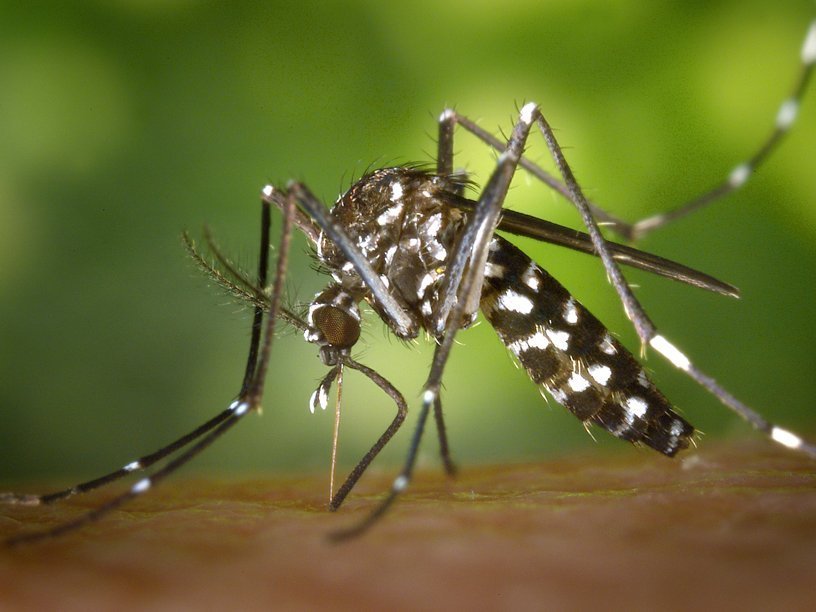
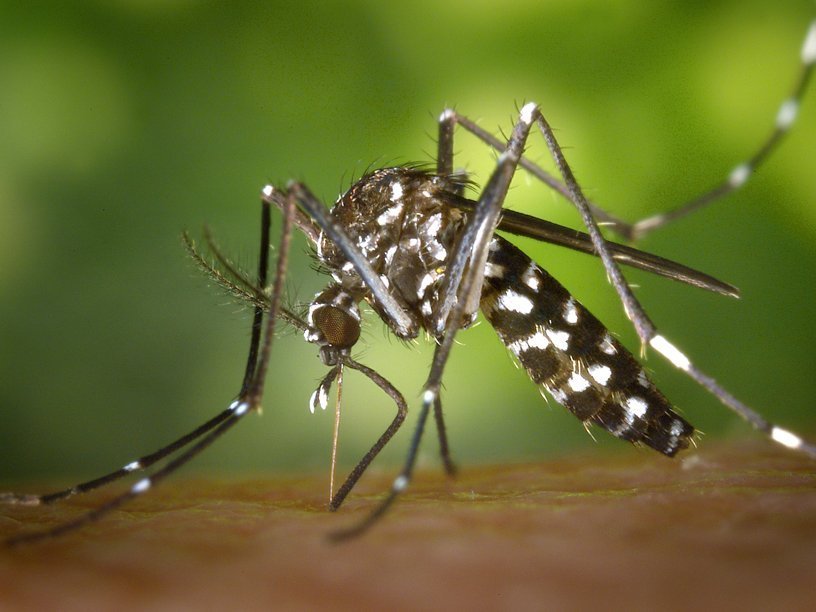
The researchers also found a mosquito responsible for the spread of infection in Gabon, the benefit of samples of mosquitoes caught in 2007 were also preserved in laboratories. It turned out to be a white-festival nurse ( Aedes albopictus ), also known as the "Asian Tiger Mosquito". Previously, the transfer of the Zik virus was not noted with this type. Kusaka White-Pestle comes from Southeast Asia, however, since the 1960s, it has spread widely around the world, capturing the entire east of the United States, Italy, Greece, the south of France, the sections of the coast of Brazil. In 2007, it spread on the Atlantic coast of Central Africa, in particular in Gabon.
The distribution of mosquito Aedes albopictus. Blue color is the original range, green - places of further penetration.
During the 2007 epidemic, 55% of mosquitoes gathered by scientists in the capital of Gabon Libreville belonged to this type. Aedes albopictus successfully competes with local mosquitoes. Its larvae are able to develop in small amounts of rainwater accumulating discarded vessels and even in car tires.
It seems that Zika’s fever can now be added to an impressive list of diseases that Aedes albopictus can tolerate, including Denge and Chukungun, the Westernnil fever, the Eastern Horses encephalitis virus, the seal valley and St. Louis encephalitis.
See also: samples of natural smallpox are found in the old warehouse to cut the African forests to spread the fever of Ebola bird flu virus similar to the famous “Spaniard” Maxim Rousseau who loves mosquitoes? The Ebola vaccine has successfully passed tests on the monkeysof pets will test on the coronavirus Mers Maxim Rousseau where does mysterious illness come from? Maxim Rousseau Justinianov Chum