
Translated material
Putin wants to collect even more powers in the center
In the Kremlin
 Putin wants to collect even more powers in the center
September 9, 2014 Dmitry Oreshkin
Regional problems have always been key to the existence of Russia, and it was inconvenient to mention them. Since the Soviet period, the real problems of the regions contradicted the proclaimed concept of a single and indivisible mighty Russia. When managing such a huge country, it is necessary to constantly solve territorial problems, then economic, then political, then national, then religious. The USSR was no exception, but at the same time, such problems, supposedly, did not exist, the whole country was one, it was inhabited by a new historical community - the Soviet people, inside of which there could be no friction. In reality, the problems accumulated, and solved them by the KGB methods. As a result, there are not enough fingers on the arms and legs to count the peoples who were evicted, repressed whose elites were destroyed and so on.
As a result, there were no problems - but life too. The economy was skidding, because it is clear that the more difficult it is, the less effective it can be commanded from the center, but people went “along the thread”. After the Stalin era, when it became clear that such a regime from the point of view of the economy is not effective, Khrushchev began to introduce the Council of People's Commissars, roughly speaking, regional governments. But as soon as the party seriously began to implement the strategy for improving the standard of living, the centralized system began to spread, because initially it was not built for this, but to obtain resources from people for its own purposes. Then new people came, the “Brezhnev elite”, which restored the vertical model, solving the problem of managing the creation of a ten times more ministries and departments. From 1965 to 1970, development was going on, but then the center stopped cope again, by the mid-80s it became obvious that the economy was uncontrollable, and “perestroika” began.
But as soon as the force of force was removed, friction immediately began, such as the war in Nagorno -Karabakh. A contradiction arose: either the country is standing and does not develop, but everything is calm, or it develops, but the risks of decay immediately increase. Brezhnev centralization was replaced by decentralization, which went so far that the country broke up. And the decay continued, and therefore Yeltsin created several institutions that were supposed to regulate interregional relations. These institutions allowed the territories to agree among themselves, but they also limited the authority of the first person, so Putin actually eliminates these institutions again.
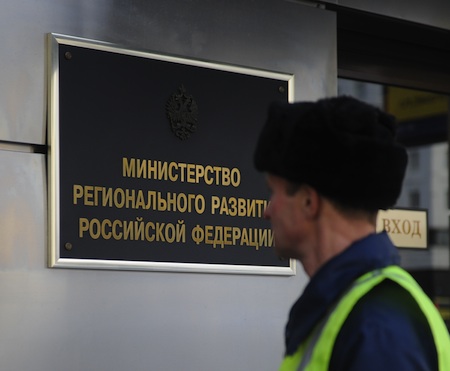
When the authorities feel that it is able to control the situation with unitary methods, it begins to seem to her that she does not need such an institute as the Ministry of Regional Development. But then, after a few years, it becomes clear that the problems have not disappeared, and the authorities, not wanting to completely get out of the logic of regional administration, is created back by the department that is engaged in this. In fact, the regions must negotiate with each other themselves, for which there was a Federation Council, and the ministry is just an illusion of a solution.
But the fact that even such a formal institution of local self -government is eliminated now, as the Ministry of Regional Development, means that the center believes: it has everything under control, and the presidential administration perfectly copes with the functions of this department. There, each region has its own curator who monitors its territory. That is, the value of order dominates, but there is no development. After two or three years, it will become clear that the order is good, but as a result, regional elites, devoid of incentive to develop, “go hibernation” and only expect subsidies from the Kremlin. As a result, interregional friction begins. Actually, they have already begun, the VTsIOM published the results of the survey, according to which 75% of the population considers, then Moscow allows itself to be too much in terms of spending.
All this is a sign of the victory of the Party of "Verticalists" and the militarists. Putin wants to collect even more powers in the center, destroying even the very illusion of local self -government. But since any complex system requires competent solutions, our power, no matter how smart it is, cannot cope with all 80 regions. Accordingly, their problems will not be solved, instead they will simply be deposited and accumulated. And the situation has already gone so far that it can only be resolved as a result of a serious conflict of values, for example, if the regions say that they do not need Moscow. And to hold the regions in a difficult situation in Russian history has always turned out only by force.