
Translated material
Grigory Kruzhkov about Wallace Stevens
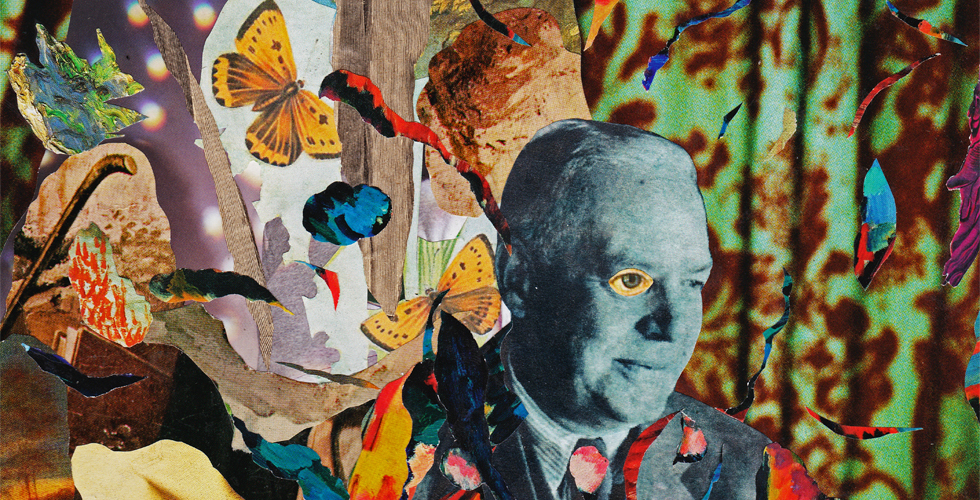
The essay of Wallace Stevens (1879-1955), unlike his poems, is practically unknown in Russia. Meanwhile, in the Anglo-American canon behind his collection of the Essay Angel Essay Necessary Angel , 1951) The reputation of an influential book was fixed, deeply, difficult and passionately talking about things, without which there is no poetry: about imagination, rationality and irrationality, the image of the poet. Readers COLTA . Ru Two Essays Stevens of the early 1940s are offered , first transferred to Russian and commented on by Leo Raorne. The preface for our publication was written by the famous translator, the opener of Stevens’s poetry in Russia, Grigory Kruzhkov.
Poetry can be defined as a game, as a special kind of hide and seek with truth, in which - alternately - then the truth is hidden from the poet, then the poet is hiding from the truth. What a gambling is, we see on the example of Wallace Stevens, a poet of hermetic and self -sufficient. Moreover, the jealous zeal with which he is trying to determine for himself and other rules of this game.
Wallace Stevens about poetry, with reservations, can be put on a par with the “protection of poetry” by Shelley (and the same essay of Philip Sidney). In them, in fact, the same apology and glorification are heard in them, although in a completely different, more power and restrained, tone. Holes of romance stick out from under the cap of the modernist. Stevens is sure that "the experiences of poets, people of the same blood with the holy, no weaker than the experiences of the saints themselves." He easily admits that God himself is only the creation of a poetic, figurative thought. He compares poetry with philosophy and comes to the conclusion that they are aimed at two different parts of a single whole. In general, we can state that Stevens' thought is moving in line with completely romantic ideas about the imagination and reality, which are still dating back to Coleridge. Although to say “moves in line” means to greatly hide our thought. Only if you imagine the channel of the frozen river, perhaps we will find ourselves closer to the truth, closer to the image of Stevens’s reasoning, “confusing as honest zigzags in the skate in the blue flame” (Mandelstam). Here is the main word: "Honest." The author does not try to flaunt beautiful aphorism, show off and hit. He wants to understand, to make ends meet. Stevens thinks, he tries to honestly overcome the eternal curse of the “I”, at the same time subject and object of poetic thought. He hopes that a clear distinction between these concepts should protect the poet from “direct egoism”. But, on the other hand, Stevens concludes, "there is no poetry without indirect egoism." He spins and leads the thread of his thoughts, trustingly hoping that we are following them. So once Sarah Bernard, indicating in the circular movements of the raised hand of the wristwalk of Hamlet’s thoughts, said the monologue “to be or not to be”, and the viewer followed her, “plunging into the intricate metamorphosis of her thoughts.”
“The image of a young man” was written two years later than a “noblecient charioteer” and makes a more integral impression. He is all devoted to the conflict of the imagination of the poet and reality. What we call the poet’s rise and enthusiasm, Stevens says, maybe not so much take -off as the “intensity of thought”, rejecting everything implausible. The most amazing property of the poet is a husband and expanding the sphere of his experience, he grows, first of all, his ignorance (Innocence) , his immediate and youthful perception of the world.
In the “noble ardor”, starting from the image of the soul as the totality of the charioteer and his team, Stevens, it seems, every now and then gets off the road. Only at the end of his speech he goes on the main path of his reasoning. Stevens states that we live in a time when the spirit of denial triumphs, all great values are rejected and people live "in the intricacies of new, local mythologies - political, economic, poetic, more and more inconsistent and inconsistent." It is difficult to imagine that it can be untimely than nobility, he says, as if apologizing. And at the same time, nobility is what is most lacking in modern poetry.
This, of course, is not about the lifeless “nobility of rhetoric”, not about pomp, not about the majestic reassurance, which is dominating itself. He defines nobility as the power of resistance, as “inner rage”, opposing external rage, that is, on the onslaught of rough reality. Determined by this, it becomes akin to the “fierce indignation” (Saeva Indignatio) of Swift and the “Old Man's Frenzy) , which was animated by Yates. At Stevens himself, this is a deliberately chilled, caustic pathos and music of proud despair.