
Translated material
Ritual of public exposure
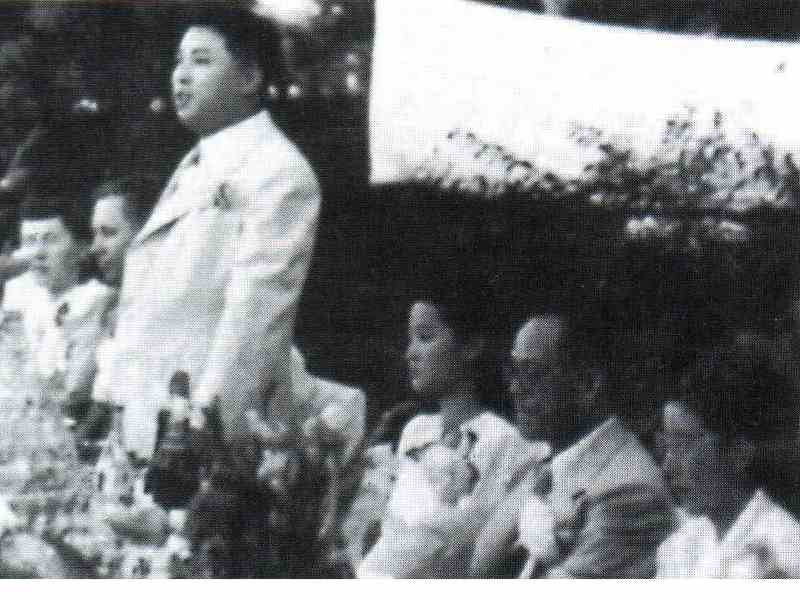
We continue to publish a cycle of articles of a wonderful mother -in -law, Associated Professor University of Kukmin (Seoul) Andrei Lankov about how North Korea lived under Kim Il Sena when she was the most contrary society in world history.
See also:
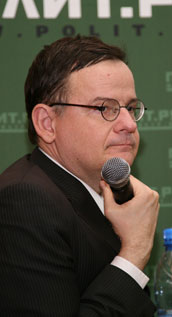 Andrey Lankov
I remember how one Soviet specialist who visited North Korea in the seventies spoke out that he had a chance to see there. He said: "They do not so much work there as the piphanes are inserted to each other." The Korean word "piphan" means "criticism." Indeed, the North Korea of the 1960-80s, that is, the DPRK of the times of “developed kimirsenism”, was a country in which the collections of criticism and self-critics reached such intensity, which, perhaps, has no precedents in world history.
The incredible addiction to all kinds of “Piphana” initially fell into North Korea from China, which, along with the Soviet Union, was one of the two countries that had the most serious influence in the Kimirsen regime.
At first, there was no special system and standardization in the organization of diverse and criticism and self -criticism - they criticized how God put on the soul. However, at the end of the sixties, when the Kimirsen North Korea began to take its very specific outlines, such a kind of institution as regular meetings of Senhvalchehhhchi was finally formed in the country. It is quite difficult to translate this name into Russian, but literally it means something like “summing up the results of life” or “ordering of life”. However, in practice, a descriptive translation of this name was fixed, quite far from the original in linguistic terms, but quite acceptable and accurate, in fact, “collections of self -criticism and mutual criticism”.
Such meetings were supposed to be held in all Korean "organizations" once a week. Let me remind you that by the “organization” this refers not to a labor collective, but by a party, trade union or Komsomol primary organization created on the basis of this team. In some ideologically important sectors of the collection of critics and self -critics, they took place more often. For example, artists and other art workers, as the public most susceptible to all vibrations and perversions, were supposed to criticize each other every two days. On the other hand, North Korean peasants (that is, agricultural cooperative workers) were allowed to hold meetings less often every 10 days. This partly reflected the comparative small significance of the peasantry, and partly, it was simply caused by the fact that in North Korea the organization of labor in the village is not an imported seven-day week, but a ten-day decade traditional for East Asia.
“Meetings of self -criticism and mutual criticism” were extremely formatized. At first, all participants in the meeting were supposed to make a short speech for 1-2 minutes. This speech should be launched with a quote from some work of the great leader of Kim Il Sen (from the end of the eighties, quotes from the works of his son, the beloved leader Kim Jong Ira) began to be used). After that, the speaker must recognize 1-2 misconduct, which he committed during this week, and express repentance about these actions. In conclusion, he had to promise that in the future he would correct and try not to make such sins.
A typical performance in the student group of the year in about 1975 was as follows: “The great leader of the Marshal-father Comrade Kim Il Sign taught us that the main task of each student is study. Unfortunately, I did not fully learn these instructions of the great leader, therefore, last Tuesday, I came to the seminar in sopmith, not preparing for the message properly, and received a deuce. I will even more conscientiously study the works of the great leader of the Marshal-Father Comrade Kim Il Sen and carefully prepare for all seminar classes. ”
After each repentant performance with self -criticism, “friendly criticism” should have been carried out. It was that someone else of the members of this “organization” was supposed to act with a revealing speech to the person who had just repented. The structure of friendly criticism was the same as repentance. It was necessary to start with quotes from Kim Il Sen, after which it was necessary to mention one or another reprehensible misconduct committed by the criticized, after which it was necessary to advise the guilty to work more on himself and not allow the repetition of such violations in the future.
I must say that such meetings of critics and self-critics began to turn into a certain performance in those days when the Marshal-father was alive and well. In most cases, the participants in the meetings were not recognized in the commission of any serious misconduct, the disclosure of which could lead to any noticeable troubles. It was always in speeches about small sins - delay to work, unprepared homework, increased percentage of marriage, etc.
“Farm self -criticism” also bore the character of the performance. As a rule, the criticized and criticism agreed in advance about who, whom and for what would criticize, as well as decided, which accusations would have to be made.
However, to reduce the “collections of self -criticism and mutual criticism” to an empty ritual would be erroneous. They still exerted considerable pressure on their participants. In addition, there was always the possibility that the meeting would get out of control and a much larger violation would be revealed on it. Therefore, the regular holding of the meetings resembled the North Koreans that, firstly, it is necessary to be careful, and, secondly, the numerous instructions of the great leader and his son, his beloved leader, should be carefully performed.