
Translated material
How much to ruin weaken
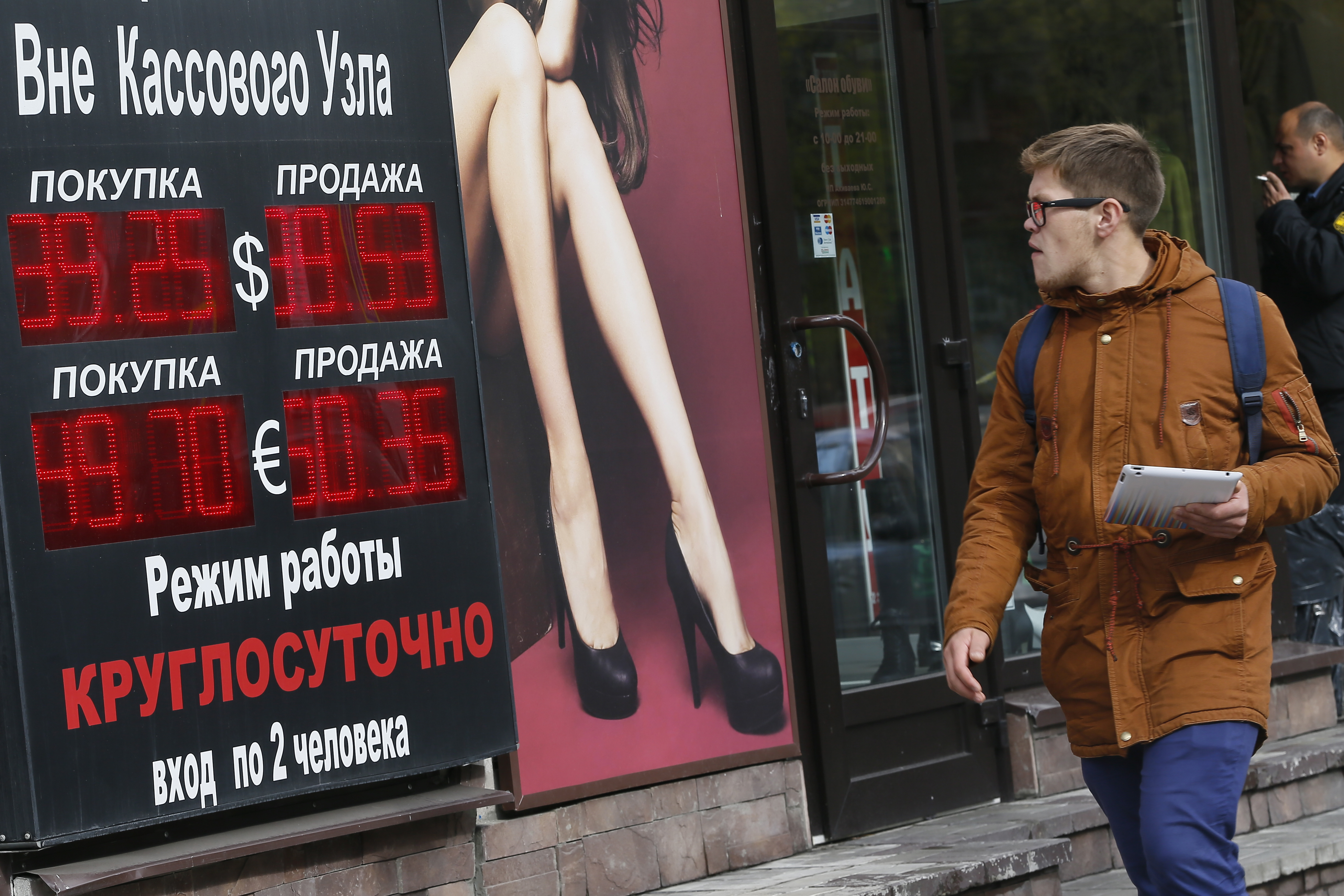
Currency deficiency in the market will disappear either with a reduction in demand for it, or due to the reserves of the Central Bank
The Russian currency for the dollar at the auction on Thursday again struck the level of 40 rubles. The official course came close to him. Having resumed foreign exchange interventions after a half -year break, the Central Bank sold about $ 3.1 billion, that is, almost 8% of their total amount from January until October, for four trading days, according to expert estimates. Over the past days, the Bank of Russia has increased the boundaries of the currency corridor for the course four times. In addition to the actions of the Central Bank, there is no need to expect factors of ruble support, analysts say. Nevertheless, they do not predict any significant fall in the course by the end of the year.
At the levels below the current Russian currency for the dollar, it was not almost 17 years old. Recall that on December 31, 1997, he amounted to 5 thousand 960 rubles. And the very next day, that is, seven and a half months before the default of Russia in August 1998 , exactly a thousand times more - 5.96 rubles. On January 1, the next monetary reform began then, and old rubles, a model of 1993 and 1995, exchanged for new ones with a coefficient of 1000: 1. In cash, not only ruble coins, but also a penny returned to the cash. Over the past seventeen years, the ruble exchange rate towards the dollar has decreased by almost seven times.
The most powerful shock for him happened at the turn of 2008-2009. Then, at the peak of the global financial crisis , the Russian Central Bank (Central Bank) conducted a “controlled devaluation” of the ruble: for the period from November 1 to February 19, its rate to the dollar decreased by as much as 37% - from 26.54 to 36.42. For comparison, a decrease in the ruble course since the beginning of 2014 as a whole is not more than 23%.
Scatter in forecasts - as many as five points: from 36 rubles per dollar by the end of 2014 to 41 rubles
Other parallels beg. Firstly, the events of six years ago developed against the background of the collapsed oil prices. This is not that the current decrease - in general, “only” by 18% since the beginning of 2014. By mid -July 2008, the price of oil Brent reached historical maximums, exceeding $ 147 per barrel, and by the end of the year it collapsed at once - up to 36 dollars per barrel.
Secondly, in the fall of 2008, world financial markets-in a matter of days after bankruptcy in the United States, the Lehman Brothers investment bank , announced on September 15, closed for banks and companies of any countries, and not just Russian, as today, and even then-only some. For the latter, nevertheless, the consequences of the events of six years ago are quite comparable to the consequences of current sanctions - in the form of closing for foreign markets of long -term borrowing .
In the most acute phase of the crisis of 2008-2009, the Central Bank of Russia had to sell a third of all its currency reserves-about $ 200 billion to provide Russian companies and banks with the currency necessary for the current service of their external debt, Oleg Kuzmin , the main economist for Renaissance Capital investment company, recalls. At the same time, Russian borrowers had practically no own reserves of foreign exchange liquidity: why was it to create them in conditions when world markets were crowded with cheap money available at any time? And suddenly they were gone, it was possible to get currency only from their Central Bank.
The Central Bank does not specify at what fluctuations in the course he intends to intervene in the course of foreign exchange trading in the future
The simple lessons of the crisis seemed to be learned. Many large Russian borrowers have held in recent years the restructuring of their former external borrowings, stretching, in particular, the terms of their repayments. And in one of its next reviews, presented at the beginning of summer, the International Monetary Fund noted that most Russian, at least state companies in the real sector have enough reserves that allow them to serve their own external debts at least a year or two.
Against this background, the total amount of currency sales by the Central Bank of Russia, starting from January 2014 until the beginning of October, amounted to $ 40 billion, that is, five times less than at the peak of the financial crisis six years ago. Moreover, from May to October, the Central Bank did not sell a single dollar from his reserves at all, Kuzmin notes. Nevertheless, in the Russian market there is clearly a deficiency of currency liquidity and the ruble exchange rate reached the upper boundaries of the currency corridor, followed by the interventions of the Central Bank. Which, in fact, is happening. “Therefore, in October, we no longer expect such a significant weakening of the course as it was in September,” says Oleg Kuzmin.
In addition, after the next peak of the next peak of current payments in December, they are currently stocking up, in the first quarter of the next year, they have more moderate repayment, which, in theory, for some time, can weaken the demand for foreign currency and, accordingly, strengthen the ruble. The same will be facilitated by the reduction of imports to Russia , which will probably continue. This, in turn, strengthens the general payment balance of the country even against the background of reducing oil prices and reducing the flow to the country of currency.
Relatively speaking, to fall into the course by three rubles in one day of the Central Bank, of course, will not allow. As with 20% in one month
Just after the events of 2008-2009, when he was forced to sell a significant part of his foreign currency reserves, the Bank of Russia and spoke about the transition to the policy of the “floating” course , the macroanalist of the Austrian Bank of Raiffeisen in Moscow Maria Pomelnikova . The transition is gradual, which is now manifested in the form of new shifts of the borders of the currency corridor, and the transition will end by January 2015, when this corridor is planned to be canceled at all.
The new policy of the Central Bank, in principle, will help ensure that the ruble exchange rate is better adapted to the changes of external factors, and this happens without the intervention of the Bank of Russia, explains Pomelnikov.
Cheaper oil
World oil prices, the main export product of Russia and the source of the currency that determines the ruble that determines the ruble, have now reached a two -year minimum, decreasing by the whole year by 20%. Moreover, this decrease has especially noticeably accelerated in recent weeks. However, with the approach of winter in the Northern Hemisphere, where countries are concentrated - the main consumers of energy in the world, oil prices traditionally increase, partially playing out the falls of the outgoing year. It is enough to look at the annual dynamics of oil prices over the past five years.
However, with their current dynamics (decrease from levels of $ 105-110 per barrel to almost 90 dollars), such a seasonal factor in itself is unlikely to lead to a noticeable strengthening of the ruble, says Dmitry Poleva , chief economist for Russia in the Dutch Bank of ING. Even if the price of oil rises, say, $ 2-3.
In Russian conditions, increasing bets in the economy only to a small extent is reflected in the dynamics of the outflow of capital
“The market can even more aggressively“ play ”the future tightening of monetary policy in the United States, accompanied by an increase in the dollar,” continues Polevoy, “that will have an additional restraining effect on oil prices.”
The recent fall in these prices, of course, had a strong negative impact on the ruble exchange rate , and, possibly, 3-5 percent of its current decline is due to just a drop in oil value, Maria Pomelnikova believes. However, an equally significant factor in the current exchange rate is an increased demand for currency in the Russian market, since its external sources in the form of loans are now limited by foreign sanctions.
“Even if we assume that oil prices are closer to winter and return to the recent levels, this is possible, only compensates for the weakening of the ruble that we observed in recent weeks,” the Raiffeisen analyst believes. “That is, the ruble can be strengthened, but not to the levels at which its course was the current reduction in oil prices.”
There is a clearly deficiency of currency liquidity in the Russian market
In general, even with the current cost of oil, if you mean this factor separately, the ruble could be much more expensive, adds Oleg Kuzmin. The current weakening is primarily associated with a lack of dollar liquidity in the Russian market.
We can say that the dollar has become a scarce product, which at a certain moment can become somewhere salt or sugar: it is worth starting to disappear from the shelves, how prices take off. About the same thing we are observing today in the Russian currency market, Kuzmin explains. “Therefore, if the problem of dollar liquidity on it is somehow resolved, the ruble can noticeably strengthen with any dynamics of oil prices in the near future.”
Indirect regulation
The transition of the Central Bank of Russia since January 2015 from many years of policies of the currency course to inflationary targeting will also mean its refusal not only from previous interventions in the foreign exchange market, but also from the very concept of “currency corridor”. Accordingly, the current fluctuations in the ruble can be much larger than so far. And this will have to be used to it.
Under new politics, the main tool for the indirect influence of the Central Bank on the course of education will remain a change in the base interest rate, says Dmitry Poleva. “However, in Russian conditions, the increase in the basic rate and other bets in the economy only to a small extent affects the dynamics of outflow from the country of capital , which, accordingly, limits the potential capabilities of the Central Bank.”
It was after the events of 2008-2009 that the Bank of Russia spoke about the transition to the policy of a “floating” exchange rate
Interior in the course of exchange trading, selling or buying currency on them, the Central Bank suggests only in some critical situations that threaten the stability of national financial markets. Or in cases of excessive, from his point of view, fluctuations in the course. Relatively speaking, to fall by three rubles in one day of the Central Bank, of course, will not allow, like 20% in one month, Oleg Kuzmin believes, at some point the Bank of Russia will inevitably speak with interventions.
However, the Central Bank does not specify at what fluctuations in the course he intends to interfere in the course of foreign exchange trading in the future, which brings unpredictability to the market, thereby limiting the possibilities of speculation, adds Maria Pomelnikova.
In October, we no longer expect such a significant weakening of the course as it was in September
In addition to managing interest rates, the Central Bank can use other indirect effects on the dynamics of the ruble. Including - previously not used. So, in September, the Bank of Russia for the first time in Russian practice, Oleg Kuzmin emphasizes, offered to commercial banks one -day “currency swap”. The Central Bank accepts rubles from banks, providing them in return for the corresponding amount in the currency. The next day, a reverse exchange is made. Although the Central Bank always has the possibility of extending the terms of such a transaction again and again, at least six months.
But, as it turned out, the Central Bank introduced a new tool, rather to ensure financial stability as a whole than to solve the problem of current lack of currency liquidity in the Russian market, Kuzmin continues. The conditions proposed for new transactions were not so attractive to banks, therefore the demand for them is small, and they are performed irregularly.
In the “coming weeks”, according to the Central Bank, he intends to offer banks another source of currency liquidity - a repo operation for a period of one to four weeks. Such an operation will differ from the currency swap in its mechanism only in that instead of rubles, banks will provide the Central Bank of liquid bonds, explains Oleg Kuzmin. “However, the conditions of new transactions have not yet been defined, and it is difficult to say what influence they can have on the dynamics of the ruble exchange rate.”
At the levels below the current Russian currency for the dollar, it was not almost 17 years old
Nevertheless, market analysts predict at the end of the year either an increase in the Russian currency to the dollar from current levels by 2-4 rubles, or, if its further decrease, then no more than one ruble. The RBC agency, in particular, gives current assessments of analysts of large banks and investment companies - six foreign, working in Russia, including the American Citibank, the British HSBC and the French BNP Paribas, and four Russian, including Sberbank and VTB Capital.
The scatter in ten forecasts is as many as five points: from 36 rubles per dollar by the end of 2014 to 41 rubles - with an official course for October 10 at 39.98 rubles. For the euro, respectively, from 46.1 rubles to 50 rubles - at the current level of 50.96, that is, to two pennies overlooking the previous absolute record , marked on March 18, 2014, a day after the referendum in the Crimea on entering Russia.