
Translated material
Washington Post: Eastern Europe is inclined to Putin
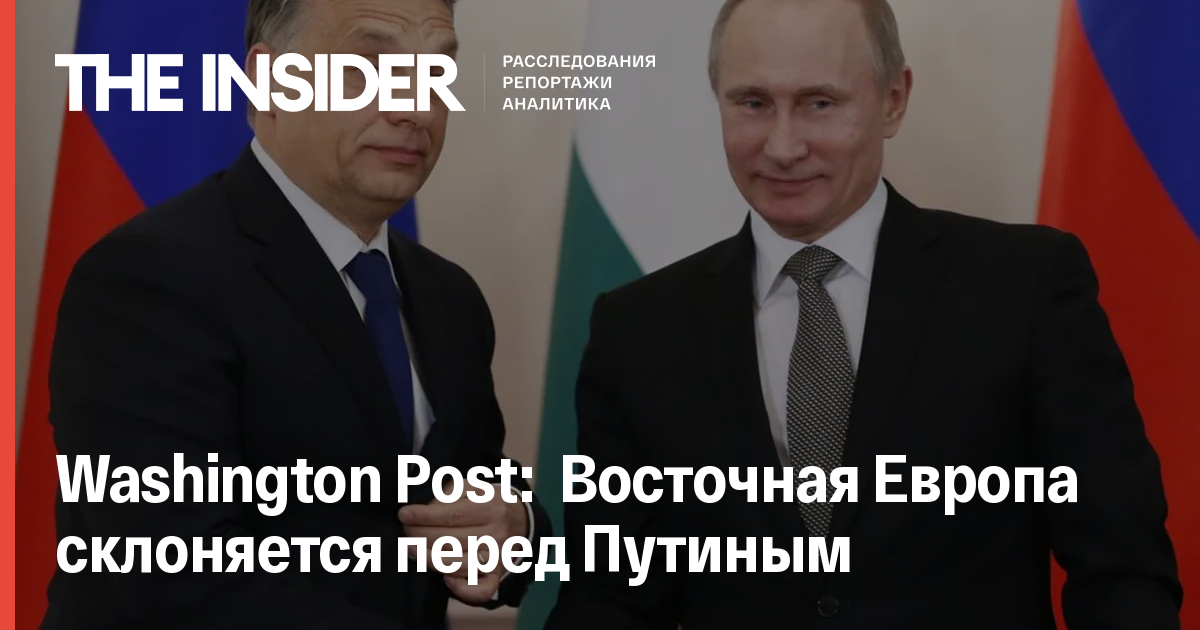
 The Insider offers the translation of the column of the editor The Washington Post Jackson Dila
To understand how far the campaign of Vladimir Putin went to revise the results of the Cold War in Europe, it is worth looking outside the East of Ukraine, where the Kremlin carefully strengthens the puppet state of the separatists. In the end, Ukraine, as President Obama likes to celebrate, is not a member of NATO, who spread Western security and democratic rule for a dozen states that were once by the power of the Soviet dictatorship.
Take, say, Hungary, NATO member, whose Prime Minister recently called Putin's Russian political model. Or Slovakia, also a member of NATO, whose Prime Minister of left-wing views compared the possible deployment of NATO forces in his country with the Soviet invasion of 1968 . Or the Czech Republic, also a member of NATO, where the Minister of Defense made a similar comparison, and the government joined Slovakia and Hungary in the struggle against the sanctions of the European Union against Russia. Or Serbia, a member of the NATO “partnership for the sake of peace”, who invited Putin this month to visit Belgrade and visit a parade dedicated to the seventh anniversary of the “liberation” of the city by the Red Army.
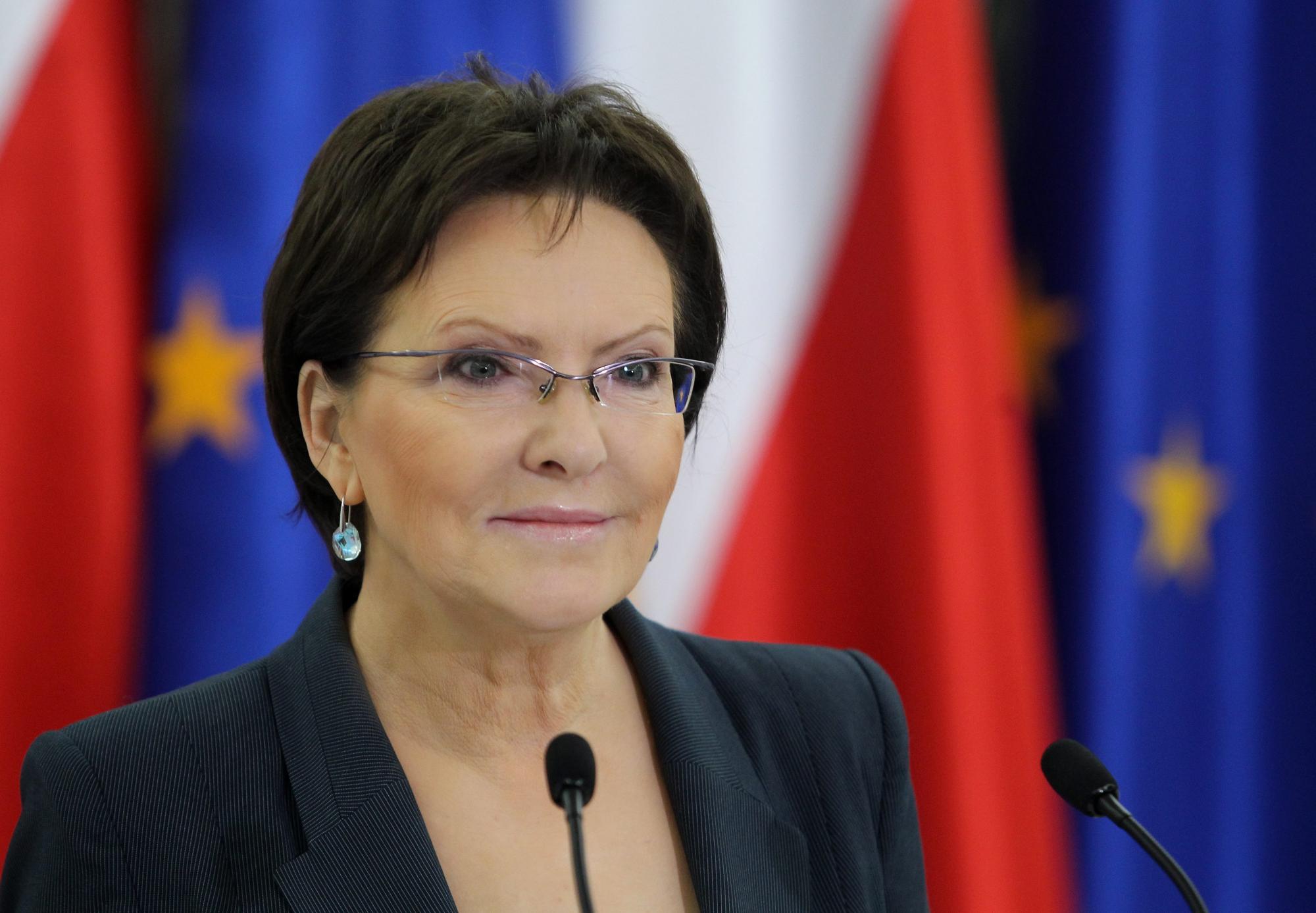
Until recently, Poland led the efforts of NATO and the European Union to support the Ukrainian pro -Western government and the confrontation of Putin's aggression. This month, the new Prime Minister Eva Kopach ordered the new foreign minister to urgently revise his policy. According to Wall Street Journal , she told the parliament that she was afraid of “isolation of Poland” in Europe, which could develop due to the task of “unrealistic goals” in Ukraine.
Obama congratulates himself on the fact that he turned out to be the head of the “single answer” of the West, which, according to him, will lead to Putin's isolation. In reality, a significant part of the NATO alliance is slowly leaning to the side of Moscow. Partially, these states do this for economic reasons: being dependent on Russian energy and exports, they are afraid of the consequences of the escalation of sanctions.
However, some also, apparently, pursue their own goals in the field of ideology and safety. They believe that it is not worth checking whether the Putin threat to invade the former countries of the Soviet bloc was really a joke - and whether they can protect NATO and Obama at the head. Otherwise, why was it in advance to announce in advance how the Prime Minister of the Czech Republic Boguslav Sobotka did that in his country NATO troops were not needed, sent to Poland and the Baltic countries in order to deter Russia?

Roberto Fitzo, a former communist, who, following the abandonment of NATO troops, rejected Obama’s call to increase defense costs and called sanctions against Russia “ suicidal” and “meaningless.” In turn, the Switch Fitzu fades in comparison with the speech, which was uttered at the end of July by the Hungarian Prime Minister Viktor Orban, who called Russia a model of how “we should abandon the liberal methods and principles of the organization of society.
If this is a “single answer”, then Putin is more controlled by Putin than Obama. “Some politicians of Central Europe seek either to remain invisible - not to express their own a goal of Putin’s anger - or to smear to Putin and survive a further deterioration in the situation is better than the rest of the allies,” Damon Wilson , an executive vice president of the Atlantic Council, told me. “The problem for many politicians will be survival when the Russians come again, worse than before. . . And the Americans are far away, they can only gain them ”911" in the case of a real tragedy.
Typically, fermentation in Eastern Europe began just a decade after a large expansion of NATO 2004 and a dozen years after the grateful and hot support of Poland and the Czech Republic of the American invasion of Iraq. What happened? Robert Coleson from Radio Free Europe suggested that one of the answers can be found in the “open letter” of the political leaders and intellectuals of these countries Obama in July 2009, when in the first year of his presidency he launched a “reboot” of relations with the Putin regime.
“Many Americans concluded that the problems of our region have been resolved once and for all” - warned in a letter. - "This point of view is premature."
Obama, approved in a letter, made a mistake, pushing relations with Central and Eastern Europe into the background. The elites, today who come to power in the post -Soviet countries "may not share idealism and the attitude to the United States that is inherent in a generation, which led the transition to democracy." Moreover, Russia is far from the most suitable partner, it "has been revived as an revisionist power, pursuing the goals of the 19th century by the 21st century."
Obama and his assistants angrily rejected these warnings , accusing the authors of the letter of “Russophobia.” Five years later, Obama repeats their diagnosis to Putin as his own wise judgment. But perhaps it is too late: “Russophobes of“ expanded NATO in several capitals were replaced by Putin's “pacifiers”.