
Translated material
A single customer
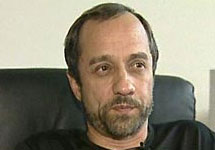
In the trial in Moscow in the Born case ("Combat Organization of Russian Nationalists"), the witness of Evgenia Hasis testified that the activities of this nationalist gang were oversaw an employee of the Presidential Administration of Russia. In any civilized country, it would be a number one sensation, after which they would talk about the indispensable resignation of senior officials and distrust of the president. We have the news almost unnoticed. Only the opposition press reported about it, and the Hasis only mentioned by the media, the media controlled by the media, carefully bypassing the entire compromising head of state.
Recall that Evgenia Hasis, together with his civil husband Nikita Tikhonov, have already been convicted of the murder of lawyer Stanislav Markelov and journalist Anastasia Baburova. Tikhonov was sentenced to life imprisonment, Hasis - to 18 years in prison. About two months ago, she was delivered from the Mordovian colony to Moscow, and now she gives testimony at her former comrades in the combat organization.
It is well informed, does not confuse in the testimony and, apparently, tells the truth. The ties with the Kremlin, according to her, were supported by the ideological leader of Bourne Ilya Goryachev.
"Leonid Simunin became curator from the administration. Goryachev, like many, received crumbs from the presidential administration, but he wanted more, he wanted to create a party. He asked Simunin to transfer his desire upstairs, but he refused that the leadership was not interested in this and that such a party would destabilize the situation in the country." This is how the Hasis story sounds in the program of the Internet Hazets "Mediazona".
Indeed, why do the authorities need another political party, if the same people can be used for illegal extremist activity? Hasis talks about the orders of the presidential administration:
"Leonid Simunin directly asked Goryachev to murder an FSB officer and proposed a monetary reward for this: they say, this fits into the concept of Bourn’s actions. But Tikhonov refused this proposal, explaining that he was not a hired killer, but a revolutionary."
The cost of the order, which Tikhonov refused, was, according to Hasis, 5 thousand euros. Not so big money for the work of the killer, but you can imagine how much money sticks to the hands of intermediaries on the way from the customer to the contractor.
“I know that of the money for youth policy, Simunin allocated money to Goryachev for a nationalist organization,” Hasis answered the question of financing Born. “I don’t know for certain whether Surkov knew all this. But I know that Leonid Simunin, who was a representative of Surkov, said phrases like“ I consulted with the leadership, ”“ The leadership did not recommend it. ” According to Tikhonov, or according to Goryachev. "
The community of power and crime may seem incredible only to those who sacredly believe in the authenticity of the desire to protect the law. We admit honestly - there are few of them in today's Russia. Most are convinced that officials are corrupt, that they are all thieves, scammers and embezzlers. But the fact that the top leadership of the country is tied with ideological maniacs and killers is believed by few. I do not want to believe in it.
It is as difficult to recognize this as the fact that it was the Russian special services that were involved in terrorist acts in Moscow, Buinaksk and Volgodonsk in the fall of 1999. Even when the evidence with an excess, an exemplary law-abiding citizen perceives them with difficulty and distrust, he evades them, he is in every possible way repelled from the truth, because if you agree with it, there is a need to do something, somehow act. And this requires time, effort, and risky.
The involvement of the authorities in criminal terror is not an exceptional feature of the Russian authoritarian regime. The same thing happened with other countries with similar public administration systems. Sometimes the truth about the killings of political opponents surfaced to the surface. However, the names of the main customers were not called, although it was clear to everyone who they were.
So it was in communist Poland after the murder of priest Jerzy Popelushko in 1984. His killers - four Ministry of Internal Affairs, led by police colonel, were found and condemned. The customer was not called the crime, although few doubted involvement in the murder of the then Polish dictator General Yaruzelsky.
So it was in Ukraine after the murder of journalist Georgy Gongadze in 2000. Three officers of the Department of External Observation and Criminal Intelligence of the Ministry of Internal Affairs were sentenced to long terms of imprisonment, and the fourth - the police general, the head of the Main Directorate of the criminal investigation department of the Ministry of Internal Affairs - to a lifelong conclusion. The customer’s name was not named at the trial, although much indicated a lot of the former President of Ukraine Leonid Kuchma.
In police states, the murder becomes an acceptable instrument of politics. The customer is always the same - the top of the authorities, the first persons. Contractors can be sacrificed, and customers for the law are out of reach. And rarely, one of the performers will decide to indicate them - except from complete hopelessness. Eugene Hasis decided. It seems that the sleepy Russian femid did not hear anything.